
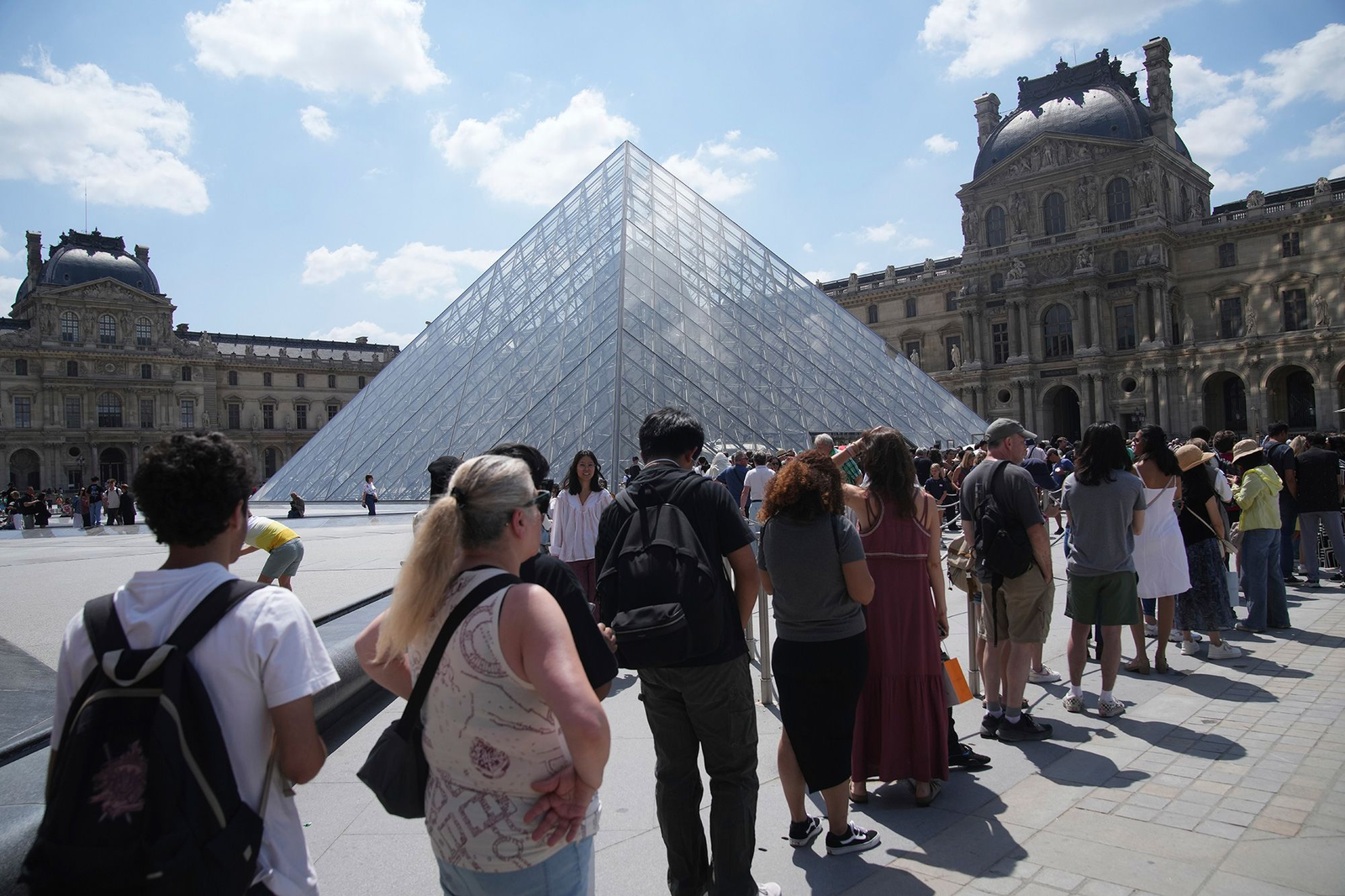
The Louvre Museum in Paris, one of the most iconic and visited cultural institutions in the world, faced an unexpected shutdown for several hours on a Monday in 2025, drawing widespread attention from tourists and the global art community alike.
The temporary closure, though brief, was the result of an impromptu strike by museum staff, shedding light on long-standing issues within the museum’s operations and infrastructure. From understaffing to over-tourism, and from outdated facilities to employee safety concerns, the reasons behind the walkout reflect a deeper crisis brewing within the grand corridors of the Louvre.
The Louvre, home to over 615,000 artefacts including masterpieces like the Mona Lisa, Venus de Milo, and the Winged Victory of Samothrace, is not just a national treasure of France but also a global icon of art preservation and history. Its roots trace back to the 12th century, having transformed over centuries from a fortress to a royal palace, and finally into the modern-day museum it is today.
Throughout its rich history, the museum has closed its doors only on rare occasions — during wars, pandemics, and national emergencies. Thus, this recent shutdown, triggered by a strike from within, holds historical significance.
Staff Demands and Deteriorating Working Conditions
The immediate cause of the closure was a sudden protest staged by staff members including security personnel, ticket agents, and museum attendants. During a routine internal meeting, frustration over working conditions erupted into a walkout, forcing the museum to shut its doors to thousands of tourists already waiting in line. For many visitors, some of whom had flown across the world to catch a glimpse of the famous artworks, the closure was both surprising and disappointing.
Yet, for the staff inside, it was a moment of reckoning. Reports from within indicate that the museum has been operating under increasing strain. A leaked internal memo from the Louvre’s president, Laurence des Cars, highlighted grave concerns over infrastructure, stating that parts of the museum were “no longer watertight.” Problems cited in the memo ranged from leaking roofs and inconsistent temperatures to insufficient food and restroom facilities for both staff and visitors.
Read : Top 10 Cities With the Highest International Arrivals in 2025
Employees described the experience of working at the Louvre as a “physical ordeal,” echoing Des Cars’ concern that the current condition of the museum fails to meet international standards for both visitors and workers. Many staff members also raised alarms about the overwhelming number of daily tourists and the growing difficulty in managing crowds within a limited space, with one worker calling the situation “untenable.”
The Louvre museum in Paris SHUTS DOWN after staff stage protest over mass tourism.
— Oli London (@OliLondonTV) June 17, 2025
Thousands of tourists stood outside the world’s most visited museum and were unable to gain entry after staff went on strike.
Staff including; gallery attendants, ticket agents and security… pic.twitter.com/iIdZrbz3B6
These complaints are not new. The Louvre has experienced strikes before, including notable walkouts in 2013 and 2019 over similar issues. However, what makes the 2025 strike different is the growing urgency in their demands, amplified by a massive surge in tourism numbers that far exceed the museum’s capacity.
The Crisis of Over-Tourism
The Louvre Museum was originally designed to accommodate around four million visitors a year. But in 2024, it received a staggering nine million tourists — more than double its intended capacity. On any given day, the museum sees an estimated 30,000 visitors, a volume that places immense pressure on the staff and the museum’s infrastructure.
With a workforce of just over 2,200 managing a space that spans more than 785,000 square feet, the imbalance is clear. Over-tourism has created logistical nightmares for staff, many of whom are responsible for not only maintaining security but also guiding crowds, answering questions, and preserving centuries-old artefacts.
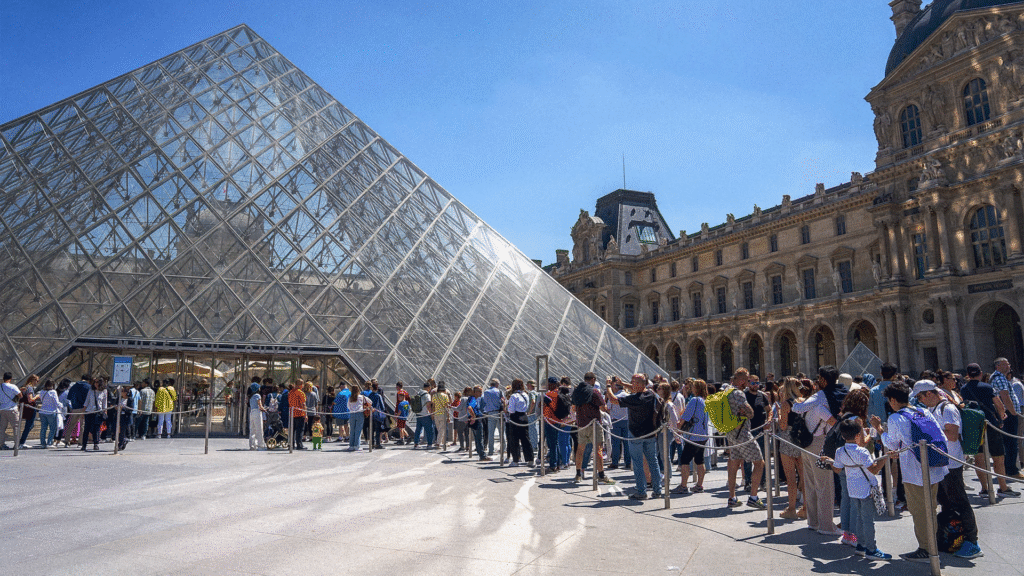
The consequences are visible. Visitors often report spending hours in long lines, navigating dense crowds just to get a glimpse of a few famous pieces. As one visitor, Ji-Hyun Park from Seoul, told the Associated Press, “You don’t see a painting. You see phones. You see elbows. You feel the heat. And then, you’re pushed out.” Her comments reflect the reality of many tourists who find the experience less about art appreciation and more about survival.
This surge in tourism also undermines the educational and cultural mission of the museum. When art becomes inaccessible due to crowds, the very essence of the museum’s role in society is compromised. What should be a tranquil and contemplative space turns into a chaotic environment, neither suitable for learning nor for working.
Preserving the Future: A Call for Immediate Action
The French government has proposed a decade-long modernization strategy titled “Louvre New Renaissance.” The plan aims to address the museum’s infrastructure problems, improve visitor experiences, and upgrade staff conditions. While the vision is comprehensive, it lacks the immediate urgency required to solve the pressing issues now affecting the museum.
As Sarah Sefian of the CGT-Culture union pointed out, “We can’t wait six years for help. Our teams are under pressure now. It’s not just about the art — it’s about the people protecting it.” Her comments underscore the central point of the strike: the preservation of the museum’s artistic treasures cannot happen without prioritizing the well-being of those who safeguard them.
A museum like the Louvre, rich in history and cultural value, must maintain a balance between accessibility and sustainability. Overcrowding threatens not only the physical state of the museum but also the safety of its staff and the condition of its priceless collections. One only needs to look back at history to understand the significance of proactive measures.
During World War II, Jacques Jaujard, a French civil servant, orchestrated the secret evacuation of thousands of artworks, including the Mona Lisa, to protect them from Nazi looting. It was a daring operation that ensured the survival of some of humanity’s greatest artistic achievements.
Today’s crisis may not involve war, but it certainly involves risk — to both heritage and human dignity. Without immediate investments in staffing, infrastructure, and crowd management, the Louvre could reach a breaking point. Water leaks, dangerous temperature fluctuations, outdated signage, and insufficient restrooms are not just minor inconveniences; they are structural failures that require urgent attention.
The art inside the Louvre has endured wars, revolutions, and political upheavals. It would be a tragedy if it were to be compromised due to modern neglect and mismanagement. The temporary closure of the museum is a wake-up call — not just for France, but for the global community that values cultural preservation. Museums around the world face similar challenges, and the Louvre’s situation could very well become a global case study in how not to manage over-tourism in the digital age.
Art is timeless, but its preservation is not. It requires resources, care, and most importantly, people who are treated with respect and provided with the tools they need to do their jobs. If we are to ensure that future generations can marvel at the Mona Lisa or stand in awe before the Venus de Milo, we must act now — not in a decade.
The Louvre’s doors may have reopened after four hours, but the message from its staff echoes loudly through its historic halls: the system is failing, and unless addressed, it won’t just be the staff or the visitors who suffer — it will be history itself.