

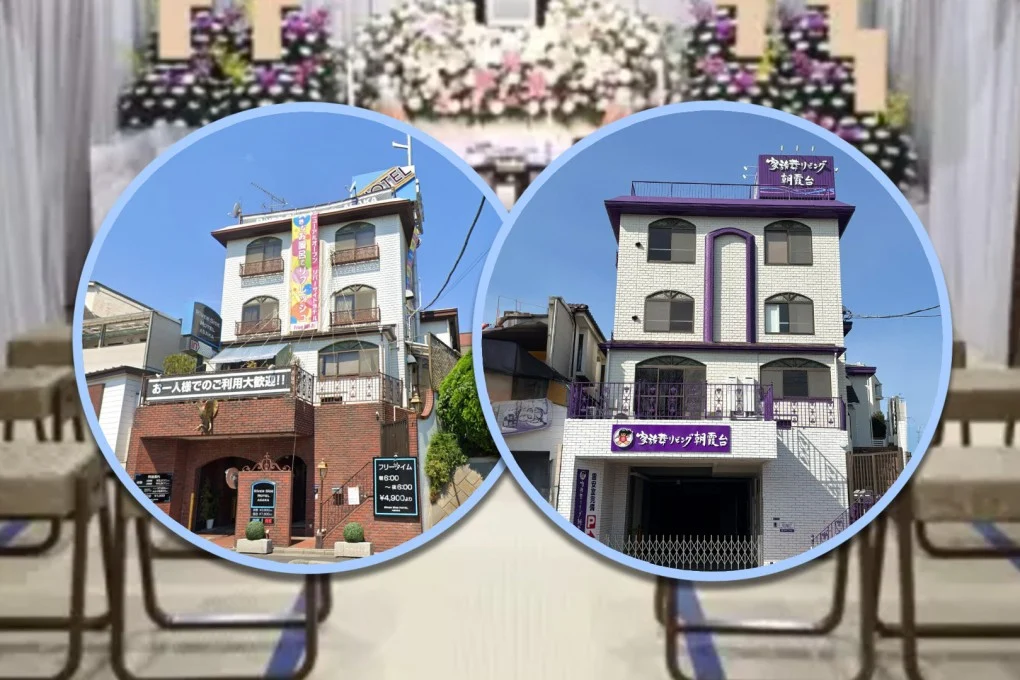
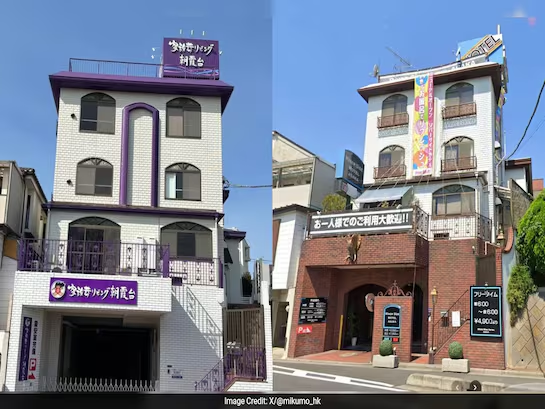
The Love Motel Converts to Funeral Home in Saitama Prefecture has ignited discussions across Japan about the nation’s declining birthrate and aging population.
Love motels, which once symbolized Japan’s economic and social vibrancy, are now slowly vanishing, making way for businesses catering to an increasingly elderly society. This conversion, while practical, has become a symbolic representation of Japan’s demographic crisis, prompting reflection on how society has evolved over the decades.
The Rise and Decline of Love Motels in Japan
Love motels emerged in Japan during the late 1960s, offering couples discreet places to spend intimate moments away from home. Their popularity skyrocketed during Japan’s economic boom in the 1980s, a period often referred to as the ‘bubble era.’
These establishments became an integral part of Japan’s social fabric, serving as a solution for young couples who lacked privacy at home due to small living spaces and multigenerational households.
During their peak, love motels came in various themes and styles, ranging from luxurious five-star-like accommodations to more budget-friendly options. Some featured extravagant interiors inspired by anime, space travel, or European castles, offering guests a unique experience beyond just privacy.
This boom coincided with Japan’s second baby boom, as annual births exceeded two million between 1971 and 1974. The abundance of such motels and the high birthrate reflected a society that embraced romance and family-building.
Read : Transgender Man Brutally Tortured and Murdered at Patty’s Lodge Motel in Canandaigua
However, as Japan’s economy stagnated in the 1990s and societal norms shifted, the popularity of love motels began to wane. Factors such as urbanization, an increase in single-person households, changing attitudes toward relationships, and declining marriage rates contributed to the decreasing demand. By 2020, the number of registered love motels had fallen from 5,670 in 2016 to 5,183, signaling a steady decline.
Japan’s Demographic Shift and Its Consequences
Japan’s population dynamics have changed dramatically over the past few decades. The country is facing an unprecedented demographic challenge, with birthrates plummeting while the elderly population continues to grow.
In 2024, Japan recorded a historic low of 720,988 births, marking a 5% decrease from the previous year. This was the ninth consecutive year of decline, highlighting the deepening crisis.
At the same time, the proportion of elderly people in Japan has reached record levels. As of September 2023, 36.25 million people, or 29.3% of Japan’s population, were aged 65 or older.
This percentage is projected to rise to 34.8% by 2040, making Japan one of the oldest societies in the world. This demographic shift has led to changes in societal needs, with businesses adapting to cater to an aging population.
The declining birthrate is attributed to several factors, including economic instability, long working hours, high childcare costs, and evolving social values.
Read : Geisha: Keepers of Tradition and Elegance
Many young Japanese are prioritizing career advancement and personal fulfillment over marriage and family life. Additionally, the high cost of living and lack of adequate support for working parents discourage many from having children.
With fewer young people and an increasing number of elderly citizens, the demand for funeral services has surged, making the funeral industry one of the few growing sectors in Japan.
The conversion of a love motel into a funeral home in Saitama Prefecture is a direct response to this changing demand. While it may seem unusual, it reflects a broader societal shift where businesses must adapt to the realities of Japan’s demographic transformation.
Public Reaction and Symbolic Implications
The news of the love motel’s conversion into a funeral home has sparked mixed reactions on social media. Some see it as a poignant reflection of Japan’s changing society—where places once associated with the beginning of life now cater to its end.
One online commentator noted, “This is truly ‘from cradle to grave,’” highlighting the stark contrast in the building’s purpose before and after the conversion.
Others found the transformation unsettling, with some expressing reluctance to hold funerals in a place once associated with intimacy and romance. “I do not want to have my funeral held in a former love motel,” one person commented, reflecting the discomfort some feel about the repurposing of such establishments.
The debate surrounding this conversion goes beyond aesthetics or personal preferences. It underscores deeper concerns about Japan’s future. With birthrates at an all-time low and an ever-growing elderly population, the country must find ways to address its demographic challenges.
Policymakers have introduced measures to encourage higher birthrates, such as financial incentives for families, improved childcare services, and workplace reforms to support working parents. However, these efforts have so far failed to reverse the trend significantly.
The closure of love motels and their repurposing into funeral homes can be seen as a metaphor for Japan’s demographic trajectory. It signifies a shift from a society once focused on youth, romance, and family-building to one that must now prioritize elderly care and end-of-life services.
While Japan’s declining birthrate poses significant economic and social challenges, it also presents opportunities for innovation. Businesses must adapt to cater to the needs of an aging society, whether through improved healthcare services, senior-friendly housing, or expanded funeral and memorial services.
At the same time, efforts to revitalize the birthrate must continue, with policies that make it easier for young people to balance work and family life. The transformation of a love motel into a funeral home in Saitama Prefecture serves as a stark reminder of Japan’s shifting demographics.
It is a symbol of both loss and adaptation—a reflection of the past and a glimpse into the future. Whether this trend continues will depend on how Japan navigates its demographic challenges in the coming years.
As society evolves, so too must the spaces it inhabits, repurposing the old to serve the needs of the new. The story of this single building in Saitama may well be a small chapter in a much larger narrative of change that Japan is undergoing.