
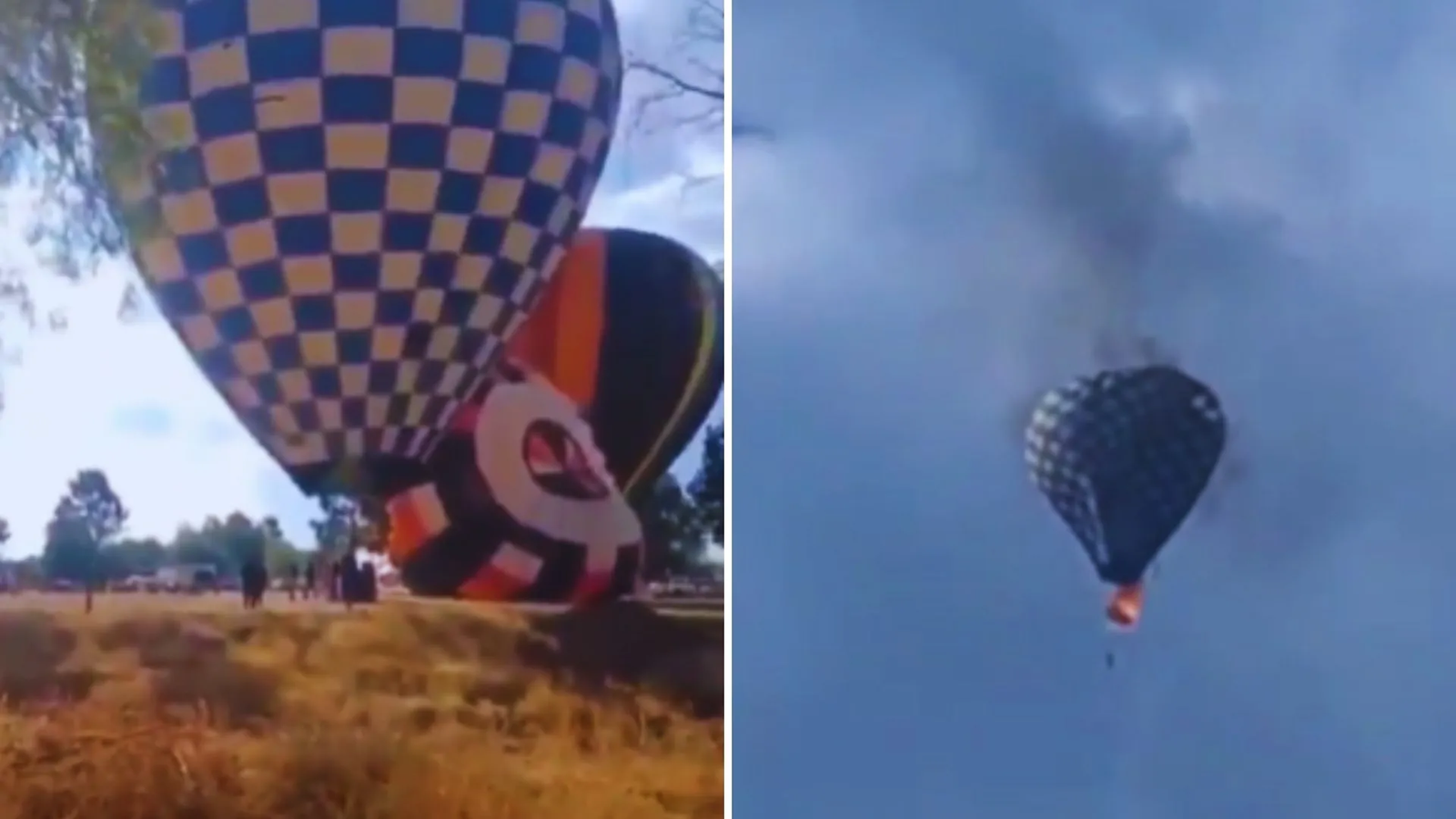
On May 11, 2025, a festive morning at the First Balloon Festival in Zacatecas, Mexico, turned tragic when a hot air balloon caught fire, leading to the death of 40-year-old Luicio N. The incident, part of the Enrique Estrada 2025 Fair, unfolded in front of horrified spectators and was captured on camera, revealing a story of heroism and heartbreak.
Luicio, identified by local outlet Riviera Maya News, sacrificed his life to save two passengers, becoming entangled in the balloon’s ropes as it ascended in flames.
A Hero’s Final Act
The First Balloon Festival in Zacatecas was meant to be a vibrant celebration, showcasing the beauty of hot air balloons soaring over the scenic landscape of Enrique Estrada, approximately 19 miles from Zacatecas city. The event, held as part of the 2025 Enrique Estrada Fair, drew crowds eager to witness the colorful spectacle.
However, around 8 a.m. local time, disaster struck when the basket of a hot air balloon, still tethered to the ground, erupted in flames. Inside were Luicio N and two other passengers, facing a life-threatening crisis.
According to reports from Riviera Maya News, Luicio acted with extraordinary courage. As flames engulfed the basket, he prioritized the safety of his fellow passengers, pulling them out of the burning structure to safety.
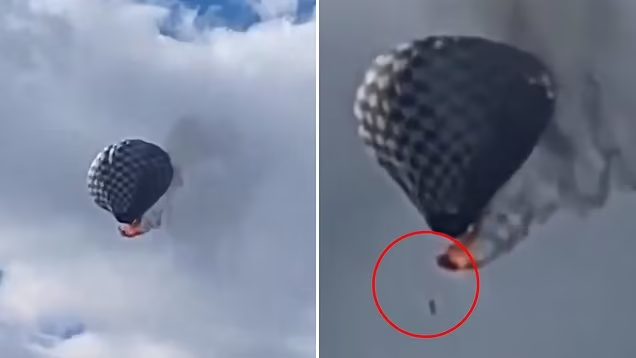
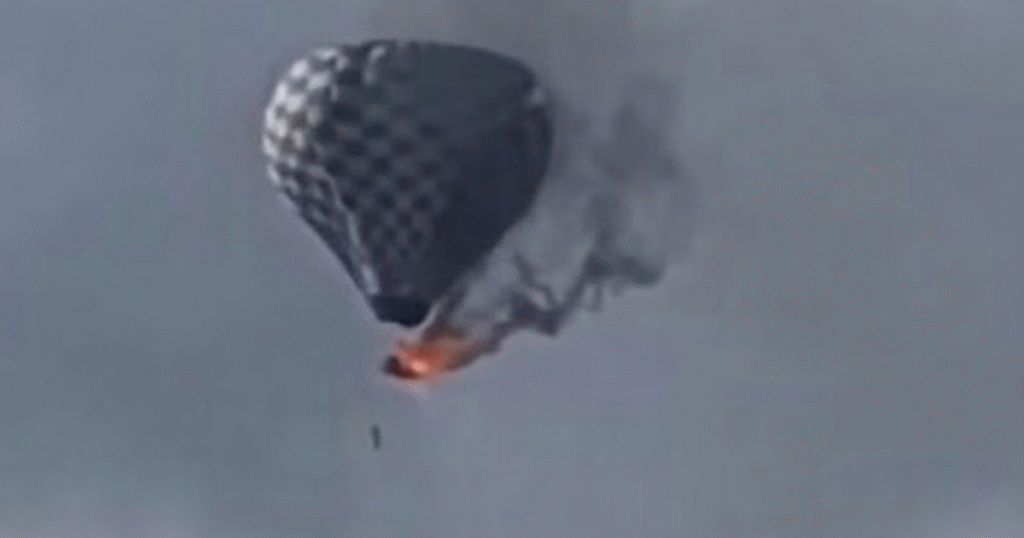
His quick thinking ensured their survival, but in the chaos, the balloon broke free from its tether and began to ascend. Tragically, Luicio became entangled in the balloon’s ropes, unable to free himself.
Video footage circulating online captured the harrowing scene: Luicio dangling from a rope beneath the burning basket, smoke billowing into the sky, as the balloon rose higher. Despite his desperate struggle, he could not hold on, plummeting to his death in a secluded field.
Read : Hydrogen Balloon Explodes on Woman’s Face While Posing with Birthday Cake in Vietnam: Watch
The two passengers Luicio saved were treated for first-degree burns at a nearby hospital, their injuries non-life-threatening. Luicio’s body was later recovered by police, marking the end of a heroic yet devastating sequence of events. His actions have since been hailed as a testament to selflessness, with social media posts reflecting an outpouring of grief and admiration.
NEW: Man falls from the basket of a hot air balloon after it caught on fire in Zacatecas, Mexico.
— Collin Rugg (@CollinRugg) May 13, 2025
The man was seen hanging onto a rope as the balloon continued to go higher in the sky.
The incident unfolded when the basket caught fire on the ground. In a final act of… pic.twitter.com/BHAY9Bn7xJ
One user wrote, “This man is a hero. That being said, I don’t go in hot air balloons for a reason,” capturing both respect for Luicio’s bravery and the inherent risks of the activity. Another commented, “Heartbreaking. His final act was one of courage and sacrifice. May he rest in peace,” emphasizing the profound impact of his sacrifice.
Luicio’s story resonates as a powerful reminder of the human capacity for bravery in the face of danger. His decision to prioritize others’ safety, even at the cost of his own life, has left an indelible mark on those who witnessed or learned of the incident. The emotional response from the public underscores the universal admiration for such acts of heroism, even as they prompt reflection on the dangers of hot air ballooning.
Official Response and Investigation
In the wake of the tragedy, Rodrigo Reyes Mugüerza, the Secretary General of Zacatecas, issued a statement confirming the incident and expressing regret. His Facebook post detailed the circumstances, noting that the accident occurred during the First Balloon Festival and resulted in the loss of one life.
Mugüerza called it an “unfortunate incident” and outlined immediate actions taken by authorities. “Immediately, authorities rushed to the scene to provide care and support to the affected people,” he stated, emphasizing the rapid response to assist the injured passengers and recover Luicio’s body.
Mugüerza also announced that the Zacatecas State Prosecutor’s Office had launched a criminal investigation to determine the cause of the fire and identify any responsible parties. “We have requested the State Prosecutor’s Office to carry out the relevant investigations to clarify the facts and disclose responsibilities,” he wrote.
This investigation aims to uncover whether mechanical failures, human error, or inadequate safety protocols contributed to the disaster. Reports indicate that two individuals involved in organizing the event initially fled the scene but have since been identified by authorities, adding a layer of complexity to the inquiry.
A key focus of Mugüerza’s statement was the need for enhanced safety measures at public events. He urged municipal authorities to “strengthen their verification mechanisms to avoid such risks during the development of their activities and festivities.”
This call to action reflects a broader recognition of the need to prevent similar tragedies, particularly at events involving inherently risky activities like hot air ballooning. The incident has sparked discussions about the adequacy of safety checks, training for operators, and emergency preparedness at such festivals.
The investigation’s findings will likely influence future regulations for hot air balloon events in Mexico and beyond. For now, the Zacatecas government’s commitment to transparency and accountability offers some reassurance to a grieving community. However, the loss of Luicio N has cast a shadow over the festival, prompting questions about how such a tragedy could have been prevented and what steps must be taken to ensure safer celebrations in the future.
The Rarity and Risks of Hot Air Balloon Accidents
Hot air balloon accidents, while rare, carry significant risks due to the nature of the activity. According to available data, the mortality rate for hot air balloon flights is less than 0.01%, making them statistically safer than many other forms of travel.
However, the potential for severe outcomes is heightened by factors such as fire, collisions with objects like power lines or trees, or uncontrolled ascents, as seen in Luicio’s case. The Zacatecas incident highlights the unique dangers of fire in a hot air balloon, where the basket’s proximity to propane burners can lead to rapid escalation if something goes wrong.
The causes of hot air balloon accidents vary but often involve equipment failure, operator error, or environmental factors like strong winds. In the Zacatecas case, the fire’s origin remains under investigation, but early reports suggest it began while the balloon was still on the ground, possibly due to a malfunction in the burner system or improper handling of fuel.
The fact that the balloon broke free from its tether indicates a failure in securing the craft, which could point to lapses in pre-flight checks or operator training. Comparisons can be drawn to other recent incidents, such as a January 2025 accident in Teotihuacán, Mexico, where a balloon was carried off course by wind, resulting in a forced landing.
While no fatalities occurred in that case, it underscores the unpredictable nature of ballooning. Globally, fatal accidents are uncommon but not unheard of. For instance, a 2013 incident in Egypt saw 19 tourists killed when a balloon caught fire and crashed, prompting stricter regulations in some regions.
The rarity of such accidents can sometimes lead to complacency, as hot air ballooning is often marketed as a serene and safe experience. However, the Zacatecas tragedy serves as a stark reminder that even well-organized events can face unforeseen dangers.
Public sentiment on social media reflects this duality, with users praising Luicio’s heroism while expressing wariness about ballooning. One comment noted, “What a tragic and heroic story. Luicio’s final act of selflessness… speaks volumes about the strength of the human spirit,” while another admitted, “I don’t go in hot air balloons for a reason.”
Moving forward, the incident may prompt a reevaluation of safety standards for hot air balloon festivals. Recommendations could include mandatory harnesses or seatbelts, as suggested by some commentators, as well as stricter oversight of equipment maintenance and operator qualifications.
The emotional and statistical weight of Luicio’s death underscores the urgency of these measures, ensuring that future festivals prioritize safety without diminishing the joy of such events. The tragic death of Luicio N at the First Balloon Festival in Zacatecas is a story of heroism, loss, and lessons. His selfless act saved two lives but cost him his own, leaving a legacy of courage that has touched hearts worldwide.
The ongoing investigation and calls for improved safety measures reflect a commitment to preventing future tragedies, while the rarity of hot air balloon accidents highlights the need for vigilance in an activity that blends beauty with inherent risks. As the community mourns Luicio, his sacrifice serves as a powerful reminder of the strength of the human spirit and the importance of safety in celebrating life’s wonders.