
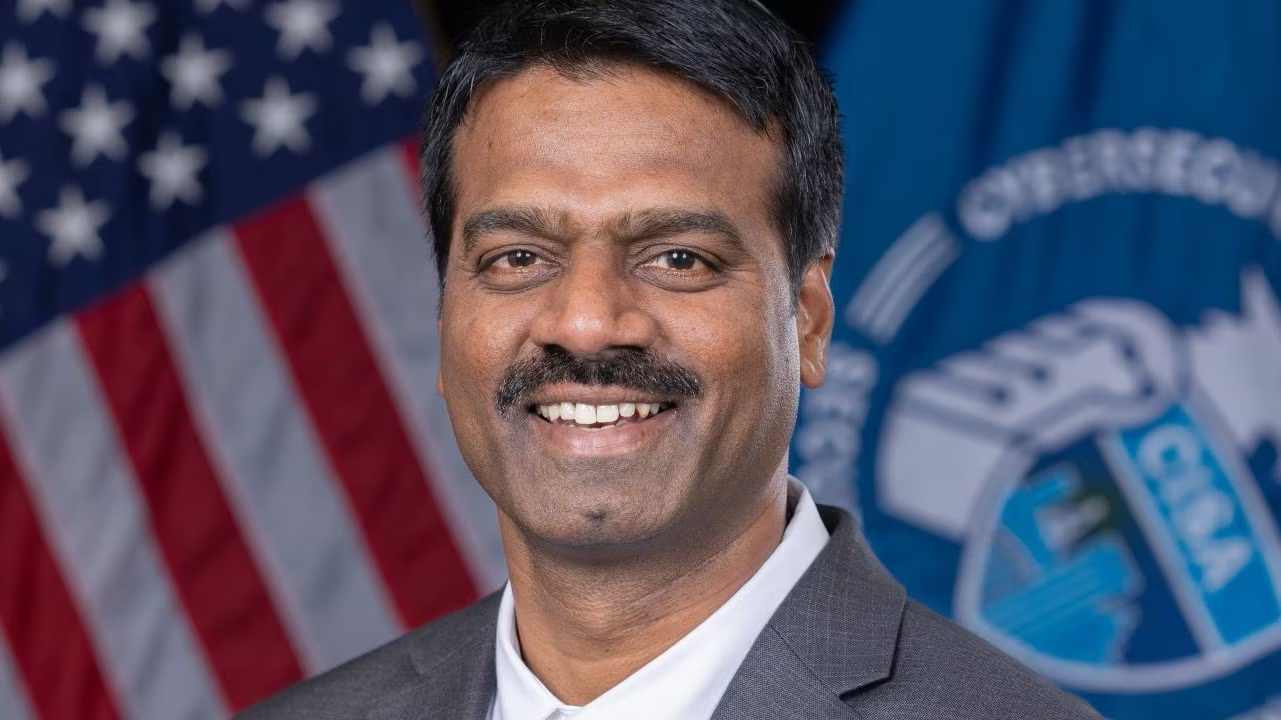
Dr. Madhu Gottumukkala, the acting director of the Cybersecurity and Infrastructure Security Agency (CISA), has emerged as a focal point of controversy following reports that he uploaded sensitive internal government documents into a public version of ChatGPT. The incident, which triggered automated security alerts and prompted a Department of Homeland Security (DHS) review, has intensified scrutiny of his leadership at a moment when CISA sits at the center of U.S. efforts to defend federal networks against escalating cyber threats.
While none of the materials were classified, officials confirmed that the documents were marked “for official use only,” raising concerns about judgment, protocol, and the handling of sensitive information within the nation’s top civilian cybersecurity agency. The episode has unfolded against a backdrop of internal disputes and leadership turbulence at CISA since Gottumukkala assumed the role in May.
As the senior-most political official at the agency, his decisions carry significant weight, not only for internal governance but also for public confidence in the government’s cybersecurity posture. Understanding who Gottumukkala is, how his career developed, and why this incident matters requires a closer look at his professional background, the details of the ChatGPT uploads, and the broader implications for CISA and DHS.
The ChatGPT Incident and Its Security Implications
According to reporting, the uploads occurred during the summer and were detected by cybersecurity sensors designed to prevent unauthorized disclosure of government material from federal networks. These safeguards flagged the activity because the documents, though unclassified, were internal contracting materials not intended for public release. The alerts prompted DHS officials to initiate an internal review to assess whether the disclosures posed any risk to government security or operations.
A key detail in the case is that Gottumukkala was reportedly granted a temporary exception to use ChatGPT at a time when the tool was blocked for other DHS employees. A CISA spokesperson described his use of the AI system as “short-term and limited,” emphasizing that controls were in place during the authorized period. DHS echoed this position, stating that the access was permitted under specific conditions. Even so, the decision to upload sensitive material into a public AI platform has raised questions among cybersecurity professionals and policymakers alike.
Public versions of generative AI tools typically involve data handling practices that differ from internal government systems. Information entered into such platforms may be shared with the operator and retained to improve responses to other users, a reality that has fueled concerns about inadvertent data exposure. DHS policy requires investigations into incidents involving potential mishandling of sensitive information, with outcomes that can range from retraining to more serious administrative measures. As of now, the results of the internal review into Gottumukkala’s actions have not been made public.
Read : ‘Gathering of Kyles’ Fails to Set Guinness World Record in Texas
The incident has also sharpened debate over how federal agencies should manage emerging technologies. CISA, tasked with protecting critical infrastructure and federal networks, plays a central role in setting standards and best practices for cybersecurity. Actions by its leadership therefore carry symbolic as well as practical consequences. Critics argue that even limited or authorized use of public AI tools for sensitive work can undermine the agency’s credibility, while supporters caution against drawing conclusions before the review process is complete.
Leadership Turbulence and Internal Controversies at CISA
The ChatGPT episode did not occur in isolation. Since Gottumukkala took over as acting director, his tenure has been marked by a series of internal disputes that have drawn attention within DHS and beyond. Among the most notable was a failed counterintelligence polygraph examination, which DHS later described as “unsanctioned.” The circumstances surrounding that test and its fallout added to perceptions of instability within the agency’s leadership ranks.
Read : Who Is Tara Arnold, Wife of Arnold & Itkin Co-founder Kurt Arnold Who Killed in Bangor Plane Crash?
Additionally, several career staff members were suspended from accessing classified information during this period, a move that reportedly caused unease among long-serving officials. Efforts to remove senior agency personnel were also undertaken, though some of these actions were later blocked. Taken together, these developments have contributed to an atmosphere of tension and uncertainty at CISA, an agency that relies heavily on institutional expertise and continuity to fulfill its mission.
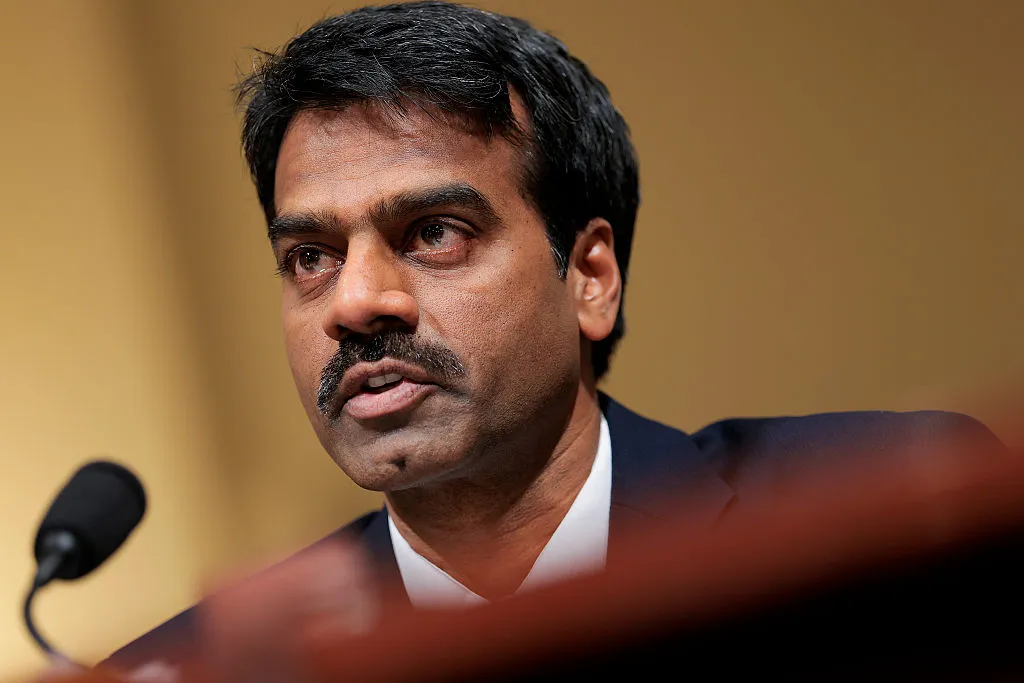
Supporters of Gottumukkala point out that leadership transitions in politically sensitive agencies often come with friction, particularly when new priorities or management styles are introduced. They argue that disputes and pushback are not uncommon when reforms are attempted. Critics, however, contend that the accumulation of controversies suggests deeper issues with leadership judgment and internal governance.
The scrutiny has been heightened by the broader political context. As a senior appointee in the Trump administration, Gottumukkala’s actions are viewed through a partisan lens by some observers, further amplifying debate over his suitability for the role. For DHS, the challenge lies in balancing transparency and accountability with the need to maintain operational focus amid ongoing cyber threats from foreign adversaries.
Madhu Gottumukkala’s Background and Career in Technology
Before his rise to national prominence, Madhu Gottumukkala built a long career in information technology across both the public and private sectors. He brings more than 24 years of experience spanning wireless and telecommunications, unified communications, and health technology. This breadth of technical exposure has been cited as a key asset in his leadership of CISA, an agency whose remit encompasses both cyber and physical infrastructure.
Prior to joining CISA, Gottumukkala served as Commissioner and Chief Information Officer for South Dakota’s Bureau of Information and Technology. In that role, he oversaw statewide technology and cybersecurity initiatives, with a focus on modernizing systems and replacing outdated legacy infrastructure. He also previously held the position of South Dakota’s Chief Technology Officer, where he worked on adopting emerging technologies and improving the state’s digital capabilities.
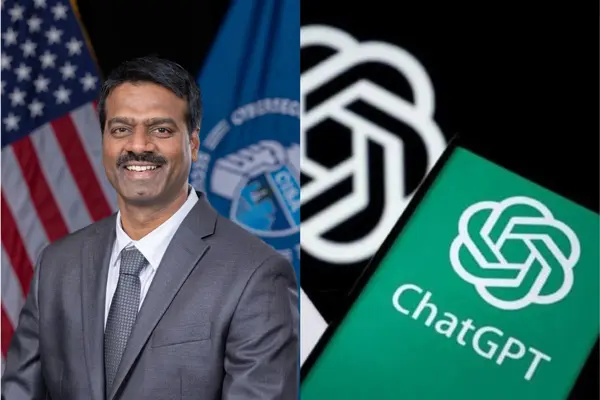
His academic credentials are extensive. Gottumukkala holds a Ph.D. in Information Systems from Dakota State University, an MBA in Engineering and Technology Management from the University of Dallas, and a Master of Science in Computer Science from the University of Texas at Arlington. He earned his bachelor’s degree in Electronics and Communication Engineering from Andhra University. In addition to his government roles, he serves on the Advisory Committee of the College of Business and Information Systems at Dakota State University, reflecting ongoing engagement with academic and professional communities.
At CISA, Gottumukkala serves as both Acting Director and Deputy Director, helping lead efforts to understand, manage, and reduce risks to the cyber and physical infrastructure that underpin daily life in the United States. The agency’s responsibilities include protecting federal networks, coordinating with private-sector partners, and responding to threats posed by foreign adversaries. Leadership stability and trust are therefore critical components of its effectiveness.
The controversy surrounding the ChatGPT uploads has placed Gottumukkala’s background and experience under renewed examination. For some, his long tenure in technology underscores the seriousness of the incident, given expectations that a seasoned IT leader would be acutely aware of data-handling risks. For others, his experience highlights the complexity of navigating rapidly evolving tools like generative AI within rigid government frameworks.
As DHS continues its review and as CISA confronts ongoing internal challenges, Gottumukkala remains at the helm as the agency’s senior political official. The outcome of the investigation and any subsequent actions will likely shape not only his future but also broader policy discussions about the use of artificial intelligence in government, the management of sensitive information, and the standards to which cybersecurity leaders are held.