
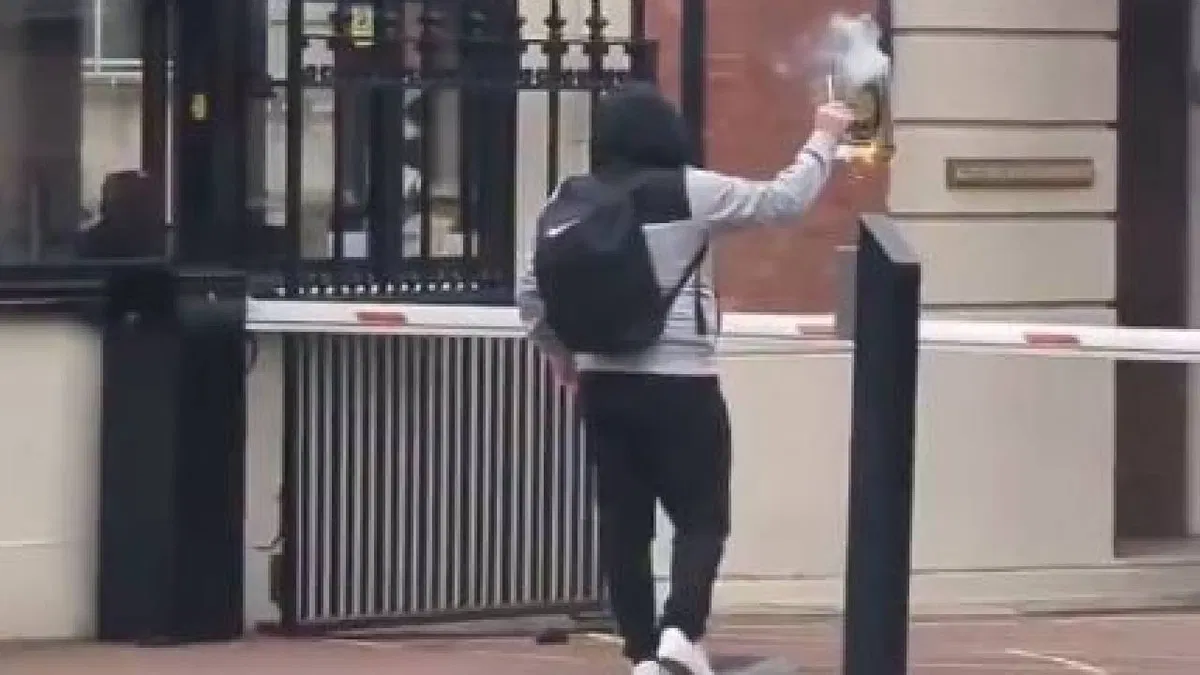
A shocking incident unfolded in London, where a Man Burning Quran Outside Turkish Embassy was violently attacked by another individual. The event, which occurred in the afternoon near Knightsbridge, has stirred intense debate and reactions on social media.
Videos capturing the incident depict a chaotic scene, with the man setting fire to a book, believed to be the Quran, and subsequently being assaulted by an onlooker. Authorities have since arrested the attacker, while the injured individual has been taken to the hospital for treatment.
The Incident: Quran Burning Leads to Violence
On Thursday, February 13, a man was seen standing outside the Turkish embassy in London, holding a book that he then set on fire. The book is believed to be the Quran, the holy scripture of Islam.
The man raised the burning book for bystanders to see, sparking outrage among those present. Some witnesses captured the act on video, which quickly went viral on social media. The footage reveals the man waving the flaming book outside the embassy, appearing to make a statement or protest.
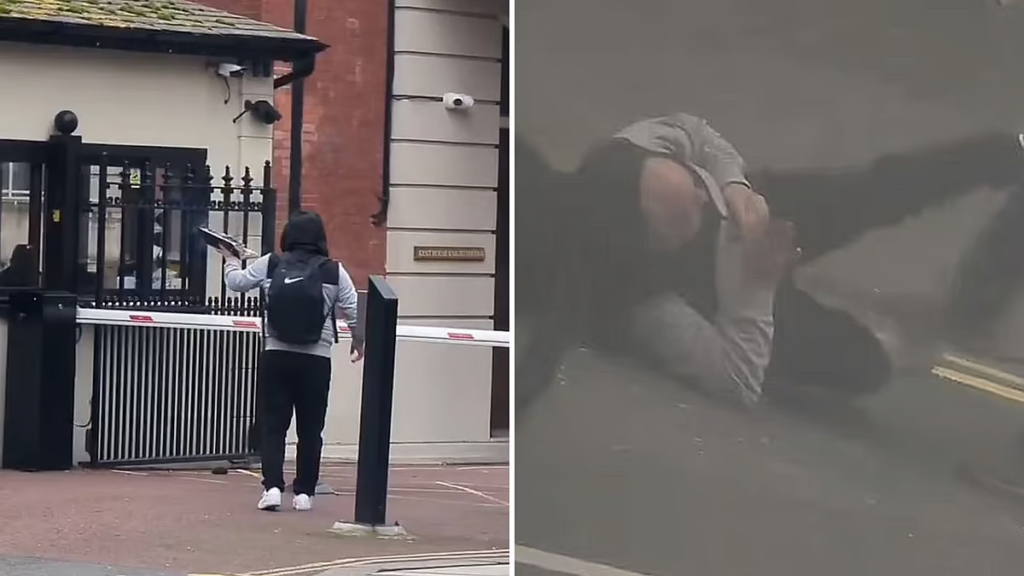
Shortly after the act, another individual confronted him aggressively. In another video, the same man is seen lying on the ground while being kicked and spat on by the attacker. The situation escalated further when the assailant produced a weapon and attacked the man.
Read : Salwan Momika, the Man Who Burnt the Quran in 2023, Shot Dead in Sweden
Witnesses reported that the attacker used a knife, but police later confirmed that the victim did not sustain any stab wounds. Instead, he suffered injuries to his fingers and was promptly transported to the hospital for medical attention.
Police Response and Investigation
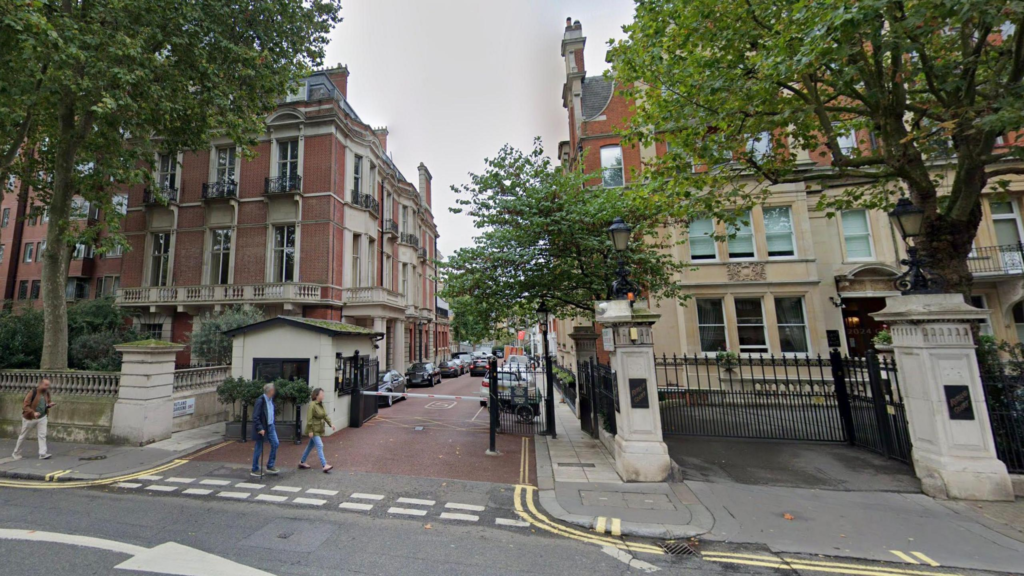
The Metropolitan Police quickly responded to the incident after receiving reports of an assault outside the Turkish consulate. Law enforcement arrived at Rutland Gardens at approximately 2:11 PM, just minutes after the attack took place.
A spokesperson for the police force confirmed that a man had been arrested on suspicion of possessing an offensive weapon and causing grievous bodily harm.
Authorities are now conducting a thorough investigation into the incident, examining both the attack and the motivation behind the initial Quran-burning act.
Man burns Quran outside Turkish embassy in London.
— Connor Tomlinson (@Con_Tomlinson) February 14, 2025
Muslim emerges with a knife and stabs him.
A passing Deliveroo cyclist kicks him.
Why are these people in my country?
This violence is entirely predictable.
We should not import it. We should expel it.pic.twitter.com/JGoX8KS5Sa
The police have urged witnesses to come forward with any additional information that may aid in the inquiry. While the assailant remains in custody, questions are being raised about the broader implications of such incidents in a society that grapples with the balance between free speech and religious sensitivities.
Meanwhile, reports suggest that the man who attempted to burn the Quran is of Turkish origin. His social media activity indicates that he had planned this demonstration in advance, reportedly in memory of Salwan Momika, an Iraqi-born man who had previously burned the Quran in Sweden.
Momika was killed in Stockholm earlier this year while live streaming a similar act on TikTok. The London demonstrator’s online posts indicate that he anticipated a strong reaction to his protest, further fueling discussions on the risks associated with provocative demonstrations of this nature.
Context and Global Reactions
The incident in London is the latest in a series of Quran burnings that have ignited controversy worldwide. The act of desecrating religious texts, particularly the Quran, has been a topic of international debate, with different countries taking varied stances on the issue.
In Sweden, for example, Quran burnings in 2023 led to tensions between the government and Muslim-majority nations, straining diplomatic relations.
Swedish-Danish politician Rasmus Paludan, known for his anti-Islamic stance, had previously burned the Quran in response to the killing of Momika. These acts have sparked protests and counter-protests, with many arguing about the limits of free speech versus the need to respect religious beliefs.
The Swedish government was forced to address the issue, as the balance between protecting free expression and preventing hate speech became a significant concern for policymakers.
The London incident is expected to have similar repercussions, drawing responses from political leaders, religious communities, and free speech advocates.
While some argue that such acts should be protected under freedom of expression, others believe that burning religious texts incites hatred and should be condemned. The attack on the demonstrator further complicates the situation, as it raises questions about the justification of violence in response to offensive acts.
In Turkey, the government has strongly opposed Quran burnings in various European countries, labeling them as hate crimes. The Turkish consulate in London has yet to release an official statement regarding the incident, but analysts predict that Ankara may pressure the UK government to take a firmer stance against such acts in the future.
Meanwhile, Islamic organizations across the world have condemned the Quran burning while also calling for peaceful reactions rather than violent responses.
The event also highlights ongoing debates in the UK about hate speech laws, religious tolerance, and public safety. London, a multicultural city known for its diversity, has experienced similar incidents in the past, prompting discussions on how authorities should handle such cases.
With tensions running high, police presence around diplomatic buildings and religious institutions may increase to prevent further confrontations.
As the investigation continues, the incident outside the Turkish embassy in London serves as a stark reminder of the deep-seated divisions that still exist in society.
The question remains: where should the line be drawn between freedom of expression and religious respect? The outcome of this case could shape future policies and set precedents for how similar events are handled in the UK and beyond.