
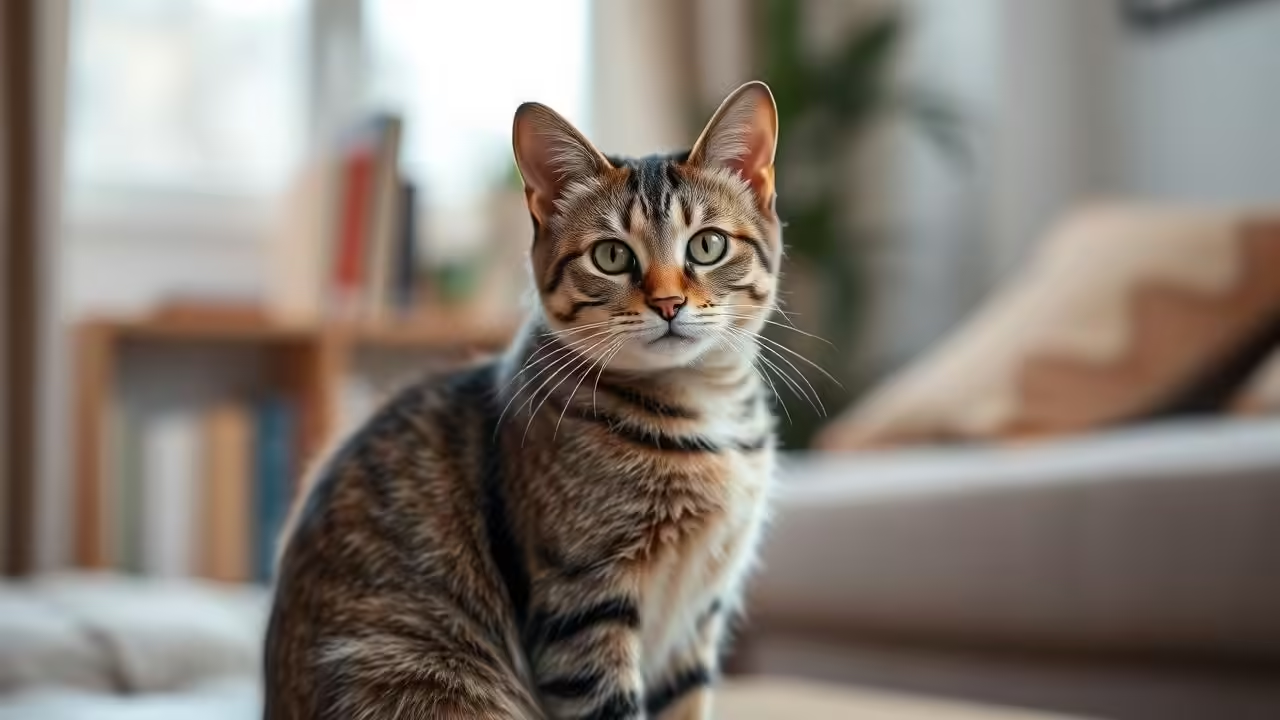
In the bustling province of Guangdong in southern China, a heartwarming and poignant story has captured the attention of many across the country. An 82-year-old man, known only by his surname Long, has made a unique and emotionally resonant decision about his future and the fate of his beloved cat.
With no children and having lived alone since the passing of his wife ten years ago, Mr Long found solace in the quiet companionship of a few stray cats he rescued during a rainy day. Of those original feline friends, only one remains by his side today—a cat named Xianba.
With his advancing age and increasing concern for Xianba’s future, Mr Long has declared that he will leave his entire inheritance to anyone who is willing to take her in and ensure her well-being after he passes. In a gesture that defies conventional inheritance norms, this man offers to give entire inheritance to whoever cares for his cat.
Mr Long’s story is not just a testament to the loyalty and love between humans and animals—it is also a reflection of the shifting values in Chinese society when it comes to pets and family. Speaking in an interview with Guangdong Radio and Television, Mr Long explained that his only condition is that the new guardian “take good care” of Xianba, offering his apartment and savings in return. This deeply emotional narrative of devotion and trust has prompted wider conversations about aging, loneliness, and the increasing humanization of pets in urban China.
Man Offers to Give Entire Inheritance to Whoever Cares for His Cat
For Mr Long, life took a significant turn a decade ago when he lost his wife. With no children to share his golden years with, the silence of his home became too overwhelming to bear. One stormy day, he encountered a group of drenched, helpless stray cats. Moved by their plight, he took them in, fed them, and gave them shelter. In that small but meaningful act, Mr Long found renewed purpose and comfort.
While three of the four cats he rescued have since passed away, Xianba has remained by his side, forming an inseparable bond with the elderly man. Mr Long’s relationship with Xianba goes beyond mere companionship. She is his family, his confidante, and his source of joy and emotional comfort.
Read : Four Dogs Die After Intoxicated Owner Falls Asleep Leaving Them In Car
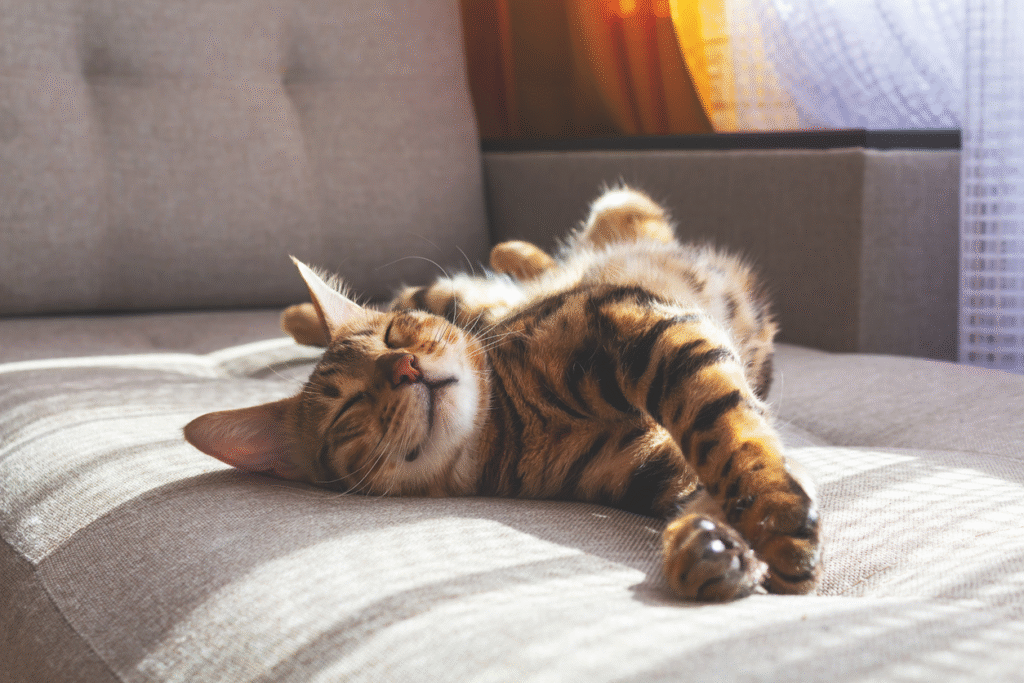
In interviews, he has described her as being more affectionate and understanding than many humans. Her presence gives him a sense of belonging that has otherwise been missing in his life. Given the depth of their bond, it is no surprise that Mr Long’s biggest fear is what will become of Xianba after he is gone. It is a concern that keeps him awake at night.
Read : Japanese Man Who Became a Dog Now Wants to Become a Panda or Cat
Driven by this fear, Mr Long has taken the extraordinary step of drafting a plan to leave his entire estate to someone who will promise to care for Xianba unconditionally. His assets, though modest, include an apartment and lifetime savings. He doesn’t seek a wealthy heir or someone with prestige. All he desires is a kind and compassionate individual who will treat Xianba with love, care, and the dignity she deserves for the rest of her life.
A Growing Trend in China’s Pet-Centric Culture
While Mr Long’s story may seem extraordinary, it is not an isolated incident in modern China. The country has witnessed a remarkable transformation in attitudes toward pets over the past decade. No longer seen as mere animals or house guards, pets in urban China have become cherished members of the family.
The rise of the pet economy has been nothing short of phenomenal. In 2024 alone, China’s pet market reached an estimated $42 billion, reflecting a 7.5 percent increase from the previous year. This boom is largely driven by younger generations—especially those born in the 1990s and 2000s—who are redefining the role of pets in their lives.

These young urbanites often delay marriage and parenthood due to economic and social pressures, and in turn, they are choosing to raise pets. Dogs and cats are pampered with gourmet meals, premium grooming, pet spas, and even pet funerals. There are also pet hotels, pet psychologists, and entire social media communities dedicated to pet parenting. In fact, analysts predict that in the coming years, the number of household pets in China’s cities may even surpass the number of children under 10.
Against this backdrop, Mr Long’s decision does not seem so surprising. His actions mirror the societal shift where emotional bonds with animals are becoming increasingly profound and significant. Pets are filling the emotional void left by changing family dynamics and social isolation. They are now recipients of love, care, and in some cases, even inheritance—further evidence of their elevated status in modern Chinese households.
A similar story made headlines last year when an elderly woman in Shanghai rewrote her will to leave her $2.8 million estate to her cats and dogs. Her adult children, she claimed, neglected her during times of illness and barely visited. In contrast, her pets gave her warmth, attention, and a sense of companionship. Her revised will ensured that her estate would be used solely for the care of her animals, reflecting a deep distrust in her human relatives and an overwhelming trust in her animal companions.
Redefining Inheritance and the Meaning of Family
Stories like those of Mr Long and the Shanghai woman are slowly reshaping the way inheritance, caregiving, and familial love are perceived in China. Traditionally, Chinese culture places strong emphasis on filial piety, where children are expected to care for their aging parents. But as more elderly people report loneliness and abandonment, some are turning to their pets as their true family.
For Mr Long, this is not just about financial assets. It is about ensuring that someone values and respects the bond he shares with Xianba. His decision raises important ethical and legal questions. Can someone legally inherit an estate solely for pet care? How can the caregiver be held accountable to fulfill the promise of looking after the pet? While some jurisdictions in China have started recognizing pet care arrangements in wills, the legal system is still catching up with these emotional and moral questions.
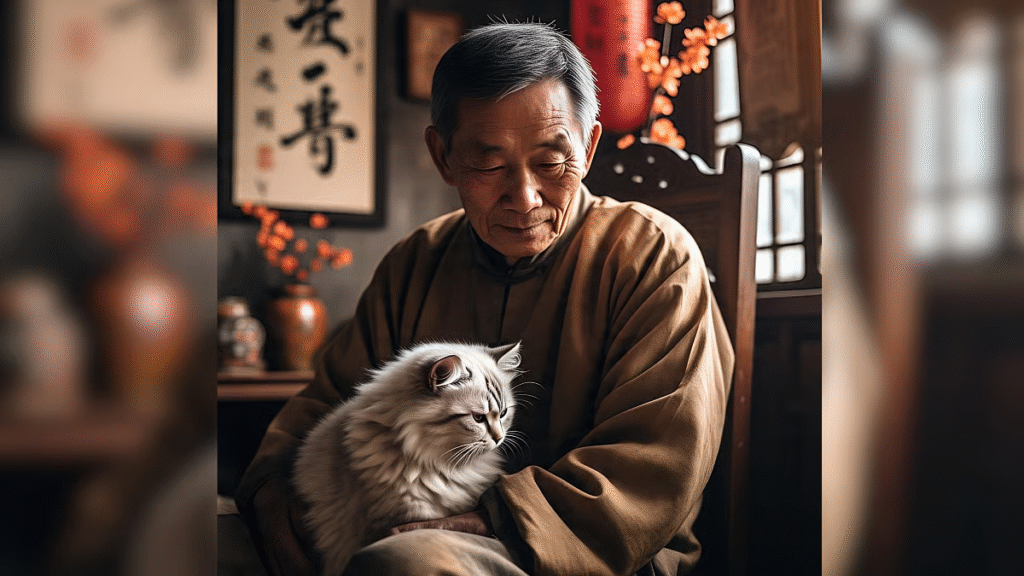
Regardless of the legalities, Mr Long’s gesture has touched a chord with many. His story has gone viral, sparking online discussions, with thousands expressing admiration and offering to adopt Xianba. Some commenters shared their own experiences of finding love and purpose through their pets. Others expressed concern over how to ensure that such an inheritance promise is truly honored and not exploited.
What stands out most in Mr Long’s story is the purity of intent. His life may have been shaped by loss and solitude, but in Xianba, he found unwavering affection. Now, as he contemplates the final chapter of his life, he wants nothing more than to secure her future. In a world that often prioritizes material wealth and social status, Mr Long’s quiet and heartfelt decision reminds us of the enduring power of love and loyalty—even between a man and his cat.
Mr Long’s story is, at its heart, a love letter to the unspoken bonds we form with animals. It is also a commentary on the human need for connection and the lengths we are willing to go to protect those we love—even if they have four legs and a tail. As China continues to evolve socially and economically, these stories may become more common, challenging long-standing norms around inheritance, kinship, and caregiving.
For now, Mr Long remains hopeful that someone kind and trustworthy will come forward to take Xianba into their home and heart. Whoever does will not only inherit his earthly possessions but also carry forward a legacy of compassion, trust, and unconditional love.