
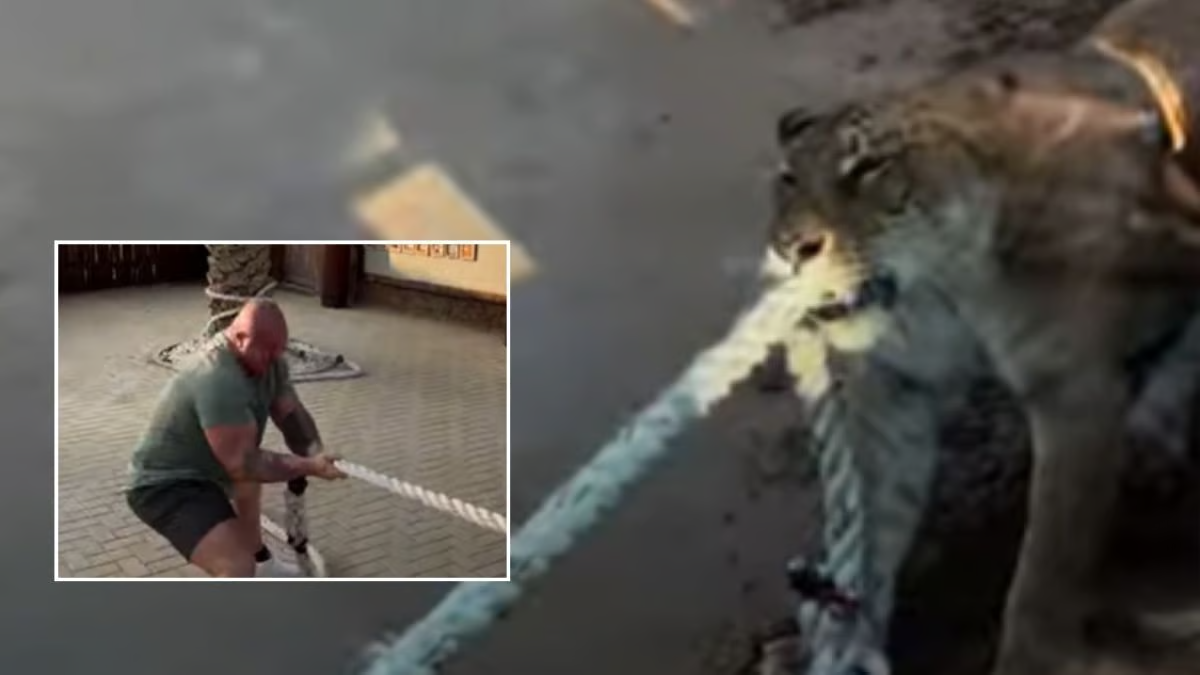
A viral video showcasing a unique and controversial tug-of-war match between a Man vs Lion has sparked widespread debate.
This event, held at Dartmoor Zoo in England, reflects a broader phenomenon where humans pit their strength against wild animals, creating a spectacle for visitors. While some view it as harmless entertainment, others have raised serious concerns about the ethics and well-being of the animals involved.
The Viral Video: Man vs Lion
The widely shared video captures moments of a tug-of-war game between a bodybuilder and a lion at Dartmoor Zoo. The bodybuilder, a muscular man showcasing his strength, gripped one end of the rope tightly, struggling to overpower the lion on the other side. The lion, forced to participate, clutched the rope with its teeth and attempted to pull against its human opponent.
Visitors at the zoo acted as enthusiastic spectators, cheering and filming the match. However, the video left viewers in suspense, cutting off before the conclusion, and raising curiosity about the outcome.
Read : Watch Video of Indian Army Jawans Defeating Chinese Troops in a Game of Tug-Of-War in Sudan
While the bodybuilder appeared determined, the sheer force and power of the lion made the challenge seem insurmountable for the human participant.
Read : Fintech Company Synapse Collapsed and Took Away $90 Million of People’s Life Savings With It
The video, though intended as entertainment, has drawn criticism. Animal rights activists and concerned individuals have questioned the practice, pointing out the potential stress and harm caused to the lion.
The Ethical Debate: Entertainment or Exploitation?
The tug-of-war activity at Dartmoor Zoo is not unique. Zoos around the world, including the San Antonio Zoo in Texas and others, offer similar experiences. Visitors are charged a fee to participate, with the event marketed as an opportunity to test human strength against a wild animal.
— Mr. How 🤔 (@truereformist) December 16, 2024
While some see these events as harmless fun, animal welfare advocates argue otherwise. They contend that such activities are exploitative and detrimental to the animals’ physical and psychological well-being. The forced participation of animals in these games can cause undue stress, exhaustion, and even injury.
In 2019, this very practice at Dartmoor Zoo came under fire when petitions were launched to end it. Critics highlighted the unnatural nature of the activity, emphasizing that it reduces majestic creatures like lions to mere tools of human amusement. Despite the backlash, the practice continues in some zoos, raising ongoing debates about the role of zoos in entertainment and conservation.
The Role of Zoos: Conservation or Commercialization?
The controversy surrounding the tug-of-war event underscores a broader discussion about the purpose of zoos. Traditionally, zoos have been seen as centers for conservation, education, and research.
They aim to protect endangered species and promote awareness about wildlife. However, activities like the human-animal tug-of-war blur the line between conservation and commercialization.
Critics argue that such practices prioritize profit over animal welfare and conservation goals. They question whether these activities truly educate the public about wildlife or simply treat animals as objects of amusement.

Advocates for animal rights emphasize that zoos should focus on creating environments that mimic the animals’ natural habitats rather than subjecting them to unnatural and stressful scenarios.
On the other hand, supporters of these events claim they attract visitors and generate revenue, which can be used for conservation efforts. They argue that activities like the tug-of-war, while controversial, bring attention to zoos and their work in protecting endangered species.
The tug-of-war match between a man and a lion at Dartmoor Zoo has reignited debates about the ethics of using animals for human entertainment. While the event showcases the incredible power of wild animals, it also raises questions about the responsibilities of zoos in ensuring the well-being of the creatures in their care.
As the discussion continues, one thing remains clear: the treatment of animals in captivity must align with ethical standards that prioritize their health and dignity. Balancing entertainment, education, and conservation is a delicate task, and zoos must tread carefully to uphold their mission in a way that respects the lives of the animals they house.