

Manohara Odelia Pinot is an Indonesian-American model and actress whose life entered the global spotlight while she was still a teenager, following a highly publicised and deeply controversial association with a member of Malaysia’s Kelantan royal family. What was initially portrayed by regional media in 2008 as a glamorous union between a young Indonesian model and a Malaysian prince later unravelled into one of Southeast Asia’s most disturbing celebrity scandals.
Nearly two decades on, Manohara has again become the focus of international attention after publicly rejecting the narrative that she was ever legally or consensually married, instead describing the episode as one marked by coercion, abuse, and sexual violence during her childhood. Born in Jakarta in 1992, Manohara’s rise in the modelling world came at an unusually young age, placing her squarely in the public eye during her formative years.
Her subsequent experiences, allegations, and long struggle to reclaim control over her story have made her case a reference point in discussions around child exploitation, power imbalances, and how media framing can shape public understanding of abuse. Her recent statements reflect not only a personal reckoning but also a broader challenge to how victims of alleged sexual violence are labelled and represented.
Early Life, Modelling Career, and Rise to Fame
Manohara Odelia Pinot was born on February 28, 1992, in Jakarta, Indonesia. From an early age, she stood out for her striking physical features, which quickly attracted the attention of modelling agencies. By her early teens, she was working consistently in Indonesia’s fashion industry, appearing in print campaigns, runway shows, and editorial features. During the mid-2000s, she became one of the most recognisable young faces in Indonesian modelling, gaining visibility at a time when social media was beginning to amplify celebrity culture across Southeast Asia.
Her rapid ascent culminated in her inclusion among Indonesia’s “100 Charms” by Harper’s Bazaar, a recognition reserved for individuals considered influential for their aesthetic appeal and public presence. This accolade further cemented her status as a rising star and contributed to her growing popularity beyond fashion circles. However, this visibility also meant that her personal life became subject to intense public scrutiny, especially given her young age and limited control over how her story was told.
Following the events surrounding her association with Malaysian royalty, Manohara transitioned into acting, capitalising on the notoriety that followed her return to Indonesia. In 2009, she starred in a self-titled television series, Manohara, which drew heavily on her public image and personal notoriety. She also appeared in several Indonesian films, including Aku Cinta Kamu (2014), The Guys (2017), and EL: The Movie (2018), according to IMDb. While these roles helped her maintain a presence in the entertainment industry, her career trajectory was markedly shaped by the controversy rather than by conventional artistic development.
Read : Curious about Mermaids? Here’s The Mystery of Mermaids
Over time, Manohara gradually stepped back from mainstream entertainment. Reports indicate that she redirected much of her focus toward social and environmental advocacy, particularly animal welfare and conservation. She has been associated with initiatives supporting wildlife rehabilitation and environmental protection, including work with organisations such as the Jakarta Animal Aid Network. This shift reflected a desire to redefine her public identity beyond the scandal that had dominated perceptions of her since adolescence.
The 2008 Marriage Controversy and Dramatic Escape
Manohara’s name became internationally known in August 2008 when reports emerged that she had married Tengku Muhammad Fakhry Petra, a member of Malaysia’s Kelantan royal family. At the time, she was just 16 years old. Early media coverage framed the situation as a fairy-tale romance between a teenage model and a royal figure, a narrative that largely ignored the significant age gap and the legal and ethical questions surrounding the situation. The portrayal was widely circulated across Malaysian and Indonesian media, contributing to public fascination and speculation.
Read : Japan’s Prince Hisahito Becomes First Male in His Family to Reach Adulthood in 40 Years
However, almost immediately, concerns were raised by Manohara’s family, particularly her mother, Daisy Fajarina, who claimed that her daughter had been abducted and coerced into the situation. These claims were initially overshadowed by the dominant romanticised narrative, but they gained credibility following Manohara’s dramatic escape in 2009. Within a year of the purported marriage, she fled from a hotel in Singapore under circumstances that drew the attention of local authorities and international media.
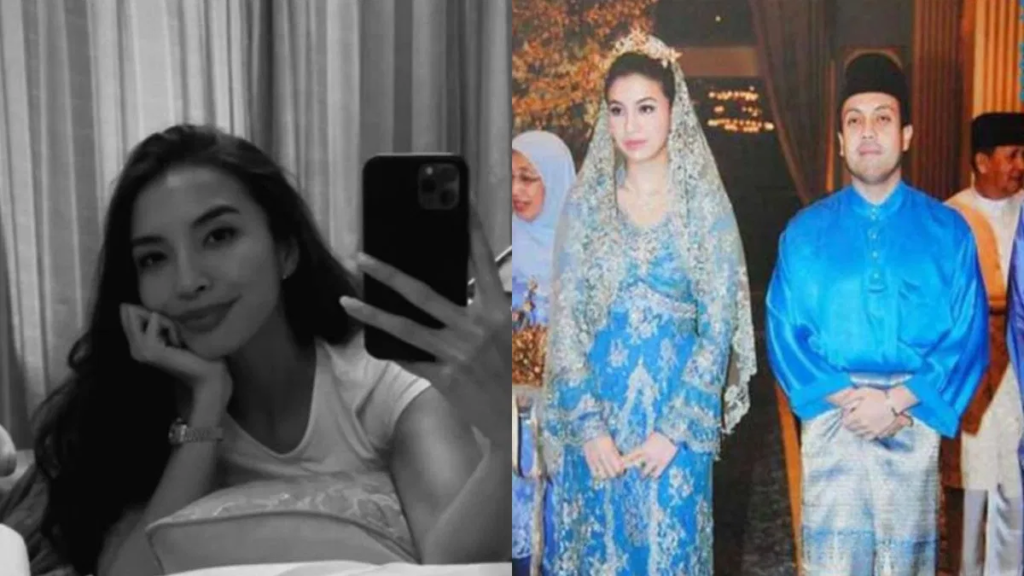
With assistance from her mother and Indonesian officials, Manohara returned to Indonesia, where she spoke publicly about her experiences. Her account sharply contradicted earlier portrayals, describing a life marked by confinement, intimidation, and abuse. The incident ignited intense media coverage across Southeast Asia, transforming what had been presented as a glamorous union into one of the region’s most disturbing celebrity scandals. Questions arose regarding child protection, legal accountability, and the role of state institutions in handling allegations involving royalty.
Following her return, Manohara alleged that she had been held captive and subjected to repeated physical and sexual abuse. She claimed she was treated as a “sex slave,” forcibly injected with drugs that caused severe physical reactions, and physically assaulted, including being cut with razors. According to reports at the time, a medical examination conducted in Indonesia confirmed signs of physical abuse. Her mother publicly stated that no parent could remain silent in the face of such treatment, adding further weight to the allegations.
The Kelantan royal family denied all accusations, describing the matter as private and personal. No criminal convictions emerged from the case, and the lack of legal resolution left many questions unanswered. Nonetheless, the incident had a lasting impact on public discourse in the region, highlighting the vulnerability of minors, the power dynamics inherent in royal and celebrity culture, and the limitations of cross-border legal mechanisms in addressing alleged abuse.
Renewed Allegations, Public Clarification, and Reclaiming the Narrative
In recent years, Manohara has largely lived outside the public eye, reportedly residing in the United States and maintaining a private life. However, she has once again drawn global attention through a series of social media posts in which she directly challenges how her past has been described. In an Instagram statement, she asserted that what has long been referred to as her “marriage” was “not a romantic relationship, not a consensual relationship, and not a legal marriage.”
Read : Moroccan-American Rapper French Montana Officially Engaged to Dubai Princess Sheikha Mahra
She has urged media outlets to stop calling her the prince’s “ex-wife,” arguing that such terminology falsely legitimises what she describes as a coercive situation involving a child. In a subsequent post, she went further, explicitly alleging sexual assault. Drawing attention to the language used to describe survivors of abuse, she wrote that victims of sexual assault are not referred to as former partners of their perpetrators.

She stressed that framing sexual violence as a relationship distorts reality and shifts focus away from harm. Manohara emphasised that she was 15 years old at the time, while the man involved was in his 30s, asserting that there was no dating, no relationship, and no consent. Her statements reflect a broader critique of how society and media often soften or normalise abuse through language, particularly when power imbalances and cultural sensitivities are involved.
By rejecting the “ex-wife” label, she is seeking to reclaim agency over her own narrative and to reframe public understanding of her experience as one of victimisation rather than scandal. This reframing has resonated with advocates for survivors of abuse, who argue that precise language is essential for accountability and justice. Manohara has also revisited allegations she first made in 2009, including claims of being subjected to daily sexual abuse and physical violence whenever she resisted sexual advances.
She previously accused both Malaysian and Indonesian authorities of attempting to suppress or minimise her claims, an accusation that remains contentious. While the royal family has consistently denied wrongdoing, her renewed public statements have reignited debate about institutional accountability and the challenges faced by victims when alleged perpetrators hold significant power.
Today, Manohara Odelia Pinot stands as a figure whose life story intersects with issues of child protection, consent, and media responsibility. Her decision to speak out again underscores the enduring impact of her experiences and the importance of allowing survivors to define their own narratives. As her case re-enters public discourse, it continues to prompt uncomfortable but necessary conversations about how societies respond to allegations of abuse, especially when they involve youth, fame, and authority.
Been playing on 123betcasino lately, and it’s been treating me well. Hope my lucky streak continues. Go check it for yourself 123betcasino.
Your place is valueble for me. Thanks!…