
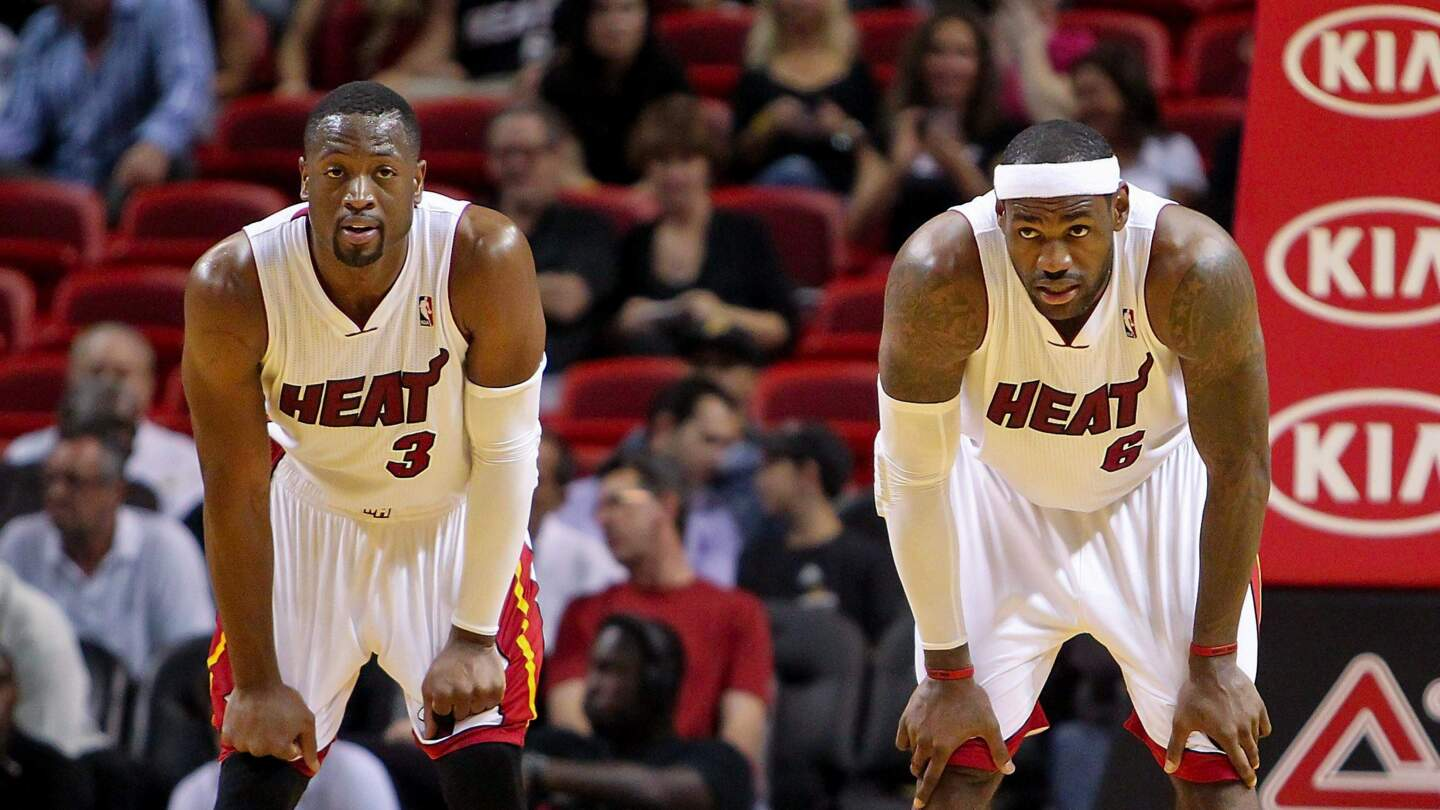
The federal sentencing of Marcos Tomas Perez marks the culmination of a case that has drawn significant attention within professional sports, law enforcement, and the memorabilia collecting world. Perez, a former Miami Heat security officer and retired Miami Police Department veteran, was sentenced to three years in federal prison and ordered to pay nearly $1.9 million in restitution after admitting to stealing hundreds of valuable game-worn jerseys and other memorabilia from the Miami Heat organization.
The scope of the theft, the length of time over which it occurred, and the historical significance of the items involved have underscored the seriousness of the crime and raised broader questions about trust, access, and oversight within professional sports franchises. Perez’s actions, carried out over several years, involved exploiting his trusted role within the Heat’s game-day security operations to access a secured equipment room at the Kaseya Center.
Prosecutors described a systematic and deliberate scheme that resulted in the loss of items intended for preservation in a future team museum. Among the stolen memorabilia were jerseys worn by some of the most iconic players in NBA history, including a LeBron James NBA Finals jersey that would later sell at auction for millions of dollars. The case has become a striking example of how insider access can be abused and how the true value of sports history can far exceed its initial perception.
Background and Scope of the Theft
Marcos Tomas Perez, 62, spent much of his professional life in public service. After retiring from the Miami Police Department with 25 years of service, he transitioned into private security roles, working for the Miami Heat from 2016 to 2021 and later as an NBA security employee from 2022 to 2025. His law enforcement background and longstanding association with the Heat positioned him as a trusted figure within the organization, granting him access to sensitive areas that were off-limits to most employees.
According to federal prosecutors and FBI investigators, Perez used his game-day security credentials to repeatedly enter a secured equipment room inside the Kaseya Center. This room housed game-worn jerseys and other memorabilia that were being stored for historical preservation, including potential display in a future Miami Heat museum. Over time, Perez removed items from the facility without authorization, often during periods when security oversight was minimal.
Authorities estimate that Perez stole more than 400 jerseys and related items over a three-year period. While not all of the stolen memorabilia was immediately sold, investigators determined that more than 100 items were transferred across state lines and sold through various online marketplaces. The total proceeds from these sales amounted to approximately $1.9 million, though prosecutors noted that many items were sold well below their eventual market value.
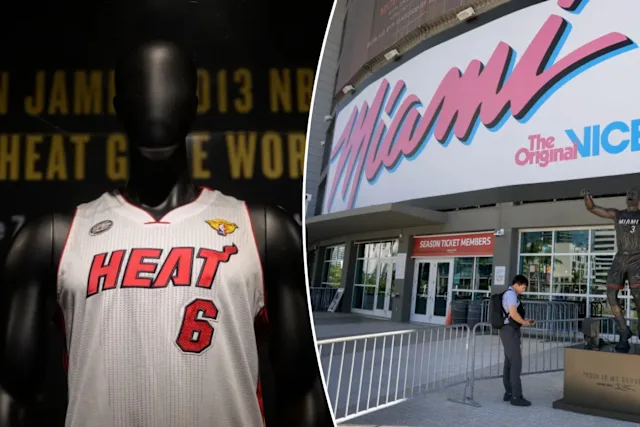
One of the most notable examples involved a Miami Heat jersey worn by LeBron James during the NBA Finals. Perez reportedly sold the jersey for around $100,000, a fraction of its true worth. When the same jersey later appeared at a Sotheby’s auction, it fetched an astonishing $3.7 million, highlighting both the historical importance of the item and the financial scale of the loss caused by the theft. This disparity also underscored how Perez’s actions deprived the team not only of physical artifacts but also of assets that held immense cultural and monetary value.
Read : ‘Gathering of Kyles’ Fails to Set Guinness World Record in Texas
The thefts went undetected for an extended period, in part because of Perez’s familiarity with internal procedures and his ability to avoid drawing suspicion. It was only after discrepancies in inventory and the appearance of Heat memorabilia on secondary markets that the investigation began to focus on internal access. The FBI ultimately executed a search warrant at Perez’s home in April, recovering nearly 300 additional stolen jerseys and memorabilia that had not yet been sold. The Miami Heat later confirmed that these recovered items originated from their facility.
Investigation, Charges, and Legal Proceedings
The federal investigation into Perez’s activities involved close coordination between the FBI, federal prosecutors, and the Miami Heat organization. Once investigators established a pattern linking stolen team property to online sales accounts, they were able to trace shipments and financial transactions that crossed state lines. This interstate element formed the basis for federal charges, as Perez was accused of transporting and transferring stolen goods in interstate commerce.
Perez ultimately pleaded guilty in August to these charges, acknowledging his role in the theft and sale of the memorabilia. The guilty plea avoided a lengthy trial but did little to diminish the severity of the offense in the eyes of prosecutors. During sentencing, the U.S. Attorney for the Southern District of Florida, Jason Reding Quiñones, emphasized the breach of trust at the heart of the case. He noted that Perez was not only a former police officer but also someone entrusted with safeguarding one of South Florida’s most prominent sports institutions.
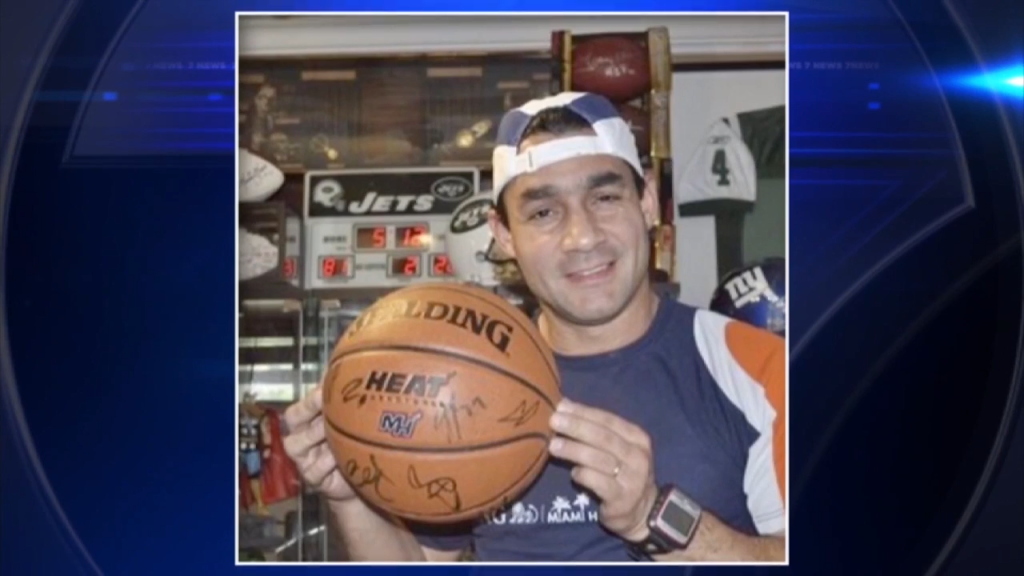
In his public statement, Quiñones described Perez’s conduct as a betrayal of both public trust and the values represented by the Miami Heat organization. He contrasted the team’s reputation for excellence, discipline, and hard work with the calculated nature of Perez’s actions, which he characterized as driven by personal gain rather than service or integrity. This framing reflected the prosecution’s broader argument that the case was about more than financial loss; it was about accountability and the misuse of authority.
At sentencing, the federal judge considered several factors, including the length of time over which the thefts occurred, the value of the stolen items, and Perez’s prior career in law enforcement. While his lack of previous criminal convictions may have been taken into account, the court ultimately imposed a sentence of three years in federal prison, along with an order to pay nearly $1.9 million in restitution. The restitution is intended to compensate for the proceeds Perez obtained through his illegal sales, though it does not fully address the potential long-term value of the stolen items.
The recovery of nearly 300 jerseys from Perez’s home played a significant role in the proceedings, as it demonstrated the scale of the theft and the extent to which memorabilia had been stockpiled rather than immediately sold. These recovered items were returned to the Miami Heat, restoring a portion of the team’s historical collection. However, prosecutors acknowledged that some items may never be recovered, either because they were sold to private collectors or because their whereabouts are unknown.
Impact on the Miami Heat, the NBA, and the Memorabilia Market
The sentencing of Marcos Tomas Perez has had implications that extend beyond the immediate criminal case. For the Miami Heat organization, the theft represented not only a financial loss but also a disruption to efforts to preserve and celebrate the team’s history. Game-worn jerseys, particularly those associated with championship runs and legendary players, serve as tangible links to defining moments in a franchise’s legacy. The removal of these items from secure storage undermined plans for a future museum and temporarily deprived fans of access to pieces of the team’s story.
Read : 12-Foot Golden Statue of President Trump Holding Bitcoin Unveiled Outside US Capitol
The case has also prompted broader reflection within the NBA and other professional sports leagues about internal security and inventory controls. While teams invest heavily in protecting players, venues, and fans, the safeguarding of memorabilia often relies on trust and limited access rather than constant oversight. Perez’s ability to exploit his role for years without detection has highlighted potential vulnerabilities in these systems.
In response, organizations may reevaluate access protocols, conduct more frequent audits, and implement additional safeguards to prevent similar incidents. Within the sports memorabilia market, the case has reinforced the importance of provenance and due diligence. Collectors and auction houses rely on documentation and verification to ensure that items are authentic and legally obtained.
The fact that stolen jerseys were able to circulate through online marketplaces before being identified raises questions about how stolen goods can enter the market and remain undetected. High-profile sales, such as the $3.7 million Sotheby’s auction of the LeBron James Finals jersey, have drawn attention to the need for rigorous checks, particularly when items carry extraordinary historical and monetary value. At the same time, the dramatic increase in value between Perez’s initial sale price and the later auction result illustrates the rapidly growing demand for elite sports memorabilia.
Jerseys worn during championship games by iconic players are increasingly viewed as investment-grade assets, capable of appreciating significantly over time. This market dynamic can create incentives for theft, especially when items are stored in locations accessible to insiders. The Perez case serves as a cautionary tale for organizations and collectors alike, emphasizing that the protection of sports history requires vigilance at every stage.
For Perez himself, the sentence represents a stark end to a career that once centered on public service and security. The contrast between his prior roles and his criminal conduct has been a recurring theme in official statements, reflecting a sense of disappointment as well as condemnation. As he begins his prison term, the case stands as a reminder that access and authority carry responsibility, and that violations of trust can have consequences that resonate far beyond the individual offender.
После того, как произошло ДТП, необходимо оперативно и корректно реагировать, чтобы сократить последствия и
обеспечить безопасность всех,
кто участвует в аварии. Ниже приведены основные шаги, которые следует
предпринять.
Оцените ситуацию
Первым делом остановитесь и проанализируйте обстановку.
Убедитесь, что вы и другие
участники аварии находитесь
в безопасности. Если есть пострадавшие, вызовите скорую помощь.
Обязательно позвоните в ГИБДД
Как только вы разобрались с ситуацией,
необходимо вызвать ГИБДД. Сотрудники дорожной полиции зафиксируют происшествие
и помогут в оформлении документов.
Создайте безопасные условия на месте аварии
Если это нужно, установите знак аварийной остановки.
Если есть возможность, переместите машины на обочину, чтобы избежать повторных столкновений.