
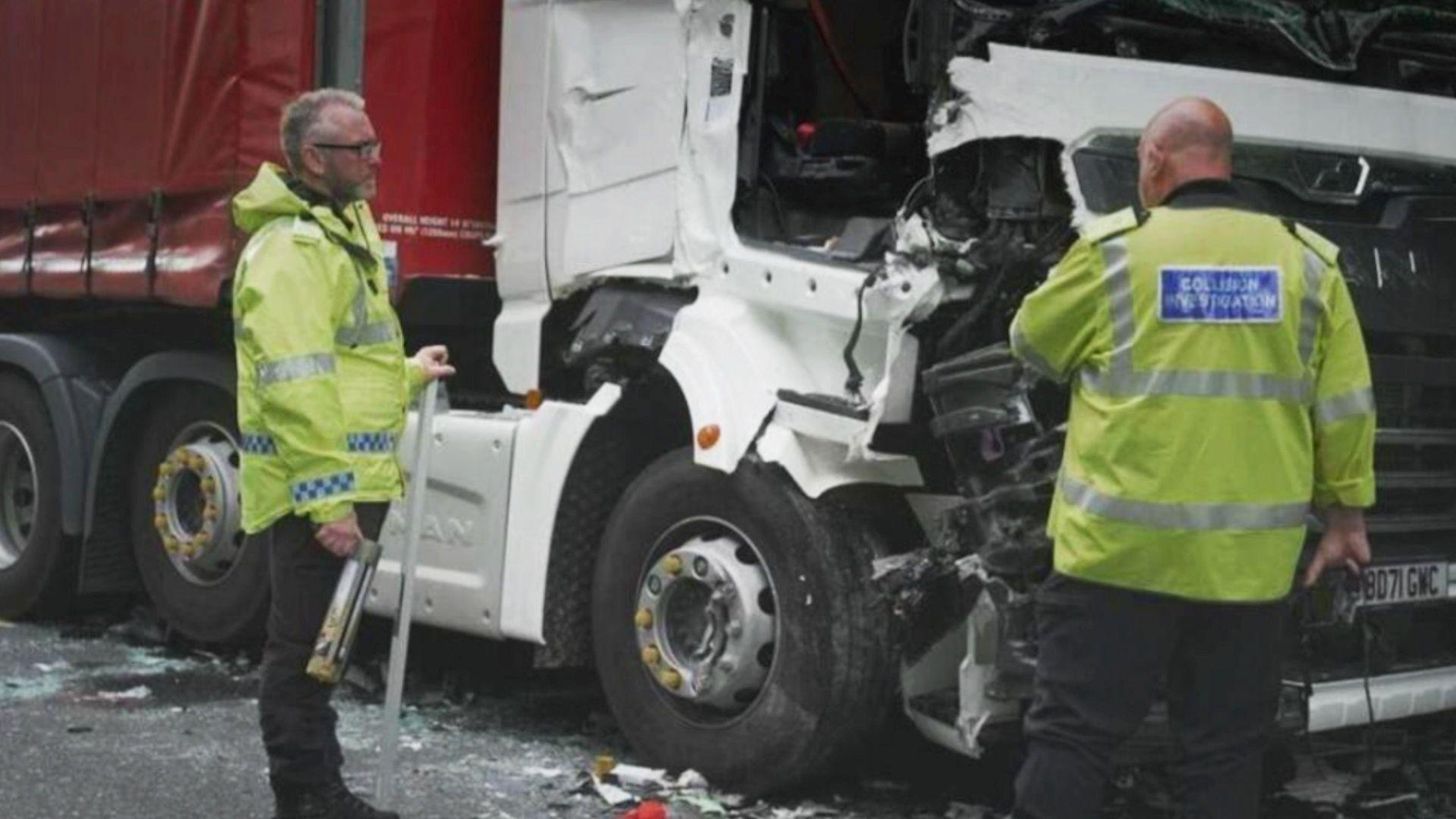
The fatal collision that claimed the life of Gary Rees, a respected lorry driver and father of two from Caerphilly, has brought to light the critical importance of vehicle-mounted cameras in uncovering the truth behind road accidents. The case involved 46-year-old Polish truck driver Mariusz Korkosz, who initially claimed a coughing fit caused him to lose control of his lorry.
However, dashcam footage — complete with audio — revealed a very different sequence of events, ultimately exposing the falsehood of his explanation and leading to his imprisonment. The crash, which occurred in July 2022, devastated a tight-knit Welsh community and highlighted both the devastating human cost of dangerous driving and the growing role of technology in delivering justice on the roads.
A Catastrophic Collision and a Questionable Excuse
On a summer day in 2022, two heavy goods vehicles collided head-on along a stretch of road within Caerphilly’s Penyfan Industrial Estate. The impact between the two lorries was catastrophic, resulting in severe injuries to local driver Gary Rees and raising immediate questions about how such a devastating crash could have occurred on an otherwise quiet industrial route.
According to police reports later featured in the BBC documentary series The Crash Detectives, Mariusz Korkosz, driving a Polish-registered HGV, had been travelling on the wrong side of the road for nearly 20 seconds before the impact. His vehicle came around a left-hand bend straight into the path of Rees’s oncoming lorry. Forensic collision investigator Dean Burnett from Gwent Police described the collision as “huge,” noting that the combined impact speed reached approximately 45 mph (72 km/h). The damage, he said, was equivalent to one or both vehicles crashing into “a brick wall that doesn’t collapse.”
Mariusz Korkosz’s immediate explanation to police was that he had suffered a sudden coughing fit that caused him to black out momentarily and drift into the opposite lane. He insisted that the violent coughing had disoriented him so badly that he lost all control of the vehicle. The driver claimed that the dashcam in his cab should have recorded the fit, believing that the audio would corroborate his version of events. However, he was unaware that the same audio system would, in fact, contradict him entirely.
When investigators reviewed the footage, it showed that Mariusz Korkosz had been driving incorrectly for an extended period before the crash. The video not only captured his route but also the sound inside the cab. Instead of coughing, the only audible noises were the lorry’s engine, the indicator, the sat-nav, and finally, a string of expletives as the driver realised an imminent collision was unavoidable. The supposed coughing fit was never heard — an omission that would prove crucial to the case against him.
The force of the collision left Rees trapped inside his cab. Emergency services were dispatched immediately, and firefighters had to cut him free from the wreckage. He sustained serious injuries to his head and leg, along with multiple broken fingers. Despite the severity of the crash, Rees initially survived and was taken to hospital, where his recovery appeared promising.
The Life and Legacy of Gary Rees
Gary Rees, aged 55, was more than just an experienced lorry driver — he was a beloved figure in his hometown of Caerphilly. Described by friends as a “huge character” and a “legend,” Rees was known for his dedication to his profession and his warm, dependable nature. Outside of work, he also served as a doorman at local venues and was deeply involved in the community’s rugby scene.
In the days following the collision, despite his injuries, Rees recounted to his wife, Hayley, how he had tried desperately to avoid the oncoming truck. “I turned the lorry as much as I could,” he told her, explaining that trees on the roadside had prevented him from swerving completely clear of the path. “I just put my hands up in front of my face and I don’t remember anything else.”
Dashcam footage from both lorries later confirmed that Rees’s account matched the evidence. His hazard warning lights were seen flashing — an indication of emergency braking — and the locked wheel marks on the road confirmed that he had reacted instantly when the other vehicle came into view. His hands were seen gripping the steering wheel as he pulled hard to the left, making every possible effort to avoid the impact.
Despite the trauma of the incident, Rees’s response after learning more about the other driver revealed the depth of his compassion. According to his wife, he expressed sympathy for Mariusz Korkosz, saying that he did not believe the crash was intentional and that he didn’t want the man to go to prison. Police had informed him that Korkosz had children and might face incarceration in a foreign country where he didn’t speak the language. “Gary said, ‘What about them? They don’t know where their dad is,’” Mrs Rees recalled. His empathy, even after enduring such a life-threatening ordeal, underscored the decency for which he was so widely admired.
Read : Viral Video Of Thai Taxi Driver Insulting Indians Sparks Outrage Among Internet
Tragically, Gary Rees’s recovery was not to last. Three weeks after the collision, he suddenly collapsed at home and died. A coroner later ruled that his death was the result of complications stemming from the injuries he had sustained in the crash. His funeral brought the town of Caerphilly to a complete standstill. His sons, Macauley and Jorge, recalled how crowds lined the streets to pay their respects as a procession of lorries followed the hearse.
His coffin was carried on the back of an American truck — a fitting tribute for a man who had spent three decades behind the wheel and had loved his work deeply. The service was held not in a chapel but on the rugby field at Bedwas Rugby Club, an outdoor venue chosen to accommodate the hundreds of mourners who came to say goodbye. The weather that day was radiant — the hottest of the year — which his family described as a final, fitting send-off for a man whose personality had lit up every room he entered.
Justice, Technology, and the Truth Behind the Wheel
The investigation into the crash relied heavily on forensic analysis and the dual dashcam recordings from both vehicles. Police examined the road markings, tyre impressions, and digital data from the recording devices to reconstruct the precise sequence of events. What emerged was a clear and compelling narrative of driver error, contradicting Mariusz Korkosz’s initial claim of a medical emergency.
Forensic collision investigator Dean Burnett noted that the evidence showed no indication of braking or evasive steering by Mariusz Korkosz until moments before impact. “It was effectively like both vehicles driving into a wall,” he said. “They both stopped dead at the point of impact.” The lack of any audible coughing on the recording was particularly damning, as it refuted his entire defense.
Faced with overwhelming evidence, Mariusz Korkosz eventually admitted causing serious injury by dangerous driving. He was sentenced to 20 weeks in prison — a term that many considered lenient given the outcome, but one that reflected the available charge and his eventual cooperation. After serving his sentence, he was deported to Poland.
For the Rees family, the conclusion of the legal process offered little comfort. The loss of Gary had left a void that could never be filled. His widow, Hayley, later recounted the moment she told her husband, before his death, that Mariusz Korkosz had been sentenced. “He just went really quiet,” she said. “He was really upset, he had tears in his eyes, and said, ‘I need to lie down.’ He stayed there for a few hours and wouldn’t talk about it.” It was one of the last emotional memories she had of him before his unexpected passing.
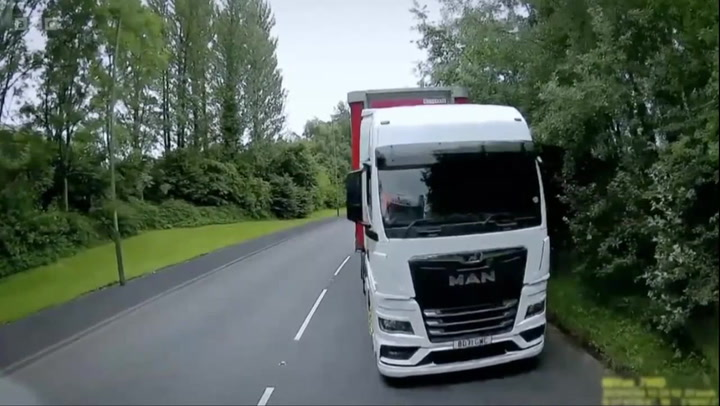
The case underscored the increasing value of dashcam technology not only as a deterrent to reckless driving but also as a critical tool in establishing factual accuracy in road traffic investigations. In this instance, it exposed an attempt to conceal driver negligence and ensured accountability in a tragedy that might otherwise have been obscured by uncertainty.
The footage captured by Mariusz Korkosz’s own camera ultimately became the key piece of evidence that invalidated his explanation and brought closure to the investigation. It demonstrated how in modern transport — particularly within the commercial haulage industry — on-board recording systems are as vital for accountability as they are for safety. As authorities across Europe continue to stress, the presence of such devices has transformed the way collisions are investigated, offering objective data where once there might only have been speculation.
The human consequences of this crash, however, go far beyond any technological or legal dimension. Gary Rees’s death left a profound mark on his family and community, who continue to remember him not only as a skilled driver but also as a devoted father, husband, and friend. His sons’ memories of that remarkable funeral procession — with lorries lined across the streets of Caerphilly and his coffin borne proudly atop a truck — remain a powerful symbol of respect and affection for a man whose life was dedicated to the open road.
Three years on, his story serves as both a cautionary reminder and a testament. It reminds professional drivers of the grave responsibility that comes with operating vehicles of such immense power and weight. It also stands as proof that truth on the road cannot be hidden when technology bears witness.
The final ruling of the coroner reaffirmed that Gary Rees’s death resulted directly from the injuries sustained in the crash. By that point, Mariusz Korkosz had already completed his sentence and been deported, closing a legal chapter but leaving behind a legacy of grief and reflection. For the Rees family, and for the wider Caerphilly community, the hope is that greater vigilance, honesty, and adherence to safety might prevent others from enduring the same heartbreak.
In a time when every journey can be recorded, the case of Gary Rees and Mariusz Korkosz illustrates that justice is no longer dependent solely on witness accounts. The lens and microphone inside a cab can capture the truth — unfiltered and indisputable — and, in doing so, ensure that even in tragedy, the facts are never lost.