
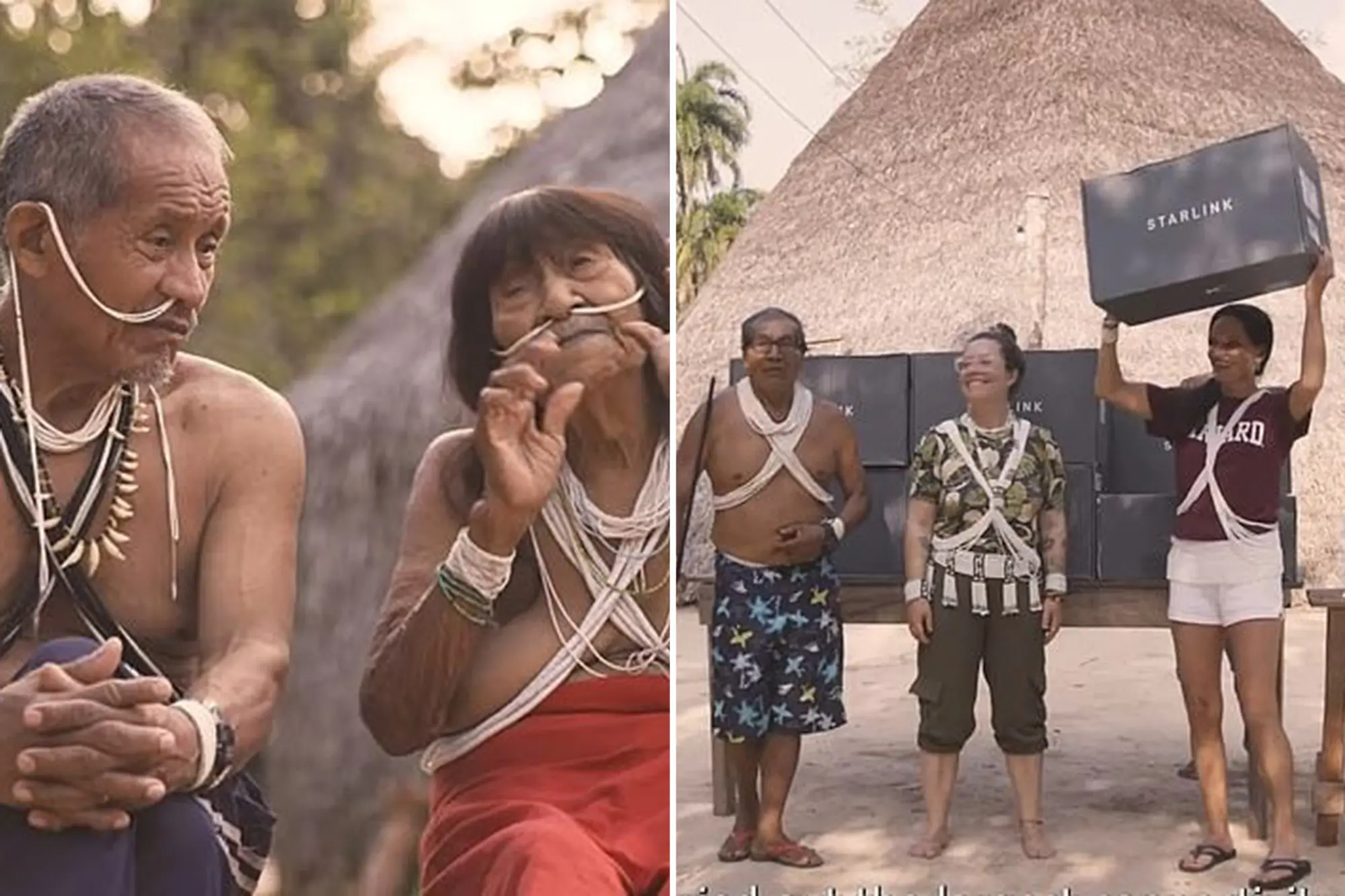
In the heart of the Amazon rainforest, the Marubo tribe has long stood as a symbol of resilience, cultural continuity, and ecological stewardship. For generations, this Indigenous community of around 2,000 people has lived in relative isolation within Brazil’s Javari Valley, preserving their traditions in one of the world’s most biodiverse and remote regions.
But with the introduction of modern technology—specifically Elon Musk’s Starlink satellite internet—the tribe found itself thrust into the global spotlight in ways few could have anticipated.
That spotlight turned harsh after a June 2024 report by The New York Times (NYT), which the tribe now says misrepresented them, leading to damaging stereotypes and a global media storm.
This week, the Marubo filed a defamation lawsuit in a Los Angeles court against the Times, as well as media outlets TMZ and Yahoo, alleging that they sensationalized and distorted the truth, painting the tribe as “porn addicted” and culturally deteriorating.
The Controversial Article and Its Aftermath
At the center of the controversy is a June 2024 article written by NYT reporter Jack Nicas. In what was presented as a deep dive into the cultural and technological upheaval caused by the sudden introduction of internet access to the Marubo tribe, Nicas detailed the tribe’s grappling with modern challenges: smartphone overuse, online scams, misinformation, social media, and yes—pornography.
The article mentioned that one tribal leader expressed concern that young men were sharing explicit content in group chats. For a community where even public displays of affection like kissing are frowned upon, the mention was striking.
Although the article made only a brief reference to pornography, that detail quickly snowballed in global media. TMZ published a sensationalist video titled “Elon Musk’s Starlink Hookup Leaves A Remote Tribe Addicted To Porn,” while Yahoo ran similar aggregation pieces. These headlines, according to the lawsuit, deeply mischaracterized the tribe and ignited a wave of damaging public perception.
Read : YouTubers NELK Boys Slammed for Giving Vapes and Tobacco to Remote Indigenous Tribe in Fiji
In response to the growing backlash, the New York Times issued a follow-up article clarifying that “The Marubo people are not addicted to pornography,” and claimed the original report was nuanced and balanced. However, the tribe’s legal representatives argue that the damage had already been done and that the follow-up article failed to acknowledge the paper’s central role in catalyzing the media storm in the first place.
Legal Action: Defamation and Cultural Harm
Filed in a Los Angeles court, the lawsuit seeks at least $180 million in damages from each defendant—The New York Times, TMZ, and Yahoo. The suit asserts that the original story and its subsequent media amplification caused not just reputational harm but real-world consequences that devastated community members and endangered cultural preservation initiatives.
The plaintiffs include Enoque Marubo, a community leader, and Flora Dutra, a Brazilian journalist and sociologist. Both appeared in the original NYT story and were key facilitators in bringing the internet to the tribe for constructive purposes such as medical care and educational access.
Read : Andaman’s Onge Tribe King Totoko and Queen Priya Welcome Baby Boy: Population Reaches 136
The suit alleges that the portrayal of Marubo youth as porn-addicted and morally wayward has led to societal scorn, endangered relationships with non-profit organizations, and even undermined internal community cohesion.
Moreover, the plaintiffs claim that the NYT’s journalist, Jack Nicas, misrepresented the nature and duration of his visit. While the article suggested an in-depth immersion, the suit states Nicas spent less than 48 hours with the tribe—far from enough time to understand the nuances of Marubo culture or responsibly report on its digital transformation.
The legal filing strongly criticizes the article’s language, saying it “went far beyond cultural commentary” and amounted to an attack on the community’s “character, morality, and social standing.”
It emphasizes that what followed was not an isolated misinterpretation by third parties but a foreseeable consequence of the article’s framing and editorial decisions. The aggregation by outlets like TMZ and Yahoo, the tribe claims, was simply the logical extension of an irresponsible narrative already seeded by the Times.
Additionally, the lawsuit alleges that visual and contextual cues in TMZ’s video segment gave the “unmistakable impression” that Dutra and Enoque Marubo introduced explicit content into the community, thereby facilitating a so-called moral collapse. This interpretation, the plaintiffs argue, has stained their reputations, discredited their professional and humanitarian efforts, and subjected them to undue scrutiny and backlash.
Broader Implications: Journalism, Representation, and the Power of Narrative
This legal battle raises urgent questions about the responsibilities of global media when reporting on Indigenous communities, especially those undergoing transformative change due to external technologies. While journalism plays a crucial role in illuminating global stories, there remains a fine line between reporting and misrepresentation—especially when narratives can be weaponized or exaggerated by fast-moving digital news cycles.
The Marubo tribe’s experience with Starlink is emblematic of the broader tension between modern technology and traditional life. Satellite internet, while revolutionary in many respects, brings with it the same challenges the rest of the world has grappled with: disinformation, distraction, and, yes, access to potentially harmful content.
However, for media outlets to reduce such complex transitions to caricatures risks not only misinforming the public but actively harming the communities being depicted. The lawsuit calls attention to the long-standing grievances many Indigenous groups have about how they are portrayed by mainstream media.

Whether through romanticized noble savage tropes or, in this case, morally alarmist narratives, such portrayals often rob these communities of agency, nuance, and dignity. The Marubo’s legal action is not merely about clearing their name—it is also a stand against the systemic ways in which media can distort Indigenous realities for clicks, virality, or narrative simplicity.
The New York Times, for its part, stands by its reporting. A spokesperson said the article was a “sensitive and nuanced exploration” of the impact of new technology on a proud and preserved culture. The newspaper intends to “vigorously defend” against the lawsuit.
Whether that defense will resonate in court remains to be seen, but what is clear is that the Marubo are determined to reclaim control of their narrative and seek accountability for what they view as journalistic overreach and cultural harm.
The fallout from this incident could reverberate far beyond the Amazon. Newsrooms around the world may face increasing pressure to scrutinize how they engage with marginalized communities and how their narratives can be amplified or distorted in the digital age. For Indigenous communities, the case represents a watershed moment in asserting media agency and challenging long-standing patterns of misrepresentation.
As the case proceeds, many eyes will be on how the U.S. legal system responds to a defamation claim from a remote Amazonian tribe against some of the world’s most powerful media corporations. At stake is more than just monetary damages—it’s a question of dignity, truth, and who gets to tell the story of the future.