
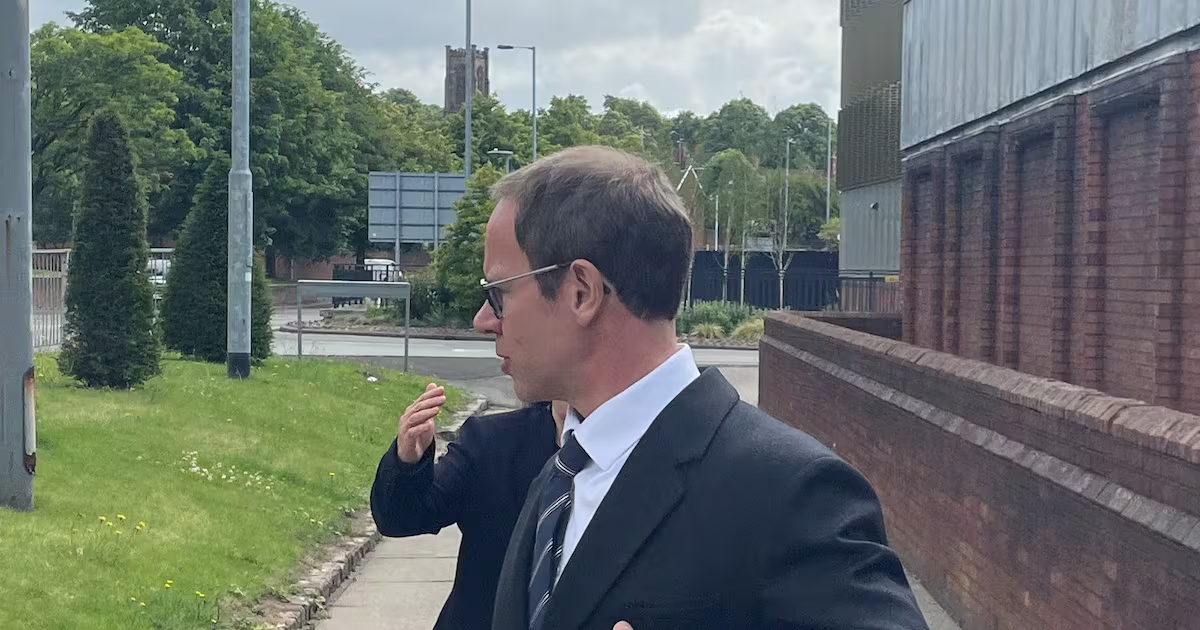
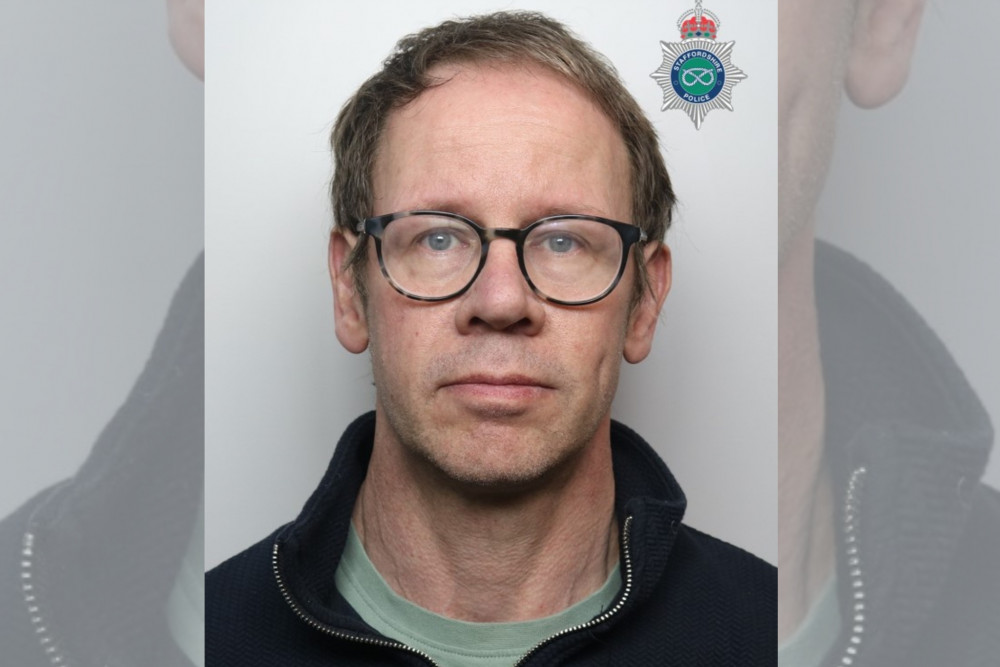
In a shocking case that has rocked the medical community in Staffordshire, former ear, nose, and throat consultant Dr Matthew Isles has been sentenced to prison for a series of grave child sexual offences. The 53-year-old doctor, who once held a respected position at two major hospitals, admitted to accumulating a vast collection of indecent images of children, engaging in grooming behaviors, and possessing materials that promoted child abuse.
His actions, spanning over five years, culminated in a three-year-and-ten-month jail term handed down at Stoke-on-Trent Crown Court. This case highlights the hidden dangers lurking within trusted professions and underscores the relentless efforts of law enforcement to protect vulnerable children from exploitation. Matthew Isles’ fall from grace serves as a stark reminder of how addictions can lead to devastating criminal behavior, affecting not only the perpetrator but also the victims depicted in the abusive materials and the broader society.
The Background and Arrest
Dr Matthew Isles’ professional life appeared exemplary on the surface. Before entering the medical field, he had served for 22 years in the armed forces, a background that likely instilled discipline and structure into his early career. Transitioning to medicine, he specialized in ear, nose, and throat surgery, becoming a consultant at the Royal Stoke University Hospital and the County Hospital in Stafford. These roles placed him in a position of authority and trust, where he dealt with patients of all ages, including children, in sensitive health matters.
Colleagues and patients would have seen him as a dedicated professional, but beneath this facade lay a dark secret that unraveled dramatically in early 2025. The investigation into Isles began following intelligence that pointed to his involvement in online activities related to child exploitation.
On February 10, 2025, Staffordshire Police executed a search warrant at his home in Whiston, a quiet village near Cheadle in the Staffordshire Moorlands. Officers arrested the doctor on suspicion of multiple sexual offences involving children. The raid uncovered a trove of digital evidence that would form the backbone of the prosecution’s case. Isles, who lived alone at the address, was taken into custody, and his electronic devices—including computers, phones, and storage media—were seized for forensic examination.
In the immediate aftermath, the University Hospitals of North Midlands NHS Trust, which oversees both hospitals where Isles worked, was notified. The trust confirmed that Isles was suspended pending the investigation and emphasized their full cooperation with the police. By the time charges were formalized in May 2025, Isles had been formally dismissed from his positions.
This swift action reflected the seriousness with which the NHS treats allegations of misconduct, especially those involving child protection. Public reaction was one of disbelief; how could a man entrusted with healing the vulnerable engage in such predatory behavior? Isles’ military and medical history added layers of complexity, as it painted a picture of a high-achieving individual whose life had spiraled into criminality due to what he later described as addictions.
The arrest sent ripples through the local community in Staffordshire. Whiston, a small rural area, is not accustomed to such high-profile scandals. Neighbors expressed shock, describing Isles as a quiet, unassuming resident who kept to himself. However, the police’s public protection unit, tasked with handling sensitive cases like this, moved methodically to build a watertight case.
Read : Doctor Sues Singapore Airlines After Staff Serves Shrimp Meal Despite Allergy Warning
Initial interviews with Matthew Isles revealed admissions that would later be pivotal in court. He confessed to a long-standing addiction to pornography, which had escalated to include child abuse material. This self-disclosure, while not excusing his actions, provided insight into the psychological underpinnings of his offences. Experts in child exploitation cases often note that such addictions can develop gradually, fueled by the anonymity of the internet, but Isles’ case stood out due to the sheer volume of material involved and his attempts to interact with what he believed were minors.
Read : “It’s My Hospital, I’m a Doctor,” Cries Injured Dr. of Kyiv Hospital After Russian Missile Strikes
As the investigation progressed, it became clear that Matthew Isles’ offences were not isolated incidents but part of a pattern that had persisted for at least five years. The police’s digital forensics team worked tirelessly to categorize and analyze the seized data, uncovering evidence that extended beyond possession to distribution and active grooming.
This phase of the probe highlighted the challenges law enforcement faces in combating online child exploitation, where offenders can amass vast collections without immediate detection. Matthew Isles’ arrest marked the beginning of a legal process that would expose the full extent of his crimes and lead to his eventual imprisonment.
The Offences and Evidence
The charges against Dr Matthew Isles totaled 13 separate offences, each revealing a disturbing aspect of his criminal activities. These included two counts of attempting to engage in sexual communication with a child, voyeurism, three counts of making indecent images of children, possession of a paedophile manual, three counts of distributing indecent images of children, possession of prohibited images of children, and two counts of possessing extreme pornographic images.
Additionally, the prosecution detailed attempts to incite a teenage girl to engage in sexual activity, painting a picture of calculated grooming behaviors. The evidence presented was overwhelming and harrowing. Forensic analysis of Isles’ devices revealed over 90,000 images and videos depicting child sexual abuse, accumulated over a five-year period.
These were meticulously categorized by severity: 1,978 fell into category A, the most serious, involving penetrative sexual activity or sadism; 1,317 were category B, showing non-penetrative abuse; and 2,134 were category C, indicative but less explicit. Additionally, there were 459 prohibited images of children, often pseudo-images or animations that still violated laws designed to prevent the normalization of child exploitation. Many more images remained uncategorized, underscoring the scale of Isles’ collection.
Among the most chilling discoveries was a document known as a “paedophile manual,” which contained explicit instructions on how to abuse children without detection. This material not only demonstrated Matthew Isles’ intent but also highlighted the underground networks that produce and share such guides. Prosecutors emphasized that possessing this manual went beyond passive viewing; it suggested a deeper immersion into the world of child exploitation.
Matthew Isles’ offences extended to distribution, with evidence showing he had shared indecent images on at least three different online platforms. This act perpetuated the cycle of abuse, as each share incentivizes the creation of new content. Furthermore, investigators found a folder labeled “Spycam” on his devices, containing voyeuristic footage. This included videos of a woman filmed without her knowledge or consent during what was otherwise a consensual interaction. While not directly related to child offences, this charge illustrated a broader pattern of violating privacy and consent.
Perhaps the most proactive elements of Isles’ crimes were his attempts at grooming. Between January 25 and February 6, 2025, he engaged in sexually explicit conversations on a gay dating site with an individual he believed to be a 14-year-old boy. In reality, this was an undercover police officer.
Isles initially halted the chat upon learning the age but later resumed, discussing potential “hooking up” and other inappropriate topics. Similarly, he attempted to communicate sexually with what he thought was a 15-year-old girl, employing grooming tactics described in court as “utterly calculated.” These interactions demonstrated that Isles was not merely a collector but someone willing to escalate to real-world harm.
In police interviews, Isles admitted to his addictions, describing an escalating compulsion that began with adult pornography and devolved into child abuse material. He acknowledged the harm caused but claimed no direct contact with children had occurred.
However, the judge later noted that every image represented a real child suffering unimaginable abuse, some of the most depraved kind. The evidence painted Isles as a man whose professional life masked a secret existence fueled by digital depravity, raising questions about how such behaviors go undetected in high-trust professions.
Court Proceedings and Sentencing
The legal proceedings against Dr Matthew Isles moved swiftly once charges were filed. He first appeared in court in May 2025, facing the initial set of allegations. By June 16, 2025, at a hearing in Stoke-on-Trent Crown Court, Isles pleaded guilty to all charges at the earliest opportunity, sparing victims and witnesses from a prolonged trial. This admission was a key factor in the sentencing, as it demonstrated some level of remorse, though the defence acknowledged the reprehensible nature of the acts.
The sentencing hearing took place on August 13, 2025, before Judge Richard McConaghy. Matthew Isles appeared in a dark suit and blue striped tie, carrying a large black bag, and waved to a woman in the public gallery as he was led away—a poignant reminder of the personal toll on his supporters. Prosecutor Hunter Gray outlined the case in detail, emphasizing the grooming conversations and the vast quantity of material. He described Isles’ interactions as sexually explicit and grooming-oriented, highlighting the risk of escalation.
Defence barrister Phil Bradley KC argued for mitigation, noting Isles’ “catastrophic fall from grace.” He pointed out that Isles’ career was irreparably ruined, and he could never return to medicine. Despite the offences’ impact, Isles retained support from family and friends, who were devastated but stood by him. Bradley conceded the material was “plainly disgusting,” involving real children and real harm.
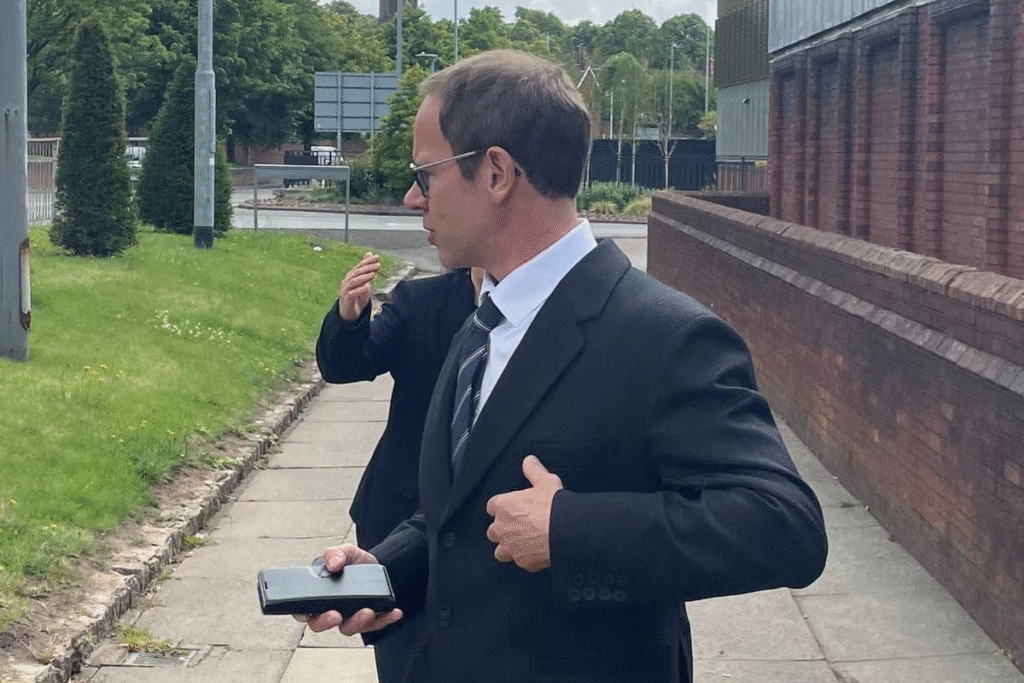
Judge McConaghy delivered a stern assessment, stating that each image depicted “real children suffering real sexual abuse, some of it of the most depraved kind imaginable.” He sentenced Isles to three years and ten months in prison, with half to be served in custody before release on licence. An indefinite sexual harm prevention order was imposed, restricting Matthew Isles’ access to devices and contact with children. Additionally, he was placed on the Sex Offenders Register for life, ensuring ongoing monitoring.
Post-sentencing statements underscored the case’s gravity. Detective Inspector Alex Glover from Staffordshire Police’s public protection unit said Isles had “sought out and hoarded images of the most horrific abuse of children.” He stressed that circulating such material normalizes abuse and drives demand for more, praising the collaboration with NHS organizations. The University Hospitals of North Midlands NHS Trust reiterated their cooperation and confirmed Isles’ termination.
This sentencing closes a chapter on a case that exposed vulnerabilities in professional oversight. It also reinforces the message that no one is above the law, regardless of status. For the victims—anonymous children in the images—the justice served offers some measure of accountability, though the scars of abuse endure. As society grapples with online exploitation, Isles’ imprisonment stands as a deterrent, urging vigilance in protecting the innocent.
In reflecting on this case, the medical community’s response has been one of introspection, with calls for enhanced safeguarding measures. While Isles’ actions were individual, they prompt broader discussions on mental health support for professionals and the detection of hidden addictions. Ultimately, this news serves as a sobering reminder of the human capacity for both achievement and downfall, and the imperative to prioritize child safety above all.