

In a move that has sparked widespread debate over individual rights and state legislation, Melissa Calhoun, a long-serving teacher at Satelite High School in Viera, Florida, has been dismissed from her position after addressing a student by their preferred name without receiving written parental consent.
This incident, rooted in a recent Florida state law, has stirred conversations around inclusivity in schools, educators’ responsibilities, and the evolving role of parental authority in public education.
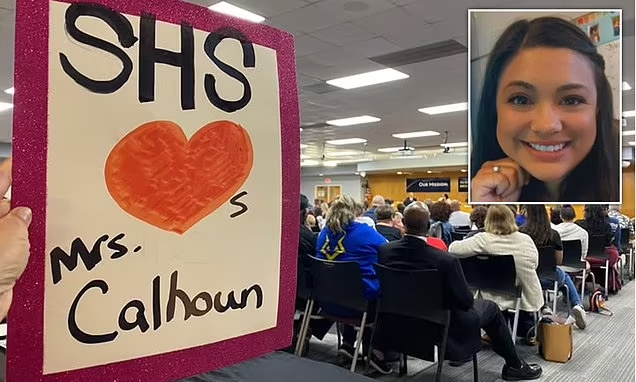
Melissa Calhoun, a respected educator with more than a decade of service in Brevard Public Schools, has since received an outpouring of support from students, parents, and community members who argue that her dismissal undermines efforts to foster a respectful and inclusive learning environment.
The issue brings to the forefront a clash between newly enacted legal mandates and the principles of empathy and recognition within the classroom. At the heart of the matter lies a broader cultural and political tension, revealing deep divides in perspectives on how identity, particularly among youth, should be acknowledged and navigated in educational settings.
As debates surrounding this case intensify, many are questioning where the line should be drawn between following state mandates and upholding the dignity of students who seek to be seen and respected for who they are.
A Beloved Teacher and the Law That Ended Her Career
Melissa Calhoun had built a reputation over her 11 years in the Brevard Public Schools system as a dedicated and inspiring educator. She taught advanced-level English, including AP Literature and pre-AP classes, first at DeLaura Middle School and more recently at Satelite High School.
Known for her passion and ability to connect with students, Calhoun became a well-regarded figure in the community. So when news broke that her contract would not be renewed due to a name-based classroom interaction, it shocked many.
The district’s decision to terminate her contract was based on a Florida law passed the previous year, which stipulates that educators must obtain written permission from a student’s parents before addressing them by a name or pronoun that differs from what appears on official school records.
Melissa Calhoun reportedly admitted to knowingly violating this law by calling a student by their preferred name despite not having formal consent from the student’s guardians.
Teacher Fired for Using Student’s Preferred Name | Brevard County School Board Meeting
— The Space Coast Rocket (@CoastRocket) April 9, 2025
🚨WATCH: Satellite High School media specialist Kristine Staniec speaks out at the Brevard County School Board meeting after her colleague, teacher Melissa Calhoun, was effectively fired for… pic.twitter.com/06LnqM4CJM
According to Brevard Public Schools, this decision aligns with both state requirements and district policy. A statement from the district emphasized the importance of parental rights, stating, “This directly violates state law and the district’s standardized process for written parental consent. BPS supports parents’ rights to be the primary decision-makers in their children’s lives, and Florida law affirms their right to be informed.”
While the law is clear in its language, Melissa Calhoun’s supporters argue that the intent behind her actions — respect and recognition — should not be grounds for professional punishment. They believe her firing reflects a rigid interpretation of law at the expense of compassion and inclusivity.
Community Outrage and Public Support for Calhoun
In response to the district’s decision, more than 11,000 individuals have signed a Change.org petition urging Brevard Public Schools to reconsider. The petition portrays Calhoun as a “beloved” teacher who is being “punished merely for showing respect to a student’s choices,” and it calls for the reinstatement of her contract. The document further stresses the importance of cultivating educational environments where students feel respected and valued.
Supporters of Calhoun emphasize that calling a student by their preferred name is not only a form of acknowledgment but also a fundamental act of humanity and kindness. For students who may already be navigating complex questions of identity, being recognized in the classroom can have a profound impact on mental health, confidence, and academic performance.

One quote from the petition reads: “Every child deserves to be educated in an environment where they feel respected and valued. Teachers like Ms. Calhoun, who understand and act on this principle, are essential to create such an environment.”
Social media has also played a role in spreading awareness about the incident, with former students, fellow educators, and community leaders expressing solidarity with Calhoun. For many, her firing represents a broader trend of political overreach into educational spaces, where teachers are increasingly placed in morally ambiguous positions — expected to follow laws that some feel contradict basic ethical teaching practices.
Calhoun herself has not yet made a public statement, but her LinkedIn profile indicates her extensive background and qualifications, suggesting a deep commitment to her craft and students.
Parental Rights vs. Student Identity: A Growing National Debate
The case of Melissa Calhoun is not an isolated incident but rather part of a larger national conversation surrounding the role of teachers in affirming student identity, especially when it conflicts with the beliefs or awareness of parents. Over the past few years, several states — including Florida — have passed legislation aimed at increasing parental control over what happens in the classroom, particularly with regard to LGBTQ+ issues, pronoun usage, and gender identity.
Proponents of these laws argue that parents have a fundamental right to be involved in decisions affecting their children’s identity and education. They see these regulations as protective measures ensuring that schools do not overstep their boundaries or expose children to ideologies without parental oversight.
Critics, however, see the laws as tools of control that ignore the lived experiences of students and place undue pressure on educators to serve as enforcers of political mandates rather than nurturers of learning and growth. They argue that the laws often fail to take into account the reality that some students may not feel safe discussing their identity with their parents or may face backlash at home if their preferred identity becomes known.
In practice, these laws leave teachers in difficult situations. They are torn between following directives that may contradict their values or what they believe is in the best interest of their students, and risking disciplinary action or job loss. The Calhoun case highlights the consequences of such a dilemma in stark terms.
For many, the most troubling aspect of the story is the implication that following the letter of the law must take precedence over the emotional well-being of students. While it is reasonable for schools to keep parents informed, critics argue that such policies must also leave room for compassion, discretion, and respect for individual student needs.
As debates over these policies continue, school districts across the country are likely to face more incidents like the one involving Calhoun. The outcome of this case — including whether her teaching certificate will be impacted — may serve as a precedent for how similar situations will be handled in the future.
In the meantime, thousands continue to voice support for the teacher they believe was simply doing her job — not just as an educator, but as a human being trying to support a student in need.