
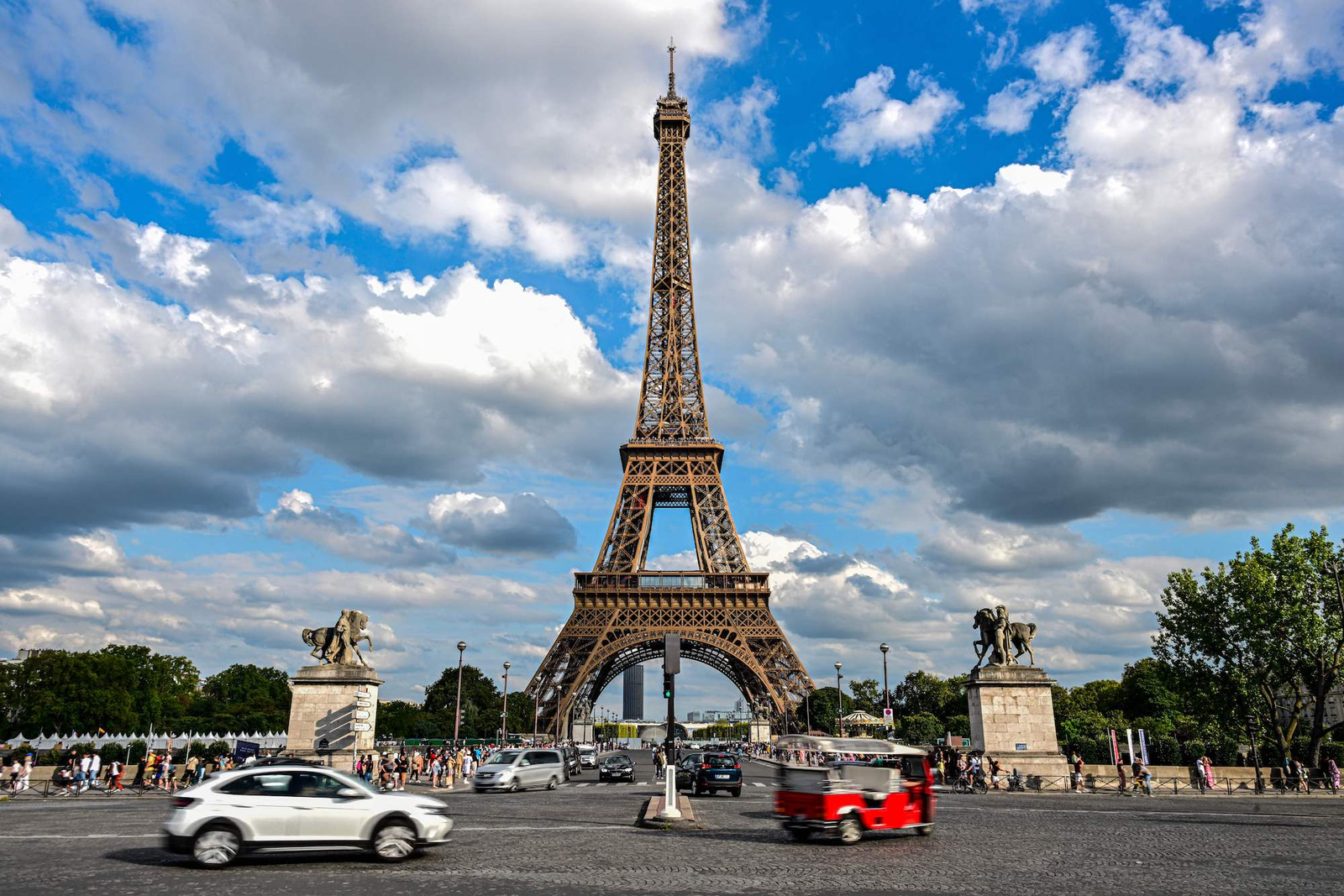
In a bold and startling event that left Paris authorities scrambling and onlookers stunned, two thrill-seekers pulled off a high-stakes stunt by scaling and leaping from the Eiffel Tower early Thursday morning. Arrest made shortly after Men Jump Off Eiffel Tower for Parachuting—a daring act that could have easily ended in tragedy but instead turned into a dramatic confrontation with law enforcement. The incident occurred around 6 a.m. local time on July 10, catching the monument’s security off guard just before sunrise.
The two individuals, clad in balaclavas and equipped with parachutes, were spotted while climbing the 330-metre-high iron tower—one of the most iconic structures in the world. Security staff immediately notified the police and civil defence forces upon noticing the climbers.
Despite efforts to communicate with them and possibly prevent the stunt, the pair made it clear they intended to jump. Their bold descent from the Eiffel Tower may have lasted only a few seconds, but the legal and public consequences of their actions will likely stretch much longer.
Men Jump Off Eiffel Tower for Parachuting
Security at the Eiffel Tower is typically tight, particularly given its status as one of the most visited monuments in the world. Still, the two men managed to bypass barriers and ascend undetected for a significant portion of their climb. By the time they were noticed, they were already dangerously high on the structure.
Police and emergency services arrived quickly but found themselves powerless to stop the jump. The moment the men leapt from the tower, their parachutes opened, and they glided downwards, landing not far from the monument. Waiting officers arrested them immediately upon touchdown.
According to reports, a third man who did not participate in the jump but was found in the vicinity was also detained. His role in the incident remains unclear, though it’s speculated he may have assisted in planning or logistics.
This unauthorized activity once again highlights the challenges in securing open urban landmarks, particularly ones as vast and accessible as the Eiffel Tower. The security breach will likely lead to questions about surveillance, staffing, and pre-dawn patrols, especially considering the tower’s popularity and symbolic importance.
Echoes of Past Parachute Attempts
This latest incident is not without precedent. The Eiffel Tower has a long and complicated history with daredevils. One of the earliest and most tragic stunts occurred in 1912 when tailor Franz Reichelt attempted to test his homemade parachute by jumping from the tower’s first platform. He died on impact, his invention proving fatally ineffective.
Fast-forward to modern times, and parachuting from the Eiffel Tower has become something of a secretive badge of honor among extreme sports enthusiasts, despite its illegality and obvious dangers. In August 2023, another man was arrested after jumping from France’s tallest skyscraper.
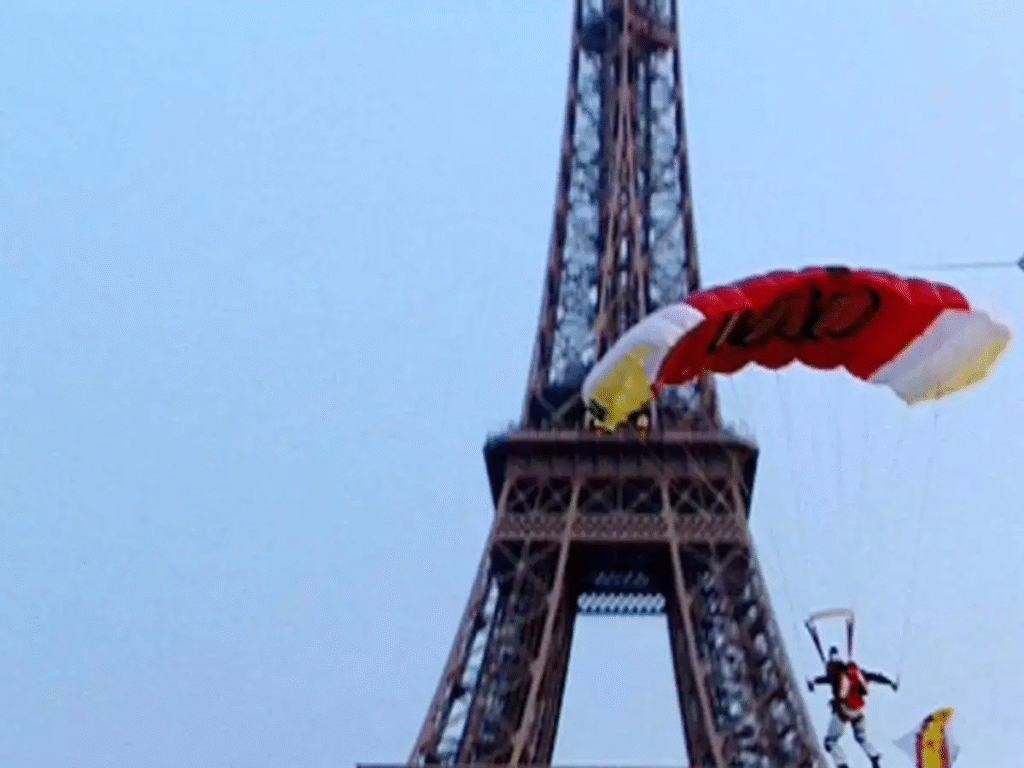
An experienced climber, he snuck onto the tower’s premises shortly after 5 a.m., carrying his parachute in a backpack. He successfully leapt and landed in a nearby stadium, but was later arrested for endangering public safety.
These repeated attempts suggest that for some, the allure of the Eiffel Tower as a backdrop for gravity-defying feats is simply irresistible. Whether driven by adrenaline, notoriety, or a craving for viral fame, the monument continues to attract a subculture of risk-takers willing to face arrest for a few moments of free fall.
The Symbolism and Security of the Eiffel Tower
Built for the 1889 Paris Universal Exhibition, the Eiffel Tower has evolved from a controversial architectural experiment to one of the most beloved symbols of France. It stands not only as an engineering marvel but also as a cultural icon that draws nearly seven million visitors every year—three-quarters of whom are international tourists.
Owned by the City of Paris, the tower is more than just a sightseeing stop; it’s a highly guarded and managed heritage site. Given its status, incidents like the parachuting stunt threaten not only public safety but also national pride. The authorities’ swift response to this event demonstrates how seriously any breaches are taken, especially with the monument’s heavy foot traffic and the potential for high-risk accidents.
Security around the Eiffel Tower has been heightened over the years in response to various threats, from terrorism to vandalism. Still, physical stunts such as this highlight a vulnerability that’s hard to eliminate: determined individuals with the skill and will to break the rules.
Heatwave, Bastille Day, and Increased Attention
The timing of the incident is particularly sensitive. Just days before the Eiffel Tower is scheduled to be the centerpiece of Bastille Day celebrations on July 14—with fireworks and national pride in full display—this act could not have come at a more inconvenient moment. Authorities are already on high alert in preparation for the festivities, which draw large crowds and significant international attention.
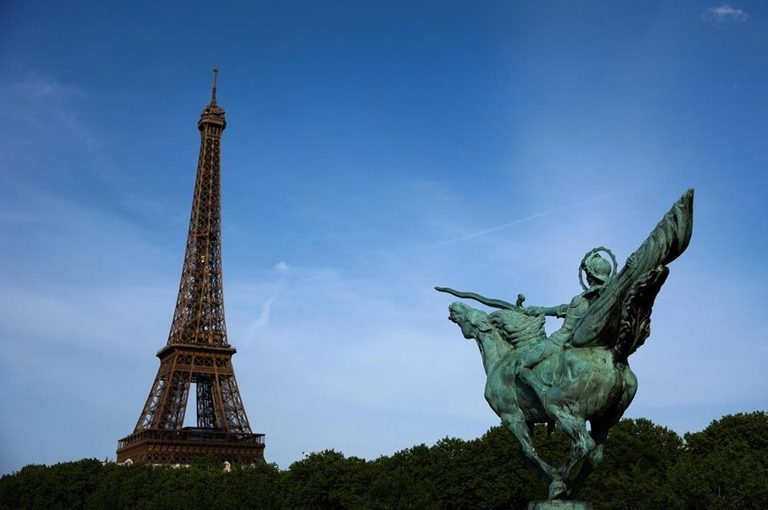
Earlier this month, the top level of the Eiffel Tower was temporarily closed due to extreme heat, as parts of Europe faced a scorching heatwave. Paris, like many major European cities, has had to adjust its operations in response to climate change-driven temperature spikes. This means that maintenance, visitor safety, and event preparation are already demanding considerable attention—making a high-profile parachuting stunt even more unwelcome.
It’s also worth noting the psychological aspect: in times of environmental stress or political unrest, acts of public defiance or spectacle can gain amplified attention, either as protest, performance, or personal thrill. Whether or not that was the motivation here remains speculative, but the dramatic nature of the event ensured it became an instant headline.
What Happens Next for the Jumpers?
Legal consequences for parachuting off the Eiffel Tower are no joke. Trespassing, endangerment, public nuisance, and possibly violating national security laws could all come into play. The identities of the two men have not been made public yet, but depending on their citizenship status, they could face prosecution under French law and possibly jail time.
Moreover, if it’s proven that the third detained individual aided or abetted the act in any way, he too could be charged. In similar past cases, jumpers have faced significant fines and travel restrictions, along with confiscation of equipment. The judicial system may also choose to make an example out of the perpetrators to discourage future stunts.
Authorities may further review internal security protocols and introduce newer deterrents—such as motion sensors, surveillance drones, or more patrols during off-hours—to make future incidents less likely.
There’s a fine line between adrenaline-charged thrill-seeking and outright recklessness. Jumping from the Eiffel Tower may seem like a bold feat of extreme sportsmanship, but it’s also a dangerous gamble—not only for the jumper, but for unsuspecting tourists, pedestrians, and emergency responders.
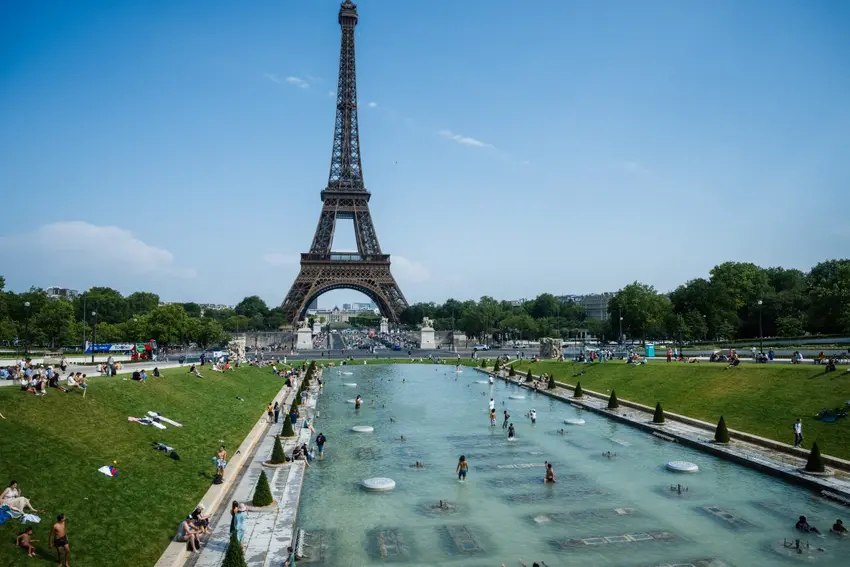
Public opinion on such stunts is often divided. Some admire the courage and audacity, likening the individuals to modern-day daredevils, while others view them as reckless lawbreakers who endanger lives and waste public resources. In the social media age, the line is even blurrier: stunts like these often go viral, bringing fame to those involved even if they face consequences afterward.
Yet glorifying such actions risks normalizing illegal behavior and encouraging copycats—something city officials in Paris are keen to prevent, particularly ahead of national events and heightened tourism periods.
Whether it’s a fireworks show, a protest banner, or a parachute stunt, the Eiffel Tower remains one of the most visible stages on Earth. Its cultural weight and visual dominance make it irresistible to those looking to make a statement—personal, political, or performative.
But with great symbolism comes great responsibility. The Eiffel Tower isn’t just an iron structure—it’s a representation of France itself. Any stunt that puts it at risk, or disrupts its operation, inevitably draws the attention of law enforcement and the public at large.
In the aftermath of the latest parachuting incident, Paris will no doubt reflect not just on the audacity of the jumpers, but also on what makes such acts appealing. Are they just thrill-seeking expressions of personal freedom, or signs of a deeper desire to challenge the rules in an increasingly regulated world?
For now, the two men sit in police custody, awaiting their legal fate. The Eiffel Tower, however, stands tall as ever—an iron monument that has, once again, witnessed human courage and folly from its dizzying heights.