
The rise of artificial intelligence has transformed the internet into a strange and often unreliable space, where content that appears polished and convincing can be entirely fabricated. Nowhere is this more evident than on social media platforms flooded with AI-generated videos, images, and instructions that blur the line between reality and illusion.
In a striking experiment, reporter Mia Mercado decided to test this phenomenon in one of the most personal and tangible ways possible: by cooking viral AI-generated recipes circulating on TikTok. What began as a curious exploration quickly turned into a deeply unsettling experience that exposed just how misleading and impractical these digital creations can be when brought into the real world.
When Viral Visuals Collapse in the Kitchen
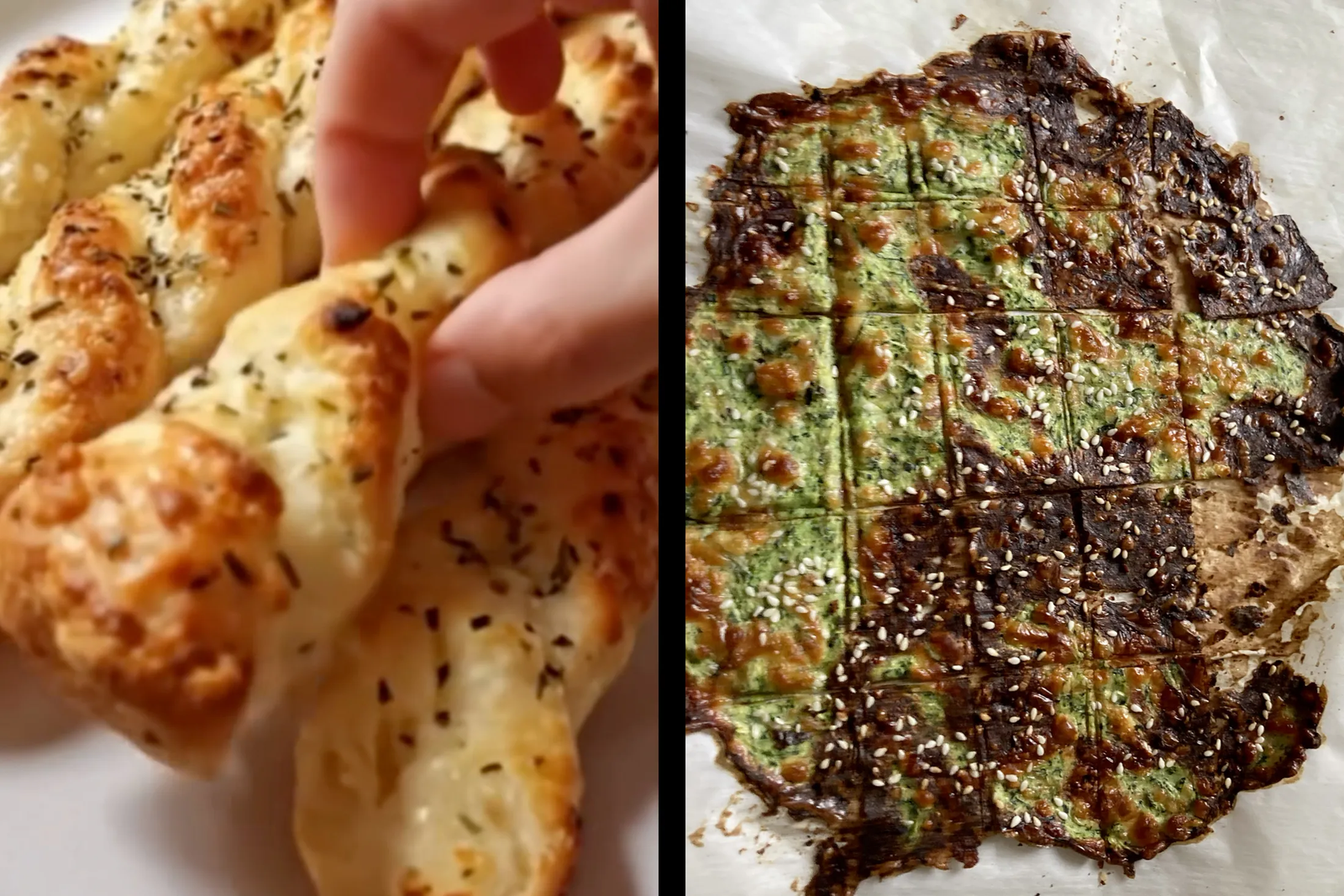
Scrolling through TikTok, it is easy to be captivated by visually appealing recipe videos that promise quick, delicious, and innovative meals. These clips often feature flawless textures, satisfying crunch sounds, and seamless cooking processes that seem almost too perfect. Mercado encountered one such recipe for cottage cheese breadsticks, entirely generated by AI, including the narration, visuals, and even the sound effects. On screen, the recipe looked simple and convincing, presenting a mixture that magically transformed into golden, twisted breadsticks.
However, the reality in her kitchen was drastically different. After following the instructions step by step, Mercado was left with a loose, unstructured batter that bore little resemblance to anything capable of forming breadsticks. The mixture lacked the consistency required to hold shape, making the twisting process impossible. Instead of neatly formed sticks, the result was a fragile, uneven mass that fell apart at the slightest attempt to handle it.
The final product resembled an egg-based dish rather than bread. Its texture was inconsistent, and its taste was described as closer to a strange omelet than anything resembling baked goods. The dramatic contrast between the polished AI-generated video and the disappointing outcome highlighted a fundamental issue: these recipes are not grounded in real culinary understanding. They are generated based on patterns and probabilities rather than practical cooking knowledge.
Read : Emily Dean Finds Over Dozen Dead Baby Leopard Sharks on La Jolla Trail
Even more concerning was the reaction from viewers who attempted the same recipe. Many expressed confusion and frustration, noting that their results mirrored Mercado’s failed attempt. Some questioned whether ingredients were missing, while others shared images of similarly unappetizing outcomes. Despite these widespread failures, there was little initial awareness that the original video itself was artificially generated, demonstrating how easily audiences can be misled.
A Rare Success Reveals a Hidden Problem
Not every experiment ended in disaster. One of the recipes Mia Mercado tried, spicy buffalo chickpea wraps, turned out to be surprisingly successful. The dish was flavorful, well-balanced, and largely met expectations. Compared to the earlier failure, it stood out as proof that AI-generated recipes can occasionally produce something edible and even enjoyable.
However, this apparent success came with an unexpected revelation. Upon closer inspection, Mercado discovered that the recipe closely resembled an existing one from a well-known food blog. Large portions of the instructions and ingredient combinations appeared nearly identical, suggesting that the AI had not created something new but had instead replicated or slightly altered existing content.
This raises a different kind of concern. While the recipe worked, it did so not because the AI demonstrated genuine culinary creativity or understanding, but because it relied on pre-existing, human-developed knowledge. In essence, the success was not original but borrowed. This blurs the line between innovation and imitation, making it difficult to trust whether any given AI-generated recipe is truly new or simply a reassembled version of something already proven.
The implications extend beyond cooking. When AI systems replicate content without clear attribution, they create an illusion of originality that can mislead users into believing they are engaging with fresh ideas. In the context of recipes, this might lead to confusion or redundancy. In other fields, the consequences could be far more significant, affecting credibility and intellectual ownership.
Mercado’s experience with the chickpea wraps demonstrates that even when AI appears to succeed, it may still be fundamentally unreliable. The outcome may depend not on the system’s ability to generate accurate instructions, but on how closely it mirrors existing, human-tested material. This unpredictability makes it difficult for users to know when they can trust the results.
From Absurd Creations to Real-World Consequences
If the failed breadsticks were disappointing and the chickpea wraps were misleading, the next experiment pushed the limits of absurdity. Mercado attempted a recipe described as fettuccine with pineapple-cashew cream sauce, an unusual combination that immediately raised questions. Unlike the previous recipes, this one appeared to be entirely original, with no clear source of inspiration or precedent.
The result was as unappealing as it sounded. The combination of flavors clashed in ways that made the dish difficult to enjoy, highlighting the lack of logical reasoning behind the recipe’s creation. Ingredients that might work well individually were combined without consideration for balance or compatibility, resulting in a dish that felt more like an experiment gone wrong than a thoughtfully designed meal.
Read : 21 Health Benefits of Drinking Raw Milk
This example underscores one of the most significant limitations of AI-generated content. While these systems can mimic patterns and produce outputs that appear coherent, they lack an understanding of context, taste, and real-world practicality. In cooking, this leads to recipes that may look plausible but fail when executed. In other areas, similar limitations can result in misinformation, poor advice, or misleading conclusions.
The broader concern is how easily such content can spread and influence behavior. Social media platforms amplify visually appealing and engaging posts, often prioritizing entertainment value over accuracy. As a result, AI-generated recipes can gain traction quickly, reaching large audiences who may attempt to replicate them without questioning their validity.

Mercado’s experiment highlights how this dynamic can have tangible consequences. Unlike abstract misinformation, cooking involves real ingredients, time, and effort. When a recipe fails, it leads to wasted resources and frustration. More importantly, it erodes trust in the content people consume online.
Beyond the kitchen, the same mechanisms that allow flawed recipes to spread can also be used to distribute more harmful forms of misinformation. AI-generated videos and instructions can be used to manipulate opinions, create false narratives, or exploit audiences who assume that polished content is inherently trustworthy. The line between reality and fabrication becomes increasingly difficult to discern.
The experience also reflects a cultural shift in how people interact with information. There is a growing tendency to accept content at face value, especially when it is presented in an engaging and visually convincing format. This makes it easier for AI-generated material to blend in with genuine content, reducing skepticism and increasing the risk of misinformation being taken as fact.
Mercado’s decision to test these recipes in real life serves as a reminder of the importance of critical thinking. Her results demonstrate that not everything that looks appealing or convincing online is reliable. In many cases, the gap between digital presentation and real-world execution can be significant, leading to outcomes that are far from what was promised.
As AI continues to evolve and integrate into everyday platforms, the challenge will be to develop better ways of identifying and verifying content. Users will need to become more discerning, questioning the source and validity of what they see rather than accepting it uncritically. Platforms may also need to implement clearer labeling or safeguards to distinguish between human-created and AI-generated material.
Mercado’s experiment may have started as a lighthearted exploration, but its implications are far-reaching. The failed recipes, misleading successes, and outright bizarre creations all point to a larger issue: the growing presence of AI-generated content in spaces where accuracy and practicality matter. Whether in cooking, news, or other areas, the ability to distinguish between genuine and artificial information is becoming increasingly important.
Her experience ultimately serves as a cautionary tale about the risks of relying on content that prioritizes appearance over substance. The next time a perfectly crafted recipe video appears on a feed, it may be worth considering whether it has been tested in a real kitchen or simply generated to capture attention.