

The deadly shooting at Brown University during final examinations has drawn national attention not only for its violence but for the extraordinary experiences of two of the students who lived through it. As gunfire forced students to barricade themselves in dormitories and classrooms, Mia Tretta and Zoe Weissman confronted a reality they had both already known far too well.
Each had survived a school shooting years earlier, at different points in their childhoods, in different parts of the United States. The attack at Brown marked the second time that campus violence had intersected directly with their lives, underscoring the cumulative trauma borne by individuals who grow up within a society marked by repeated mass shootings.
Now in their early twenties, Tretta and Weissman represent a generation shaped by lockdown drills, emergency alerts, and a persistent awareness of gun violence as a real and present risk. Their stories, reported in detail by national media outlets, provide insight into the personal toll of repeated exposure to such events and the broader context in which these tragedies continue to unfold.
Mia Tretta and the Saugus High School Shooting
Mia Tretta was 15 years old when her life was irrevocably altered by a shooting at Saugus High School in Santa Clarita, California, in November 2019. A 16-year-old student opened fire on campus, killing two people and wounding several others before turning the gun on himself. Tretta was shot in the abdomen during the attack and survived after receiving emergency medical treatment. Among those killed was her best friend, a loss that compounded the physical injuries she sustained with deep psychological trauma.
The Saugus High School shooting occurred during a period when school shootings were already a grimly familiar feature of American life, yet for Tretta and her classmates, it transformed abstract fear into lived experience. Recovery required not only physical healing but long-term emotional adjustment, as she navigated grief, survivor’s guilt, and the disruption of her adolescence. Like many survivors, she faced the challenge of returning to school environments marked by heightened security and lingering fear.
Years later, Tretta enrolled at Brown University, one of the country’s most prestigious institutions, where she expected to pursue her education in a markedly different setting. On the day of the Brown shooting, she was studying in her dormitory and had initially planned to work in the Barus and Holley engineering and physics building, the site where the attack ultimately occurred. She changed her plans shortly beforehand, a decision that may have spared her direct exposure to the violence unfolding there.
Read : Global Academic Achievements: The Top 10 Universities in the World
When reports of the shooting spread across campus, Tretta once again found herself in a lockdown situation, relying on emergency alerts and word-of-mouth updates. Speaking to the New York Times, she reflected on how easily people assume such events will never happen to them personally. Before being shot at Saugus High School, she shared that belief. Her experience has since stood as a stark counterpoint to the notion that mass shootings are rare anomalies detached from everyday life.
Zoe Weissman and the Parkland Connection
Zoe Weissman’s first encounter with a school shooting came even earlier in her life. In 2018, when she was 12 years old, she witnessed the aftermath of the shooting at Marjory Stoneman Douglas High School in Parkland, Florida. The attack, carried out by a former student, left 17 people dead and became one of the deadliest school shootings in American history. Weissman was attending a middle school adjacent to the high school at the time, placing her in close proximity to the violence and its immediate aftermath.
Although she was not physically injured, Weissman’s experience as a witness to the Parkland shooting exposed her at a young age to the realities of mass violence and the chaos it produces. The Parkland attack became a national turning point in debates over gun policy, youth activism, and school safety, but for those who lived nearby, it was also a deeply personal trauma. Weissman carried those memories with her as she moved through adolescence and eventually into higher education.
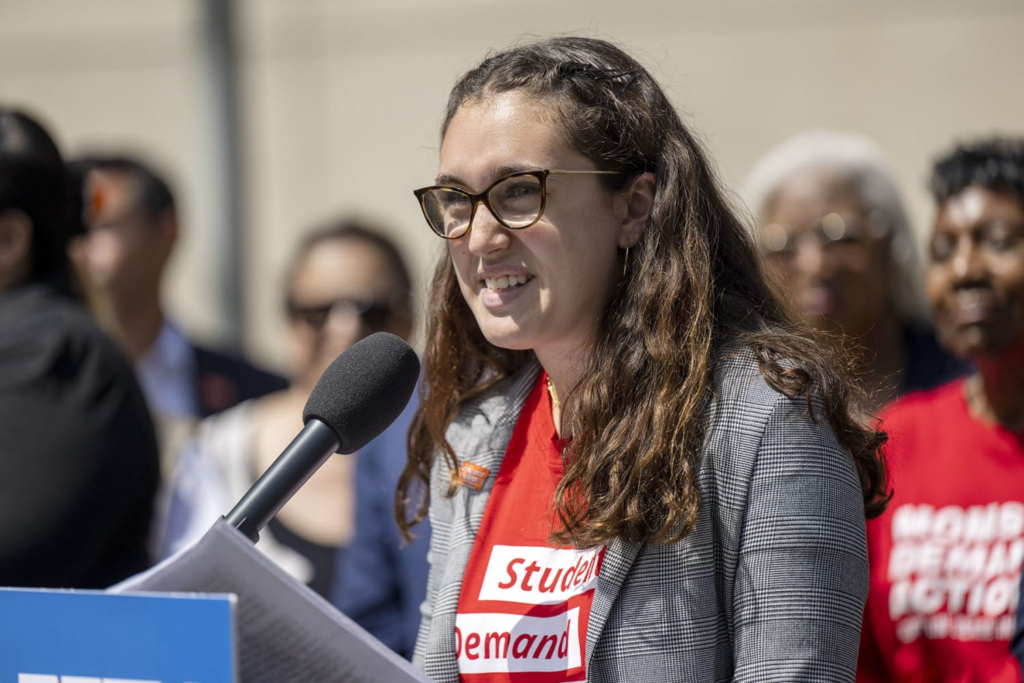
At Brown University, Weissman was in her dorm room when a friend called to warn her that a shooting was underway on campus. As she later recounted to NBC News, her initial reaction of panic gave way to anger. She had believed that such an experience belonged firmly in her past, something she would never have to confront again. Instead, eight years after Parkland, she found herself reliving the fear and uncertainty that accompany an active shooter situation.
In interviews following the Brown attack, Weissman expressed a sense of disbelief that she had once again been placed in such circumstances. She spoke candidly about the assumption many survivors make that enduring one mass shooting statistically insulates them from another. That assumption, she suggested, no longer feels tenable in a country where mass shootings occur with alarming frequency.
The Brown University Shooting and Its Broader Context
The shooting at Brown University resulted in the deaths of two people and left nine others wounded. A man dressed in black opened fire during final exams, prompting an immediate and massive law enforcement response. Hundreds of police officers searched the campus and surrounding neighborhoods through the night as the suspect initially remained at large. For students, faculty, and staff, the incident shattered the sense of security often associated with elite academic institutions.

For Mia Tretta and Zoe Weissman, the Brown shooting carried an added emotional weight. Both had assumed that their previous experiences were singular tragedies rather than precursors. In separate interviews, they described grappling with the realization that the statistical improbability they once relied upon no longer felt reassuring. Weissman articulated a sense of outrage that the conditions allowing such violence persist, making it possible for the same individuals to be affected more than once.
The incident has again drawn attention to the scale of gun violence in the United States. According to data from the Gun Violence Archive, there have been 389 mass shootings so far this year, defined as incidents in which four or more people are shot. In the previous year, more than 500 such incidents were recorded. These figures place the Brown shooting within a broader pattern rather than as an isolated event.
Public discussion following the attack has revisited longstanding debates over gun control, campus security, and the psychological impact of repeated exposure to violence. While policy responses remain contested, the personal narratives of students like Mia Tretta and Zoe Weissman highlight the long-term human consequences that statistics alone cannot convey. Their experiences illustrate how mass shootings ripple outward across years and institutions, affecting not only immediate victims but also those who carry trauma into new stages of life.
As Brown University begins the process of recovery and investigation, the stories of Mia Tretta and Zoe Weissman stand as a reminder of the continuity of this crisis. Both young women entered college expecting to focus on academics and personal growth. Instead, they were forced to confront once more the realities of a phenomenon that has shaped their generation from childhood onward.
Howdy! I simply would like to offer you a big thumbs up for the great information you’ve
got here on this post. I’ll be coming back to your blog for more
soon.
Alright, 33win39bet’s not bad ya know. Got a decent selection of stuff to bet on. Could be better, but it’s solid. Give it a shot if you’re looking for something new 33win39bet
If you want to take much from this article then you
have to apply such methods to your won webpage.
**mitolyn reviews**
Mitolyn is a carefully developed, plant-based formula created to help support metabolic efficiency and encourage healthy, lasting weight management.
References:
Temecula casino
References:
https://hedgedoc.eclair.ec-lyon.fr/s/akzGQS1cs
References:
Which of the following effects of anabolic steroids on women is not reversible?
References:
http://139.196.103.114:18084/lavernjessup42
References:
Peppermill casino reno
References:
https://sportpoisktv.ru/author/tonshears3/
References:
Steroid side effects for females
References:
https://www.overheid-integriteit.nl/Home/index.php/;focus=HOSTNP_com_cm4all_wdn_Flatpress_3151498&path=&frame=HOSTNP_com_cm4all_wdn_Flatpress_3151498?x=entry:entry180112-060416%3Bcomments:1