

The world of Disney is often associated with magic, wonder, and wholesome family entertainment. But behind the scenes, even this iconic brand is not immune to serious security breaches.
In a shocking case that has unfolded over the past year, a former Disney World employee, Michael Scheuer, used his insider access to tamper with critical information in the company’s computer systems. His actions could have had devastating consequences for guests and have now earned him a three-year prison sentence and nearly $700,000 in financial penalties.
From Trusted Employee to Cyber Criminal
Michael Scheuer, a 40-year-old resident of Winter Garden, Florida, once held a significant role at Disney World as a “menu production manager.” In this position, he was responsible for publishing menus across Disney’s vast restaurant portfolio.
It was a position that required trust, attention to detail, and a strong sense of responsibility—especially considering how many guests rely on accurate allergen warnings when making dining decisions.
However, that trust was shattered when Scheuer was terminated from his position in June 2023 for what Disney described as “misconduct.” The exact nature of the misconduct leading to his dismissal remains unclear, but it set off a chain of events that would soon put him at the center of a criminal investigation.
Not long after his termination, Disney began noticing disturbing anomalies within their internal systems. Menu allergen information was being changed in ways that could have endangered the health of guests with food allergies.
Read : Canadian Man Arrested for Wandering Disneyland Completely Naked
Alterations were made that could have misled customers about the presence of peanuts, tree nuts, shellfish, and milk—common allergens that can trigger life-threatening reactions. Fortunately, Disney’s internal checks and balances caught these changes before they made it to the restaurants, preventing a potential disaster.
Read : A Tour of the Six Disneylands Around the World
The company launched an internal investigation and quickly flagged Scheuer as a possible suspect. His insider knowledge of the menu publication system made him a prime candidate. Disney’s concerns soon attracted the attention of federal authorities, who would soon uncover the full scope of Scheuer’s activities.
The Hacking Campaign and Its Shocking Content
Federal investigators obtained a search warrant and raided Scheuer’s home in September 2023, seizing four computers. It was clear that Scheuer had not merely tampered with allergen information. His attacks on Disney’s systems were wide-ranging and deeply disturbing.
In addition to changing allergen warnings, Scheuer altered the locations of wine regions listed on menus, matching them to locations of recent mass shootings—a move that seemed intended to provoke fear and outrage.
He also inserted a swastika symbol into one menu, an action widely recognized as a hateful and inflammatory gesture. Perhaps even more bizarrely, he embedded a QR code into a menu that redirected users to a website calling for a boycott of Israeli companies.
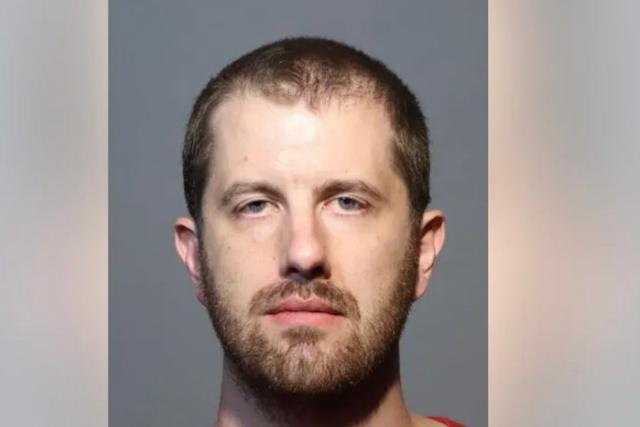
These actions demonstrated that Scheuer’s motive was not merely revenge against his former employer but a deliberate attempt to spread disruption, hatred, and chaos through one of the world’s most trusted family brands. His campaign even extended to his former coworkers, with Scheuer locking 14 employees out of their accounts, further complicating Disney’s efforts to manage the situation.
The breadth and nature of his attacks showed a calculated desire to inflict harm, both reputationally and potentially physically. Changing allergen information alone could have caused medical emergencies or even fatalities if unchecked. Coupled with the disturbing symbolism and politically charged messaging, it was clear that Scheuer’s actions were not impulsive acts of anger but part of a systematic attempt to damage Disney’s operations and public image.
Arrest, Conviction, and Sentencing
In October 2023, Michael Scheuer was arrested. Federal prosecutors charged him with knowingly transmitting a program, code, or command to a protected computer and intentionally causing damage, as well as aggravated identity theft. The charges reflected the seriousness of his crimes, not just for the disruption they caused but for the potential risks they posed to public safety.
Court documents revealed that even before his arrest, Scheuer exhibited bizarre behavior. The night before he was taken into custody, he visited the home of a former coworker, smiled at their Ring doorbell camera, and gave a thumbs-up gesture. The unsettling encounter prompted Disney to temporarily relocate the employee to a hotel for their safety.
Scheuer initially claimed that Disney was framing him, alleging that his termination had been unfair and that the company was seeking to ruin him. However, the evidence collected during the search of his home, combined with the clear links to his former insider access, left little room for doubt about his guilt. On January 29, 2024, he pleaded guilty to the charges.
On Thursday, a judge sentenced Michael Scheuer to three years in federal prison. In addition to the prison term, he was ordered to forfeit his computer equipment and pay $687,776 in restitution to Disney to cover the damages and costs incurred from the attack.

The restitution amount reflects not just the immediate cost of investigating and mitigating the damage but also the potential financial impact of a breach that could have harmed the health and trust of Disney’s guests.
Disney has since discontinued the use of the software that Scheuer exploited, moving to new systems with presumably enhanced security measures to prevent similar incidents in the future.
The case of Michael Scheuer is a sobering reminder of how much damage a disgruntled former employee can cause, especially when they have deep insider knowledge of a company’s systems. It also highlights the critical importance of cybersecurity, even in industries not typically associated with tech-related threats like theme parks and hospitality.
As companies around the world continue to digitize operations and rely on complex computer networks, the need for robust internal controls, timely monitoring, and swift response to insider threats has never been greater. Disney’s quick detection and intervention likely prevented a much worse outcome. But for Michael Scheuer, the price of his vendetta was steep — a lengthy prison sentence, financial ruin, and a permanent criminal record.
This case leaves many to wonder: How can businesses better protect themselves from insider threats? And what deeper issues drive an individual to turn from employee to saboteur? While Michael Scheuer’s story may have reached its legal conclusion, the questions it raises about trust, security, and the human cost of digital sabotage will linger far longer.