
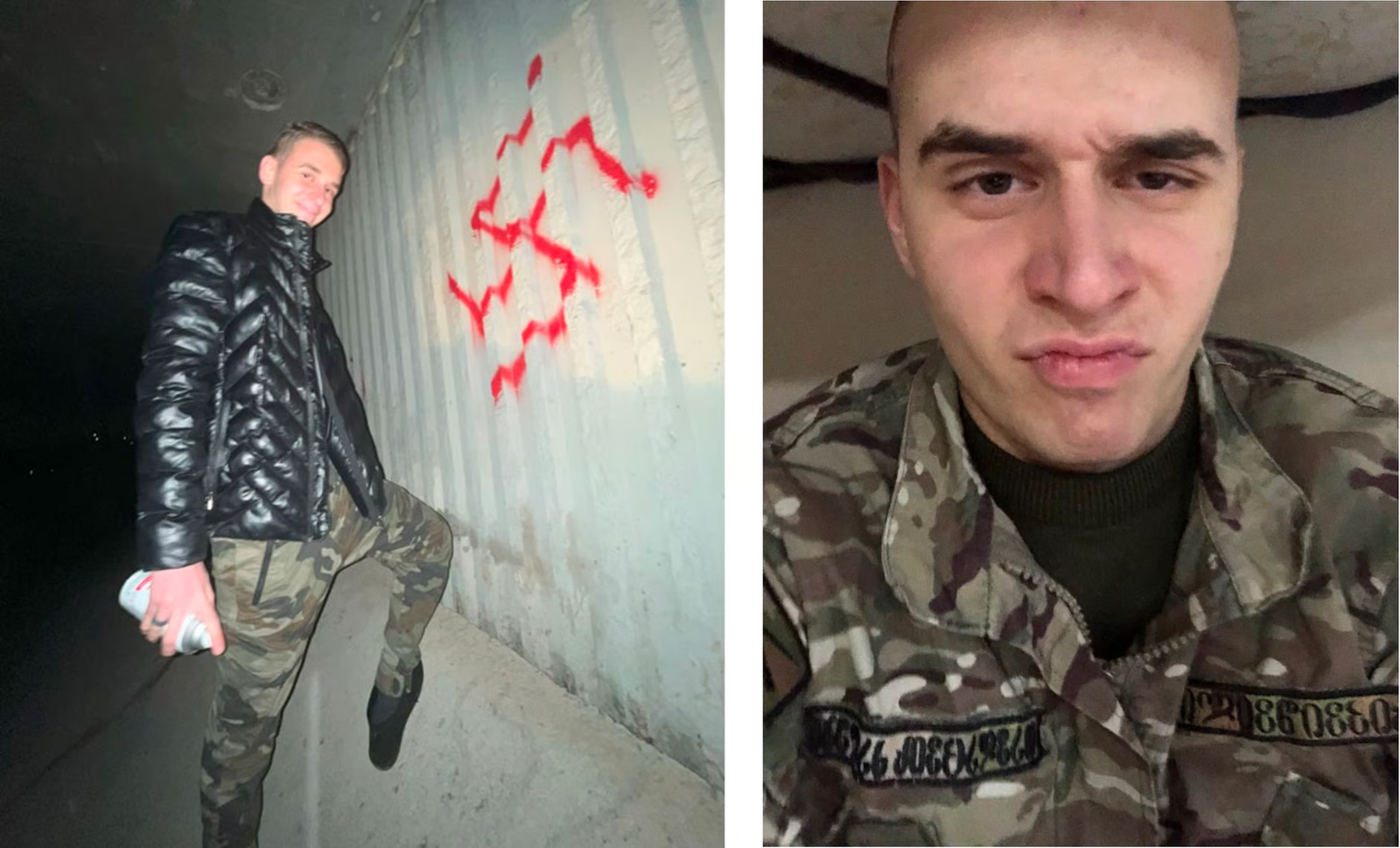
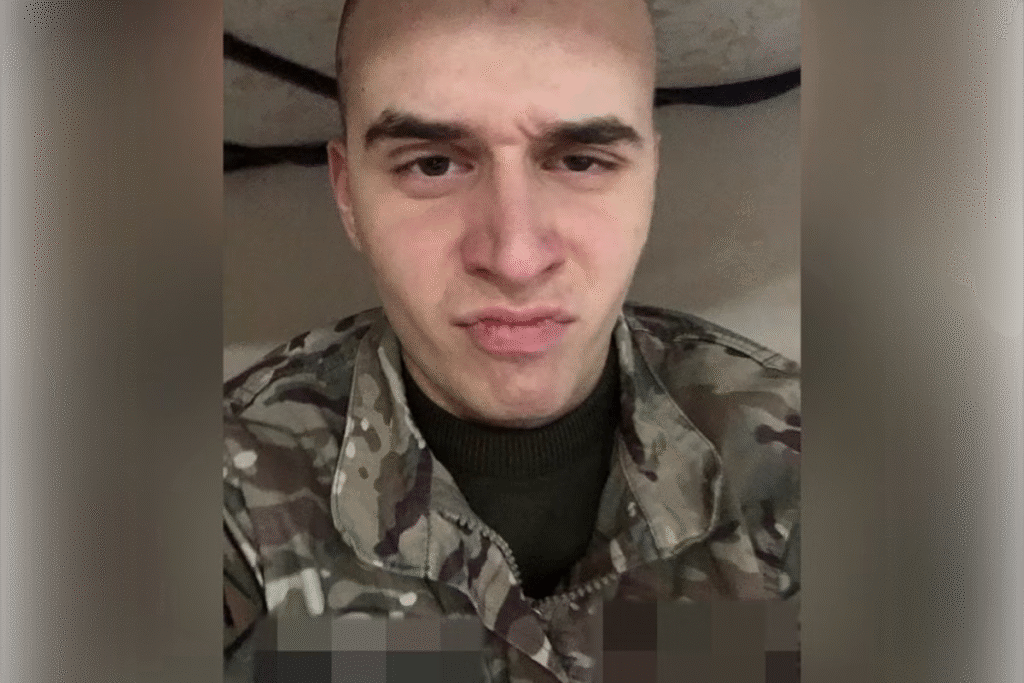
Federal authorities have announced the extradition of Michail Chkhikvishvili, a 21-year-old man from the country of Georgia, in connection with a terrifying plot that targeted Jewish schoolchildren in Brooklyn, New York.
Arrested last summer in Chișinău, Moldova, Chkhikvishvili is accused of orchestrating a racially motivated act of terror, attempting to carry out mass murder through poison-laced candy distributed by someone dressed as Santa Claus.
According to the Department of Justice, Chkhikvishvili led an international neo-Nazi “murder cult” called the “Maniac Murder Cult,” which follows an ideology rooted in hate, accelerationism, and a desire to destabilize society through acts of extreme violence.
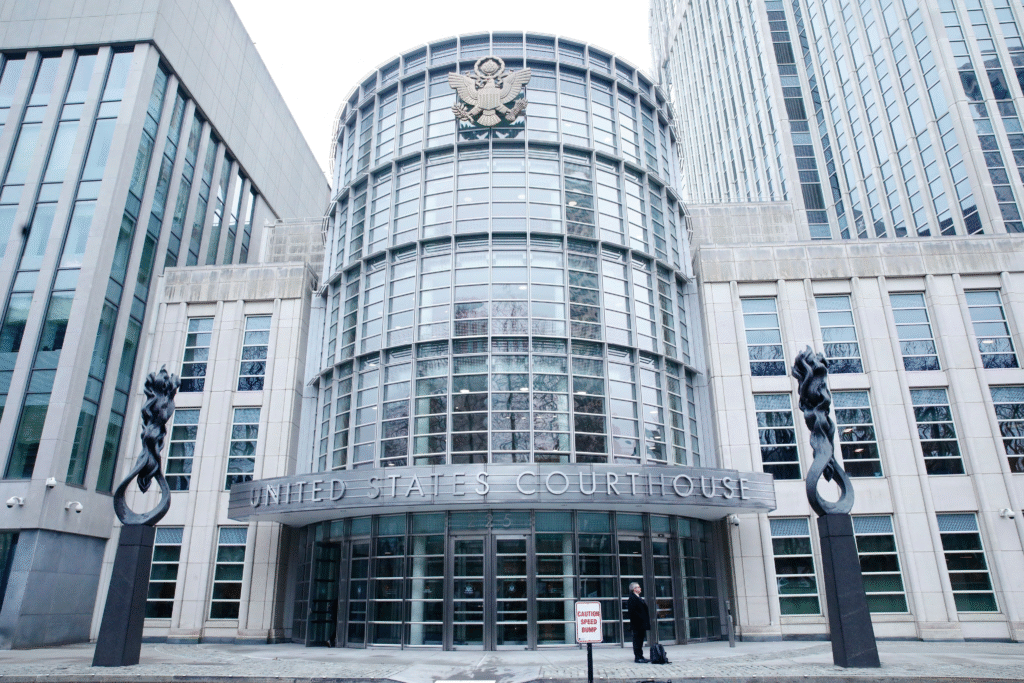
In federal court on Friday, Michail Chkhikvishvili pleaded not guilty to charges including soliciting hate crimes and promoting mass violence. Still, the weight of the accusations against him has cast a dark shadow across the community and triggered widespread alarm.
The alleged plan targeted vulnerable Jewish children attending schools in Brooklyn, and investigators say it was intended to cause mass casualties, echoing the kind of ideologically driven atrocities seen in previous decades.
Chkhikvishvili is even alleged to have described his desired outcome as “a bigger action than Breivik,” referring to the 2011 mass murder of 77 people in Norway by Anders Behring Breivik, a far-right extremist.
The Rise of Commander Butcher and the Maniac Murder Cult
Michail Chkhikvishvili operated under the pseudonym “Commander Butcher,” a name that prosecutors say he used while leading the Maniac Murder Cult. This extremist organization allegedly spanned multiple countries and attracted like-minded individuals who shared a violent neo-Nazi ideology.
The group embraced what authorities describe as “accelerationist” thinking — a belief that society must be plunged into chaos through terrorism and destruction to bring about a race war or societal collapse.
According to the Department of Justice, the cult viewed racial minorities, Jews, and other marginalized groups as targets in their broader goal of undermining democratic systems and inciting terror.
Read : Two Nurses of Sydney Hospital Suspended After They Threaten to Kill Jewish Patients
Federal prosecutors allege that Michail Chkhikvishvili was not merely a member of this violent network but its primary architect and ideological leader. He is accused of distributing a disturbing “manifesto” called the “Hater’s Handbook” since 2021 — a document designed to inspire and instruct individuals on how to carry out mass murder and domestic terror attacks.
Read : Holy Land Highlights: Pilgrimage-worthy Places in Israel
The materials included detailed instructions for creating poisons, using chemical weapons, and executing acts of sabotage and arson. Some of these manuals, prosecutors say, bore links to known foreign terrorist groups like ISIS, raising concerns about the cross-pollination of ideologies between far-right and jihadist networks.

His communications reportedly encouraged others to engage in violence and expressed satisfaction in having committed murder. In chilling online exchanges, Chkhikvishvili is said to have boasted, “I’m glad I have murdered,” and declared an intent to “murder more” by “making others murder first.”
He reportedly coached individuals on how to disguise lethal poison in common candy and distribute it in heavily populated Jewish neighborhoods in Brooklyn — an act that, if executed, could have resulted in a catastrophic loss of life.
A Sinister Plot Against Children in Brooklyn
Perhaps the most horrifying aspect of the allegations is the target: Jewish schoolchildren in Brooklyn. Prosecutors claim that Michail Chkhikvishvili devised a step-by-step plan to carry out a mass poisoning attack in the heart of one of New York’s largest Jewish communities.
His plan, allegedly, involved recruiting someone to dress as Santa Claus and distribute poisoned candy outside of Jewish schools. The symbolism was as calculated as it was sinister — a disguise intended to disarm suspicion and gain the trust of innocent children during the holiday season.
New York authorities, along with federal agents, worked extensively to track Michail Chkhikvishvili’s movements and communications, eventually leading to his arrest in Moldova. Officials say that the level of detail in the attack plans revealed a deep and deliberate intention to carry out mass murder.
The materials shared with co-conspirators included formulas for toxins, tips for handling lethal chemicals, and strategies for maximizing casualties. At the time of his arrest, investigators believed that the plan had reached an advanced stage of preparation.
This isn’t the first time such ideologies have manifested in acts of planned violence, but the nature of this case — involving a cult-like following, global recruitment, and the targeting of children — adds a chilling new dimension to the ongoing threat of domestic extremism.
According to NYPD Commissioner Jessica Tisch, “This defendant allegedly planned to poison Jewish children and carry out mass murder in New York City. He incited bombings, arsons, and violence against racial and religious minorities – driven by a hateful neo-Nazi ideology. These weren’t idle threats. They were detailed plans.”
Legal Proceedings and the Broader Threat of Extremism
Michail Chkhikvishvili appeared in federal court in Brooklyn and pleaded not guilty. He is now expected to face a rigorous prosecution under federal anti-terror and hate crime statutes.
While the courts will determine his guilt or innocence, the volume and gravity of evidence presented in the indictment illustrate how digital platforms are increasingly used to radicalize individuals and facilitate violent conspiracies that transcend national borders.
The Department of Justice has emphasized the transnational nature of the Maniac Murder Cult and how the internet served as a key recruitment and coordination tool. In this case, Chkhikvishvili is said to have connected with followers across continents, embedding his ideology through written manifestos, encrypted messaging apps, and extremist online communities.
Federal authorities see this case as part of a larger effort to combat the growing danger posed by decentralized, online hate groups that encourage lone-wolf and small-cell terrorism.
His arrest and extradition reflect growing international cooperation in counterterrorism efforts. Moldova’s decision to hand over Chkhikvishvili to U.S. authorities sends a strong message that hate-fueled extremism will not find safe harbor across international borders.
Yet, the ideology he represents continues to pose a threat. Experts warn that groups like the Maniac Murder Cult thrive in digital anonymity, drawing in disenfranchised youth with promises of power, identity, and purpose through hate and destruction.
Law enforcement and intelligence agencies now face the task of not only prosecuting individuals like Chkhikvishvili but also disrupting the broader networks that enable such conspiracies to develop. This means increased vigilance, cross-border collaboration, and a deeper understanding of how online spaces facilitate radicalization.
The Chkhikvishvili case serves as a sobering reminder of the threat posed by ideologically motivated violence in the modern age. While his plans were intercepted before they could be carried out, the intent alone — to massacre innocent children for the sake of racial hatred — reveals the depth of depravity that such extremist ideologies can reach.
In an era of global interconnectedness, such plots can emerge from anywhere and target anyone, making the fight against hate and terrorism an urgent, collective priority.