
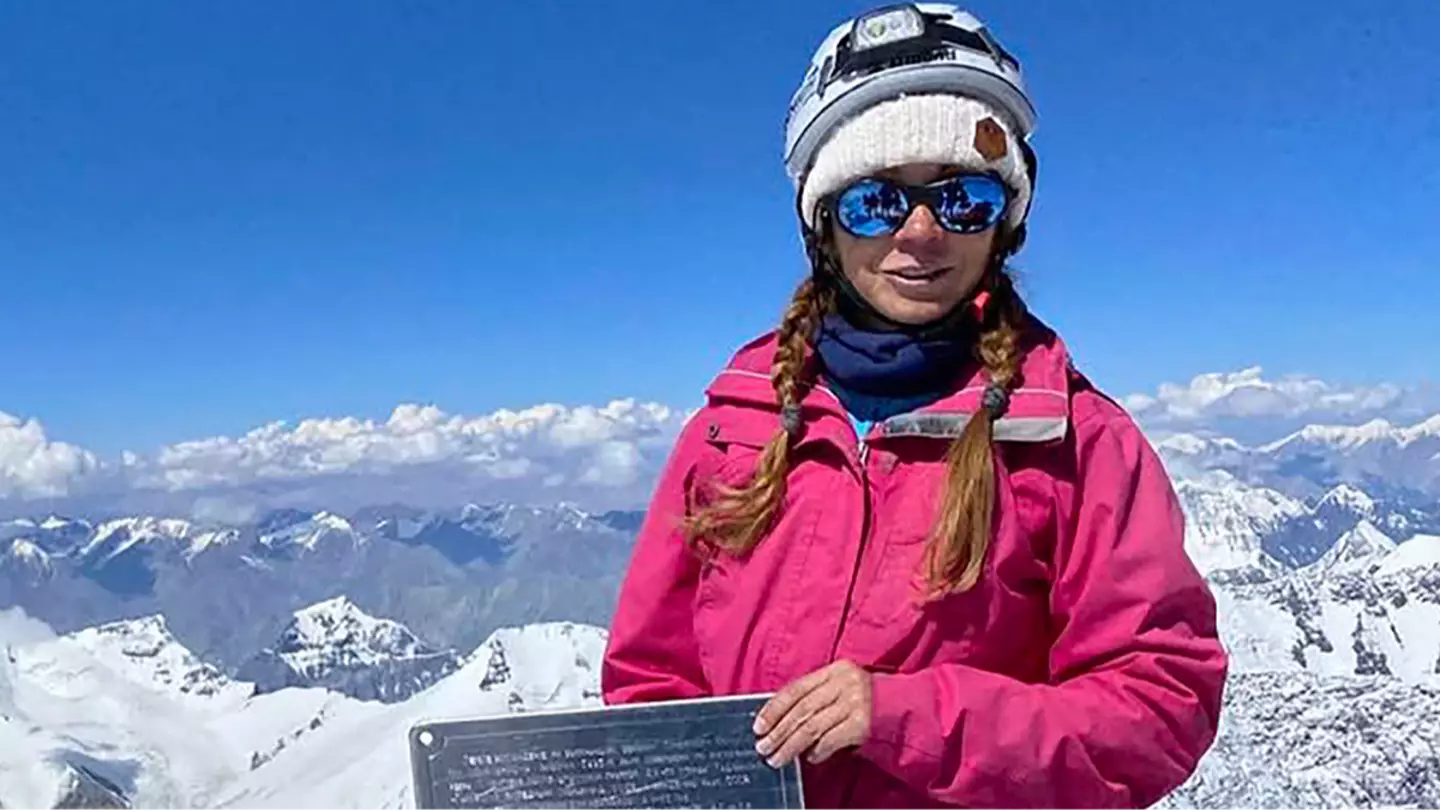
On August 12, 2025, Russian mountaineer Natalia Nagovitsina, aged 47, suffered a severe injury while descending Victory Peak (also known as Jengish Chokusu or Pobeda Peak), the highest mountain in Kyrgyzstan’s Tian Shan range, standing at 7,439 meters (24,406 feet).
Stranded at approximately 7,000 meters (22,965 feet) with a broken leg, Natalia has been battling extreme conditions, including temperatures as low as -23°C, with minimal food and water. For two weeks, her son, Mikhail Nagovitsin, has been tirelessly advocating for renewed rescue efforts, firmly believing that his mother, an experienced climber, remains alive despite the odds.
The Perilous Situation on Victory Peak
Natalia Nagovitsina, a seasoned mountaineer from Moscow, was descending from the summit of Victory Peak when she fractured her leg, rendering her immobile at an altitude of 7,000 meters. Her climbing partner provided initial first aid before descending to seek help, leaving Natalia in a tent with limited supplies. The extreme altitude, coupled with freezing temperatures, high winds, and low oxygen levels, has made survival exceptionally challenging.
Reports indicate that Natalia had little to no food or water, and the harsh weather conditions, including snowstorms and near-zero visibility, have severely hampered rescue operations. On August 13, two climbers—Italian Luca Sinigaglia and a German mountaineer—reached Natalia to deliver critical supplies, including a sleeping bag, food, water, a tent, and a gas stove to melt snow for drinking water. These supplies were intended to sustain her until a rescue could be executed.
Tragically, Luca Sinigaglia, aged 49, succumbed to hypothermia and low oxygen exposure during his descent, highlighting the extreme dangers of the rescue mission. Drone footage captured on August 19, a week after her injury, showed Natalia moving and waving her hand, indicating she was still alive at that point. However, as temperatures dropped further to -30°C at night and weather conditions worsened, experts began to express doubts about her chances of survival.
#VIRAL: DRAMA EN LAS ALTURAS DE KIRGUISTÁN
— Colombia Noticias (@CNotiWeb) August 26, 2025
Natalia Nagovitsina, alpinista rusa de 47 años, lleva atrapada desde el 13 de agosto a más de 7,000 metros, en el Pico Pobeda de Kirguistán, tras fracturarse una pierna, y lleva más de 7 días de haber perdido todo contacto con los… pic.twitter.com/dc1l7QjN6X
Victory Peak is notorious for its treacherous conditions, with constant avalanches, sudden temperature fluctuations, and rugged terrain posing significant risks to both climbers and rescuers. The mountain’s remote location near the Kyrgyz-Chinese border adds to the logistical challenges, making helicopter and ground-based rescues perilous. Despite these obstacles, Natalia’s resilience and experience as a climber have fueled hope, particularly for her son, Mikhail, who remains convinced of her survival.
Mikhail Nagovitsin’s Plea for Action
Mikhail Nagovitsin, Natalia’s 27-year-old son, has emerged as a vocal advocate for resuming rescue efforts. On August 26, 2025, after Kyrgyz authorities announced the suspension of the rescue operation due to deteriorating weather, Mikhail made a public appeal to Russian officials, including the Prosecutor General, the Ministry of Foreign Affairs, and the Russian ambassador to Kyrgyzstan.
He urged them to organize another drone flight to confirm whether his mother is still alive and, if so, to launch a new rescue mission. His plea was accompanied by a video he received, reportedly showing Natalia actively waving from her tent seven days after losing contact, suggesting she was still strong at that time.
Mikhail’s determination stems from his belief in his mother’s strength and preparedness. “My mother is an experienced climber with excellent training, which increases her chances of survival,” he stated on social media. He emphasized the urgency of the situation, noting that favorable weather conditions were expected to last only a couple more days before rescue operations might become impossible until the next climbing season in spring 2026.
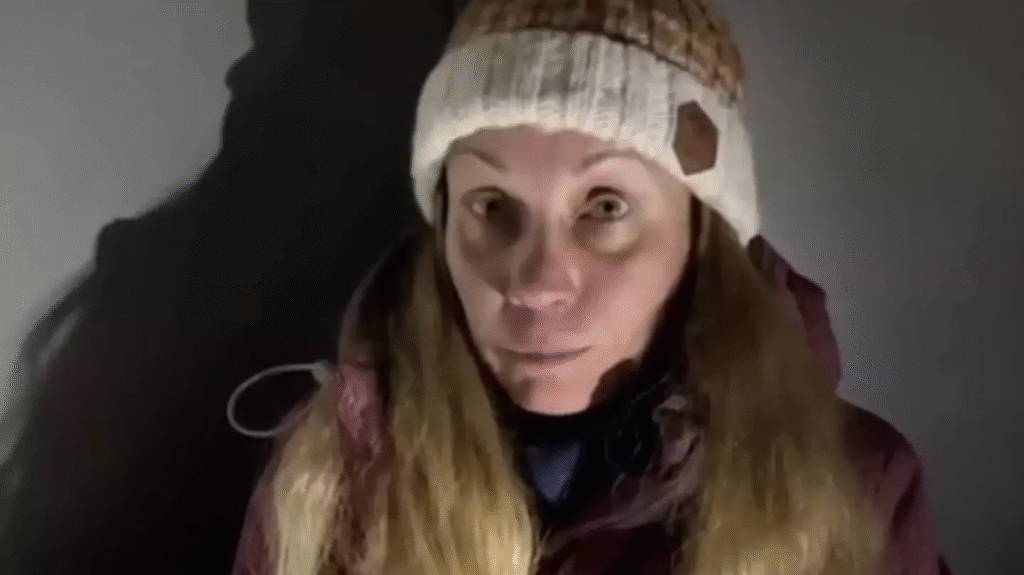
His frustration was palpable as he questioned the decision to disband the rescue operation on August 26, despite earlier forecasts predicting a brief window of clear weather on August 25. “They continued to wait for a weather window, but this morning, the entire rescue operation was disbanded, and the reason is unknown. It alarms me,” Mikhail said.
Mikhail’s appeals have garnered significant attention, with some Russian officials responding to his call. On August 26, Russia’s chief investigator, Alexander Bastrykin, ordered his staff to coordinate with emergency officials to assist in the rescue efforts, following Mikhail’s video appeal. However, the logistical and environmental challenges remain daunting, and Kyrgyz authorities have indicated that resuming operations may not be feasible until the weather improves significantly.
The emotional weight of Mikhail’s pleas is compounded by the family’s history of tragedy in the mountains. In 2021, Natalia’s husband, Sergei Nagovitsin, suffered a stroke at 6,900 meters on Khan Tengri, another peak in Kyrgyzstan. Despite rescue efforts, Natalia refused to leave his side, staying with him until his death.
His body was never recovered, and Natalia later returned to Khan Tengri to install a memorial plaque, a testament to her courage and devotion. This past tragedy adds a poignant layer to Mikhail’s current fight to save his mother, as he refuses to accept that she, too, may be lost to the mountains.
Challenges and Tragedies in the Rescue Efforts
The rescue operation for Natalia Nagovitsina has been fraught with setbacks and tragedies, underscoring the extreme risks of high-altitude mountaineering. Multiple attempts to reach her have failed due to the mountain’s unforgiving conditions. On August 16, a Kyrgyz Ministry of Defense Mi-8 helicopter made a hard landing during a rescue attempt, injuring the pilot and rescuers from a private tourism company.
A second helicopter, a Mi-17VM, was forced to turn back due to poor visibility. On August 19, a team of climbers led by Vitaly Akimov attempted to reach Natalia but was forced to abandon the mission when Akimov suffered back pain, possibly exacerbated by the earlier helicopter crash. The death of Luca Sinigaglia, who heroically delivered supplies to Natalia, has been a devastating blow to the mountaineering community. His sacrifice was widely praised, with social media posts hailing him as a hero for his selfless act.
However, his death, combined with the injuries sustained by other rescuers, has highlighted the immense dangers faced by those attempting to navigate Victory Peak’s treacherous slopes. Dmitry Grekov, head of the base camp at South Engilchek, expressed skepticism about Natalia’s survival, stating, “She has been there since August 12—count how much time has passed. It is unrealistic to survive at such an altitude.” Similarly, Ilim Karypbekov, vice president of the Kyrgyz Mountaineering Federation, noted that professional pilots from Italy were unable to fly due to unfavorable weather, and even drone operations were grounded by heavy fog.
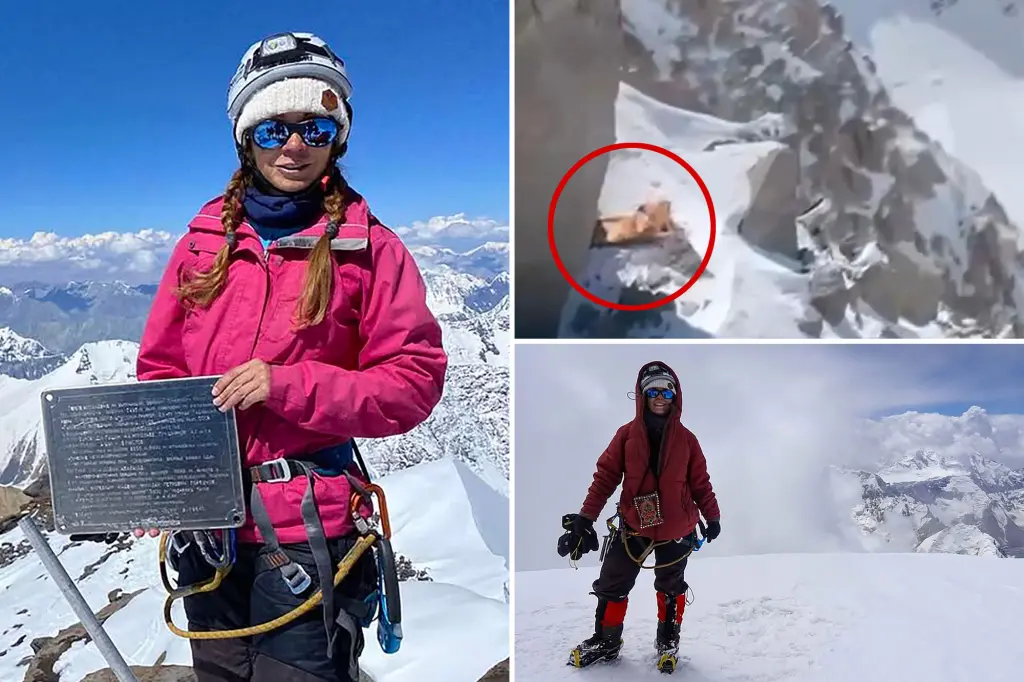
The Kyrgyz Ministry of Emergency Situations officially called off the rescue operation on August 23, citing insurmountable risks and worsening weather. Eduard Kubatov, president of the Kyrgyz Mountaineering and Sport Climbing Federation, warned that Natalia’s chances of survival after more than nine days at such an altitude were slim, as the body deteriorates rapidly in such conditions. Despite these grim assessments, Mikhail’s insistence on his mother’s survival has kept the issue in the spotlight, with drone footage providing a glimmer of hope that she may still be alive.
The suspension of rescue efforts has sparked debate about the feasibility of high-altitude rescues and the ethical considerations of risking additional lives. Some experts argue that the extreme conditions on Victory Peak make evacuation nearly impossible without specialized high-altitude helicopters, which Kyrgyzstan lacks.
Others, including Mikhail, believe that even a drone flight to confirm Natalia’s status could pave the way for a renewed rescue attempt. The tragedy has also drawn attention to the broader dangers of mountaineering in Kyrgyzstan, where recent incidents have claimed the lives of other climbers, including Russian climbers Nikolai Totmyanin and Alexey Yermakov, and injured a German climber.
As of August 27, 2025, the fate of Natalia Nagovitsina remains uncertain, with rescue operations officially halted due to extreme weather and logistical challenges. Mikhail Nagovitsin’s unwavering belief in his mother’s survival, supported by drone footage showing her alive a week after her injury, has fueled his relentless campaign to urge Russian and Kyrgyz authorities to act. His appeals have resonated with the global mountaineering community, drawing attention to the heroism and sacrifices of climbers like Luca Sinigaglia and the resilience of Natalia, who has faced unimaginable challenges in the mountains she loves.
The situation on Victory Peak serves as a stark reminder of the perils of high-altitude mountaineering and the limits of human endurance in the face of nature’s harshest conditions. For Mikhail, the fight to save his mother is not just a personal mission but a testament to her legacy as a courageous climber who has already overcome profound loss.
Whether authorities can muster the resources and conditions to resume the search remains to be seen, but Mikhail’s pleas ensure that Natalia’s story—and her potential survival—remain in the forefront of public consciousness. As the climbing season closes and the weather worsens, the window for rescue is rapidly narrowing, leaving hope as the only force keeping Natalia’s story alive.