

In a move that has ignited fierce debate within Israel’s creative circles and beyond, Culture and Sports Minister Miki Zohar has declared his intention to slash government funding for the Ophir Awards, the nation’s premier film honors often dubbed the “Israeli Oscars.” The announcement came swiftly on the heels of the 2025 ceremony, where the poignant drama The Sea clinched the Best Feature Film prize. This film, centering on the dreams and struggles of a 12-year-old Palestinian boy from the West Bank, has now been automatically selected as Israel’s entry for the Best International Feature at the 2026 Academy Awards.
Zohar’s decision underscores deepening tensions between Israel’s right-wing government and its film industry, which has long served as a platform for nuanced explorations of the Israeli-Palestinian conflict. The Ophir Awards, held annually in Tel Aviv under the auspices of the Israeli Academy of Film and Television, represent a cornerstone of the country’s cinematic heritage. Established in 1991, the event celebrates excellence across categories like directing, acting, and screenwriting, drawing entries from both Jewish and Arab filmmakers.
This year’s ceremony, however, unfolded against a somber national backdrop: Israel’s ongoing military operations in Gaza, the lingering trauma of the October 7, 2023, Hamas attacks, and the unresolved hostage crisis. Attendees wore T-shirts emblazoned with messages like “a child is a child” and “end the war,” turning the red carpet into a subtle protest space. Yet, it was The Sea‘s victory that transformed the evening’s emotional undercurrents into a full-blown political firestorm.
Zohar’s response was unyielding. In a statement posted on X (formerly Twitter) and echoed by the Culture Ministry, he lambasted the awards as an “embarrassing and detached” affair that delivers “no greater slap in the face of Israeli citizens.” He specifically targeted The Sea for its portrayal of Israeli Defense Forces (IDF) soldiers in what he called a “defamatory and false” manner, accusing the film of promoting “foreign, disconnected narratives against Israel and IDF soldiers.”
Declaring that “under my watch, Israeli citizens will not pay from their pockets for a ceremony that spits in the faces of our heroic soldiers,” Zohar vowed to withhold taxpayer funding starting with the 2026 budget. This isn’t mere rhetoric; the Ophir Awards have historically received significant state support, making the threat a direct assault on the event’s viability.
Read : Chinese Cemetery in Thailand Hosts Unique Movie Night for Dead, Arranging Rows of Empty Seats
The controversy highlights a broader pattern of governmental scrutiny over cultural outputs deemed insufficiently aligned with national interests. As Israel’s film sector grapples with international boycotts and internal divisions, Zohar’s action raises profound questions about artistic freedom, state patronage, and the role of cinema in a divided society. With the Oscars looming, The Sea‘s journey from Ophir winner to potential global contender could either amplify these debates or force a reckoning on how Israel represents itself on the world stage.
Unveiling ‘The Sea’: A Story of Innocence Amid Division
At the heart of this uproar lies The Sea, a 90-minute drama written and directed by Shai Carmeli-Pollak, a filmmaker known for his introspective takes on human fragility. Produced by Palestinian Baher Agbariya in collaboration with Jewish-Israeli creatives, the film premiered at the Jerusalem Film Festival in August 2025 to critical acclaim. Its narrative unfolds through the eyes of Khaled, a wide-eyed 12-year-old from a West Bank village, whose lifelong dream is to behold the Mediterranean Sea for the first time.
On a school trip to Tel Aviv, Khaled is barred entry at a checkpoint due to his Palestinian identity, a moment that shatters his innocence and propels him into a perilous solo journey across the border. As Khaled navigates the unfamiliar terrain of Israel—evading authorities and grappling with isolation—his undocumented father, Ribni (played by Khalifa Natour), abandons his low-wage labor job to scour the country in a frantic search. The story weaves in encounters with Israeli civilians and soldiers, painting a mosaic of empathy, suspicion, and systemic barriers.
Carmeli-Pollak has described the film as “sensitive and empathetic toward human beings in general,” emphasizing Khaled’s universal longing over partisan rhetoric. Shot in Arabic and Hebrew with subtitles, it underscores the linguistic and cultural chasms that define daily life in the region. The Ophir win was no fluke; The Sea dominated the night, securing additional accolades including Best Actor for its young star, 13-year-old Muhammad Gazawi—the youngest recipient in the category’s history.
Gazawi’s raw performance, capturing a child’s unfiltered wonder and fear, drew standing ovations. During the acceptance speech, Agbariya seized the moment to articulate the film’s ethos: “This film was born from love for humanity and cinema, and its message is one—the right of every child to live and dream in peace, without siege, without fear, and without war.” His words, delivered amid a hall heavy with anti-war sentiment, resonated as a plea for tolerance in a nation reeling from conflict.

Critics have lauded The Sea for its restraint and humanism, avoiding didacticism in favor of quiet devastation. One reviewer noted its “harsh yet compassionate portrayal of Israeli soldiers,” which humanizes individuals while critiquing the machinery of occupation. As Israel’s Oscar submission, it positions the country to submit an Arabic-language film born of binational collaboration—a rarity that could challenge stereotypes abroad. Yet, in Zohar’s eyes, this very nuance equates to betrayal, framing the film as an endorsement of “the enemy’s narrative.” The director himself has remained measured, telling media outlets that the story is about “a Palestinian child whose only wish is to reach the sea,” not a political manifesto.
This victory arrives at a precarious juncture for Israeli cinema. Nominated alongside provocative entries like Nadav Lapid’s Yes—a satire skewering societal complicity in Gaza’s humanitarian crisis—and Natali Braun’s Oxygen, about a mother’s battle to exempt her son from military service, The Sea emerged as a beacon of cross-cultural dialogue. Its success at the Ophirs, voted on by academy members, signals a industry appetite for stories that bridge divides, even as external pressures mount.
Minister Zohar’s Stance: Defending National Pride or Stifling Dissent?
Miki Zohar, a Likud party stalwart and the minister since 2022, has positioned himself as a guardian of cultural orthodoxy amid Israel’s polarized landscape. His threat to defund the Ophirs is not an isolated outburst but part of a sustained campaign against what he perceives as leftist bias in the arts. In February 2025, Zohar tabled a bill to overhaul film funding, redirecting resources from independent projects to commercially viable ones—a shift critics decried as prioritizing box-office hits over artistic risk-taking. He has repeatedly excoriated films that humanize Palestinian experiences, most notably labeling the Oscar-winning documentary No Other Land as “sabotage against the state of Israel.”
Zohar’s rhetoric taps into a vein of frustration among conservative Israelis who view the film industry’s output—often produced by a Tel Aviv elite—as out of touch with frontline realities. The Gaza war, now in its second year, has claimed thousands of lives and strained national unity, with IDF soldiers hailed as heroes in official narratives. For Zohar, funding a ceremony that honors a film depicting soldiers negatively is tantamount to subsidizing ingratitude. “The great absurdity that the citizens of Israel are still paying out of their own pockets for the shameful ceremony of the Ophir Awards… is over,” he proclaimed, invoking the awards’ representation of “less than one percent of the Israeli people.”
Yet, Zohar’s authority to enact this cut remains murky. Legal experts, including Oded Feller of the Association for Civil Rights in Israel, have dismissed it as “empty threats,” arguing the minister lacks unilateral power to withhold funds allocated by the Knesset. The ministry’s budget for cultural institutions is subject to legislative oversight, and past attempts to politicize funding have faced court challenges. The Association is already probing the legality, potentially setting the stage for judicial intervention. Zohar’s move, then, may serve more as a symbolic salvo than a binding policy, aimed at rallying his base while intimidating creators.
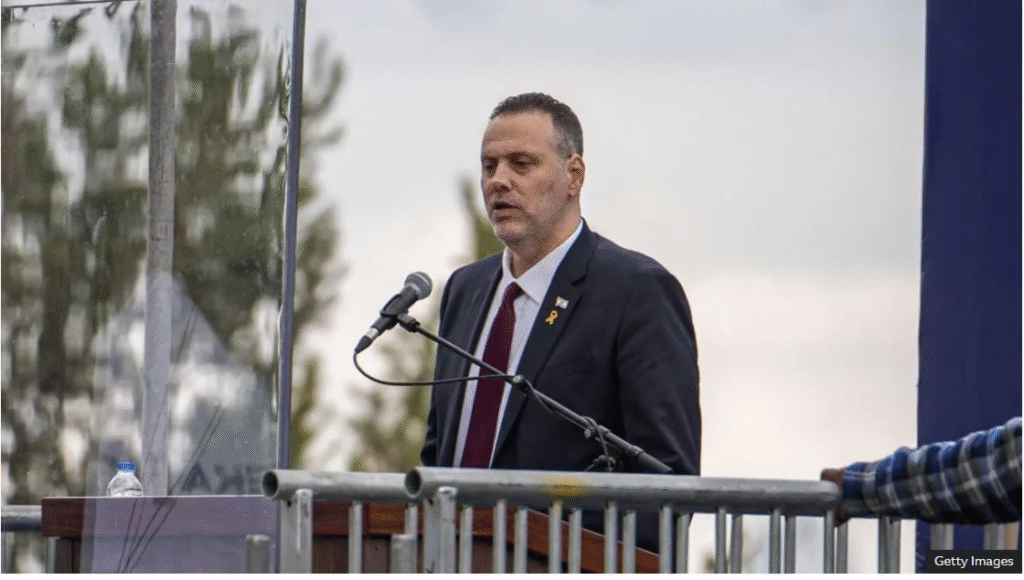
This isn’t Zohar’s first clash with filmmakers. In August 2025, upon the Ophir nominations’ release, he preemptively assailed the slate for elevating “disconnected” voices. His broader agenda includes curbing grants for projects that “perpetuate the enemy’s narrative,” a criterion vague enough to ensnare diverse works. Supporters applaud this as fiscal prudence and patriotic housekeeping; detractors see it as McCarthyism redux, eroding the pluralism that has fueled Israel’s cinematic golden age—think Waltz with Bashir or Footnote, both Ophir winners that probed national traumas.
Echoes of Outrage: Industry Backlash and Global Ripples
The film community’s retort was swift and unequivocal. Assaf Amir, chair of the Israeli Academy of Film and Television, hailed The Sea‘s triumph as a “powerful and resounding response” to governmental assaults and international boycott calls. “As the never-ending war in Gaza takes a terrible toll in death and destruction, the ability to see the ‘other’… gives small hope,” Amir stated, underscoring the film’s collaborative spirit. He expressed pride in an Arabic-language entry representing Israel at the Oscars, a testament to cinema’s bridging potential.
Directors and actors echoed this defiance. Carmeli-Pollak called the win a validation of “humanity over politics,” while Gazawi’s family highlighted the boy’s performance as a cry for all endangered children. Protests at the ceremony amplified these voices, with attendees linking the film’s themes to Gaza’s plight. The academy vowed to fight the defunding, potentially through private donors or international partnerships, though such pivots risk alienating local audiences.
Globally, the saga has amplified calls for cultural solidarity. The Ophir controversy coincides with heightened scrutiny of Israel’s actions, including raids on filmmakers like Basel Adra of No Other Land, whose West Bank home was searched post-Oscar win, and the killing of activist Awdah Hathaleen by a settler. A boycott pledge targeting Israeli festivals, signed by over 4,500 artists including high-profile Hollywood names, explicitly names the Jerusalem Film Festival—where The Sea debuted—as complicit. Yet, Amir framed the film’s Oscar bid as a counter-narrative, potentially humanizing Israel abroad.
In Israel, the divide is stark: polls show a majority favoring cultural funding tied to “Zionist values,” but filmmakers warn of a chilling effect on creativity. As The Sea sails toward Hollywood, it carries not just a boy’s dream but a nation’s fractured mirror—reflecting hopes for empathy amid escalating strife. Zohar’s gambit may rally the right, but at the cost of isolating a vibrant industry that has long illuminated Israel’s complexities. In a year defined by war’s shadows, this clash reminds us: art endures, even when patrons falter.