
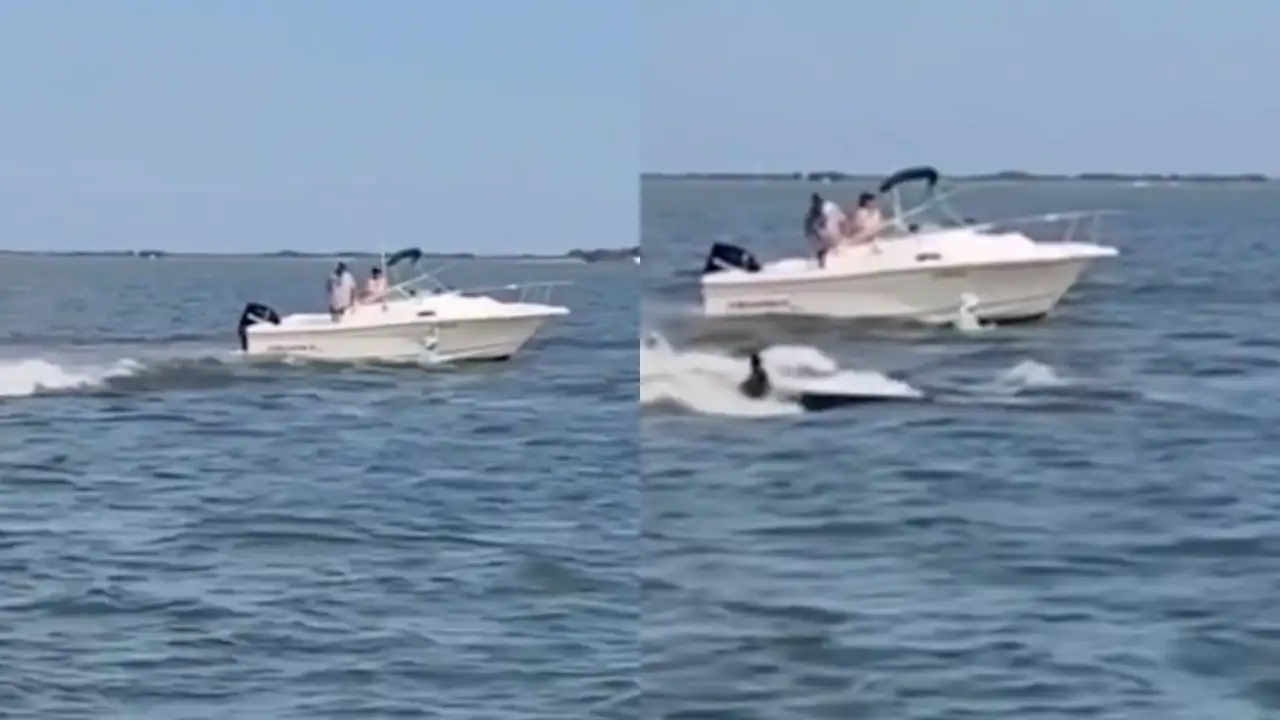
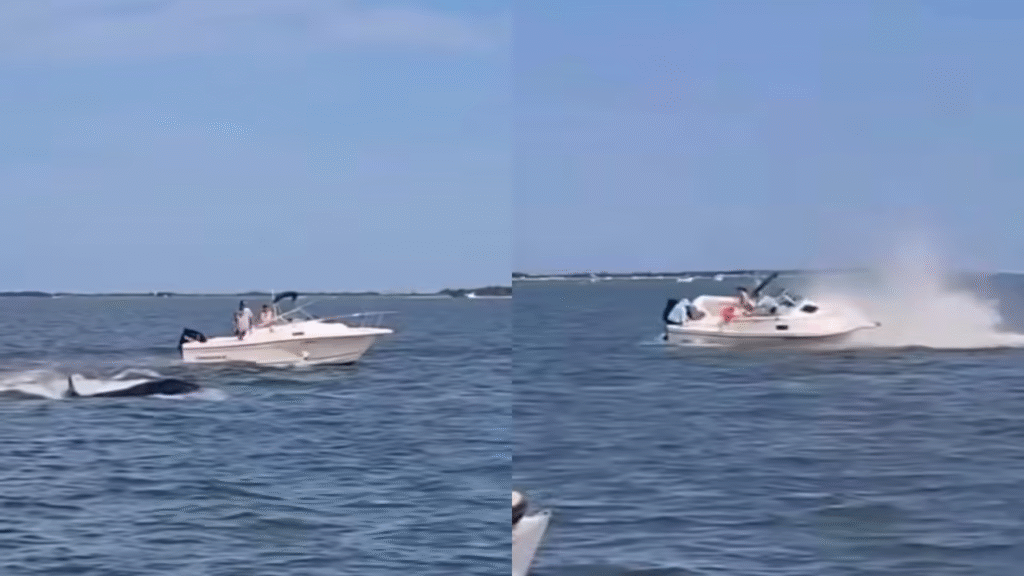
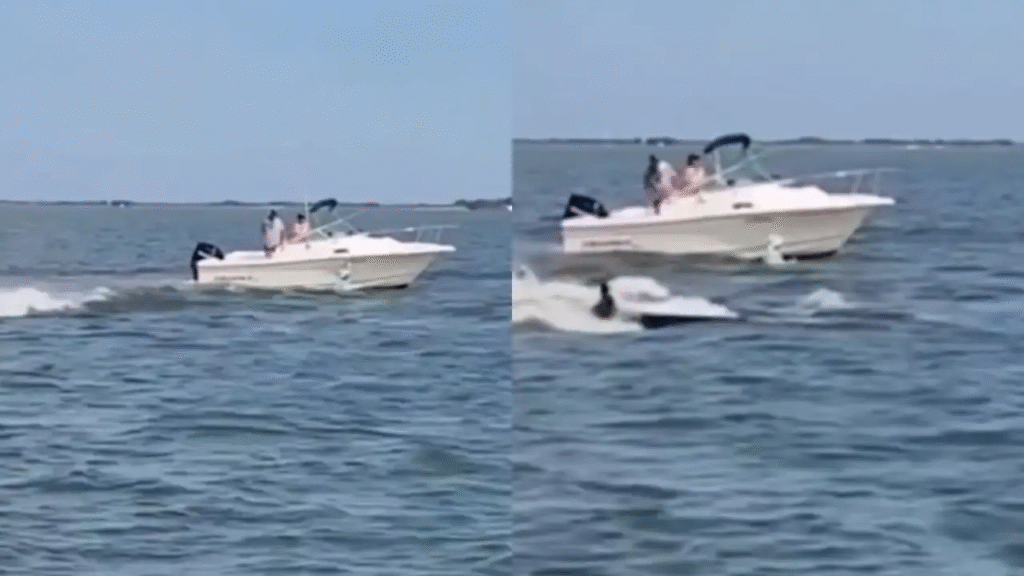
A tragic scene played out off the coast of New Jersey on a sunny Saturday afternoon, when a minke whale collided with a small motorboat in Barnegat Bay. The incident, which was captured on video and quickly circulated on social media, shows the terrifying moment the 20-foot (6-meter) whale hit the boat, causing it to lurch violently and throwing a passenger into the water.
Witnesses can be heard shouting in shock as the whale splashes near the vessel before slowly swimming away. Although the person thrown overboard managed to stay afloat and climb back into the boat, the fate of the whale was far more devastating.
Just hours later, it was found dead, stranded on a sandbar in shallow water, sparking concern and heartbreak among local marine experts and environmentalists alike. The event has drawn attention to the growing number of whale-boat collisions along the East Coast and the ongoing threats marine mammals face in increasingly busy coastal waters.
The Collision and Immediate Aftermath
Barnegat Bay, a picturesque coastal area popular among recreational boaters and tourists, became the site of a rare and disturbing incident. According to the video footage and eyewitness accounts, the minke whale surfaced unexpectedly near a small motorboat. The impact was so strong that it rocked the boat and nearly overturned it, hurling at least one person into the bay.
Those onboard screamed in panic as they scrambled to regain balance. The individual who fell into the water was seen swimming beside the boat before being helped back on board. Minke whales are typically shy and elusive, preferring deeper waters and avoiding human activity. This sudden appearance so close to shore—and the ensuing collision—was highly unusual.
Observers initially hoped the whale had escaped uninjured after it was seen swimming away. However, the grim reality became clear just a short time later when the whale was discovered lifeless on a sandbar. The whale’s massive body lay partially submerged in shallow water, its size and presence attracting attention from boaters and locals along the bay.
Whale VS Boat : A distressed 20-foot minke whale has died after colliding with a boat in Barnegat Bay near Long Beach Island, New Jersey, over the weekend. The dramatic collision threw one passenger overboard! Such a sad thing. pic.twitter.com/yOohs8VIPf
— John Cremeans (@JohnCremeansX) August 4, 2025
Sadly, marine authorities were unable to approach the whale for an initial assessment due to difficult tidal conditions. The Marine Mammal Stranding Center, a New Jersey-based nonprofit dedicated to the rescue and rehabilitation of marine life, reported that the whale was out of reach, complicating efforts to evaluate its injuries or confirm the cause of death immediately.
Marine Experts Struggle to Understand the Cause
With limited access to the whale and only a partial view of its body, experts were left with more questions than answers in the initial hours following the incident. Jay Pagel, the stranding coordinator for the Marine Mammal Stranding Center, confirmed on Sunday that the side of the whale visible to rescuers did not show obvious signs of trauma. However, Pagel also emphasized that the team’s visibility was severely restricted due to water depth and conditions.
“There are no clear external injuries on the side we could examine,” Pagel stated, “but that doesn’t mean the animal wasn’t already injured or harmed during the collision. We need a full necropsy to know more.”
Read : Watch: Endangered Whale Calf Struck by Speedboat off the Coast of New South Wales
Pagel added that reports had been circulating prior to the videoed collision, suggesting the whale may have been injured before its encounter with the boat. Another video posted online appears to show the same whale making contact with a pontoon boat earlier in the day. This second video, though less widely shared, suggests the whale may have been disoriented or already in distress before the more serious collision occurred.
Marine biologists are considering multiple possibilities: the whale may have been sick, lost, or navigating unfamiliar territory. Injured or weakened whales may struggle to avoid boats and other hazards, putting them at higher risk for collisions. Alternatively, the busy nature of Barnegat Bay—with its heavy boat traffic and noise pollution—could have disoriented the animal, leading to a tragic accident that might otherwise have been avoidable.
The Broader Threat to Marine Life
This incident, while shocking, is not an isolated one. In recent years, collisions between whales and boats have become increasingly common along the Eastern Seaboard. As human activity in coastal waters expands—with more recreational boating, commercial shipping, and fishing—whales and other marine mammals are facing greater threats than ever before.
Minke whales, while not currently endangered, are protected under the Marine Mammal Protection Act. They are typically found in deeper offshore waters but occasionally venture closer to shore. When they do, they are vulnerable to a variety of risks, including entanglement in fishing gear, ingestion of marine debris, and collisions with fast-moving vessels.
Experts have long warned that the combination of vessel speed, increased traffic, and lack of awareness among boaters creates dangerous conditions for whales. Despite public education efforts and designated “slow zones” in some areas, enforcement remains limited. In some cases, whales can be difficult to spot until it’s too late, especially smaller species like the minke, which do not always breach dramatically like humpbacks or gray whales.
The Barnegat Bay incident is likely to spark renewed calls for improved monitoring and stricter regulations in busy boating areas. Marine conservationists are urging authorities to enforce slower speed limits and enhance public awareness campaigns about whale safety and reporting protocols.
Pagel and his team plan to tow the whale to a nearby state park on Monday morning, where a full necropsy will be conducted. The goal is to determine the definitive cause of death, which may shed more light on whether the boat collision was the primary factor or merely the final blow to an already injured animal. The results could guide future efforts to protect whales and prevent similar tragedies.
In the meantime, the image of the stranded whale, lifeless on the sandbar, remains a somber reminder of the delicate balance between human recreation and wildlife conservation.
A Wake-Up Call for Boaters and Policymakers
The death of the minke whale off New Jersey’s shore is more than a freak accident—it’s a symbol of an ongoing crisis in the relationship between humans and the ocean. While many boaters are respectful and aware of marine life, incidents like this show how quickly things can go wrong when nature and machinery collide.
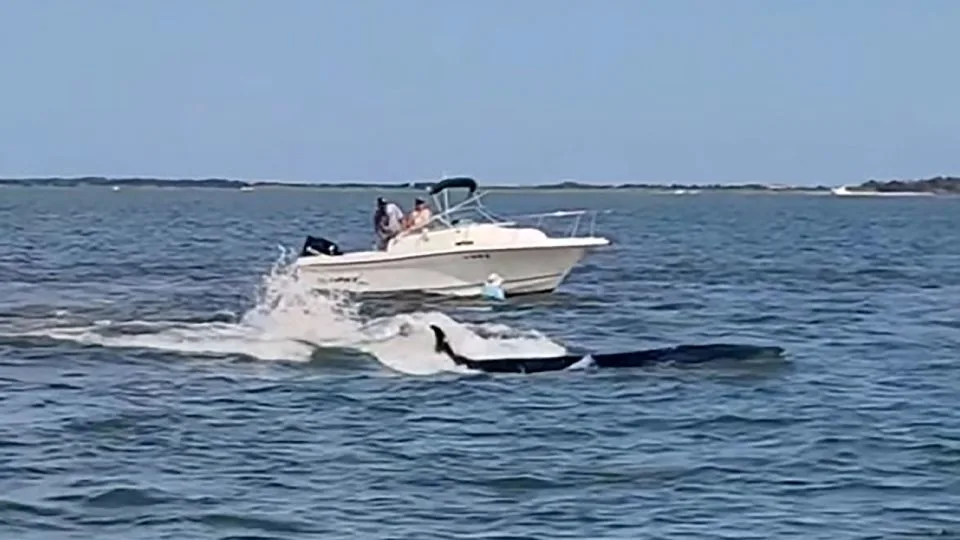
Videos of the encounter continue to circulate online, prompting widespread reactions ranging from sorrow to outrage. Some viewers have questioned why the boat did not take evasive action, while others express concern over the increasing encroachment of human activity into marine habitats. However, marine experts caution against assigning blame without a full understanding of the circumstances. As Pagel noted, “It’s likely no one intended for this to happen. But that doesn’t mean it couldn’t have been prevented.”
Environmental organizations are using this moment to advocate for increased research into whale behavior and habitat use along the Atlantic coast. They argue that better data could inform zoning rules, boating guidelines, and technology that helps prevent collisions—such as sonar alerts or AI-assisted monitoring of marine mammal locations.
The sad fate of this whale may also serve as a crucial teaching moment. By understanding the risks whales face and adjusting our behaviors, humans can help ensure that such tragedies do not continue to unfold in our waters. The sea is not just a playground—it is a living, breathing ecosystem that demands respect, care, and caution.
As the necropsy is prepared and investigations continue, one truth remains clear: the ocean’s gentle giants are at risk, and it is up to us to decide what kind of legacy we will leave for them. Will we continue to share the seas carelessly, or will we finally listen to the signs and shift our approach? The death of the minke whale in Barnegat Bay may just be the wake-up call we need.