
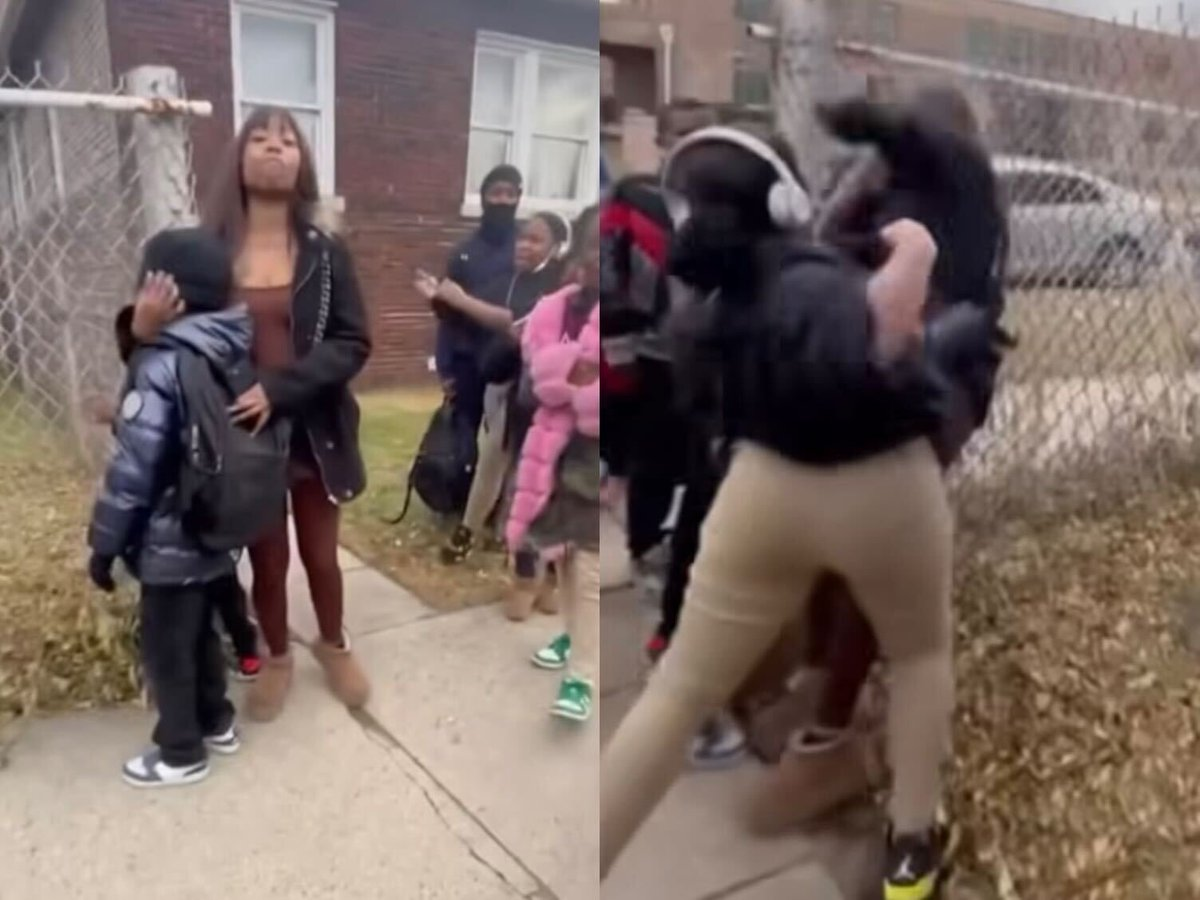
A violent incident involving a mother and her children near an elementary school on Chicago’s Far South Side has drawn national attention, prompting criminal charges against seven minors and renewed scrutiny of youth safety and supervision in public spaces. The attack occurred in November in the South Deering neighborhood and was captured on video that later spread widely across social media and news platforms. Authorities say a group of children chased, taunted, and physically assaulted 33-year-old Corshawnda Hatter while she attempted to protect her young son and other children walking with her near Orville T. Bright Elementary School.
Chicago police confirmed that all seven individuals involved are minors aged 13 or younger. Each has been charged with misdemeanor battery and referred for counseling services. The juveniles were released from custody as the investigation continues. While law enforcement officials have emphasized that the legal process is ongoing, the incident has already had a significant impact on the victim’s family and has sparked responses from city leadership, Chicago Public Schools, and community members who have mobilized to provide assistance.
The episode has also reignited discussions about school-area safety, the role of community intervention, and the broader social factors that can contribute to youth violence. With video evidence circulating widely, the case has become a focal point for conversations about accountability, trauma, and preventive measures in neighborhoods facing persistent challenges.
Details of the November Attack in South Deering
According to police reports, the incident took place on November 17 near the intersection of 106th Street and Bensley Avenue, just down the street from Orville T. Bright Elementary School. Corshawnda Hatter was walking with her 9-year-old son and other children when a group of minors began following them. Authorities said the group called the family names, taunted them verbally, and then escalated the encounter into physical violence.
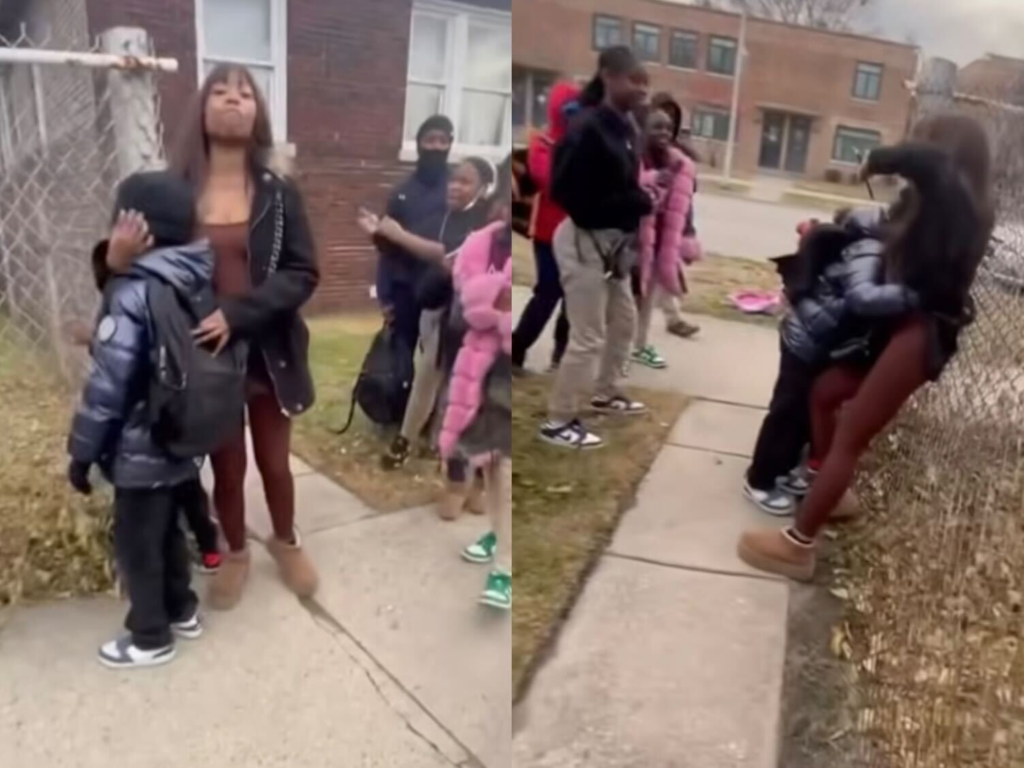
Video footage of the assault shows multiple children surrounding Corshawnda Hatter and her son. The recording, which later went viral, depicts the mother attempting to shield her child while being struck and pushed. Police said the encounter unfolded in a public area near the school, raising concerns about the safety of families traveling to and from educational facilities.
The footage quickly circulated online, drawing widespread attention and condemnation. Many viewers expressed shock at the age of the alleged attackers and the intensity of the assault. The visibility of the video played a significant role in accelerating public awareness of the case and in prompting responses from city officials. Police investigators identified seven juveniles as being involved in the incident. All were charged with misdemeanor battery.
Law enforcement officials stated that, due to their age, the minors were processed through the juvenile justice system. Each was referred to counseling services, and none remain in custody at this time. Authorities have not released the names of the minors, citing their age and juvenile privacy protections. Police emphasized that the investigation remains active, suggesting that additional steps may be taken as evidence continues to be reviewed.
Corshawnda Hatter and her family have been moved to a safe, undisclosed location. Her children will be enrolled in a new school and provided therapy. A GoFundMe is now set up to support them for the holidays and beyond. The best part? Corshawnda is pressing charges against the… pic.twitter.com/NI9dhi3x1t
— Daphne (@celebriD) November 20, 2025
The location of the incident has been a central point in discussions surrounding the case. Orville T. Bright Elementary School serves students from the surrounding South Deering community, and parents have raised concerns about supervision and security in areas adjacent to school grounds. While the assault did not occur on school property, its proximity to the campus has amplified calls for preventive measures during school arrival and dismissal times.
Impact on Corshawnda Hatter and Her Family
In the days following the attack, Corshawnda Hatter spoke publicly about the physical and emotional toll the incident has taken on her and her children. In an interview with CBS News Chicago, she said she was still experiencing pain from the assault and described the ongoing distress affecting her family. Hatter recounted how her 9-year-old son has struggled in the aftermath. She described episodes in which he wakes up at night screaming, repeatedly calling out to ensure that his mother is present.
These reactions, she said, reflect the lingering trauma caused by the violent encounter. The emotional effects have extended beyond her son to the rest of her household. Corshawnda Hatter said her children have become more fearful in public settings, particularly when walking outside. The sense of security that once accompanied routine activities, she explained, has been significantly diminished.
Read : 2-Year-Old Key’Monnie Bean Beaten to Death by Mother’s 21-Year-Old Boyfriend
In response to the widespread attention generated by the viral video, members of the community and individuals from across the country began offering assistance. Community members stepped in to help Hatter relocate from the South Deering neighborhood, citing concerns for her family’s safety and well-being. The support included financial contributions and logistical help aimed at providing the family with a fresh start away from the area where the attack occurred.
The public response has underscored the extent to which the incident resonated beyond Chicago. Messages of support, donations, and offers of assistance poured in after the video circulated online. While the relocation effort was not initiated by city officials, it reflected a grassroots response to the circumstances faced by the family. Despite the support, Corshawnda Hatter has emphasized that the experience has been deeply unsettling. She has stated that the attack has altered her family’s daily routines and sense of normalcy.
The psychological impact, particularly on her children, remains a central concern as they attempt to recover from the event. Advocates and mental health professionals have pointed to cases like this as examples of how violent incidents involving minors can have lasting consequences for victims. The emphasis on counseling referrals for the juveniles involved has been framed by authorities as part of an effort to address underlying issues while balancing accountability within the juvenile justice system.
Official Responses and Ongoing Investigation
City leaders and educational authorities responded swiftly after the video of the attack gained national attention. In a statement, Chicago Mayor Brandon Johnson said he was “deeply disturbed” by the footage, characterizing the incident as unacceptable and troubling. His remarks aligned with broader concerns expressed by residents about safety in neighborhoods surrounding schools.

Chicago Public Schools also issued a response, stating that there would be increased security measures in the area. While specific details were not immediately outlined, CPS officials indicated that additional steps would be taken to ensure safer environments for students and families traveling near school grounds. The announcement was intended to reassure parents and community members following the widely publicized incident.
Law enforcement officials reiterated that the case remains under investigation. Police confirmed that all seven juveniles involved were 13 years old or younger at the time of the attack. The misdemeanor battery charges represent the current legal status of the case, though investigators continue to review evidence and witness statements. The decision to refer the minors to counseling services reflects standard practices within the juvenile justice framework, which often prioritizes rehabilitation alongside accountability.
Authorities have not indicated whether additional charges could be filed but have stated that the investigation is ongoing. Community leaders have pointed to the case as highlighting broader challenges related to youth behavior, supervision, and access to resources. While officials have avoided drawing conclusions beyond the specifics of the incident, the attack has become part of a larger conversation about preventive strategies and support systems for young people.
The national attention generated by the video has placed added pressure on institutions to demonstrate responsiveness. The visibility of the case has also amplified scrutiny of how similar incidents are handled and how communities can work collaboratively to prevent future occurrences. As the legal process continues, the focus remains on the well-being of the victim and her children, as well as on the outcomes for the juveniles charged in connection with the assault. Authorities have emphasized that updates will be provided as the investigation progresses, underscoring that the case is not yet concluded.
**mitolyn reviews**
Mitolyn is a carefully developed, plant-based formula created to help support metabolic efficiency and encourage healthy, lasting weight management.