
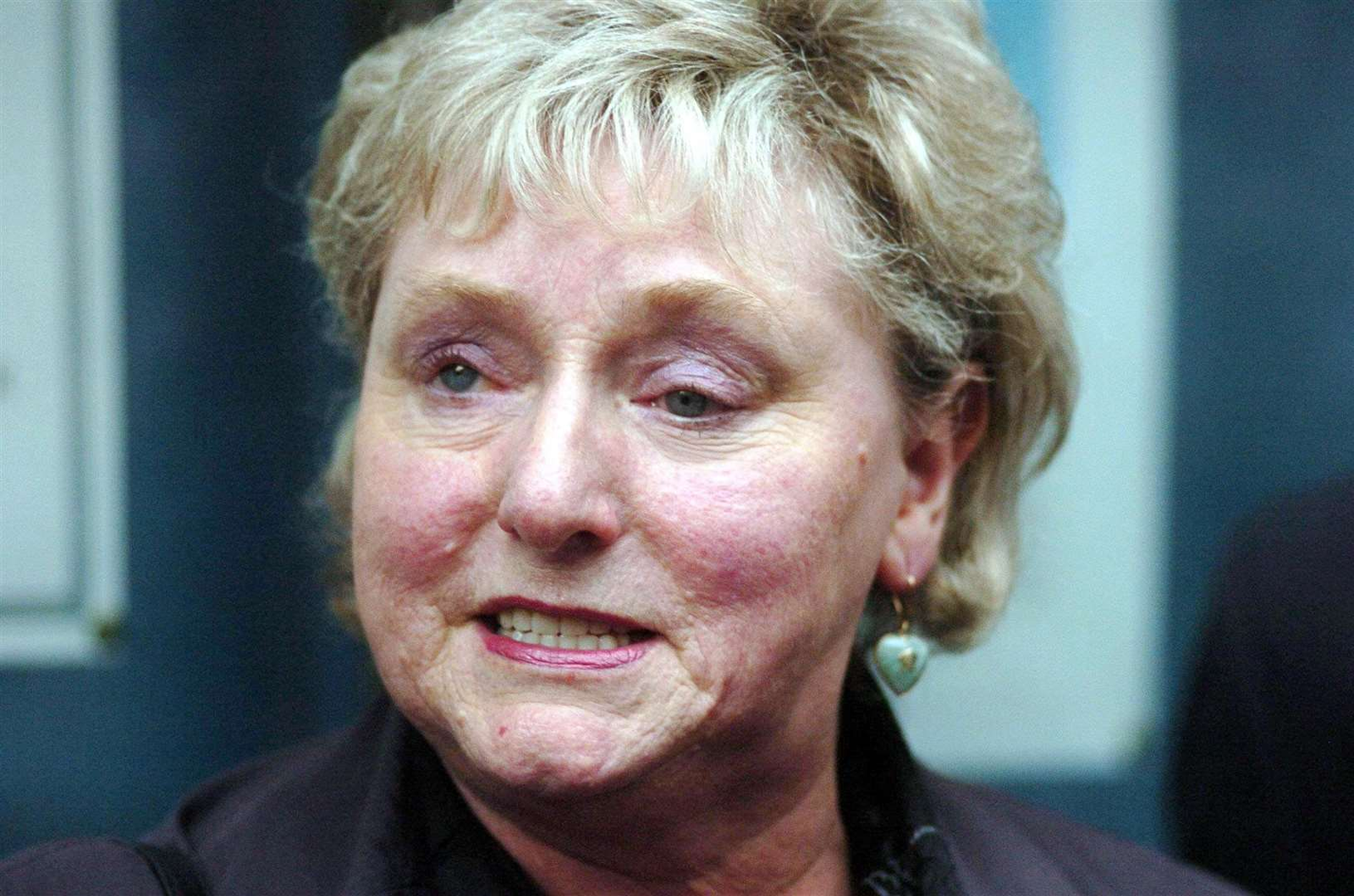
Justice is often a long and arduous road, especially for families of victims who have suffered unimaginable loss. For Ann Ming, the battle to bring her daughter’s killer to justice was not just about seeking closure but also about changing an age-old legal principle that allowed murderers to evade justice.
Her tireless efforts led to a historic legal reform, ensuring that criminals could be retried even after an acquittal. Yet, despite her perseverance, she now finds herself fighting once again—this time against the Parole Board’s decision to move her daughter’s killer, William Dunlop, to an open prison.
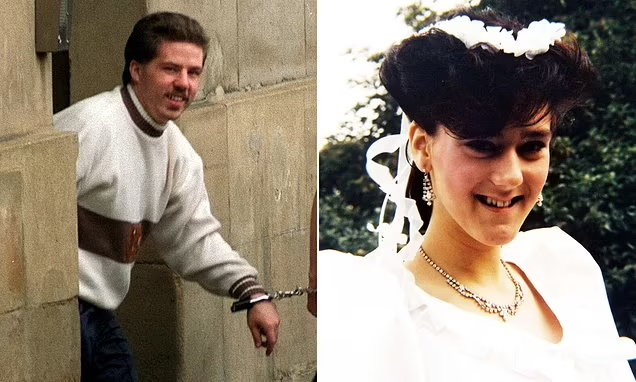
William Dunlop was convicted of the brutal murder of Julie Hogg, a 22-year-old pizza delivery woman from Billingham, County Durham. In 1989, Dunlop strangled Julie in a premeditated and horrific attack before hiding her body behind a bath panel, where it remained undiscovered for over two months.
At the time, despite being tried twice for the crime, both juries failed to reach a verdict, allowing him to walk free under the double jeopardy law. However, Dunlop later confessed to the murder while serving time for another crime, boasting that he could not be retried due to the existing legal framework.
This blatant miscarriage of justice spurred Ann Ming into action. Over the next fifteen years, she campaigned relentlessly to change the 800-year-old double jeopardy law, arguing that it should not shield murderers who had been acquitted due to a lack of evidence but later confessed.
Her dedication bore fruit in 2006 when the law was reformed, allowing Dunlop to be retried for Julie’s murder. He became the first person to be convicted under the new law and was sentenced to life imprisonment.
Now, nearly two decades later, the Parole Board has recommended that Dunlop be moved to an open prison, a decision that has left Ann Ming feeling deflated and betrayed. She has publicly voiced her disbelief and dismay, questioning how anyone could fall for his claims of reform. To her, the idea that Dunlop could be trusted outside the strict confines of a high-security prison is not just naive but dangerous.
The Role of the Parole Board and the Risks of Open Prisons
The Parole Board is responsible for assessing whether a prisoner poses a continued risk to society. Their recommendation to transfer Dunlop to an open prison suggests they believe he no longer poses an immediate threat.
However, open prisons operate under far less restrictive conditions, allowing inmates more freedom and even opportunities for day releases. This transition is often a precursor to full release, something that deeply concerns Ann Ming and many others who fear Dunlop may reoffend.
Read : Mother Jailed for Killing 4-Year-Old Diabetic Daughter by Feeding Her Mountain Dew in US
Ms. Ming has expressed strong concerns about the Parole Board’s decision, arguing that some individuals are simply beyond rehabilitation. She insists that Dunlop is one such person, citing his past manipulation and deceit as evidence that he cannot be trusted.

Having witnessed his ability to evade justice once before, she dreads the possibility that another family might suffer due to his release. Her stance is firm: life should mean life, especially for someone who has committed such a heinous crime and then attempted to exploit the legal system.
Moreover, public safety remains a critical consideration in such decisions. Critics argue that the parole system, despite its rigorous assessments, is not infallible.
There have been numerous instances where convicted criminals released under parole conditions have gone on to commit further crimes. Given Dunlop’s history of manipulation and his brutal crime, there is valid concern that he remains a threat, even if he presents himself as reformed.
The Impact on Victims’ Families and the Justice System
For families of murder victims, the sentencing of a killer to life in prison offers a semblance of justice and closure. However, when parole decisions like this arise, it reopens old wounds and forces them to relive their trauma.
Ann Ming has already endured the pain of losing her daughter, the frustration of failed trials, and the grueling process of changing the law to finally secure justice. The prospect of Dunlop gaining more freedom is not just a personal betrayal but a wider failure of the justice system to uphold its commitment to victims and their families.
Ms. Ming’s outcry also highlights broader issues within the justice system, particularly around the meaning of life sentences. In the UK, a life sentence does not always mean imprisonment for life; instead, it often includes the possibility of parole after a minimum term is served. This discrepancy between public perception and legal reality has led to increasing calls for tougher sentencing and stricter parole policies for violent criminals.
In response to this case, there is likely to be renewed debate on whether certain crimes should warrant a whole-life order, where parole is never an option.
Whole-life orders are currently reserved for the most egregious crimes, but many believe that cases like Dunlop’s, where the murder was particularly brutal and premeditated, should automatically qualify. The question remains whether justice should prioritize rehabilitation or whether, in some cases, the risk of recidivism is simply too great.
Public Reaction and the Role of the Justice Secretary
The final decision on Dunlop’s transfer to an open prison rests with the Justice Secretary, Shabana Mahmood. Given the public outcry and Ms. Ming’s strong opposition, there is significant pressure on the government to intervene and prevent Dunlop from gaining more freedom. Cases like this often become a test of the justice system’s ability to balance rehabilitation with public safety and victims’ rights.
Public opinion appears to be on Ms. Ming’s side, with many expressing outrage that a convicted murderer with a history of deception could be granted leniency. Advocacy groups supporting victims’ rights argue that such decisions undermine trust in the justice system and signal a lack of respect for those who have suffered irreparable loss.
Conversely, some legal experts argue that parole decisions should remain objective, based on risk assessments rather than emotional responses. However, when the case involves an individual who has exploited the system before, skepticism about his so-called rehabilitation is understandable.
Ms. Ming has urged the Justice Secretary to overrule the Parole Board’s recommendation, emphasizing that her daughter’s killer should never have the opportunity to manipulate his way into society again.
For her, and many others, the issue is clear: William Dunlop took an innocent life in a horrific act of violence, and the only way to ensure justice is to keep him behind bars for the rest of his days.
Ann Ming’s fight for justice has already left a significant mark on the UK legal system, but her battle is not over. The Parole Board’s decision to recommend William Dunlop’s transfer to an open prison has reignited painful memories and raised serious concerns about public safety. For Ms. Ming, the idea that life should mean life is not just about her personal loss but about ensuring that justice is truly served.
As the Justice Secretary deliberates on the final decision, the case serves as a stark reminder of the complexities of the legal system, the ongoing struggles of victims’ families, and the difficult balance between rehabilitation and punishment.
While society must strive to reform offenders where possible, there are cases where the risk is simply too great. In the eyes of many, including Ann Ming, William Dunlop’s case is one of them. The question now is whether the justice system will listen.