

The wrongful death lawsuit filed by Massachusetts mother Jacquelyn Tremblett against Tesla brings renewed scrutiny to the safety design of electric vehicles, particularly the use of electronically operated doors. The case centers on the death of her 20-year-old son, Samuel Tremblett, who was unable to escape his Tesla Model Y after it crashed and caught fire in Easton, Massachusetts.
According to court filings, Samuel was alive after the collision and repeatedly pleaded for help during a 911 call, stating that he was trapped inside the burning vehicle and could not breathe. The lawsuit alleges that Tesla’s door design, which relies primarily on electronic operation, rendered the vehicle inescapable after the crash and directly contributed to his death. Beyond a single tragedy, the case raises broader questions about manufacturer responsibility, prior knowledge of design risks, and whether safety concerns were adequately addressed despite repeated warnings and reported fatalities.
The Fatal Crash and the Events Leading to Samuel Tremblett’s Death
The incident occurred on October 29 when Samuel Tremblett was driving his Tesla Model Y along Route 138 in Easton. According to the Bristol County District Attorney’s Office, the vehicle veered off the roadway, crossed traffic lanes, struck a tree, and immediately burst into flames. The impact caused extensive damage to the car, which came to rest roughly 20 feet from the road in a wooded area. First responders arriving at the scene reported that the Tesla was already fully engulfed and that multiple explosions occurred within the first ten minutes, consistent with battery-related fire behavior.
Crucially, investigators determined that Samuel survived the initial collision. During a recorded 911 call, he told dispatchers that he was trapped inside the car as it burned. He pleaded repeatedly for assistance, stating, “I can’t breathe. It’s on fire. Help. Please. I’m going to die.” These statements form a central part of the lawsuit, which argues that the young man’s death was not instantaneous but occurred after a period in which escape may have been possible had the doors functioned differently.
Emergency responders were unable to open the doors due to the extent of the damage and the apparent failure of the vehicle’s door mechanisms. By the time Samuel could have been extricated, the fire had intensified, and he succumbed to heat-related injuries and smoke inhalation. The official cause of death, as cited in the complaint, was heat thermal injuries and inhalation of combustion byproducts.
Read : From Amazon Rainforest to Rio: Must-See Places in Brazil
Samuel Tremblett was a student at Syracuse University and was pursuing a career in fashion and modeling. His mother has described him as ambitious and creative, noting that he had already launched his own clothing line. The lawsuit emphasizes these details not as sentiment, but to demonstrate the scale of the loss and the life that was cut short. From the family’s perspective, the most devastating aspect of the incident is that Samuel was conscious, aware of his circumstances, and actively seeking help while being unable to escape a vehicle that was marketed as safe.
Allegations of Defective Door Design and Prior Knowledge by Tesla
At the core of the lawsuit is the claim that Tesla vehicles, including the Model Y, are equipped with an “unreasonably dangerous design” due to their reliance on electronically operated door handles. According to the complaint, these door handles can become inoperable during or after a crash if the vehicle experiences an electrical failure, particularly in frontal or high-impact collisions. When this occurs, occupants may be unable to open the doors from either the inside or outside.
The lawsuit further alleges that in many Model Y vehicles, there is either no accessible external manual override or that any internal manual release is located in an inconspicuous position without clear emergency labeling. As a result, even if a manual release exists, occupants may be unaware of it or unable to locate it in a high-stress emergency involving smoke, fire, or injury. This design, the complaint argues, effectively traps occupants inside the vehicle when electrical systems fail.
Read : 37-Year-Old Man Injured After Tesla Model Y Crashes and Catches Fire Due to Medical Emergency
Jacquelyn Tremblett’s legal team contends that Tesla has been aware of these risks for years. The lawsuit cites internal concerns reportedly raised by Tesla engineers who warned that exclusive reliance on electronic door handles could be dangerous in crash scenarios involving power loss. Despite these warnings, the complaint alleges that the company continued to prioritize a sleek, minimalist exterior design over safety modifications that could have reduced the risk of entrapment.
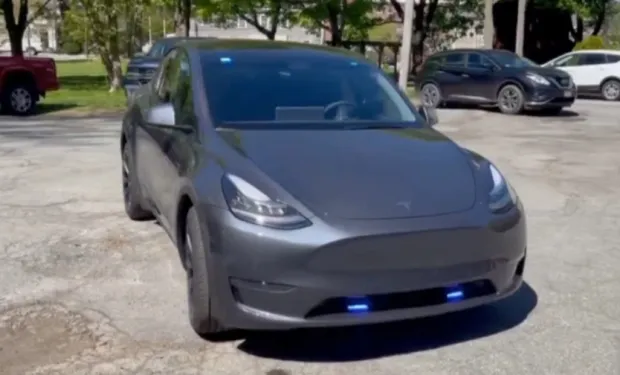
The filing references at least 15 deaths since 2016 in which individuals were allegedly trapped inside Tesla vehicles following crashes that resulted in fires. These incidents are presented as evidence of a recurring and foreseeable problem rather than isolated anomalies. In one cited case from 2016, a Tesla Model S crashed near downtown Indianapolis. Witnesses reportedly observed the driver alive after the crash, but he could not exit the vehicle.
He was extricated approximately 20 minutes later and later died from heat injuries. In another incident in Florida, a police officer allegedly attempted to rescue a driver from a burning Tesla but was unable to open the doors because the handles were retracted. The lawsuit also references public statements made by Tesla CEO Elon Musk, including remarks during a 2018 earnings call in which he described Tesla as being “absolutely hardcore about safety” and suggested that safety was a primary reason to recommend Tesla vehicles.
According to Jacquelyn Tremblett’s attorney, these statements stand in stark contrast to what the lawsuit characterizes as the company’s failure to correct a known design defect. The complaint asserts that Tesla “carelessly, negligently, and with gross negligence” designed and marketed vehicles that posed a foreseeable risk to occupants in severe crashes.
Legal Implications and Broader Questions About Vehicle Safety Accountability
The wrongful death lawsuit filed in Boston federal court seeks to hold Tesla legally accountable for Samuel Tremblett’s death and to compel broader recognition of what the family alleges is a systemic safety flaw. While the suit seeks damages, it also aims to bring public attention to the risks associated with electronically controlled doors in emergency situations. Jacquelyn Tremblett has stated that her objective extends beyond compensation, emphasizing the need for consequences and transparency so that other families do not experience similar losses.
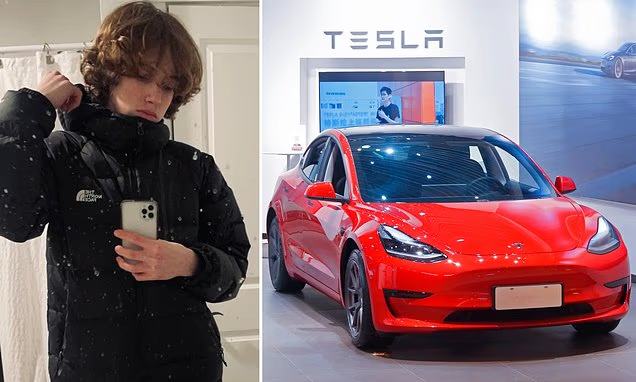
From a legal standpoint, the case may hinge on whether plaintiffs can demonstrate that Tesla knew or should have known about the alleged defect and failed to take reasonable steps to address it. Product liability law typically requires proof that a design was unreasonably dangerous and that a safer alternative design was feasible. The complaint argues that manual external door releases or more clearly marked and accessible internal releases could have prevented entrapment without undermining vehicle aesthetics or functionality.
The lawsuit also raises questions about regulatory oversight and whether existing vehicle safety standards adequately address post-crash escape scenarios, particularly in electric vehicles. While electric cars undergo extensive crash testing, critics argue that current standards may not sufficiently account for battery fires, delayed ignition, or the effects of electrical system failure on door operability. The Tremblett case could prompt closer examination of whether regulations should require more robust mechanical fail-safes for emergency egress.
Tesla has not publicly commented on the lawsuit as of the latest reports. The company has historically defended its safety record by citing crash test ratings and data suggesting that Tesla vehicles have lower rates of injury per mile driven compared to conventional cars. However, the Tremblett lawsuit focuses not on crash avoidance or overall accident frequency, but on survivability and escape after a severe collision.
If the case proceeds to trial, it may involve extensive expert testimony on vehicle design, human factors engineering, and emergency response limitations. The outcome could influence not only Tesla’s future design choices but also industry-wide practices regarding electronic components that affect occupant safety in worst-case scenarios. For Jacquelyn Tremblett, the case represents an effort to ensure that her son’s final moments are not dismissed as unavoidable, but examined as the result of decisions that, in her view, could and should have been different.
I’m truly enjoying the design and layout of your site. It’s a very easy on the eyes which makes it much more pleasant for me to come here and visit more often. Did you hire out a designer to create your theme? Fantastic work!
I have recently started a web site, the info you provide on this site has helped me greatly. Thanks for all of your time & work.
Saved as a favorite, I really like your blog!
Thanks for helping out, wonderful info. “Considering how dangerous everything is, nothing is really very frightening.” by Gertrude Stein.