
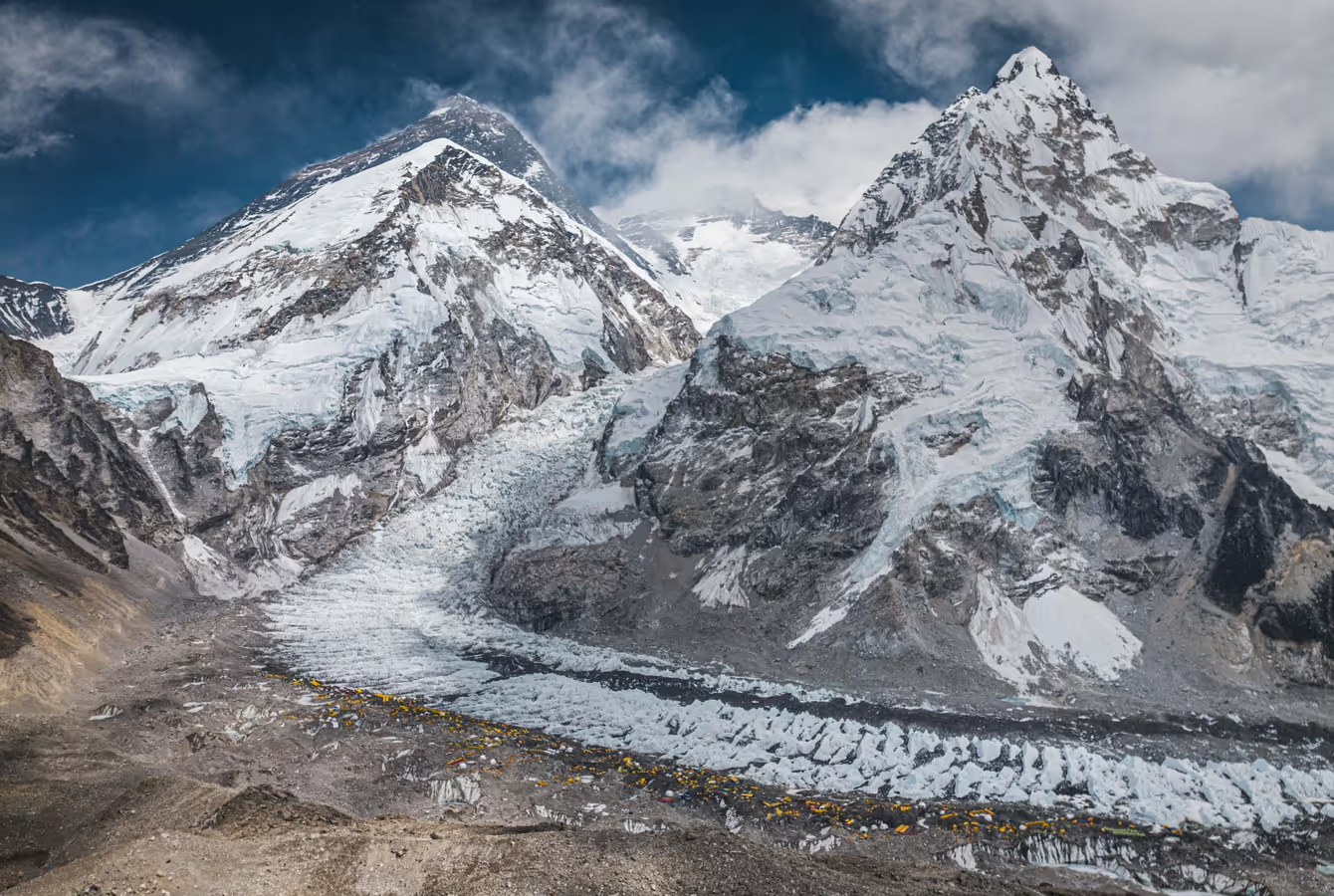
Mount Everest is growing, and the fascinating interplay between rivers and geological processes has recently revealed new insights into this phenomenon. A groundbreaking study published in Nature Geoscience confirms that Mount Everest is growing faster than previously thought.
Approximately 89,000 years ago, the Kosi River merged with the Arun River, triggering a chain of events that has significantly impacted the growth of this iconic mountain.
For millions of years, the collision of the Indian and Eurasian tectonic plates has been responsible for the uplift of the Himalayas. Yet recent research shows that Mount Everest is growing even faster than scientists expected.
The Mount Everest is growing phenomenon, largely attributed to the Kosi and Arun rivers’ merger, is a compelling illustration of how Earth’s natural systems are intricately connected.
Read : Pilgrims Get First View of Kailash Peak from Indian Territory
This study sheds new light on the ongoing growth of Everest and neighboring peaks like Lhotse and Makalu, emphasizing the role of rivers, erosion, and isostatic rebound in shaping the tallest mountain on Earth.
The Role of Kosi and Arun River in Mount Everest’s Growth
Mount Everest is growing at an impressive rate due to the effects of the Kosi and Arun rivers. Approximately 89,000 years ago, these two rivers merged, leading to an estimated height increase of 49 to 164 feet (15 to 50 meters) for Mount Everest.
Read : Guide to Climb the Highest Peak on Earth : Mount Everest
The process behind this growth is called isostatic rebound, a geological phenomenon that occurs when the Earth’s crust responds to changes in weight, usually caused by the removal of large amounts of material from its surface.
The merged rivers significantly increased erosion in the region, removing vast amounts of rock and soil. As the weight on the Earth’s crust decreased, the land beneath began to rise, much like how a boat rises in water when its cargo is unloaded.
This isostatic rebound accounts for about 10% of Everest’s annual uplift rate, estimated at 0.01 to 0.02 inches (0.2 to 0.5 millimeters) per year. This uplift is remarkable because it outpaces the natural surface erosion caused by wind, rain, and river flow.
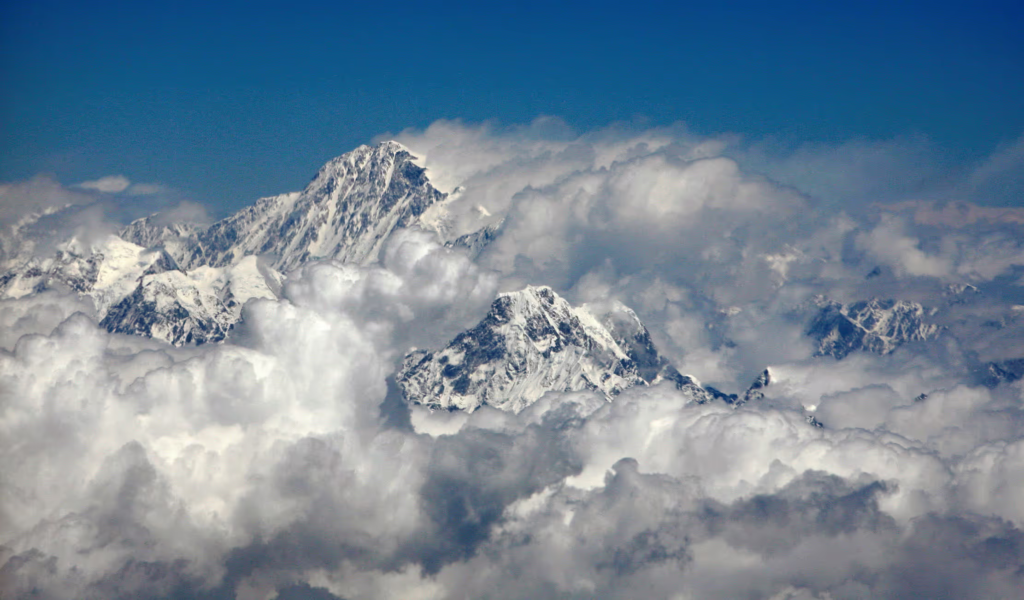
Scientists have long known that the Himalayas are rising, but the discovery that Mount Everest is growing even faster than anticipated has shifted the focus to the Kosi and Arun rivers.
The study led by Jin-Gen Dai from China University of Geosciences in Beijing highlights how this river system change has directly influenced Everest’s rapid growth. It’s a striking example of how natural forces combine to shape Earth’s landscape in profound ways.
The Geological Process of Isostatic Rebound
Isostatic rebound plays a crucial role in explaining why Mount Everest is growing. When large amounts of material are eroded from Earth’s surface, the reduced weight allows the crust to rise.
This is the process currently occurring beneath Mount Everest due to the Kosi and Arun rivers’ impact on the region’s landscape. The erosion caused by the rivers removed enough material to trigger this rebound, allowing Everest to grow taller over time.
The study suggests that isostatic rebound accounts for approximately 10% of the total uplift rate for Mount Everest. While 0.01 to 0.02 inches per year may not seem like much, this growth adds up over millennia, contributing to Everest’s continued rise.
Furthermore, this process is not limited to Mount Everest alone. Neighboring peaks like Lhotse and Makalu are also experiencing uplift due to similar isostatic forces, with Makalu’s growth being slightly higher since it is closer to the Arun River.

The impact of isostatic rebound on Mount Everest is growing highlights the dynamic nature of our planet. Even the tallest and most iconic mountains are not static; they continue to evolve and change due to the forces of erosion, tectonic activity, and geological processes like isostatic rebound.
The Earth’s crust, constantly responding to changes in weight and pressure, underscores how interconnected natural systems shape the landscape in ways that are often imperceptible in our daily lives.
Everest’s Growth in the Context of Geological Time
While Mount Everest is growing at a rate of about 0.08 inches per year, this growth is part of a much larger and slower process that has been occurring for millions of years.
The Himalayas themselves began to form around 50 million years ago due to the collision between the Indian and Eurasian tectonic plates. This tectonic activity caused the land to buckle and rise, giving birth to the towering peaks we see today.
Everest, standing at 8.85 kilometers (29,032 feet) above sea level, is still growing because of these tectonic forces. However, what makes this new discovery particularly intriguing is how much the regional river system contributes to this growth.
The research shows that while tectonic forces are responsible for the majority of Everest’s uplift, the rivers have also played a significant role in shaping the mountain.
The Mount Everest is growing phenomenon is not limited to the mountain itself. Neighboring peaks like Lhotse and Makalu are also experiencing uplift, driven by both tectonic activity and isostatic rebound.
Makalu, being closer to the Arun River, has a slightly higher uplift rate than Everest, demonstrating how local geological features can influence the growth of specific mountains within a range.
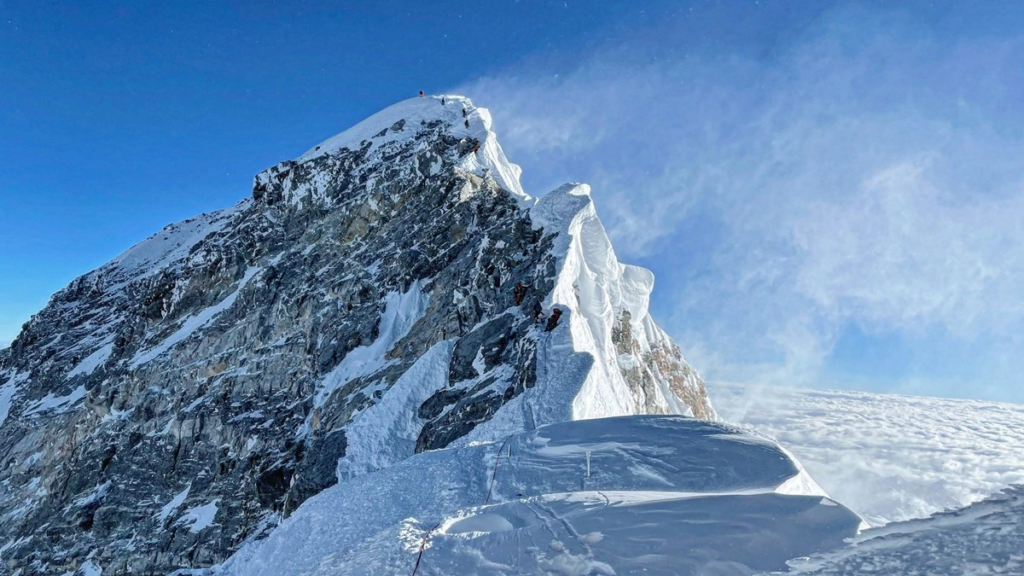
Over time, erosion will continue to remove material from the region, but as long as isostatic rebound and tectonic forces are at play, Everest will continue to rise. The ongoing growth of the Himalayas serves as a reminder that even the most imposing natural features are subject to change over geological time.
The Significance of the Study
This study provides valuable insights into the forces driving the growth of Mount Everest and the Himalayas. It highlights the interconnectedness of natural systems—how rivers, erosion, and tectonic forces work together to shape the landscape.
The fact that Mount Everest is growing due to both isostatic rebound and tectonic activity reveals the complexity of the processes involved.
Adam Smith, a co-author of the study and doctoral student at University College London, notes that GPS measurements confirm the continued rise of Everest and the surrounding Himalayas.
These precise measurements offer a real-time look at how Earth’s crust is responding to changes in the region, providing important data for future research.
While isostatic rebound accounts for only a portion of the total uplift rate, it could become an even more significant factor in the future. As erosion continues to remove material from the region, the land beneath could rise even faster, potentially accelerating the growth of Mount Everest and neighboring peaks.
This research not only deepens our understanding of how Mount Everest is growing but also offers a glimpse into the dynamic processes shaping our planet. It serves as a reminder that the Earth is constantly evolving, with even the tallest and most iconic features subject to change over time.

The discovery that Mount Everest is growing faster than previously thought due to the merger of the Kosi and Arun rivers adds a new layer of understanding to the geological forces at work in the Himalayas. Isostatic rebound, driven by the removal of material through erosion, has played a significant role in the mountain’s ongoing growth. While tectonic forces remain the primary driver, the impact of rivers on the uplift rate cannot be ignored.
This study emphasizes the complexity of Earth’s natural systems and the ongoing evolution of even the most imposing landscapes. Mount Everest, which has captivated explorers and scientists alike, continues to grow, and its story is far from over. As research continues to uncover new insights, it becomes clear that the forces shaping Everest are as dynamic as the mountain itself.