
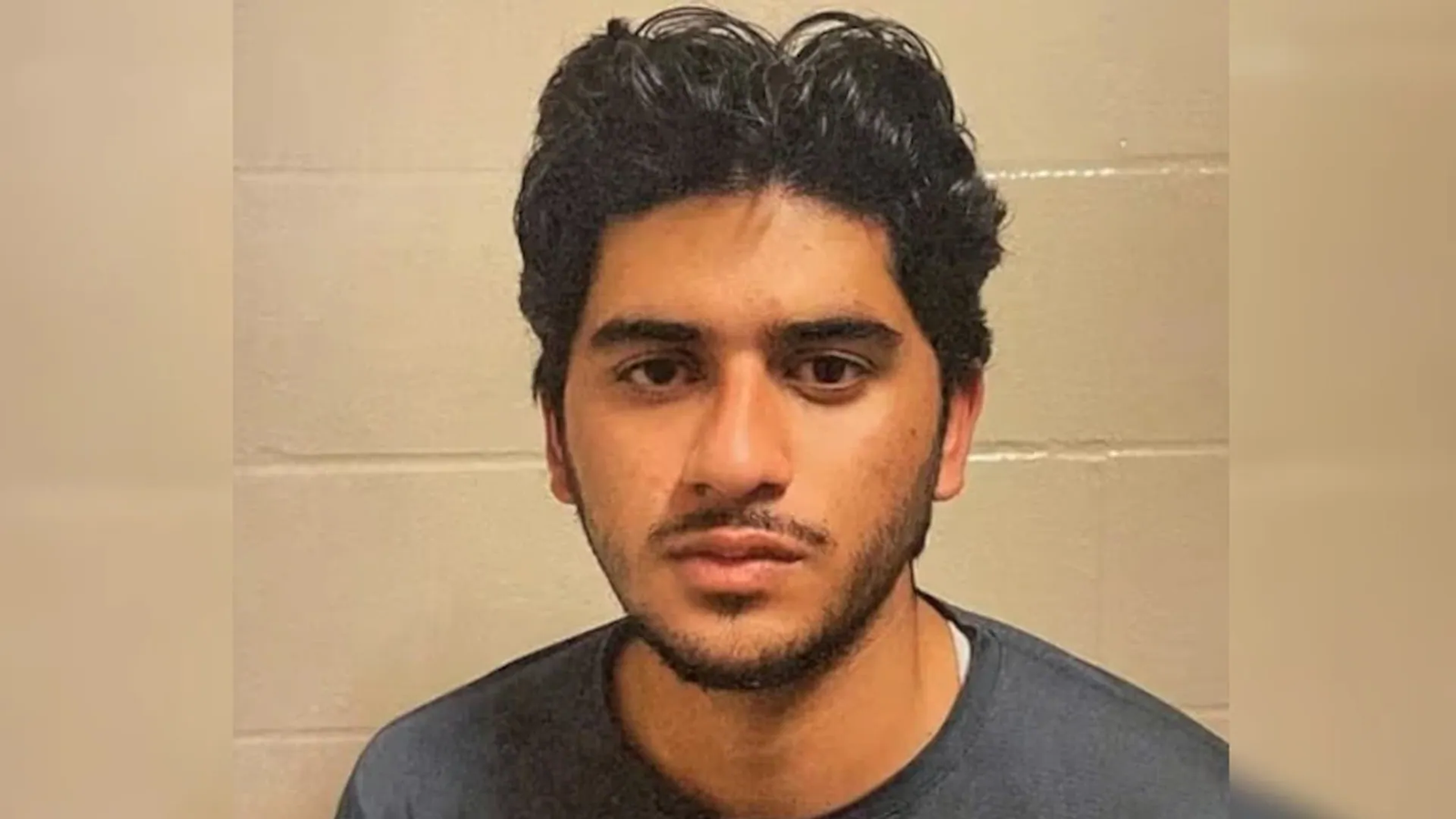
The extradition of Muhammad Shahzeb Khan, a 20-year-old Pakistani citizen residing in Canada, has sent shockwaves through North America, highlighting the continued threat posed by lone-wolf actors influenced by international terrorist organizations such as the Islamic State of Iraq and al-Sham (ISIS).
Khan, also known as Shahzeb Jadoon, was extradited to the United States on June 10, 2025, following an indictment in the Southern District of New York. The indictment accuses Khan of attempting to provide material support to a foreign terrorist organization and attempting to commit acts of terrorism that transcend national boundaries.
Khan’s case underscores the continued appeal of extremist ideologies, especially among disaffected youth vulnerable to online propaganda. His arrest and extradition represent a coordinated effort between U.S. and Canadian law enforcement agencies, reflecting the seriousness with which both nations treat threats of terrorism, particularly those aimed at vulnerable and targeted communities, such as the Jewish population in New York City.
With his initial court appearance scheduled for June 11, this case is expected to shed light on how individuals can be radicalized remotely and orchestrate detailed plots from across borders.
Plot and Motivation Behind the Planned Attack
According to U.S. prosecutors, Muhammad Shahzeb Khan began expressing support for ISIS in late 2023, primarily through social media platforms and encrypted messaging apps. It was through these communications that he distributed ISIS propaganda and eventually connected with two undercover law enforcement officers (UCs), believing them to be fellow ISIS supporters. Through these interactions, Khan revealed his intentions to carry out a large-scale terrorist attack on American soil, specifically targeting Jewish centers.
Initially, Khan had been planning a coordinated assault in a U.S. city referred to in court documents as “City-1,” in partnership with another ISIS sympathizer based in the United States, known only as Associate-1. He spoke about forming an “offline cell” dedicated to executing an armed attack using AR-style rifles.
He even emphasized that “Israeli Jewish chabads,” which are community centers and places of worship, would be prime targets. Khan went so far as to instruct the undercover officers to procure assault rifles, ammunition, and other materials necessary for the attack.
Read : British YouTuber Lord Miles’ AirPods Stolen from Dubai Hotel Room Tracked to Pakistan a Year Later
In a chilling detail, Khan discussed the symbolic significance of the dates October 7 and October 11, identifying them as opportune moments for targeting Jews. October 7, in particular, marked the anniversary of the Hamas-led attack on Israel in 2023, and Khan anticipated Jewish protests and gatherings around this date, increasing the potential casualties of his planned shooting.
Read : 12 Pakistani Army Soldiers Killed in Taliban-linked Suicide Bomber Storm in Bannu
Eventually, Khan changed his planned location from “City-1” to New York City, citing its large Jewish population. He decided to target a specific Jewish center in Brooklyn, referred to as “Location-1.” He sent photographs of the exact area within the building where he intended to carry out the massacre. His language during communications with the UCs became even more graphic and hate-filled. He expressed his desire to use “hunting knives” to “slit their throats” and fantasized about the attack being “the largest on U.S. soil since 9/11.”
Undercover Operation and Arrest in Canada
Muhammad Shahzeb Khan’s elaborate planning and active communication with supposed ISIS operatives were carefully monitored by U.S. federal authorities. His contacts with the UCs revealed a calculated, multi-layered approach to the terrorist attack, including renting properties near the target location and arranging for a human smuggler to assist his illegal entry into the United States from Canada.
In late August 2024, he finalized New York City as his target and began sharing precise logistics for the attack, including the weapons required, surveillance photos of the target, and financial arrangements for his travel. The operation was carefully mapped out, with Khan intending to cross the U.S.-Canada border using a series of vehicles in an attempt to avoid detection.
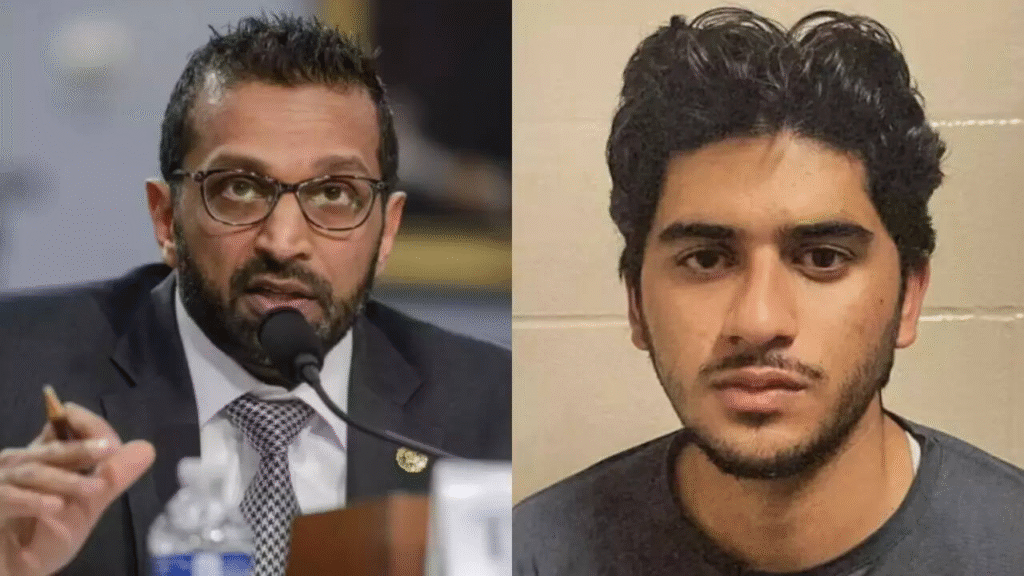
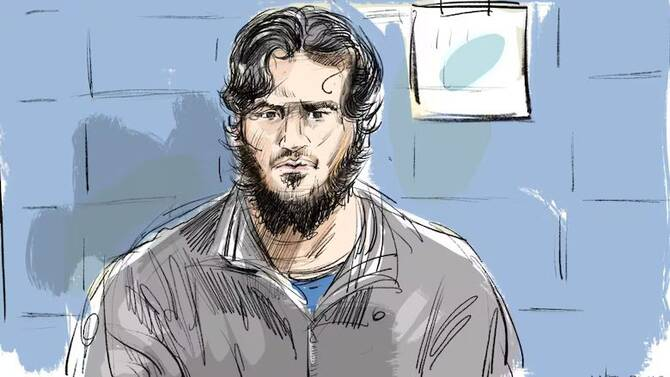
On September 4, 2024, Khan put his plan into action, traveling across Canada in three different vehicles. He was intercepted by Canadian law enforcement in Ormstown, located roughly 12 miles from the U.S.-Canada border. At the time of his arrest, Khan was believed to be only hours away from reaching his target destination in New York. The timely intervention by Canadian authorities, acting on information provided by U.S. agencies, likely prevented a catastrophic mass shooting.
The Justice Department’s Office of International Affairs facilitated Khan’s extradition from Canada, enabling U.S. federal prosecutors to formally charge him with terrorism-related offenses. He now faces two significant charges: attempting to provide material support to a designated foreign terrorist organization and attempting to commit acts of terrorism transcending national boundaries. If convicted, he faces up to life in prison.
Reactions and Broader Implications
In official statements following the extradition, top U.S. officials emphasized the serious and ongoing threat posed by ISIS and similar groups. Attorney General Pamela Bondi labeled ISIS “a clear and present danger to the American people,” while acknowledging the unique risk the Jewish community faces from such organizations.
FBI Director Kash Patel commended law enforcement for shutting down the attack before it could be executed, stating that Khan’s plan could have become one of the deadliest acts of terrorism in the United States since 9/11.
U.S. Attorney Jay Clayton of the Southern District of New York also denounced Khan’s plot as a deadly, antisemitic attack, praising the collaborative efforts of law enforcement and prosecutors. He stated that Khan’s detailed plan demonstrated a clear intent to “kill as many members of our Jewish community as possible, all in support of ISIS.”
The case has also reignited discussions around the impact of online radicalization. The ability of terrorist groups to spread ideology and recruit operatives across national boundaries through encrypted digital channels continues to be a major concern for intelligence agencies worldwide. Khan’s case is especially alarming because it shows how an individual residing outside the United States, with no direct organizational ties to a foreign terrorist group, can still pose an imminent threat to national security.
Furthermore, the timing and symbolism behind Muhammad Shahzeb Khan’s planned attack raise questions about the role of geopolitics in domestic terrorism plots. His selection of October 7, coinciding with the anniversary of the 2023 Hamas attacks on Israel, shows a disturbing pattern of ideological justification for violence based on global events. Such ideologically motivated plots often blur the lines between political grievances and religious extremism, making them even harder to anticipate and prevent.
Moving forward, intelligence communities are expected to increase vigilance around anniversaries of major global incidents, particularly those involving conflict in the Middle East. Communities considered at high risk of hate-based attacks, including Jewish and other religious minorities, may see enhanced security and surveillance during such periods.
As the legal proceedings against Muhammad Shahzeb Khan begin, this case is likely to become a key example of modern counterterrorism efforts and cross-border law enforcement cooperation. It also serves as a stark reminder that the threat of terrorism—especially antisemitic violence—is not confined by geography, and that ideology continues to inspire horrific plots even thousands of miles away from conflict zones.
Muhammad Shahzeb Khan’s arrest not only saved lives but also exposed the growing need for global collaboration in intelligence sharing, border control, and online monitoring of radical content. While his prosecution may bring a sense of justice, the incident underscores that vigilance, technology, and proactive law enforcement are essential in thwarting future threats.