

In a chilling reminder of the dangerous lives led by those entangled in organized crime, three men have been sentenced to a combined 99 years in prison for their roles in a plot to murder Paul Allen, a former member of the notorious Securitas heist gang.
The case, filled with dramatic turns and violent acts, has captured public attention, highlighting not only the continued risks faced by those involved in major crimes but also the cold realities of criminal loyalty and retribution.
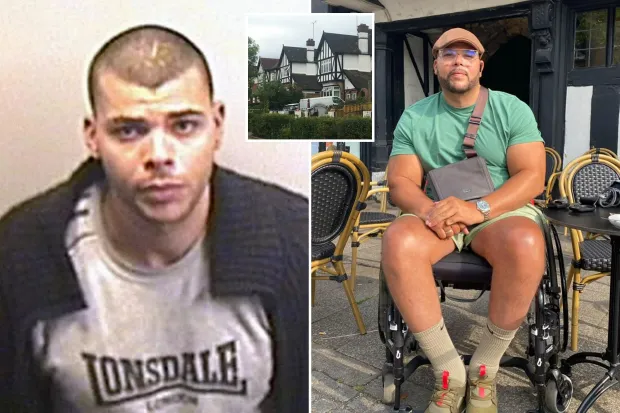
Paul Allen, once a key figure in Britain’s largest-ever cash robbery, was living a seemingly quieter life with his partner and young children when violence found its way back to his doorstep. The attack, which left him permanently paralyzed from the chest down, serves as a stark reminder that the shadows of past crimes often linger longer than prison sentences.
The Target: Paul Allen’s Life After Crime
Paul Allen had once stood among Britain’s most infamous criminals. In 2006, he was involved in the Securitas depot robbery in Tonbridge, Kent, where a gang managed to steal £54 million in cash, an act that remains the biggest cash heist in British history. Following the heist, Paul Allen served an 18-year prison sentence, a punishment many thought would mark the end of his criminal career.
After his release, Paul Allen appeared to have taken a step back from the criminal world. He was living in a large, detached rented home in Woodford, East London, raising three young children with his partner. However, despite his apparent retreat into a domestic life, the past had not let him go.
On 11 July 2019, the tranquility of his suburban life was shattered when Allen was shot twice while standing in his kitchen. The attack was swift, brutal, and left Allen with life-altering injuries. Paralyzed from the chest down, he now relies entirely on others for daily care.
Read : Wildlife Officials in the U.S. Are Planning to Kill 450,000 Barred Owls to Save Spotted Owls
Prosecutors painted Paul Allen as a “sophisticated” career criminal, someone who, despite serving time, was unlikely to have completely severed ties with the underworld. Yet, the motive behind the attempt on his life remained murky. Authorities suggested financial gain was a key driver, though they admitted that others beyond the three convicted men were likely involved in orchestrating the attack.
The Attackers: A Deadly Plot Unfolds
The men convicted of plotting to kill Allen – Louis Ahearne, Stewart Ahearne, and Daniel Kelly – were no strangers to serious criminality. Their actions before and after the attack further showcased the depth of their criminal enterprises.
Louis Ahearne, 36, Stewart Ahearne, 46, and Daniel Kelly, 46, were found guilty at the Old Bailey following a lengthy trial. Judge Sarah Whitehouse KC, in her sentencing remarks, stated unequivocally that the three men were motivated by promises of financial gain and that their actions were of “very high” culpability.
Read : Caine Lonsdale Jailed for Murder of His Friend Jonathan Dittia
Kelly received the harshest sentence: 36 years in prison with an additional five years on license. Louis Ahearne was sentenced to 33 years, and his brother Stewart Ahearne received a 30-year prison term.
Evidence presented at the trial depicted a coordinated, determined effort to kill Allen. The trio had extensive criminal records, with the attack on Paul Allen being just the latest in a string of serious offenses. The day before the shooting, Kelly and Louis Ahearne committed a burglary in Kent, using a rented vehicle and disguising themselves as police officers to gain entry into a gated community.
Even more astonishing was their involvement in an international theft: a month prior to the attack, the group stole more than $3.5 million worth of Ming dynasty antiques from the Museum of Far Eastern Arts in Geneva, Switzerland. The Ahearne brothers had already faced jail time in Switzerland for that heist, illustrating their broad and dangerous criminal ambitions.
Adding to the international dimension, Kelly is also wanted in Japan for his alleged role in a violent jewelry store robbery in Tokyo in 2015, where a security guard was assaulted during the theft. These details paint a picture of three hardened, experienced criminals for whom violence and high-stakes thefts were a way of life.
A Plot Straight Out of a Hollywood Blockbuster
Detectives investigating the shooting remarked that the case resembled the plot of a Hollywood blockbuster – but they were quick to stress the grim, brutal reality behind the cinematic comparisons.
Photos released from the crime scene in Woodford showed the aftermath of the attack: a shattered kitchen door and bullet casings scattered in the garden. It was clear that the shooters had come with lethal intent, and Allen’s survival was nothing short of remarkable, albeit with devastating physical consequences.

Despite extensive investigations, the exact motivations behind the plot remain somewhat unclear. Prosecutors refrained from detailing a specific reason, though financial incentives were widely believed to have been a major factor. Judge Whitehouse’s remarks reinforced this view, suggesting that the three men were acting on promises of monetary reward from unidentified individuals.
Authorities indicated that the conspiracy likely involved more people beyond the three convicted men, hinting at deeper and more complex criminal networks. These revelations emphasize the ongoing dangers posed by organized crime groups in the UK and abroad, many of whom operate with ruthless efficiency and brutal tactics.
The public, already familiar with the original Securitas heist and its massive fallout, has been left both horrified and fascinated by this latest chapter in the saga. For many, it is a stark illustration that involvement in high-profile criminal activity casts a long and often deadly shadow.
The sentencing marks a significant victory for law enforcement in their battle against organized crime. But for Paul Allen and his family, it is a deeply personal tragedy that will continue to shape their lives forever.
As for the convicted men, they now face long years behind bars, a fitting punishment for their role in a plot that left one man permanently disabled and highlighted the enduring menace of organized crime.