
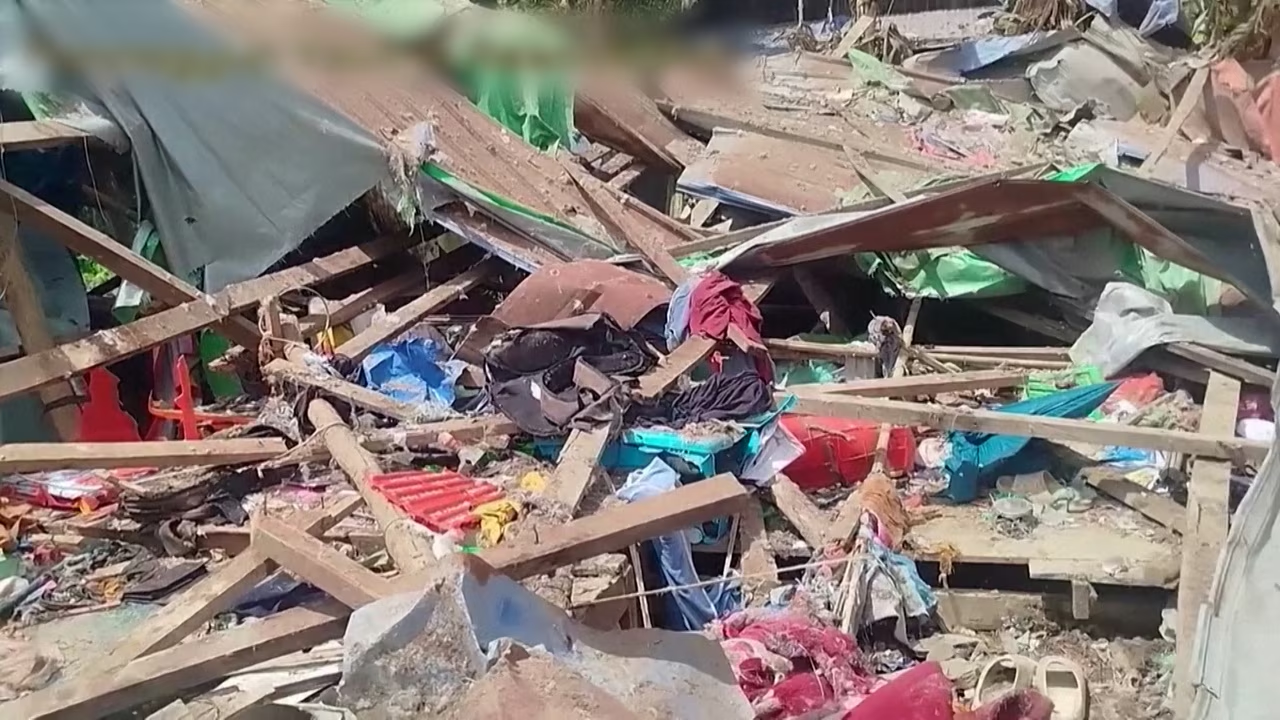
In the ongoing turmoil gripping Myanmar, a devastating airstrike has once again highlighted the brutal realities of the country’s civil conflict. On the night of September 12, 2025, Myanmar’s military junta launched an aerial attack on two private high schools in the western Rakhine State, resulting in the deaths of at least 19 students. The targeted institutions, Pyinnyar Pan Khinn High School and A Myin Thit High School, were located in Thayet Thapin village, Kyauktaw township—an area under the control of the ethnic Arakan Army (AA).
This incident, which occurred around 1:05 AM when most students were asleep in their dormitories, has been condemned as a war crime by local armed groups, relief agencies, and international observers. As a nation still reeling from the 2021 military coup, this attack underscores the escalating violence that has claimed thousands of lives and displaced millions. The airstrike comes amid intensified clashes between the junta and resistance forces, particularly in Rakhine State, where the AA has been fighting for greater autonomy for the ethnic Rakhine population.
Reports from the Arakan Army indicate that a military jet fighter dropped two 500-pound bombs on the schools, causing widespread destruction. Eyewitness accounts describe a scene of chaos: explosions ripped through the quiet village, collapsing buildings and igniting fires that lit up the night sky. Students, aged between 15 and 21, were caught completely off guard, with many perishing instantly from the blasts or being crushed under debris. More than 20 others were injured, suffering from shrapnel wounds, burns, and fractures.
Local media and the AA spokesperson, Khaing Thukha, confirmed the details, emphasizing that the schools served as boarding facilities for students from remote areas seeking education amid the conflict. This tragedy not only represents a loss of young lives but also a direct assault on education in a region already plagued by instability. As news of the attack spread, images and statements from the ground painted a harrowing picture. Photographs shared by local activists showed the rubble-strewn sites of the schools, with bodies of young victims laid out for identification. The AA issued a formal statement labeling the military council as “fascist terrorists” and vowing to continue their resistance.
UNICEF demands end to violence against children after junta airstrike kills 19 students at boarding school in Kyauktaw Township, Rakhine State. #WhatsHappeningInMyanmar pic.twitter.com/W4CKUtIQAb
— The Irrawaddy (Eng) (@IrrawaddyNews) September 13, 2025
Relief efforts were hampered by the remote location and ongoing fighting, but community members and AA forces quickly mobilized to aid survivors. Hospitals in nearby areas reported an influx of wounded students, many in critical condition. This event has reignited debates about the junta’s tactics, which often involve indiscriminate bombings in civilian areas to suppress opposition. With Myanmar’s conflict entering its fourth year since the coup, such incidents serve as stark reminders of the human cost of the power struggle.
The Incident: A Night of Terror in Thayet Thapin Village
The airstrike on Pyinnyar Pan Khinn High School and A Myin Thit High School unfolded in the early hours of September 12, 2025, transforming a peaceful village into a zone of devastation. Thayet Thapin, a small community in Kyauktaw township, Rakhine State, is nestled in a region known for its lush landscapes and tight-knit ethnic Rakhine communities. The two private high schools, both boarding institutions, had become vital hubs for education in an area disrupted by years of fighting. Pyinnyar Pan Khinn High School, established to provide quality secondary education to local youth, housed around 150 students at the time of the attack.
Similarly, A Myin Thit High School served as a refuge for students from surrounding villages, offering classes up to the 10th grade and emphasizing vocational skills amid the economic hardships caused by the conflict. According to detailed reports from the Arakan Army, the military’s jet approached under the cover of darkness around 1:05 AM. The first bomb struck Pyinnyar Pan Khinn High School, demolishing the main dormitory building where most students were sleeping.
Read : TikTok Astrologer John Moe The Arrested for False Earthquake Prediction in Myanmar
The explosion was powerful enough to level concrete structures, sending shards of glass and metal flying in all directions. Seconds later, a second bomb hit A Myin Thit High School, just a short distance away, targeting what locals described as the assembly hall repurposed as sleeping quarters. The blasts were heard for miles, waking residents who rushed to the scenes only to find scenes of unimaginable horror. Students’ personal belongings—books, uniforms, and notebooks—were scattered amid the wreckage, a poignant testament to lives cut short.
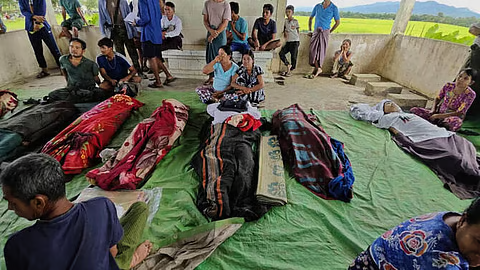
Initial casualty figures varied slightly across sources, but the AA and local media converged on at least 19 students killed, with the majority being teenagers. Among the confirmed deaths were 12 girls and 7 boys, all enrolled in the schools’ programs. The attack’s timing was particularly insidious, as it occurred during a period when students were not only asleep but also vulnerable without immediate access to shelters.
Survivors recounted the moments leading up to the strike: some had been studying late into the night, while others were dreaming of exams and futures in a war-torn country. One unnamed student, treated for shrapnel injuries, told reporters that the “sky lit up like fireworks, but it was death raining down.” The use of 500-pound bombs, as reported by investigators on the ground, suggests a deliberate intent to maximize destruction, far exceeding what would be needed for any purported military target.
The schools themselves were not military installations; they were civilian educational facilities registered with local authorities. The AA, which administers the area, had ensured that the schools operated under their protection, but no armed personnel were present during the night hours. This has led to accusations that the junta’s strike was punitive, aimed at demoralizing the local population and disrupting education as a form of collective punishment.
Forensic details emerging from the site indicate that the bombs caused secondary explosions from stored fuel or generators, exacerbating the damage and complicating rescue efforts. Firefighters from nearby villages battled blazes for hours, while AA medics provided first aid under the threat of further attacks. By dawn, the village was in mourning, with parents traveling from afar to claim the remains of their children. This incident, while tragic, fits into a pattern of aerial assaults in Rakhine, where the military has repeatedly targeted civilian infrastructure to regain control from ethnic armed groups.
Eyewitness testimonies add depth to the narrative. A teacher from A Myin Thit High School described hearing the roar of the jet before the first explosion: “We thought it was thunder at first, but then the ground shook, and screams filled the air.” Community leaders noted that the schools had been symbols of resilience, with enrollment increasing despite the risks.
The attack’s precision—or lack thereof—has been scrutinized, with some experts suggesting it was part of a broader offensive against AA-held territories. As rescue teams sifted through the debris, they recovered school records and personal items, underscoring the innocence of the victims. This subsection of the story highlights not just the mechanics of the strike but the profound loss of potential in a generation already burdened by conflict.
Immediate Aftermath: Rescue, Mourning, and Medical Crisis
In the hours following the airstrike, Thayet Thapin village became a focal point for urgent humanitarian response amid the chaos of Myanmar’s civil war. Rescue operations began almost immediately, led by Arakan Army personnel and local volunteers who braved unstable structures to pull survivors from the rubble. By mid-morning on September 12, at least 22 injured individuals had been transported to makeshift clinics and hospitals in Kyauktaw and surrounding townships.
The wounded suffered a range of injuries: severe lacerations from shrapnel, blast-induced trauma, respiratory issues from smoke inhalation, and crush injuries from collapsing roofs. Medical teams, stretched thin by the ongoing conflict, prioritized the youngest victims, many of whom required emergency surgeries without access to advanced equipment. The death toll, initially reported as 18 by some outlets, was updated to 19 by the AA and relief agencies as bodies were recovered and identified.
Families gathered at the school sites, their grief palpable as they waited for news. Photographs circulating from the scene depicted rows of young bodies covered in white sheets, a heartbreaking sight that galvanized local communities. Funerals were held swiftly due to the tropical heat and security concerns, with Buddhist rites performed in line with Rakhine traditions. Monks from nearby monasteries led prayers, while villagers shared stories of the deceased—bright students aspiring to become doctors, teachers, or engineers. The emotional toll was immense; parents collapsed in sorrow, and siblings searched frantically for missing loved ones.
Humanitarian aid arrived sporadically, with AA coordinators distributing food, water, and blankets to displaced families. International organizations, though limited in access due to junta blockades, expressed readiness to assist. UNICEF, in a statement, condemned the attack and called for safe corridors for aid delivery. Locally, community networks activated to shelter over 100 students who had been at the schools but survived unscathed or with minor injuries. Psychological support was rudimentary, with elders and teachers stepping in to counsel the traumatized youth. Reports indicated that some survivors exhibited signs of post-traumatic stress, reliving the explosions in nightmares.

The junta’s response was notably absent; no official acknowledgment or apology was issued, consistent with their pattern of denying civilian casualties in airstrikes. Instead, state media downplayed the incident, claiming it targeted “terrorist hideouts.” This denial only fueled outrage among Rakhine communities, who viewed it as further evidence of the military’s disregard for human life. Social media posts from activists showed the scale of destruction: craters in the ground, twisted metal from school buildings, and bloodstained uniforms. By September 13, temporary learning spaces were being set up in safer village areas, a testament to the determination to continue education despite the risks.
The medical crisis extended beyond immediate care. Overcrowded facilities in Rakhine struggled with limited supplies, leading to fears of secondary infections among the wounded. Doctors reported that at least five injured students were in critical condition, with some requiring blood transfusions that were scarce. International calls for medical evacuations went unheeded, highlighting the isolation of conflict zones. In the broader aftermath, the attack prompted a surge in local enlistments for the AA, as anger boiled over into resolve. Mourning rituals continued into September 14, with vigils held across Rakhine to honor the fallen students, transforming personal loss into collective resistance.
Broader Implications: War Crimes, Education Under Siege, and the Path to Peace
The airstrike on Pyinnyar Pan Khinn and A Myin Thit High Schools has far-reaching implications for Myanmar’s protracted conflict, raising serious questions about accountability and the future of education in war zones. Legal experts and human rights groups have swiftly labeled the incident a potential war crime, citing the deliberate targeting of civilians under international humanitarian law.
The Geneva Conventions prohibit attacks on educational facilities, especially when children are present, and this strike appears to violate those principles. The AA has pledged to document the event for submission to the International Criminal Court, joining a growing dossier of atrocities committed since the 2021 coup. Over 5,000 civilians have been killed in similar airstrikes, according to monitoring organizations, eroding any legitimacy the junta might claim.

Education in Myanmar, already in crisis, faces an existential threat from such violence. Prior to the coup, the country had made strides in literacy rates, but the conflict has shuttered thousands of schools and displaced over 2 million children. In Rakhine State, where ethnic tensions simmer, schools like Pyinnyar Pan Khinn and A Myin Thit were beacons of hope, providing not just academics but also cultural preservation for the Rakhine people. The loss of 19 students represents a blow to community futures, exacerbating intergenerational trauma.
UNICEF estimates that 3 million children nationwide are out of school, many due to safety fears. This attack could deter enrollment further, perpetuating cycles of poverty and instability. On the geopolitical front, the incident has drawn muted international condemnation. Neighboring countries like India and Bangladesh, wary of refugee inflows, have urged restraint but offered little concrete action. The United Nations Security Council discussed the strike on September 13, but veto powers prevented binding resolutions.
Western nations imposed additional sanctions on junta leaders, yet enforcement remains challenging. For the AA and other resistance groups, the bombing strengthens their narrative of fighting a genocidal regime, potentially attracting more support from diaspora communities and allies. Looking toward peace, this tragedy underscores the urgency for dialogue. The National Unity Government, in exile, called for unified international pressure to halt aerial bombings.
Analysts suggest that without external intervention, such as arms embargoes or peacekeeping forces, the cycle of violence will continue. The students’ deaths serve as a call to action: for the global community to prioritize civilian protection and for Myanmar’s factions to seek negotiated settlements. As Rakhine mourns, the hope is that these young lives were not lost in vain, but rather catalyze a turning point toward reconciliation. In a nation divided, education must remain a sanctuary, not a target.