
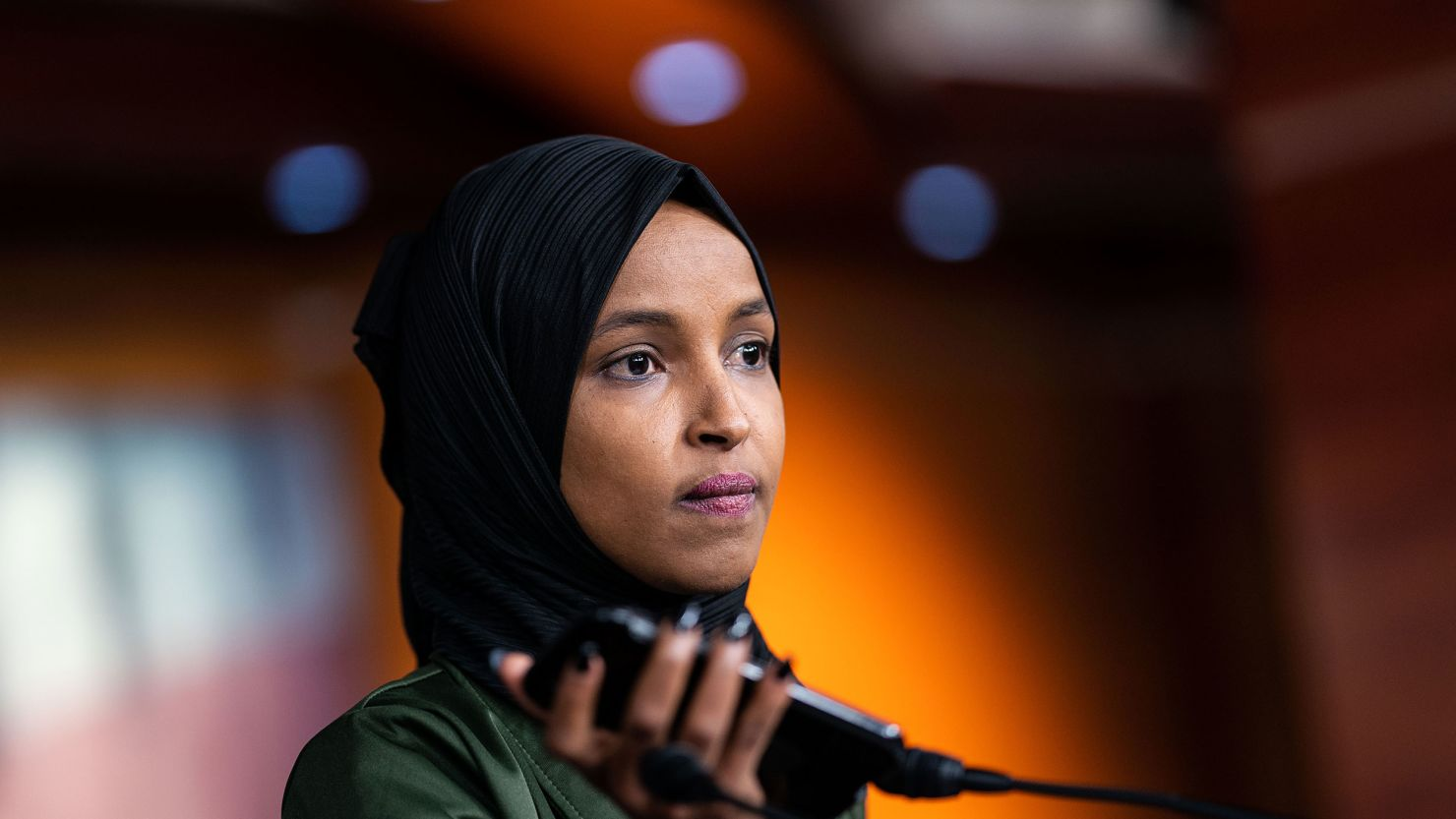
The recent guilty plea entered by Florida resident Myles McQuade has drawn national attention to the intensifying pattern of violent threats against American public officials. At age 30, McQuade now faces up to five years in federal prison after admitting he posted explicit death threats toward Democratic Rep. Ilhan Omar on X, the social media platform formerly known as Twitter. His messages included racist slurs, a promise to decapitate the congresswoman, and threats to murder and cannibalize her children.
These statements, which federal prosecutors determined were intentional true threats of violence rather than hyperbolic political speech, highlight both the rising extremism directed at elected leaders and the real-world consequences such rhetoric creates for democratic safety. The unsealed plea agreement offers a detailed account of the events that unfolded shortly after Ilhan Omar criticized the late conservative figure Charlie Kirk in a media interview, sparking online outrage that escalated rapidly across partisan lines.
Escalating Threats Following Public Backlash
According to the plea documents filed on December 2, Myles McQuade’s threats were posted early on September 12 while he was vacationing in Orlando. His messages directly referenced and attacked Ilhan Omar in the wake of her televised criticism of Charlie Kirk, who had long been a polarizing figure in conservative circles.
The late commentator had previously called for Omar’s deportation, and her remarks questioning the sanitized public narratives that followed his death prompted a fierce reaction from right-wing personalities and lawmakers. Within hours, posts accusing her of disloyalty and hostility toward the United States proliferated online, amplifying a politically charged environment that had already placed Ilhan Omar under heightened scrutiny.
Myles McQuade’s response was immediate, extreme, and violent. In his first message, he warned Ilhan Omar to “go back to Somalia before it’s too late,” while using a racist epithet and threatening to kill her and consume her children. A second post followed only minutes later, promising to murder her children “in front of you” before decapitating her when “this country falls.” These messages, reproduced verbatim in court filings, were unambiguous in their intent, delivery, and severity.
Read : North Korea Fires Suspected Rocket After Warning of Satellite Launch
Federal prosecutors noted that Myles McQuade’s statements were not impulsive insults or rhetorical exaggerations but rather fully formed threats he understood would be taken seriously. The plea agreement states that he acknowledged the posts were meant as true threats of violence, not careless or joking remarks. Investigators also concluded that he targeted Omar specifically because of her position as a Member of Congress and her official actions, meeting the statutory threshold for federal criminal prosecution.
Federal Investigation and Legal Proceedings
The U.S. Capitol Police learned of the threats shortly after sunrise on September 12 and immediately initiated an investigation. Special agents traveled to McQuade’s Tampa-area residence that evening, attempting to speak with him, but he was still out of town. When agents later contacted him by phone and identified themselves, Myles McQuade ended the call. Two days later, investigators returned and attempted another interview, details of which were not expanded upon in the plea documents.
Prosecutors charged Myles McQuade on December 2 with a single count of transmitting an interstate threat to injure—a federal offense carrying a potential five-year prison sentence, a fine of up to $250,000, and up to three years of supervised release. He entered a guilty plea the same day. The case, which had not been publicly reported prior to these filings, revealed that McQuade works as an account executive at a technology company according to his LinkedIn profile.
His court hearing is scheduled for December 22 in Tampa federal court, where a judge will determine whether the threats merit the maximum penalty. Federal sentencing guidelines will consider several factors, including the explicit nature of the language, the target’s status as a federal officeholder, and Myles McQuade’s acknowledgment that he intended the threats to be taken seriously. While the statutory maximum is five years, sentencing outcomes often vary based on the defendant’s criminal history, the specifics of the conduct, and any cooperation with investigators.
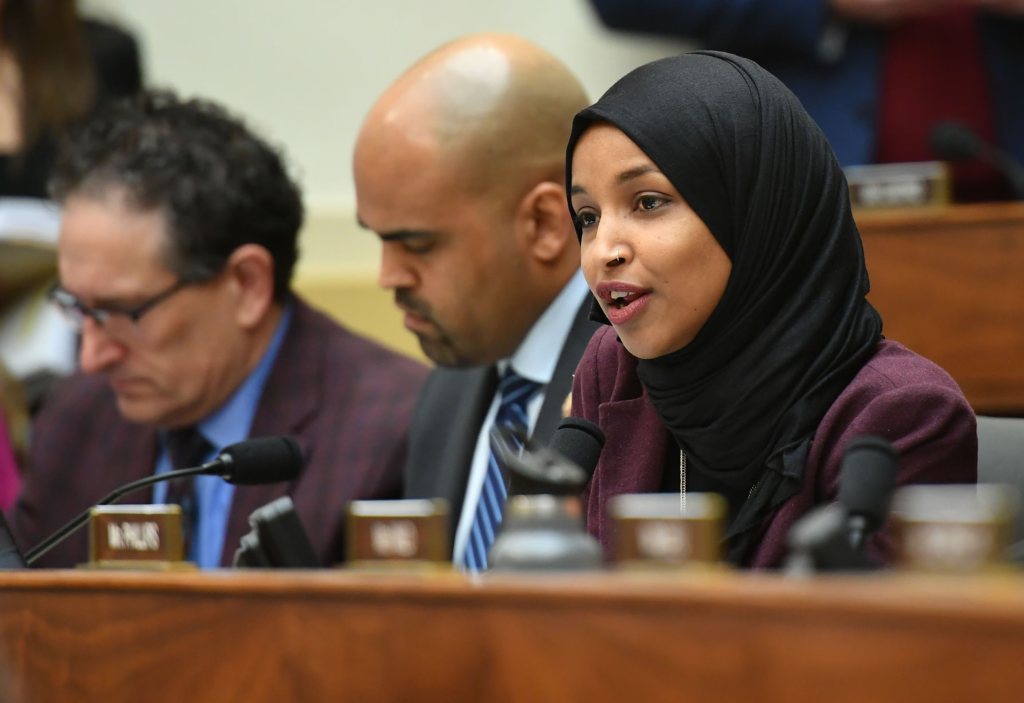
Legal experts have increasingly emphasized that the federal government is facing a dramatic surge in investigations and prosecutions related to threats against public officials. Seamus Hughes, a senior researcher specializing in violent extremism, said these kinds of cases are appearing at unprecedented levels. With weeks remaining in the year, he noted that 2025 had already surpassed the previous decade’s federal arrest records in cases involving threats to public officials.
Hughes warned of a growing subset of Americans who now view violent threats as an acceptable means of expressing political grievances, a trend he described as deeply concerning given its corrosive impact on public safety and democratic institutions. Rep. Omar, who has long been a lightning rod for politically motivated hostility, has repeatedly emphasized the severity and frequency of the threats she receives.
In an October interview, she revealed she feared for her life amid rising hostility linked to her criticisms of Israeli policy. She stated that GOP leaders had failed to curb escalating inflammatory rhetoric within their ranks and noted that the threats directed at her have intensified drastically in recent months. Since taking office, she said, multiple individuals have already pleaded guilty to threatening to kill her, underscoring the routine nature of the danger she and other high-profile officials face.
A Broader Climate of Political Violence and Targeted Harassment
Ilhan Omar’s status as the first Somali-American member of Congress and one of the only Muslim women serving in the legislative body has made her a frequent target of racist and xenophobic attacks, both online and in political discourse. Her family fled Somalia’s civil war and was granted asylum in the United States in 1995. She became a U.S. citizen five years later at age 17. Since assuming office in 2019, she has faced criticism and hostility from across the political spectrum, but the intensity of threats has escalated sharply during periods of heightened national political conflict.
The recent surge in threats came amid comments by former President Donald Trump, who last week described Omar and Somali-Americans as “garbage” and demanded that she be “thrown the hell out of our country.” His statements, delivered during a televised cabinet meeting, echoed past rhetoric in which he told several Democratic congresswomen of color to “go back” to their countries—a remark widely condemned at the time as racist.
Read : Afghan National Mohammad Dawood Alokozay Arrested for Bomb Threat at Fort Worth Apartment Complex
In his latest comments, Trump insisted Somali-Americans had “destroyed our country” and claimed Omar would not be alive if not for the United States. His remarks intensified partisan tensions and contributed to an environment in which political violence and targeted harassment have become normalized for some segments of the public.

Experts warn that verbal attacks from prominent figures can legitimize or embolden extremist behavior among individuals predisposed to violent rhetoric. This phenomenon has been documented in cases across the political spectrum, but the threats directed at Ilhan Omar are particularly acute given her intersectional identity as a Black, Muslim, immigrant woman serving in federal office. She has repeatedly stated that she must teach her children to remain vigilant for their own safety, acknowledging the chilling effect such constant fear imposes on her family and her ability to perform her duties.
The Myles McQuade case stands out not only for its explicit language and violent content but also for the growing legal vigilance with which federal authorities are responding. While the First Amendment protects politically charged expression, threats of violence against public officials fall squarely outside its protections. Federal courts have consistently upheld statutes criminalizing threats against elected leaders, judges, and other public servants, recognizing the potential for such statements to incite real-world harm and inhibit democratic participation.
Myles McQuade’s guilty plea adds another entry to a growing list of federal prosecutions aimed at reinforcing these boundaries and deterring future offenders. In the view of prosecutors, his actions were deliberate and targeted, rooted in a political grievance but expressed through violence. The legal consequences he now faces serve as a reminder that the digital age, while expanding public discourse, has also expanded avenues for criminal threats—requiring investigators and courts to respond swiftly when words cross into the realm of unlawful intimidation.
As Myles McQuade prepares to appear in federal court on December 22, his case reflects the broader national debate over political rhetoric, accountability, and the safety of elected officials. The rise in threats documented across the United States signals a troubling erosion in the norms that guard democratic life. While online platforms and political movements may amplify hostility, the legal system remains the safeguard that intervenes when rhetoric becomes dangerous, criminal, and capable of producing profound harm to individuals and institutions alike.
Alright guys, I’m on the hunt for a new sportsbook and 88vinbet1 keeps popping up. Anyone got firsthand experience? Good odds? Quick payouts? Let me know. Check out the site here 88vinbet1.