
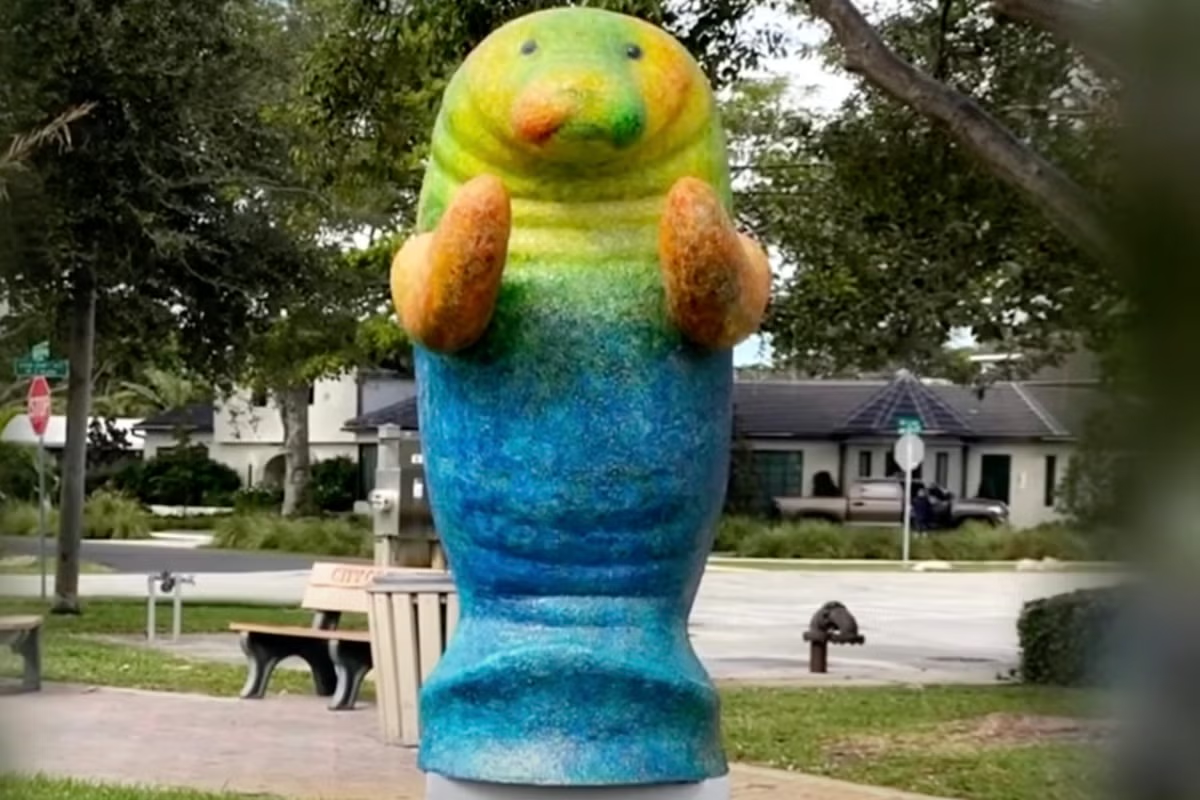
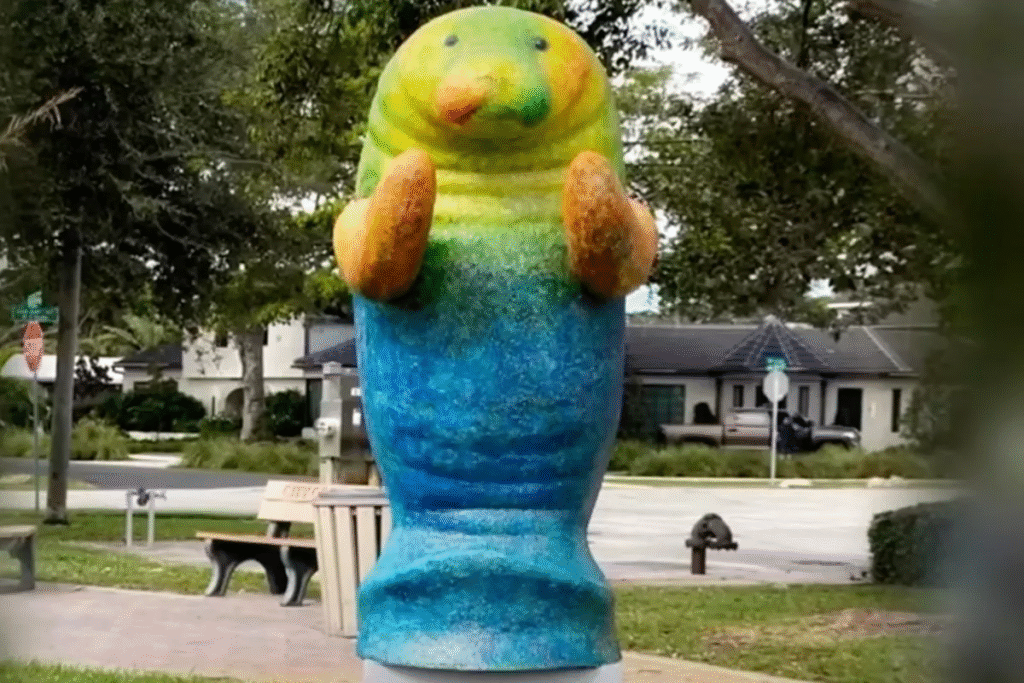
In the heart of Wilton Manors, a vibrant city just north of Fort Lauderdale, a beloved symbol of community and art has mysteriously vanished. A rainbow-painted Manatee Statue, commissioned in honor of former Mayor Justin Flippen, was stolen from a local park, leaving residents shocked, saddened, and searching for answers.
The incident has not only raised concerns about theft and vandalism in the area but also drawn attention to the deeper significance of public art and its impact on a community’s identity.
The colorful manatee, painted with love and care by local artist Claudia Castillo, was more than just an ornamental statue. It was a tribute to a man who served his community with distinction and compassion. Now, its disappearance has become a point of collective grief and determination, as locals band together to recover the cherished artwork and preserve the memory it represents.
A Community in Shock: Tribute to a Beloved Mayor Gone Missing
Wilton Manors has long prided itself on being an inclusive, vibrant, and culturally rich city. It is known for its progressive values, active arts scene, and tightly-knit community spirit. The rainbow manatee sculpture, affectionately admired by locals and visitors alike, stood at the corner of Wilton Drive and Northeast 21st Court.
The statue was not just a visual delight but a meaningful tribute to Justin Flippen, the city’s former mayor who tragically passed away in 2020 after suffering a brain aneurysm. Flippen, remembered for his dedication to equality, public service, and community development, was a beacon of leadership and humanity. Following his sudden passing, the city rallied to find a fitting way to honor his legacy.
The manatee statue, painted in bright rainbow hues—a nod to the city’s prominent LGBTQ+ community—was chosen as the symbol to memorialize him. Local artist Claudia Castillo was entrusted with bringing this vision to life. The result was a joyful, whimsical sculpture that not only celebrated Flippen’s legacy but also embodied the city’s inclusive values.
Read : Statues Touching the Sky: Exploring Earth’s Top 10 Tallest Marvels
Castillo, deeply affected by the theft, described the loss as heartbreaking. “This was more than art,” she told local news outlets. “It was for the community, for everyone to enjoy, and a tribute to someone who meant a lot to all of us.” The artist’s grief reflects the sentiment of many residents, who saw the statue as a part of the city’s cultural fabric.
Theft in the Night: Clues and Community Response
The sculpture was reported missing in the early hours of Tuesday morning, around 1 a.m. Surveillance footage and eyewitness accounts suggest that the theft was carried out under the cover of darkness, with the perpetrators making a quick and quiet escape. Given the size and weight of the sculpture—it’s speculated to weigh several hundred pounds—authorities believe more than one individual was involved and that a vehicle was likely used to transport it away from the site.
The sudden disappearance sparked immediate concern among residents. Many took to social media to express their anger, disbelief, and sadness. Hashtags like #FindTheManatee and #JusticeForFlippen began trending locally, as community members shared memories of the statue and appealed for its return. Petitions have circulated, and some have even offered monetary rewards for information leading to its recovery.
The Wilton Manors Police Department has launched a full investigation. Officers are reviewing nearby security footage, canvassing neighborhoods, and interviewing potential witnesses. They have also urged anyone with information to come forward, emphasizing the sentimental and civic importance of the statue. “This isn’t just a theft of property—it’s a theft from the heart of the community,” one official remarked during a press conference.
In addition to police efforts, local businesses and organizations have joined the search. Flyers have been posted around town, and city leaders have made public appeals during council meetings and community events. The response showcases Wilton Manors’ resilience and unity, as neighbors rally to defend what they see as a piece of their shared history.
The Role of Public Art and Its Deeper Meaning
The theft of the rainbow manatee is more than a local crime—it reflects a broader conversation about the role of public art in society and the vulnerability of cultural symbols in open spaces. Public art often serves as a bridge between past and present, offering tangible expressions of memory, identity, and values. In Wilton Manors, the sculpture was a symbol of hope, diversity, and remembrance, freely accessible to anyone who walked by.
Art in public spaces is particularly significant in communities like Wilton Manors, where inclusivity and visibility matter deeply. The rainbow colors on the manatee were not chosen at random—they represented the LGBTQ+ pride flag, a fitting tribute in a city that has long championed LGBTQ+ rights and representation. The sculpture stood as a silent yet powerful declaration that love, remembrance, and diversity are integral to the city’s soul.
Unfortunately, public art is also susceptible to vandalism and theft. Unlike museum pieces, which are heavily guarded and secured, sculptures in parks or on street corners are vulnerable by their very nature. They are designed to be accessible, to invite interaction and reflection. But that openness can be exploited, as it was in this case.
Claudia Castillo’s work, like that of many public artists, was rooted in the idea of connection—connecting people to place, to each other, and to the values that bind them. The theft of her manatee creation is, in a sense, a disruption of that connection. Yet the community’s response shows that the bonds of meaning and memory are not so easily broken. Even in its absence, the statue continues to unite people in shared purpose and emotion.
This incident has also sparked conversations about how to better protect public art. Some have proposed increased surveillance, protective barriers, or GPS tracking embedded in future sculptures. Others argue that the solution lies not in fortifying the art but in cultivating a stronger sense of communal stewardship—where residents feel collectively responsible for preserving and protecting what belongs to everyone.
As the investigation continues, there is hope that the manatee will be found and returned. But even if it is not, its legacy is already etched in the hearts of those who knew what it stood for. In a city that values both remembrance and resilience, the spirit of the rainbow manatee lives on.
The loss has become a catalyst for community dialogue, creative expression, and renewed commitment to civic pride. Artists, educators, and local leaders have expressed interest in creating new public art inspired by the missing statue. These initiatives aim to keep Justin Flippen’s memory alive while also reinforcing the idea that art, once shared with the public, becomes part of a collective identity that no single act of theft can erase.
The disappearance of the manatee has reminded Wilton Manors—and perhaps all of us—how fragile yet powerful symbols can be. It has illuminated the ways in which art speaks, connects, and heals. And while the city mourns the loss of a cherished piece, it also stands as a beacon of unity, determined to turn a moment of grief into one of renewed inspiration.