

A routine morning commute in San Francisco turned into a terrifying ordeal when the operator of a packed N Judah light rail train appeared to fall asleep while driving through a tunnel at nearly five times the typical speed limit. Surveillance footage captured inside the train shows the moment the operator dozed off, sending passengers tumbling as the train jolted violently through a curve. The incident, which took place on the morning of September 24, has raised serious questions about operator fatigue, system safeguards, and the overall safety of the city’s public transit network.
The San Francisco Municipal Transportation Agency (SFMTA), which oversees the Muni system, has since detained the operator and launched an investigation into what it described as an “unacceptable and alarming” breach of safety protocols. As details continue to emerge, the shocking episode underscores the challenges of maintaining vigilance and safety in an urban transit network that transports hundreds of thousands of passengers daily.
A Frightening Morning Ride Through the Sunset Tunnel
The events unfolded as the two-car N Judah train headed inbound toward downtown San Francisco. According to SFMTA’s official statement, the train had just exited the Sunset Tunnel near Duboce Park when it began to accelerate rapidly, reaching a speed of around 50 miles per hour. Muni light rail vehicles are typically limited to 8 to 10 mph in this area due to the curvature of the tracks and the close proximity of infrastructure, making the sudden burst of speed extremely dangerous.
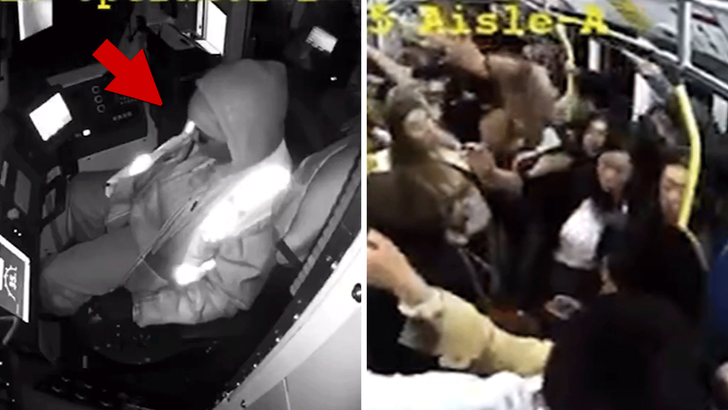
Passengers on board were caught completely off guard. Surveillance video footage from inside the carriage shows commuters standing or seated casually moments before the train begins to shake violently. Within seconds, riders are seen clutching seats, walls, and poles for stability, while others lose their footing and fall. Several passengers can be heard shouting in panic as the train continues to sway at high speed.
The source of the chaos quickly became apparent when investigators reviewed footage from the driver’s cabin. The operator, a woman whose name has not been released, can be seen nodding off at the controls while the train barrels forward. Within moments of the incident, she appears to regain consciousness, jolting awake as the train rocks from side to side. The footage cuts off before showing her response, but investigators confirmed that she managed to bring the train to a stop shortly thereafter.
Story here 👉️ https://t.co/BJPX0Cw3Bt San Francisco morning commuters were taken for an unexpectedly wild ride after their train operator appeared to fall asleep at the controls. pic.twitter.com/1pwRTEMkrS
— Eyewitness News (@ABC7NY) November 12, 2025
Emergency personnel were dispatched to the scene to assess the situation, and while several passengers suffered minor injuries from falls and collisions inside the carriage, no serious injuries were reported. The train was later taken out of service as SFMTA officials began a detailed review of the vehicle’s event recorder, operator logs, and on-board camera footage.
SFMTA Responds: ‘Safety Is Our Top Priority’
In the days following the incident, SFMTA officials held a press conference to address growing public concern and to reassure riders that corrective action was already underway. Julie Kirschbaum, Director of Transportation for SFMTA, acknowledged the severity of the incident, describing it as “a frightening experience for our riders” and emphasizing that the agency “takes this very seriously.”
“Safety is always our top priority,” Kirschbaum said. “We are committed to accountability in response to this specific unacceptable incident and are taking all necessary steps to keep Muni safe and reliable for all riders and the public.”
According to the agency, the operator has been placed on administrative leave pending the outcome of an internal investigation. SFMTA has also confirmed that it is working closely with the manufacturer of the city’s new light rail vehicles to develop and install a software-based speed-limiting system. This feature, once implemented, would automatically restrict the maximum speed of Muni trains in specific areas such as tunnels, curves, and intersections—effectively preventing similar incidents from occurring in the future.
Transit safety experts have noted that while most modern rail systems employ a range of automatic braking and alert systems designed to detect operator inattention, older or partially upgraded systems like Muni’s still rely heavily on human control. SFMTA’s current fleet includes newer Siemens light rail vehicles that feature improved braking and monitoring systems, but these safeguards are not yet fully automated.
An SFMTA spokesperson also confirmed that the agency is reviewing its fatigue management policies. Operators are required to undergo strict scheduling oversight and rest period compliance, but fatigue remains a recurring challenge in transit operations nationwide. “We are looking into whether rest requirements, shift lengths, or scheduling practices contributed to what happened,” the spokesperson said.
Broader Concerns Over Operator Fatigue and System Safety
The incident has reignited a broader conversation about fatigue and human error in urban rail networks. Across the United States, transportation authorities have grappled with similar issues involving operators who fell asleep or lost focus while operating trains, buses, or other transit vehicles. Fatigue, often caused by long shifts, irregular hours, or inadequate rest between assignments, is one of the leading human factors in transit-related accidents.
According to data from the Federal Transit Administration (FTA), fatigue-related incidents account for a significant portion of operator-related safety violations in the country. The problem is compounded by the fact that urban transit agencies often face staffing shortages, especially in high-cost cities like San Francisco, forcing drivers and operators to take on extended hours to meet service demands.
Public transportation unions have also weighed in, pointing out that many operators experience erratic schedules that make it difficult to maintain healthy sleep cycles. Union representatives have long advocated for more consistent shift patterns, mandatory fatigue management training, and real-time monitoring systems that can detect signs of drowsiness or distraction.
Transit analyst Carl Madison, who has studied fatigue management in rail systems, noted that “the Muni incident illustrates the vulnerability of systems that rely too heavily on operator attentiveness without sufficient technological backup.” He added that fatigue detection systems—such as sensors that monitor eye movement or grip pressure—are becoming increasingly common in newer transit networks. “These systems don’t replace human operators, but they provide an added layer of protection,” Madison said.

Passengers who were on board the train have since spoken out about their experiences. One commuter, identified only as Maria L., told a local station that the train “felt like it suddenly took off,” adding that she thought there had been an explosion or mechanical failure. “People were screaming, and I remember grabbing the seat in front of me just to stay upright,” she said. “When we found out the driver had fallen asleep, it was unbelievable. We trusted that the system had safety measures to prevent this.”
In response, city officials have pledged to expedite the rollout of enhanced safety mechanisms across all Muni light rail lines. The planned speed-limiting software will be accompanied by real-time performance monitoring, which will alert control centers if any train exceeds designated speed thresholds or deviates from expected patterns.
The agency is also considering additional safety investments, including automatic braking systems that can override manual control in emergencies. Such systems are already standard in some major transit networks, including those in New York City, Washington D.C., and parts of Europe. Meanwhile, the SFMTA Board of Directors has requested a full public report on the incident, including recommendations for policy changes, training upgrades, and long-term infrastructure improvements. The report is expected to be released later this year.
A Wake-Up Call for Transit Oversight and Technology
The N Judah incident has sent shockwaves through the community and reignited debate about the adequacy of Muni’s safety culture. San Francisco’s light rail system, one of the oldest in the country, has undergone significant modernization efforts in recent years, including new vehicles, upgraded signals, and expanded service reliability initiatives. However, as this event demonstrates, even advanced systems remain vulnerable when human error and outdated safeguards intersect.
Transit watchdog groups have urged SFMTA to accelerate implementation of automated safety technologies. Advocates argue that the investment is not just about preventing fatigue-related incidents but also about improving consistency and public trust. “Automation doesn’t eliminate the need for skilled operators,” said transportation safety advocate Lydia Chen, “but it ensures that one moment of human exhaustion doesn’t put dozens of lives at risk.”
Read : 11-Year-Old Jaiden Shehata Killed by Train at Level Crossing Was Distracted by Phone
Local lawmakers have also called for an independent safety audit of the Muni system. Supervisor Dean Preston, whose district includes several Muni rail routes, stated that while the agency’s initial response was appropriate, the incident underscores the need for greater transparency. “The public deserves to know what went wrong, how it will be fixed, and what safeguards will prevent it from happening again,” Preston said.
SFMTA has maintained that it is fully committed to transparency and reform. In addition to the internal investigation, the agency is coordinating with the California Public Utilities Commission and the FTA to ensure compliance with all safety standards. Any disciplinary action or policy changes arising from the investigation will be made public once the review is complete.
For now, the operator involved remains under suspension while investigators determine whether negligence, health issues, or procedural lapses contributed to the event. The incident has left an indelible mark on San Francisco’s transit community, serving as both a warning and a catalyst for change.
As Muni continues to move forward with technological and operational reforms, passengers and city officials alike hope that the lessons learned from the September 24 incident will lead to a safer, more resilient transit system—one that ensures no rider ever again experiences such a terrifying “wild ride” on their morning commute.