
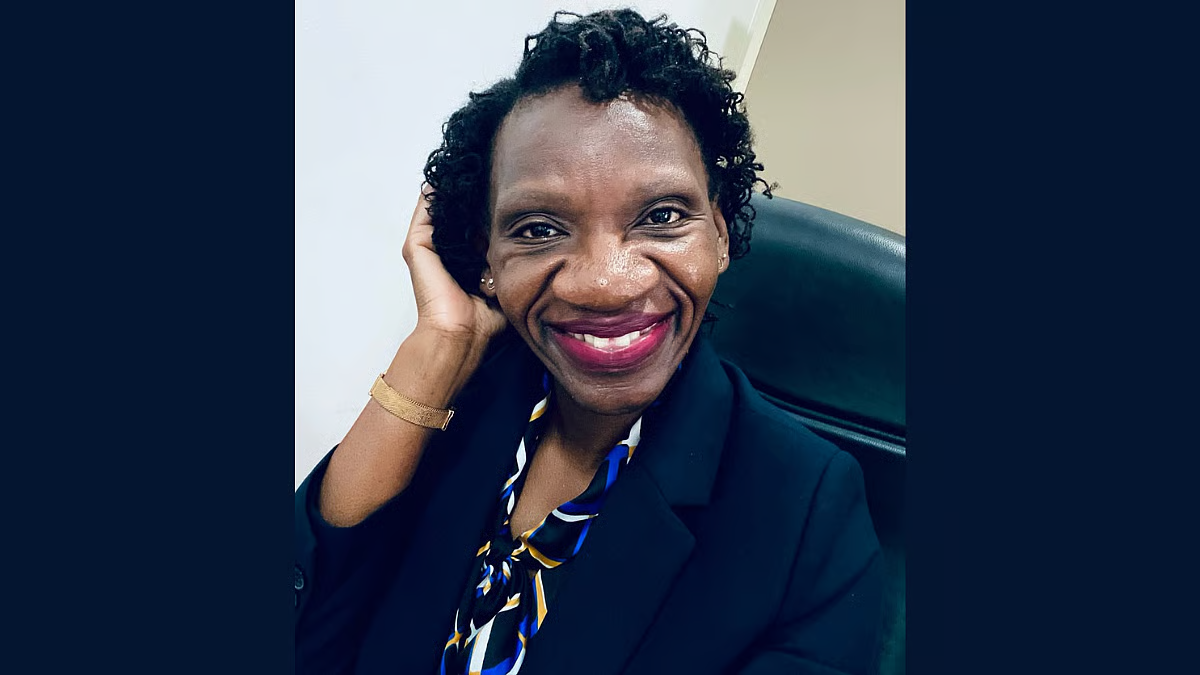
In an era where social media amplifies both praise and criticism, Naomie Pilula, a 37-year-old Zambian lawyer, has emerged as a powerful voice for self-love and resilience. In June 2025, Pilula posted a cheerful selfie on Instagram, captioned with enthusiasm about her natural hair and radiant skin.
What began as a simple expression of joy turned into a viral moment, amassing over 530,000 comments and shares, many of which were cruel remarks targeting her appearance, particularly her nose. Rather than retreating, Pilula confronted the negativity head-on, refusing to delete her post and using the experience to spark a broader conversation about self-acceptance. Her response has resonated with thousands, transforming her into an accidental advocate for embracing one’s unique features.
From Viral Selfie to Vicious Comments
Naomie Pilula’s story began with a routine Instagram post on June 22, 2025. The selfie, captioned “Happy Monday! The hair is hairing and the skin is skinning so I’m so happy!!!!! This is a Bantu knotout on freshly washed hair. So even though my hair is in dire need of a retire, it still looks cute 🥰. Here’s to feeling and looking cute,” radiated positivity.
However, the post quickly attracted a flood of negative comments, many focusing on her nose. Remarks ranged from suggestions to “try rhinoplasty” to outright insults like “you’re ugly” and “you don’t deserve to be on the internet.” The scale of the backlash was staggering, with the post garnering over half a million interactions, most of which were derogatory.
Naomie Pilula, a lawyer based in Zambia’s financial sector, was no stranger to scrutiny. Growing up as the youngest of seven siblings in Zambia, she faced teasing about her petite frame and her nose, a feature she inherited from her father. Her experiences studying abroad at the University of Queensland in Australia and the University of Auckland in New Zealand further exposed her to different cultural standards of beauty, where she was often the only Black person in her classes.
These moments shaped her understanding of desirability and self-worth, but they also fostered resilience. By her late teens and early twenties, Naomie Pilula had grown to appreciate her features, particularly her nose, which she saw as a connection to her heritage. “It’s my father’s nose. Why would I want to remove a feature that identifies me with my father? It doesn’t make sense,” she told People magazine.
Read : Netizens in Tears Watching Viral Video of Elephant Mourning After Partner of 25 Years Died in Russia
The viral selfie, however, tested this resilience. Initially, Naomie Pilula was shocked and angered by the comments. She admitted to deleting some of them but soon grew tired of the effort. A particularly stinging remark about rhinoplasty prompted her to post a passive-aggressive response video, which she later deleted.
Meet Naomie Pilula from Zambia. The internet dragged her for her appearance.
— MR AIRTIME (@Aubrey_Senyolo) September 2, 2025
We are all created in the image of God. pic.twitter.com/N08UNYoTRP
Instead of escalating the conflict, she turned to her sister for advice. Her sister’s words were pivotal: “You can’t control what people say. But what it triggers in you, and your response to it, is just a mirror showing you what’s inside yourself.” This perspective shift encouraged Pilula to reflect on why the comments affected her, leading her to a deeper understanding of her journey toward self-acceptance.
A Stand for Self-Love and Faith
Rather than succumbing to the pressure to conform, Naomie Pilula chose to keep her viral selfie online, a decision rooted in her faith and personal growth. She drew inspiration from Psalm 139:15-16, which speaks of being “fearfully and wonderfully made.” For Pilula, this scripture reinforced her belief that her appearance was divinely crafted, rendering external criticism irrelevant. “If it’s flowing from my relationship with God and understanding who he is, understanding who he’s created me to be, then what can people say?” she told People. This conviction became her anchor as she navigated the online storm.
Naomie Pilula also found strength in the biblical story of Joseph, who overcame betrayal to achieve greatness. She referenced Joseph’s response to his brothers: “What the enemy meant for evil, God will turn it around for my good.” This perspective allowed her to reframe the negativity as an opportunity for growth.
“If you weren’t resilient, if you didn’t love yourself the way you do, this kind of backlash would destroy you,” she reflected. By choosing not to delete the post, Naomie Pilula demonstrated that her confidence was unshaken by external opinions. Her decision resonated with many, as her Instagram following grew from 1,000 in April to 20,000 by August, with supporters drawn to her authenticity.
Naomie Pilula’s response was not just about defiance; it was about modeling self-love for others. In a heartfelt video message, she admitted that the comments initially stung but emphasized her journey of overcoming insecurity. “I was very insecure about my appearance for a very long time. Thank the Lord, I started liking myself,” she said. Her openness about her struggles and her refusal to conform to societal beauty standards have made her a beacon for those seeking authentic representation in a digital world often dominated by curated perfection.
The Broader Impact of Pilula’s Resilience
Naomie Pilula’s story is more than a personal triumph; it highlights critical issues about online culture and societal beauty standards. The barrage of negative comments she received underscores the pervasive issue of cyberbullying, particularly targeting those who don’t fit conventional beauty ideals. Pilula’s experience reflects a broader societal tendency to scrutinize and criticize physical appearances, especially for women and people of color. Her refusal to delete her post challenges this culture, encouraging others to embrace their unique features rather than seeking validation through conformity.
Her story also raises questions about the role of social media in shaping self-perception. Platforms like Instagram can amplify voices but also expose users to unchecked cruelty. Naomie Pilula’s decision to confront the hate head-on, rather than retreating, serves as a powerful example of how individuals can reclaim their narrative. By sharing her journey, she has inspired others to reflect on their own insecurities and find strength in their authenticity.
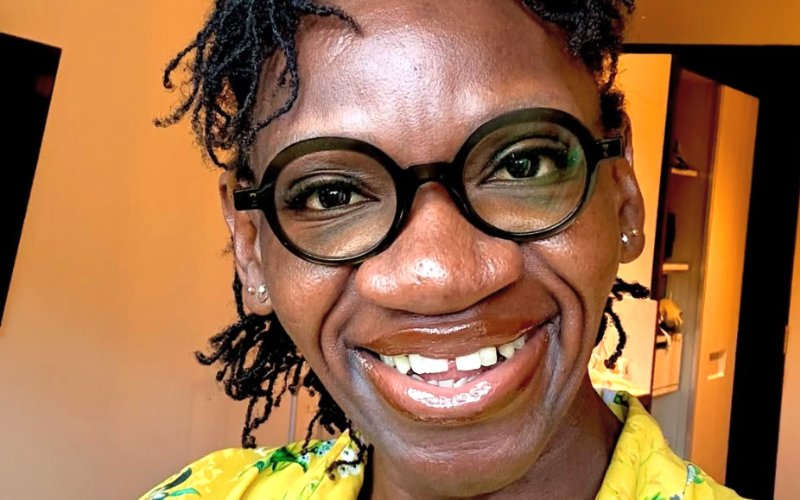
“Every person has an inner light that deserves to shine,” she said, emphasizing that true confidence comes from within, not from external approval. Moreover, Pilula’s experience highlights the importance of cultural context in discussions of beauty. In Zambia, where fuller figures are often celebrated, Pilula’s petite frame was seen as unconventional. Her time abroad exposed her to yet another set of beauty standards, where her Blackness made her stand out.
These experiences shaped her understanding of beauty as subjective and fluid, yet the online criticism she faced reveals how rigid and universalizing beauty standards can be in digital spaces. Pilula’s embrace of her nose as a link to her heritage challenges the idea that certain features are inherently undesirable, encouraging a more inclusive definition of beauty.
Naomie Pilula’s story has also sparked a broader conversation about resilience in the face of adversity. Her ability to transform a negative experience into a platform for advocacy demonstrates the power of self-acceptance. By refusing to be silenced, she has become a role model for those facing similar criticism. Her journey underscores that self-love is not a destination but a process, one that requires confronting insecurities and choosing to prioritize one’s own sense of worth over external judgments.
In conclusion, Naomie Pilula’s response to the criticism of her appearance is a testament to the strength of self-love and resilience. Her viral selfie, initially a source of pain, became a catalyst for empowerment, as she refused to let online hate define her. Through her faith, reflection, and determination, Pilula has turned a personal challenge into a public statement about embracing authenticity. Her story serves as a reminder that beauty is diverse, subjective, and deeply personal, and that true confidence comes from within. As she continues to live authentically and share her journey, Pilula inspires others to let their inner light shine, regardless of what the world might say.