

The quiet rural setting of Sells Lane in Trenton, Georgia, was shattered recently with news that shocked the community and outraged animal lovers across the country. On July 9, 2025, local authorities executed a search warrant at the home of Nathaniel Levon Curington, 44, and Aimee Renee Curington, 45, in response to reports of suspected animal cruelty.
What they discovered inside was described by the Georgia Department of Agriculture (GDA) as one of the most appalling cases of animal abuse and neglect they had ever encountered. Inside the Nathaniel and Aimee Curingtons’ property, investigators were met with deplorable conditions. A staggering 256 animals—mostly dogs and a smaller number of cats—were found either barely surviving or already deceased.
Many of the animals were in extremely poor health, suffering from malnutrition, dehydration, infections, and untreated wounds. In some areas of the property, dead animals lay among the living, a heartbreaking testament to prolonged suffering and utter disregard for humane treatment. Authorities quickly moved to remove all surviving animals and begin a criminal investigation that has since drawn national attention.
The Nathaniel and Aimee Curington were arrested on the same day the search was conducted. Both were charged with seven counts of felony cruelty to animals, and authorities have said more charges are likely as the investigation continues. They are currently being held at the Dade County Jail, awaiting prosecution by the Dade County District Attorney’s Office. The case not only highlights the ongoing issue of large-scale animal hoarding and abuse but also raises broader questions about animal welfare laws, enforcement practices, and community responsibility.
The Shocking Discovery: A Scene of Tragedy and Horror
The events that led to the Nathaniel and Aimee Curingtons’ arrest began with anonymous reports to local authorities and the Georgia Department of Agriculture’s Law Enforcement Division. Concerned individuals claimed they had reason to believe that animals were being kept in inhumane conditions at the Curingtons’ rural property. Acting on these reports, officials initiated a formal investigation, which culminated in the July 9 search of the premises.
What investigators found was nothing short of horrific. Of the 256 animals discovered, approximately 240 were dogs and 16 were cats. Many of the animals were caged in overcrowded, filthy conditions, with limited or no access to food or clean water. The smell of urine and feces permeated the home and surrounding areas, indicating that the animals had been living in squalor for a prolonged period. Some animals were found confined to crates too small for their size, leading to physical deformities and severe distress.
Read : Georgia Couple Traumatized by Neighbor’s Dogs Attacking Them in Their Own Yard
In addition to those suffering from neglect, a number of dead animals were also discovered, their remains in various stages of decomposition. The presence of these bodies among the living not only exacerbated the unsanitary conditions but also added to the trauma endured by the surviving animals. Rescuers reported that many of the animals were extremely fearful, possibly as a result of both physical abuse and the psychological toll of their surroundings.
Read : 74th-Ranked Georgia Beat Portugal as Ronaldo Remains Goalless
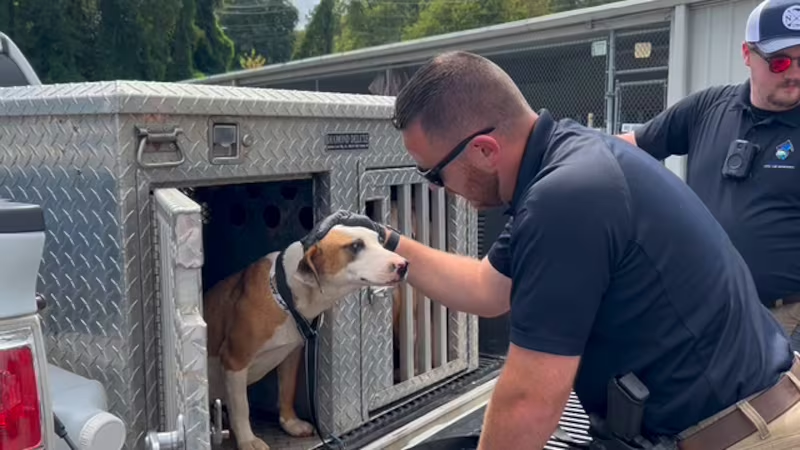
Veterinarians and animal rescue workers were brought in immediately to provide emergency care. The surviving animals were transported to nearby shelters and veterinary clinics, where they received food, hydration, medical treatment, and a safe environment for recovery. These organizations have since launched efforts to rehabilitate the animals and, eventually, place them in loving homes.
Legal Consequences and Community Reaction
Following the discovery, Nathaniel and Aimee Curington were arrested and charged with seven counts of felony cruelty to animals. The charges reflect the most egregious aspects of the abuse uncovered during the search. However, law enforcement officials have indicated that these initial charges are only the beginning. As evidence continues to be collected and evaluated, the Dade County District Attorney’s Office is expected to bring additional charges against the couple.
Georgia Agriculture Commissioner Tyler Harper addressed the case in a public statement, calling it “one of the worst” his department had ever encountered. “I am confident these individuals will be held accountable to the fullest extent of the law,” Harper said. He also emphasized the importance of collaboration between state and local agencies in cracking down on animal abuse, adding, “GDA Law Enforcement is sending a clear message that animal abuse has no place in the state of Georgia.”

The arrests have sparked widespread outrage across the state and beyond. Animal rights activists, local residents, and concerned citizens have voiced their horror over the abuse and demanded justice for the animals. Social media has been flooded with messages of support for the rescue teams and calls for stronger animal protection laws. Community members have also come together to donate supplies and funds to assist in the care and rehabilitation of the rescued animals.
Some residents of Trenton expressed disbelief that such a large-scale case of animal cruelty could go unnoticed for so long in their quiet community. Others have suggested that neighbors may have been hesitant to report the situation earlier, either out of fear or uncertainty about how to intervene. These reactions highlight the importance of public education and awareness about the signs of animal hoarding and abuse.
The Larger Issue: Animal Hoarding and the Need for Reform
While the case of Nathaniel and Aimee Curington is particularly egregious, it is far from isolated. Across the United States, hundreds of cases of animal hoarding and cruelty are reported each year. In many instances, the individuals involved may initially have had good intentions—such as rescuing strays or unwanted animals—but gradually become overwhelmed by the demands of care and the realities of limited resources. In other cases, like that of Nathaniel and Aimee Curingtons, the abuse appears more willful and malicious.
Experts in animal welfare note that hoarding situations often involve complex psychological and social factors. Hoarders may suffer from mental illness, including obsessive-compulsive disorder or delusional thinking. They may genuinely believe they are helping animals, even as the conditions deteriorate to dangerous levels. However, mental health concerns do not absolve individuals from responsibility, particularly when suffering and death are the result.
One of the challenges in preventing such cases is the lack of adequate monitoring and enforcement. Many communities lack the resources or legal authority to regularly inspect properties suspected of hoarding or abuse. Moreover, current animal cruelty laws vary widely from state to state, and some jurisdictions do not impose serious penalties unless the abuse reaches a very high threshold.
In Georgia, felony charges can carry significant penalties, including prison time. But animal advocates argue that more needs to be done—not just to punish offenders, but to prevent abuse before it occurs. This includes improved coordination between animal control, law enforcement, and mental health services; public education campaigns about responsible pet ownership; and the implementation of more comprehensive tracking and reporting systems for repeat offenders.
The case also underscores the vital role of community vigilance. In Nathaniel and Aimee Curingtons’ case, the situation may never have come to light if not for concerned individuals who chose to speak up. Recognizing the warning signs of animal hoarding—such as persistent foul odors, numerous animals in poor condition, or reclusive behavior from the property owner—can make the difference between continued suffering and rescue.
As the rescued animals begin the long road to recovery, many of them will bear the physical and emotional scars of their ordeal for years to come. Their suffering serves as a powerful reminder of why vigilance, compassion, and strong laws are necessary to protect those who cannot speak for themselves.
Though justice may ultimately be served in the courtroom, the responsibility for preventing such cruelty lies with society as a whole. Only by working together—through advocacy, education, enforcement, and care—can we ensure that such horrific abuse never happens again.