
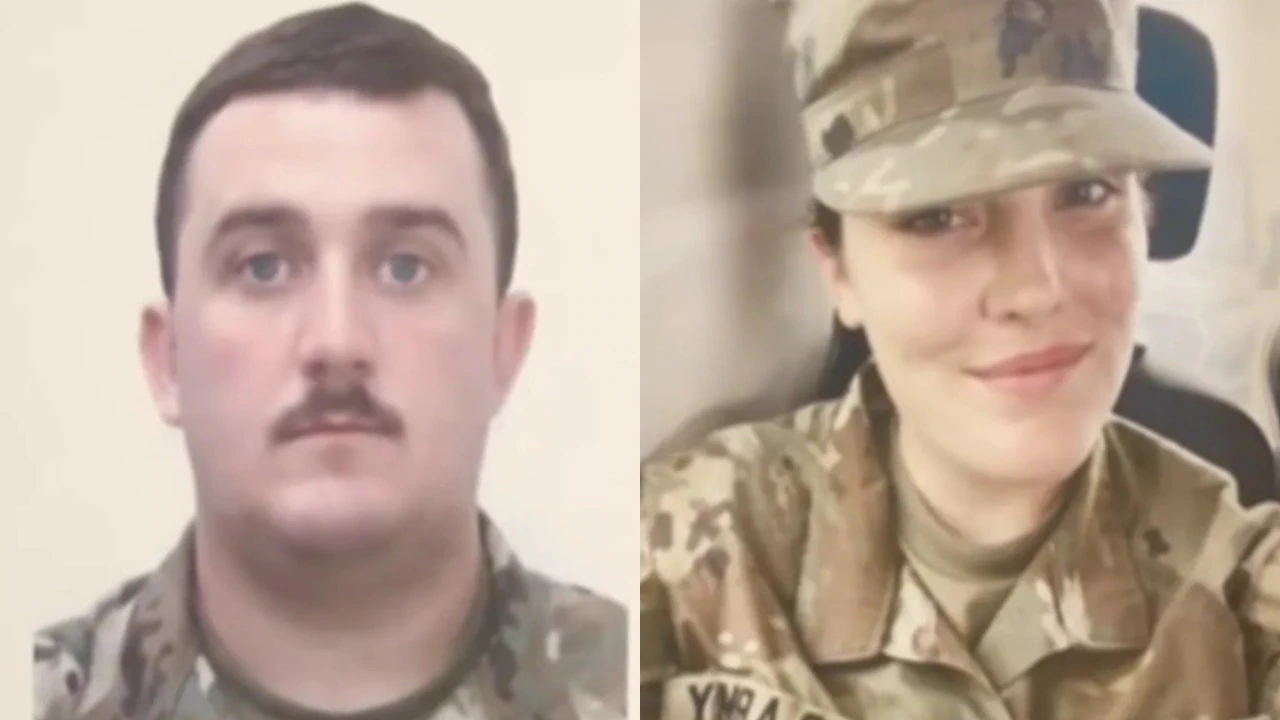
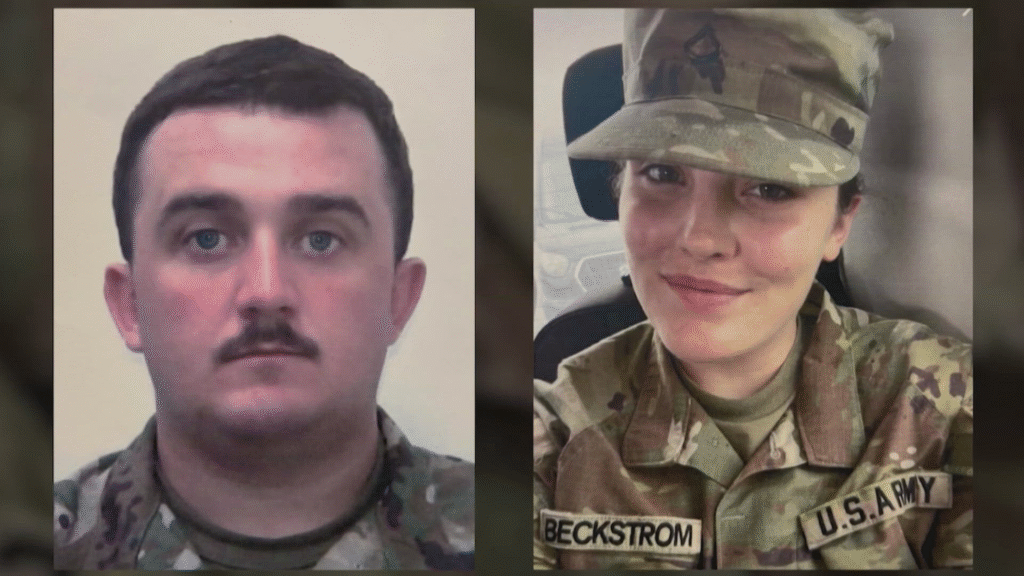
The fatal shooting of two West Virginia National Guard members near the White House has cast a deep shadow over Thanksgiving week in the United States. What began as a routine security deployment ended in tragedy for the families of 20-year-old Sarah Beckstrom and 24-year-old Andrew Wolfe, both of whom were targeted in a violent attack carried out by 29-year-old Rahmanullah Lakanwal. The incident has raised complex questions about national security, immigration vetting, and the vulnerabilities faced by deployed Guard personnel in the nation’s capital.
As federal officials confirmed the identity of the victims and outlined the circumstances leading to the attack, the country was left grappling with the loss of two young service members whose careers had only just begun. Their deaths, and the political controversy following the naming of the suspect, have intensified public attention on the policies and operational conditions under which National Guard members have been serving in Washington, D.C.
Background of the Victims and Their Service
Sarah Beckstrom and Andrew Wolfe had arrived in Washington earlier this year as part of a federal security mission assigning National Guard personnel to conduct presence patrols in the district. Their deployment was linked to a federal takeover order initiated during Donald Trump’s presidency, a measure intended to reinforce security in high-traffic and high-profile areas of the capital. The West Virginia National Guard confirmed that both soldiers were deputised less than a day before the shooting—an administrative move often required to ensure their legal and operational authority during security assignments across federal and local jurisdictions.
Beckstrom, only 20 years old, had entered the Guard in June 2023. A member of a military police company, she was among the youngest personnel deployed to the district and had quickly built a reputation for diligence and composure under pressure. Her role involved patrol duties, visibility operations, and readiness support—work designed to supplement local law enforcement in areas experiencing elevated security demands. Though early in her military career, colleagues noted her strong sense of responsibility and her eagerness to take on challenging assignments.
Andrew Wolfe, aged 24, joined the Air National Guard in February 2019. His service record included multiple medals earned over several years, reflecting a commitment to operations that extended beyond routine patrol work. His training and experience made him an asset to the joint task force running security operations in the district, and he served in a capacity that often required long shifts, rapid coordination with other agencies, and the ability to respond to unexpected threats.
Read : 29-Year-Old Rahmanullah Lakanwal Shoots 2 West Virginia National Guard Members Near White House
Andrew Wolfe’s peers described him as dependable and disciplined, traits that had become increasingly visible during the heightened security operations of recent months. The attack occurred while both soldiers were on duty near Farragut Square, a busy urban center known for its daytime crowds and proximity to government buildings.
Read : Taiwan Urges China to Release Fishing Boat Detained by China’s Coast Guard
Federal officials reported that the two Guardsmen were performing their presence-patrol assignment when they were targeted by gunfire, a detail that underscored the vulnerability of even routine security operations. Despite being armed at the time of the shooting, they were unable to prevent the assault that ultimately claimed Sarah Beckstrom’s life and left Andrew Wolfe critically injured before his death was confirmed the following day. President Donald Trump announced Wolfe’s passing in a Thursday statement, noting that the families of both victims were “shattered” on the eve of the Thanksgiving holiday.
Details About the Suspect and His Entry Into the United States
Federal officials identified the suspect as Rahmanullah Lakanwal, a 29-year-old Afghan national residing in Washington state. His past association with U.S. agencies in Afghanistan immediately drew political scrutiny after CIA Director John Ratcliffe stated that Lakanwal had been permitted to enter the United States due to his prior work with the U.S. government.
According to Ratcliffe, Lakanwal had served in a partner force in Kandahar, a role that involved working alongside U.S. intelligence and military personnel before the American withdrawal from Afghanistan in 2021. Ratcliffe characterised his entry into the country as part of the Biden administration’s post-withdrawal intake of Afghan nationals who had supported U.S. operations, asserting that the administration relied on his service history as justification for granting him entry.
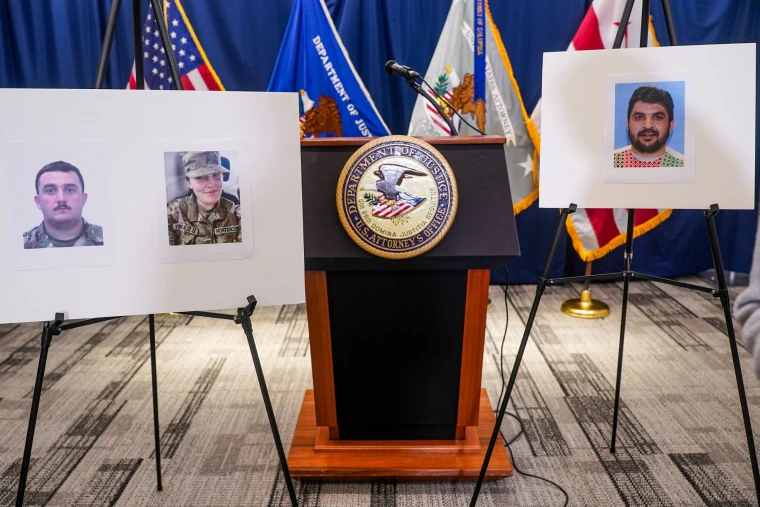
Officials reported that the suspect travelled from Washington state to the nation’s capital before carrying out the shooting. The motives behind the attack have not yet been clarified, though federal investigators have brought three counts of assault with intent to kill while armed, along with charges related to illegal possession of a weapon. Lakanwal’s background, along with his ties to U.S. operations overseas, has become central to the political reaction following the incident, with several federal officials linking the tragedy to broader debates about vetting processes and the challenges of resettling individuals from conflict zones.
In a public statement, U.S. Attorney for the District of Columbia Jeanine Pirro emphasised the devastating impact on the families involved, noting that the timing of the attack—just before Thanksgiving—added to the emotional toll. Her comments highlighted the human dimension of the tragedy, which included not only the loss of two young soldiers but also the broader effects on National Guard communities that have been operating under extended federal deployment orders for months.
The allegations surrounding Lakanwal’s history have also generated new discussions about the intelligence-sharing infrastructure that governs the screening of foreign nationals who previously worked with the United States. While many Afghan partner-force members were vetted and resettled through the Special Immigrant Visa (SIV) program, emergency evacuations and subsequent processing during the withdrawal created procedural gaps that policymakers continue to evaluate. The case has prompted renewed calls for reviewing how individuals with complex operational backgrounds are screened, monitored, and integrated after relocation to the United States.
Political Response and Impact on National Guard Operations
The attack has intensified debate over national security policies, particularly concerning Afghan nationals resettled following the U.S. withdrawal from Afghanistan. In an address delivered Wednesday night, Donald Trump referred to the shooting as an act of terror and called for a comprehensive review of every Afghan alien who entered the country under the Biden administration.
His remarks mirrored comments from other political figures who argued that the current vetting procedures were insufficient, citing the suspect’s alleged ties to U.S. intelligence work as evidence of systemic shortcomings. Trump’s call for a “re-examination” of Afghan entrants reignited discussions that had been prominent during the early stages of the resettlement effort, particularly those concerning the balance between humanitarian obligations and security considerations.
Read : Former NBA Guard Patrick Beverley Arrested on Felony Assault Charge Involving Minor Sister
In response to the shooting, Defense Secretary Pete Hegseth announced that Trump had requested an additional 500 National Guard troops for deployment to Washington, D.C. This request followed recent status updates showing more than 2,100 Guard personnel already assigned to the district.
The expanded deployment reflects ongoing concerns about safety in high-profile federal areas and underscores the extent to which the National Guard has become a cornerstone of security operations in the capital. Since the initiation of the federal takeover order in August, Guardsmen have played a sustained role in patrol, monitoring, and deterrence functions across the city.
Federal agencies are now reevaluating the protocols governing how Guard members are deputised, equipped, and supported during deployment periods. The fact that Sarah Beckstrom and Wolfe had been sworn in only hours before the shooting prompted further inquiries into how rapidly changing administrative requirements might affect troop readiness and coordination on the ground. While deputisation is often routine, the timing in this case highlighted the high-tempo operating environment within which Guard members have been working.
The shooting has also intensified scrutiny of communication practices between federal, state, and local agencies. As investigations proceed, the overlapping responsibilities among the Department of Defense, the FBI, local law enforcement, and national intelligence bodies are expected to come under review, particularly in regard to how information about potential threats is shared and acted upon. The incident has underscored the need for a clear chain of communication that can respond swiftly to emerging threats, especially in areas with dense public presence and complex jurisdictional structures.
For the families of the victims, the political reaction offers little comfort in the face of their profound loss. Federal officials have indicated that support structures are being mobilised for both families, including military assistance programs and casualty-support operations designed to navigate the immediate aftermath. The deaths of Sarah Beckstrom and Andrew Wolfe mark a devastating end to careers defined by service, and their loss has reverberated deeply within the West Virginia National Guard community.
As the investigation continues, questions about vetting policies, deployment practices, and interagency coordination will likely persist. What remains clear is that the shooting has laid bare the risks faced by the young men and women tasked with securing the nation’s capital, and has reignited broader debates about national security that will shape policy discussions in the months ahead.
SuperPH2? Yeah, that’s where I play sometimes. Selection’s not bad, and the site is easy to use. I’ve won a few times, nothing crazy, but enough to keep me coming back. Here’s the link superph2.
Trang web đánh bạc trực tuyến này có các chính sách nghiêm ngặt về việc bảo vệ thông tin cá nhân của game thủ, giúp họ cảm thấy an toàn hơn trong các hoạt động cá cược. Dịch vụ thanh toán nhanh chóng cũng là một yếu tố quan trọng đảm bảo người chơi dễ dàng và nhanh chóng tiếp cận số tiền thắng cược của họ. xn88 slot Tất cả những yếu tố này đóng góp vào việc tạo ra một môi trường giải trí độc đáo nơi game thủ không chỉ tìm thấy sự thích thú mà còn an toàn tuyệt đối khi tham gia. TONY12-26
Bước xác minh tài khoản (KYC) tại 66b có phần linh hoạt hơn so với nhiều nền tảng khác. Bạn chỉ cần xác minh danh tính khi rút tiền lần đầu hoặc khi số tiền rút vượt ngưỡng quy định, thường là 10 triệu VND. Quá trình này yêu cầu ảnh CMND/CCCD và một tấm ảnh selfie cầm giấy tờ tùy thân, đảm bảo an toàn cho cả người chơi và nền tảng. TONY12-26
**mitolyn official**
Mitolyn is a carefully developed, plant-based formula created to help support metabolic efficiency and encourage healthy, lasting weight management.