

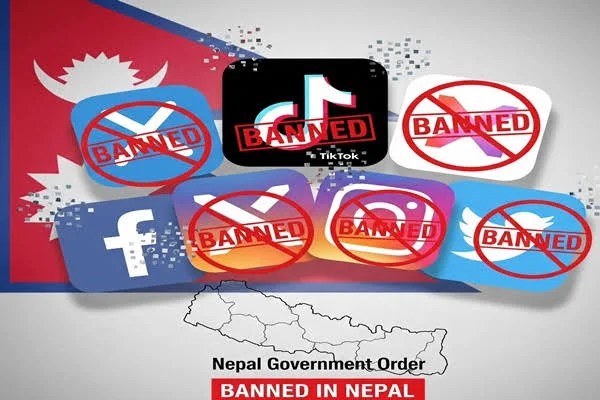
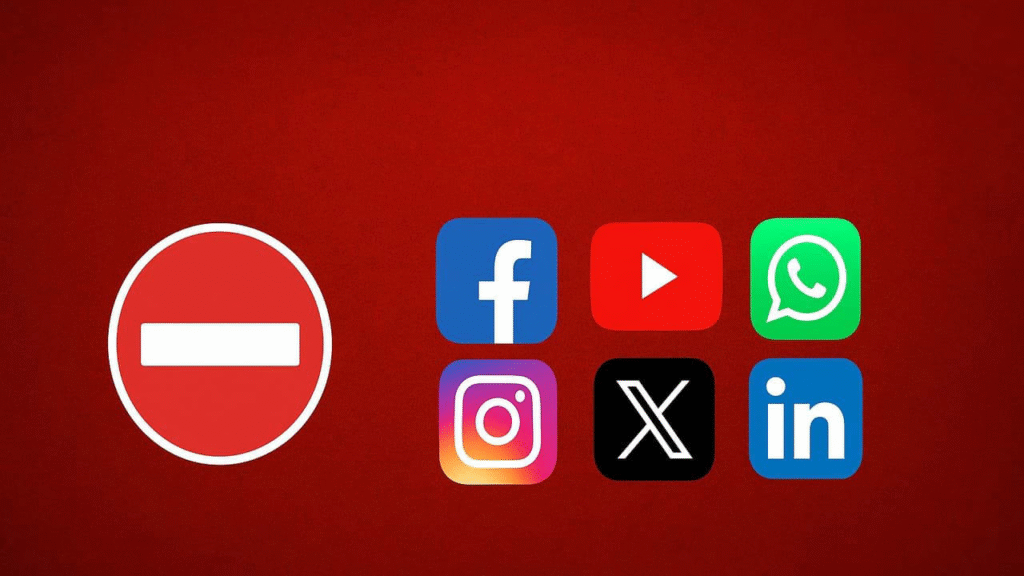
On September 4, 2025, Nepal’s government enacted a sweeping ban on 26 major social media platforms, including Facebook, Instagram, YouTube, WhatsApp, X, Reddit, and LinkedIn, due to their failure to comply with mandatory registration requirements.
This decision, rooted in a Supreme Court directive and the 2023 Directive for Managing the Use of Social Networks, has sparked widespread debate about digital freedom, government oversight, and the socio-economic implications for a nation where 90% of the population uses the internet. The ban, effective immediately, marks a significant escalation in Nepal’s efforts to regulate online spaces, raising questions about the balance between national sovereignty and freedom of expression.
Reasons Behind the Social Media Ban
The Nepalese government’s decision to block 26 social media platforms stems from a combination of legal mandates and regulatory efforts aimed at ensuring accountability and oversight of digital platforms. The Ministry of Communications and Information Technology (MoCIT) issued a seven-day ultimatum on August 28, 2025, requiring all social media platforms operating in Nepal to register with the government, appoint a local contact person, establish a grievance redressal mechanism, and enable self-regulation.
This mandate was reinforced by a Supreme Court ruling on August 17, 2025, which ordered that all online platforms, domestic or foreign, must be registered to operate legally in Nepal, primarily to monitor misinformation and harmful content. The 2023 Directive for Managing the Use of Social Networks, along with a proposed Social Media Bill tabled in 2025, outlines stringent requirements for platforms, including securing a license, renewing it every three years, and ensuring content does not undermine national security, social harmony, or cultural values.
Platforms like Meta (parent company of Facebook, Instagram, and WhatsApp), Alphabet (YouTube), X, Reddit, and LinkedIn failed to meet the registration deadline, prompting the government to instruct the Nepal Telecommunications Authority (NTA) to direct internet service providers (ISPs) to deactivate access to these platforms starting midnight on September 5, 2025. Only five platforms—TikTok, Viber, Witk, Nimbuzz, and Popo Live—had registered, while Telegram and Global Diary were under review, allowing them to continue operating.
Read : Who Was Frank Caprio the Viral Rhode Island Judge with a Massive Social Media Following?
Government officials, including Communications Minister Prithvi Subba Gurung, emphasized that repeated notices had been issued since November 2023, with specific correspondence sent to Meta and X, but these companies ignored the requests. The government argues that registration is essential for accountability, enabling authorities to address issues like cybercrime, hate speech, and misinformation.
Read : Exploring Nepal: A Journey Through the Land of Himalayan Splendor
Critics, however, view the requirements as overly bureaucratic, noting that establishing local offices and complying with content moderation demands may be economically unfeasible for some platforms, particularly in a smaller market like Nepal. The government’s insistence on compliance, backed by the Supreme Court, reflects a broader push for digital sovereignty, but it has raised concerns about censorship and overreach.
Immediate Impacts on Nepalese Society and Economy
The ban has profound implications for Nepal’s 30 million citizens, particularly given the country’s high internet penetration rate and reliance on social media for communication, commerce, and information. Social media platforms, especially Facebook, YouTube, and WhatsApp, account for approximately 80% of internet traffic in Nepal, with 87% of social media users active on Facebook alone. The sudden deactivation of these platforms disrupts daily life for millions, affecting both personal and professional spheres.
For many Nepalese, social media is a primary means of staying connected, particularly for the estimated seven million migrant workers and students abroad who rely on platforms like WhatsApp and Facebook Messenger to communicate with families back home. According to World Bank data from 2024, personal remittances account for 33.06% of Nepal’s GDP, underscoring the importance of these platforms for maintaining emotional and social ties across borders.
Sociologist Meena Paudel has warned that the ban could lead to increased feelings of isolation, depression, and psychological stress among migrant workers and their families, as these platforms are often their only affordable means of communication. The economic impact is equally significant. Social media has become a cornerstone of Nepal’s informal economy, serving as a low-cost marketing platform for small businesses, startups, and content creators.
The recent launch of Facebook’s monetization program in Nepal had enabled local creators to earn revenue from their content, a development now halted by the ban. Economist Chandramani Adhikari noted that businesses relying on platforms like Instagram and Facebook for marketing and sales will face major setbacks, forcing them to pivot to costlier alternatives like SEO or offline promotion. The ban also threatens Nepal’s burgeoning digital economy, as startups and entrepreneurs lose access to global platforms critical for reaching audiences and scaling operations.
Cybersecurity risks are another immediate concern. Experts like Rajiv Subba have pointed out that the ban may drive users to unregulated and potentially unsafe virtual private networks (VPNs) to bypass restrictions, increasing vulnerability to cybercrime. Previous bans, such as the temporary TikTok ban in 2023, saw a surge in VPN usage, often leading to data breaches and fraud. With social media synonymous with the internet for many Nepalese, the ban could push users toward less secure alternatives, exacerbating digital vulnerabilities in a country with low cybersecurity awareness.
Broader Implications for Digital Freedom and Governance
The social media ban has ignited a fierce debate about digital freedom, press freedom, and the role of government in regulating online spaces. Critics, including the Federation of Nepalese Journalists (FNJ) and the Committee to Protect Journalists (CPJ), have condemned the move as a direct assault on freedom of expression and the public’s right to information.
The FNJ argues that banning platforms without providing viable alternatives violates Nepal’s constitutional guarantees, stifling dissent and limiting citizen journalism. CPJ’s Regional Director, Beh Lih Yi, warned that the ban sets a “dangerous precedent for press freedom,” as social media platforms are vital tools for journalists reporting on public policy and government accountability.
The government’s broader legislative agenda adds context to these concerns. Alongside the social media ban, draft bills amending the Print and Publications Act, establishing a new Media Council, and introducing counter-intelligence measures suggest a trend toward increased state control over information and communication. The proposed Social Media Bill, still under parliamentary review, would allow authorities to fine platforms up to Nepalese Rs. 10 million and users up to Rs. 500,000 for content deemed harmful to national interests.
Critics, including Access Now’s Raman Jit Singh Chima, have compared these measures to authoritarian models of digital censorship, warning that Nepal risks undermining its democratic reputation. On the other hand, the government maintains that regulation is necessary to protect national security, curb misinformation, and ensure tax compliance from global tech giants.
The requirement for platforms to register and establish local offices is framed as a step toward accountability, aligning with global trends where countries like the United States, European Union, and Australia are tightening oversight of social media. However, the heavy-handed approach—blocking 26 platforms without clear legal infrastructure or dialogue with tech companies—has drawn criticism for its lack of proportionality. Senior journalist Pralhad Rijal highlighted the disruption to millions of users, particularly the diaspora, while business leaders like Sujeev Shakya of Beed Management questioned the government’s preparedness and transparency in implementing the ban.
The ban’s enforcement also raises practical challenges. While the NTA has directed ISPs to block unregistered platforms, technical difficulties and user workarounds like VPNs may limit its effectiveness. Reports indicate that Meta reached out to MoCIT on September 4 to inquire about registration requirements, suggesting potential negotiations to restore access. The government has stated that platforms completing registration will be reactivated immediately, but the lack of response from major players like Meta, Google, and X underscores tensions between global tech companies and local regulations.
Nepal’s ban on 26 social media platforms represents a bold but contentious move to assert control over its digital landscape. While the government argues that registration is essential for accountability and national security, the sweeping ban threatens to disrupt communication, commerce, and freedom of expression for millions of Nepalese.
The reliance on platforms like Facebook, YouTube, and WhatsApp for personal connections, economic activity, and public discourse highlights the high stakes of this decision. As Nepal navigates this digital turning point, the government faces the challenge of balancing regulatory oversight with the preservation of an open, democratic society. The coming weeks will reveal whether platforms comply with registration demands or if Nepal’s digital restrictions become a long-term reality, potentially reshaping its role as one of Asia’s open societies.
Заказать Haval – только у нас вы найдете цены ниже рынка. Быстрей всего сделать заказ на хавал 2025 г можно только у нас!
[url=https://havalmsk1.ru]haval официальный[/url]
купить хавейл – [url=https://havalmsk1.ru/]http://havalmsk1.ru[/url]
Blade & Fangs играть
Казино Riobet
References:
Common bodybuilding steroids
References:
https://clinfowiki.win/wiki/Post:Liquid_Testolone_RAD140_Premium_15_Mg_mL_Solution
References:
Casino orlando fl
References:
https://pikidi.com/seller/profile/dangergirl5
References:
Can i buy steroids online
References:
https://www.theramedica-altenburg.de/Blog/index.php/;focus=STRATP_com_cm4all_wdn_Flatpress_33109632&path=?x=entry:entry251209-152330%3Bcomments:1
References:
Safest steroid to take
References:
https://yourclipz.com/@marcoshinojosa?page=about
References:
Prolonged use of corticosteroids
References:
https://git.miasma-os.com/alycewellish6
References:
Pros and cons of heroin
References:
https://lookingforjob.co/profile/noeliarowan694