
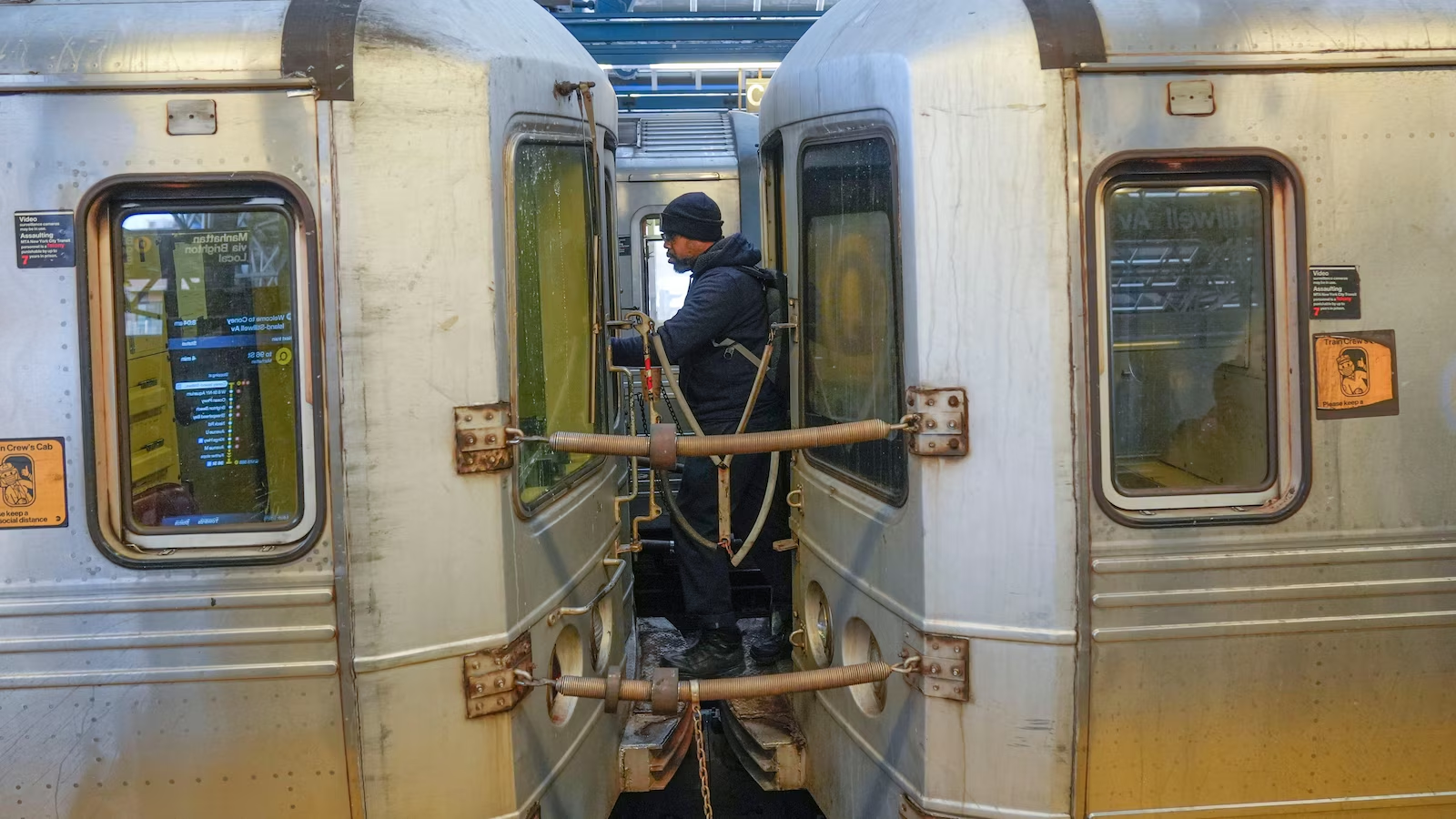
In a grim milestone for New York City’s transit system, six individuals have lost their lives in 2025 due to subway surfing, the perilous practice of riding atop moving subway trains. This deadly trend, which surged in popularity through social media platforms like TikTok and Instagram, has claimed young lives with increasing frequency. The most recent tragedy unfolded on October 4, when two teenage girls were found dead on a J train in Brooklyn, bringing the year’s toll to six. Officials from the New York Police Department (NYPD) and the Metropolitan Transportation Authority (MTA) have intensified warnings, attributing the resurgence to viral videos that glamorize the stunt.
Subway surfing, illegal and inherently fatal, exposes participants to electrocution, falls, and collisions at speeds exceeding 40 miles per hour. As the city grapples with this public safety crisis, the focus remains on prevention amid a backdrop of rising incidents. The NYPD began formally tracking subway surfing incidents in 2022, when social media amplification first propelled the century-old daredevil act into a widespread youth phenomenon. Prior to that year, fatalities were sporadic; from 2018 to 2022, only five deaths were recorded citywide.
But the numbers have climbed sharply since. In 2023, five people died, followed by six in 2024. This year, through September, three fatalities were reported, with the October 4 incident pushing the total to six. Police data indicates that victims are predominantly teenagers, often boys, though the latest case involved girls, highlighting the trend’s broadening appeal. Subway surfers typically target elevated lines like the 7 train in Queens and the J train in Brooklyn, where tracks run above ground, offering easier access but heightened risks from overhead wires and bridge structures.
Authorities emphasize that subway surfing is not a harmless thrill but a form of self-endangerment. Riders face immediate threats: high-voltage third rails delivering 625 volts, sudden stops flinging passengers onto tracks, and low clearances under bridges causing decapitation or crushing injuries. In many cases, victims succumb to blunt force trauma or cardiac arrest from electrical shocks.
Read : 20-Year-Old Hua Develops Kidney Disease After Dyeing Hair Monthly to Follow Celebrity Trends
The MTA reports that train operators frequently spot surfers, especially during peak after-school hours, but interventions are limited by the speed and volume of the system. This year’s deaths underscore a failure to curb the activity despite multimillion-dollar awareness campaigns and enforcement efforts. As winter approaches, officials worry that colder weather could drive more youths outdoors seeking viral fame, exacerbating the crisis.
The Latest Tragedy: Two Teens Lost on the J Train
The October 4 incident at Brooklyn’s Marcy Avenue station on the J line epitomizes the senseless loss tied to subway surfing. Around 4:40 a.m., as a Manhattan-bound J train crossed the Williamsburg Bridge into Brooklyn, two girls—aged 12 and 13—were discovered unconscious and unresponsive atop the train’s final car. First responders pronounced them dead at the scene, with preliminary investigations pointing to subway surfing as the cause. The girls, whose identities have not been publicly released pending family notification, appeared to have climbed aboard during an overnight escapade, a pattern seen in prior cases.
Eyewitness accounts from MTA workers described a chaotic morning rush as the train pulled in. The bodies, sprawled amid the car’s rooftop equipment, halted service briefly while police secured the area. NYPD transit chief Joseph M. Gulotta confirmed the surfing suspicion, noting the girls’ positions and lack of other trauma indicators. Autopsies are pending, but officials ruled out foul play early. This marked the first fatal subway surfing incident involving girls this year, shifting attention to how the trend, once male-dominated, now ensnares a wider demographic through peer pressure and online challenges.
REPORT: "Subway surfing" is becoming a growing trend among teenagers who will "surf" and run on top of moving trains.
— Collin Rugg (@CollinRugg) May 8, 2024
The trend is common in New York City where teens risk their lives just for some views online.
One Manhattan mother is suing Meta, TT and the MTA after her son… pic.twitter.com/ItBRrbnQAg
New York City Transit President Demetrius Crichlow issued a stark statement hours later: “It’s heartbreaking that two young girls are gone because they somehow thought riding outside a subway train was an acceptable game. Parents, teachers, and friends need to be clear with loved ones: getting on top of a subway car isn’t ‘surfing’—it’s suicide.” Crichlow highlighted the emotional toll on transit staff, who discovered the scene. Mayor Eric Adams echoed the sentiment, calling it a “preventable nightmare” and vowing escalated patrols.
Governor Kathy Hochul posted on social media: “Subway surfing is serious and the consequences are deadly. We will continue working with the MTA and NYPD to ensure that young New Yorkers ride inside and stay alive.” The tragedy drew condolences from community leaders, including mayoral candidate Zohran Mamdani, who described it as a “stark reminder of the dangers.”
This event follows closely on the heels of another near-miss: On October 3, a 14-year-old boy was hospitalized after falling from a 7 train in Queens, suffering severe injuries but surviving. Such brushes with death often fail to deter copycats, as social media algorithms push related content to impressionable viewers.
A Year of Irreversible Losses: The 2025 Fatalities
The six deaths in 2025 represent a sustained escalation, each case a stark data point in the NYPD’s grim ledger. The first occurred in early spring, when a 16-year-old boy from the Bronx fell from an elevated A train in Manhattan, succumbing to head injuries at a hospital. Investigators linked it to a TikTok challenge circulating in local schools. By June, a 14-year-old was found with fatal trauma on the tracks at Baychester Avenue station in the Bronx, his phone containing videos of prior surfing attempts.
July brought the death of 15-year-old Zackery Nazario, discovered unresponsive on a 7 train roof at Queensboro Plaza around 2:45 a.m. Transported to Bellevue Hospital, he was pronounced dead from apparent electrocution and blunt force. His mother, Norma Nazario, later revealed finding his phone filled with subway surfing clips, underscoring the personal devastation. “I didn’t know until it was too late,” she told reporters, advocating for stricter platform moderation.
August saw the fifth fatality: a 17-year-old girl struck by overhead wiring while surfing a G train in Queens. Her case, one of the earliest involving a female victim this year, amplified calls for gender-targeted outreach. The October 4 J train incident claimed the sixth life, closing a chapter of unrelenting sorrow. Collectively, these victims—ranging from 12 to 17 years old—hailed from diverse boroughs but shared a common thread: vulnerability to social media’s siren call. NYPD statistics show over 200 arrests for subway surfing in 2024 alone, with 135 in 2023, but enforcement alone proves insufficient against the digital allure.

Each loss ripples through families and communities. Funerals have become forums for grief and activism, with parents like Norma Nazario joining coalitions demanding accountability from tech giants. Schools in high-risk areas, such as Queens and Brooklyn, report heightened absenteeism post-incidents, as fear grips neighborhoods. Transit workers, too, bear the burden; many describe the psychological strain of spotting—and sometimes failing to stop—surfers mid-act. As the year nears its end, these stories serve as cautionary markers, urging a collective reckoning with the forces fueling this epidemic.
Fighting Back: Enforcement, Education, and the Social Media Battle
New York City’s response to subway surfing spans aggressive policing, public education, and legal pressures on social media companies, yet officials admit the multi-pronged strategy lags behind the trend’s velocity. The NYPD’s drone program, launched in 2024, has conducted over 900 flights, intervening in 114 potential incidents involving surfers aged 9 to 33. Drones equipped with thermal imaging patrol elevated lines, alerting ground units for rapid response. “We’ve saved lives by getting there in time,” said Transit Chief Gulotta, though he notes drones cover only a fraction of the 472-station system.
The MTA’s “Ride Inside, Stay Alive” campaign, rolled out in September 2023, targets youth through posters, school assemblies, and PSAs. It features survivor testimonials and animations depicting electrocution risks, distributed via MTA apps and billboards. Partnerships with schools have reached over 100,000 students, emphasizing digital literacy to counter viral challenges. Additionally, the MTA collaborates with TikTok, Instagram, and YouTube to remove content; through June 2025, more than 1,800 videos were taken down, per agency reports. Despite this, enforcement remains spotty, as platforms’ algorithms often recirculate similar material under innocuous hashtags.
Legally, the city has escalated: In 2024, New York sued Meta, Snapchat, TikTok, and others, alleging their platforms exacerbate youth mental health crises and enable stunts like subway surfing. The suit cites algorithmic promotion of dangerous content, seeking damages for healthcare costs tied to injuries. State lawmakers, in a 2024 letter to tech CEOs, decried unfulfilled promises to curb uploads. Meanwhile, physical deterrents lag; the MTA is testing new subway cars with sloped roofs to thwart climbers, but deployment on high-risk lines like the 7 and J could take years.
Advocates argue for bolder steps: mandatory school curricula on online risks, harsher penalties for adult enablers, and federal oversight of social media. MTA worker Tyesha Elcock, whose train was involved in a prior fatality, calls for expanded mental health resources in transit hubs. As 2025’s toll hits six, the city’s fight intensifies, but success hinges on bridging the gap between awareness and action. Without it, more young New Yorkers risk becoming statistics in a stunt born of likes and shares.