
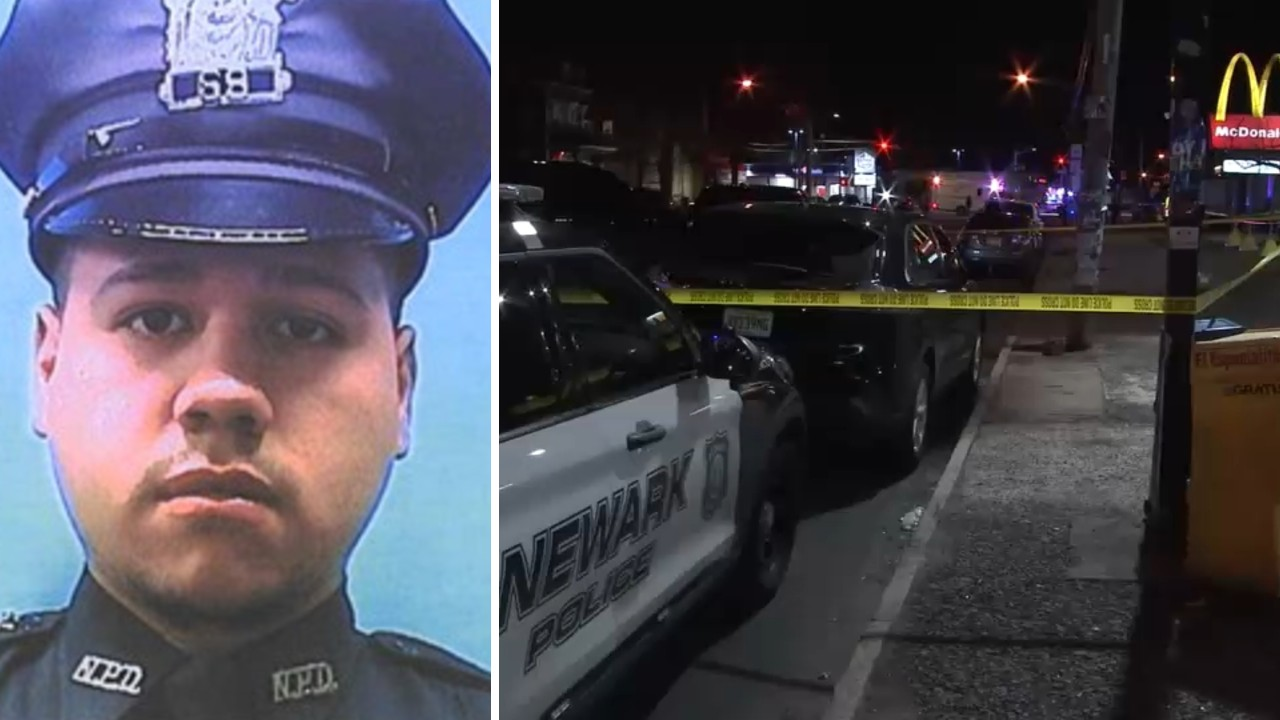
The tragic killing of Detective Joseph Azcona has sent shockwaves through Newark, a city that has long battled crime and violence.
Newark boy arrested for killing detective Joseph Azcona has become the focal point of a deeply troubling case that raises questions about the influence of family, environment, and the cycle of violence that seems to persist across generations.
The accused, a 14-year-old boy, comes from a family deeply entrenched in criminal activities, with his mother and aunt allegedly running an illicit drug empire in Newark’s North Ward.
The brutal slaying of Detective Joseph Azcona, which occurred in a hail of 29 bullets, has left the community in mourning and sparked outrage over the circumstances that led to such a tragic event.
A Family Legacy of Crime and Violence
Sources close to law enforcement and even the suspect’s own relatives reveal that the teenager’s upbringing was steeped in criminal activity. His mother, Rabiyah Sorey, 43, has been a known drug dealer in the North Ninth Street neighborhood for years. Her twin sister, Hadiyah Sorey, is reportedly her “partner in crime,” running the family business alongside her.
Both women have long rap sheets, with multiple arrests for drug distribution, weapons charges, and gang affiliations. Rabiyah, in particular, was identified as a member of the Bloods gang when she was arrested during a drug raid in 2010.
Law enforcement sources claim that the sisters control the drug trade in their area, effectively making them crime bosses of the neighborhood. The teen suspect grew up in this environment, exposed to illegal activities from an early age.
Read : Texas Couple Arrested for Shooting Son’s Teen Girlfriend’s Father
Those familiar with the case suggest that he was heavily influenced by his family’s criminal lifestyle, which normalized drug dealing, violence, and defiance of the law. His aunt, Hadiyah, even boasted to reporters that she makes $4,000 a day selling drugs and has complete control over the North Ward.
The New Jersey State Police extends our deepest condolences to the family, friends, and colleagues of Detective Joseph Azcona of the Newark Police Department, who tragically lost his life in the line of duty on Friday, March 7th. pic.twitter.com/6vmJBtnjVR
— NJSP – New Jersey State Police (@NJSP) March 8, 2025
Despite this, she admitted to concerns about bringing her nephew to Newark, acknowledging that he was better off in Georgia, where he previously lived and played sports. However, within just six months of moving to Newark, the boy found himself on a path that led to the tragic killing of Detective Azcona.
The Fatal Night: A Hail of Bullets
Detective Joseph Azcona, a dedicated officer known for his commitment to keeping Newark’s streets safe, was gunned down in a brutal attack that left the city in shock. The shooting took place in a hail of 29 bullets, highlighting the sheer brutality of the crime.
Joseph Azcona, who had served with distinction, was allegedly ambushed by the 14-year-old suspect in an incident that underscores the growing concern over youth involvement in violent crime.
While the exact motive behind the attack remains under investigation, sources indicate that the suspect had already been involved in multiple serious crimes, including robbery. His rapid descent into criminal activity raises pressing questions about how young individuals in crime-ridden environments are influenced by their surroundings.

The circumstances surrounding Detective Azcona’s murder reflect broader issues within Newark, where gang violence, drug trade, and illegal firearms continue to plague certain neighborhoods. The Newark Police Department has condemned the killing in the strongest terms, vowing to seek justice for their fallen colleague.
The case has also reignited debates on crime prevention strategies, juvenile justice, and the role of family influences in shaping a young person’s future. Community members have expressed grief and outrage, calling for stronger measures to prevent such tragedies from occurring in the future.
The Aftermath: A Community in Mourning and Demands for Justice
Detective Azcona’s death has left an irreplaceable void in the law enforcement community and among his loved ones. Tributes have poured in from colleagues, friends, and community members, all mourning the loss of a dedicated officer who put his life on the line to protect others. His tragic killing has fueled discussions on how Newark and other cities can better address the root causes of crime, particularly among youth who are vulnerable to negative influences.
The arrest of the 14-year-old suspect has also raised significant legal and ethical questions. Given his age, there is widespread debate on how he should be tried and what the appropriate punishment should be.
Some argue that the severity of the crime warrants him being charged as an adult, while others believe that systemic failures, including his upbringing in a criminal environment, should be taken into account when determining his fate.

Meanwhile, the broader issue of family-run crime enterprises remains a pressing concern. The Sorey family’s influence in Newark’s North Ward has drawn increased scrutiny from law enforcement, with authorities vowing to dismantle the networks that enable such criminal activity to thrive.
Hadiyah Sorey’s blatant admission of her role in the drug trade further underscores the brazenness with which some individuals operate outside the law. The case has also prompted calls for increased community intervention programs aimed at steering young people away from crime.
Advocates argue that more resources should be directed toward mentorship, education, and economic opportunities to prevent vulnerable youth from following in the footsteps of relatives involved in illegal activities.
The tragedy of Detective Joseph Azcona’s murder serves as a stark reminder of the urgent need for comprehensive solutions to address crime and violence in Newark and beyond.
As the legal proceedings against the 14-year-old suspect unfold, the city watches closely, hoping for justice while grappling with the deeper societal issues that this case has brought to light.
The story of Newark boy arrested for killing detective Joseph Azcona is more than just a tragic crime; it is a reflection of systemic challenges that demand attention, action, and long-term solutions to prevent future tragedies.