
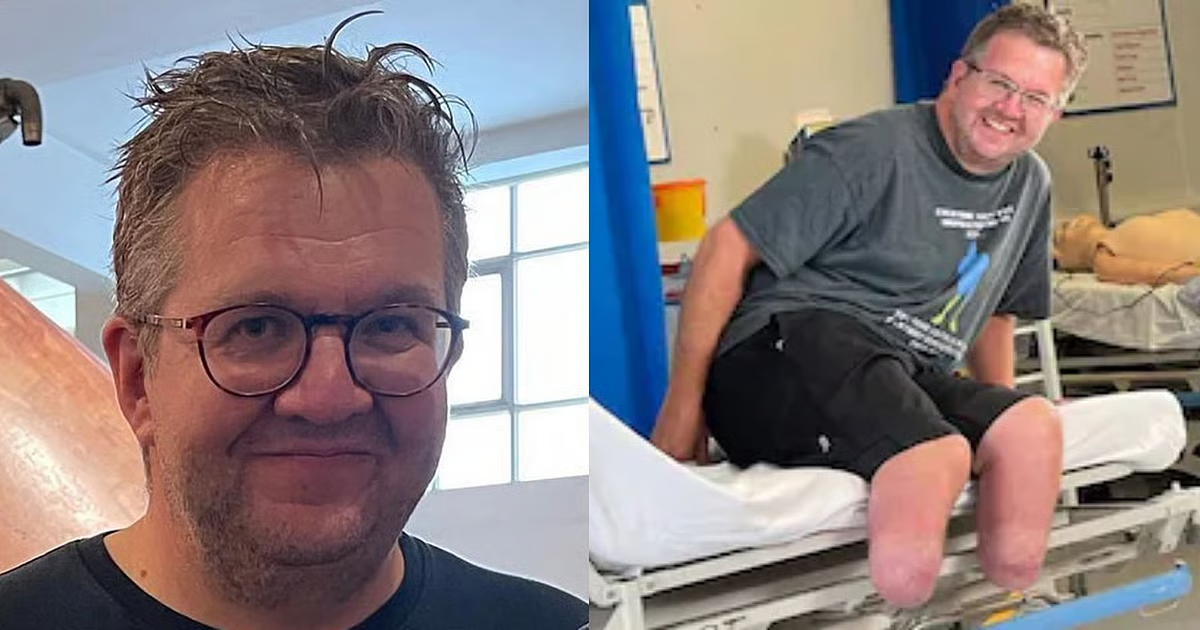
In a shocking case that has stunned the medical community and the public, Neil Hopper, a 49-year-old NHS vascular surgeon from St Erme, Truro, Cornwall, has been sentenced to 32 months in prison for orchestrating a deliberate scheme to amputate his own legs using dry ice and fraudulently claiming nearly £500,000 from insurance companies.
The case, heard at Truro Crown Court on September 4, 2025, revealed a disturbing mix of self-inflicted injury, financial deception, and a connection to extreme body modification practices. Neil Hopper pleaded guilty to two counts of fraud by false representation and three counts of possessing extreme pornographic images, casting a dark shadow over his once-respected medical career.
The Deliberate Act and Deceptive Insurance Claims
On April 15, 2019, while his wife and children were away from their home in St Erme, Neil Hopper deliberately immersed his lower legs in dry ice, following instructions from Marius Gustavson, a notorious figure who ran an extreme body modification ring known as the “Eunuch Maker.” The court heard that Hopper messaged Gustavson during the act, expressing excitement about becoming a double amputee, stating, “It’s going to be awesome being a double amputee.” The use of dry ice caused severe frostbite, rendering his legs irreparably damaged and necessitating amputation below the knees.
Two days later, a family friend, concerned for Hopper’s welfare, called paramedics to his home. They found him in bed with socks covering his feet, concealing the extent of the damage. Hopper misled medical professionals by claiming he had been unwell with diarrhoea and vomiting, leading doctors to treat him for suspected sepsis. He was initially taken to the Royal Cornwall Hospital and later transferred to Derriford Hospital in Plymouth for treatment in a hyperbaric oxygen chamber.
Despite extensive medical efforts, on May 10, 2019, Hopper underwent a double foot amputation, followed by a further operation a week later to remove his legs below the knees. Following the amputations, Hopper made fraudulent insurance claims to two companies, Aviva and Old Mutual Wealth, asserting that his injuries were caused by sepsis and were not self-inflicted. These claims resulted in payouts totaling £466,653.81, which he spent on luxury items such as a campervan, a hot tub, a wood burner, and home renovations.
Read : Maria Penaloza Cabrera Died After Fake Surgeon Performs Butt Implant Removal Surgery at Home
The court heard that Hopper’s actions were driven by a combination of greed and a long-standing obsession with amputation, which he described as a source of sexual gratification. Judge James Adkin, the honorary recorder of Truro, sentenced Neil Hopper to 22 months for the fraud charges and an additional 10 months for the possession of extreme pornographic images, emphasizing that the injuries were “deliberately” self-inflicted following Gustavson’s instructions.
Former NHS surgeon Neil Hopper, who had both legs amputated, has been jailed for insurance fraud – following the revelation that his injuries were entirely self-inflicted.
— Channel 5 News (@5_News) September 4, 2025
The court also heard that he had a “sexual interest in amputation”.@tessa5news pic.twitter.com/6Oys8WQHE5
The Crown Prosecution Service, led by senior prosecutor Richard Parkhouse, described the case as “highly unusual and shocking.” They noted that Hopper’s communications with Gustavson revealed the truth about his self-inflicted injuries, which he concealed to secure the substantial insurance payouts. Prosecutors have since announced plans to pursue an application under the Proceeds of Crime Act 2022 to recover the fraudulently obtained funds, underscoring the severity of Hopper’s financial deception.
Connection to Extreme Body Modification and Legal Consequences
Hopper’s case came to light during investigations into Marius Gustavson, a Norwegian national who was jailed for life with a minimum term of 22 years in 2024 for running the Eunuch Maker website. This platform facilitated extreme body modifications, including male castration, penis removal, and limb amputations, often performed on individuals as young as 16. Gustavson himself had his penis removed with a kitchen knife and froze his own leg to necessitate amputation, actions that mirrored Hopper’s.
The court heard that Hopper purchased three videos from the Eunuch Maker website for £10 and £35, depicting men willingly having their genitals removed, and exchanged approximately 1,500 messages with Gustavson about his own amputations, including details on how much dry ice he used. Hopper’s involvement with the Eunuch Maker extended beyond personal acts, as he was also charged with possessing extreme pornographic images related to the website’s content.
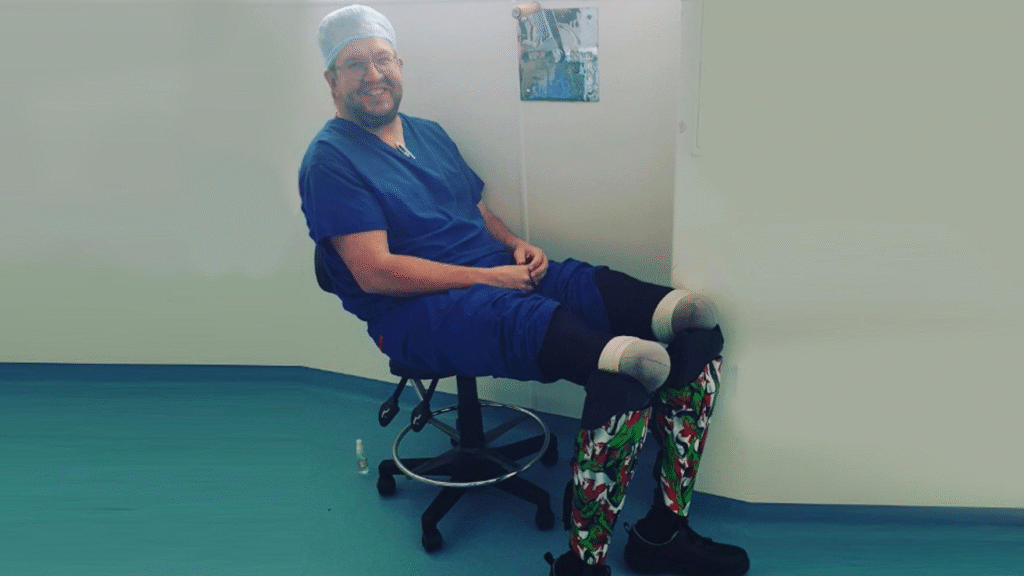
These charges, which he admitted to, highlighted a disturbing sexual fetish linked to amputation, which prosecutors argued was a significant motivator for his actions. Judge Adkin imposed a 10-year Sexual Harm Prevention Order to restrict Hopper’s behavior and protect the public, reflecting the gravity of his offenses. The court also noted that Hopper’s wife is seeking a divorce, and he faces the loss of his home, further compounding the personal consequences of his actions.
Hopper’s defense, led by Andrew Langdon, KC, argued that he suffered from body integrity identity disorder, a condition where individuals feel a persistent desire to amputate healthy limbs, viewing them as “unwelcome extras.” Hopper described his feet as a source of “persisting never-ending discomfort” since childhood and expressed remorse for his dishonesty, though not for the amputations themselves. Despite this, the court found that his motivations were not solely psychological but also tied to financial gain and sexual gratification, as evidenced by his messages to Gustavson and his enjoyment of media attention following the amputations.
Impact on the NHS and Public Trust
The case has raised significant concerns about the integrity of the medical profession and the trust placed in NHS surgeons. Neil Hopper, who worked at the Royal Cornwall Hospitals NHS Trust from 2013 until his arrest in March 2023, was a respected vascular surgeon who performed hundreds of amputations on patients. Following his arrest, he was suspended from the medical register in December 2023, effectively ending his career.
The Royal Cornwall Hospitals Trust issued a statement emphasizing that the charges did not relate to Hopper’s professional conduct and that an independent clinical review found no evidence of risk or harm to patients. However, the revelation of his actions has prompted former patients, including some who underwent amputations, to contact Enable Law, a South West-based medical negligence firm, expressing concerns that their surgeries may not have been necessary.
Mike Bird, a partner at Enable Law, described the case as causing “shock and grave concern” among Hopper’s former patients, some of whom underwent life-changing procedures. He called for a rigorous public investigation to address these concerns, despite the NHS trust’s assurances. The trust has provided support and counseling to Hopper’s colleagues, acknowledging the distressing nature of the case. The absence of evidence linking Hopper’s crimes to his professional practice has not fully alleviated public unease, particularly given his ability to deceive medical professionals and insurers about the cause of his injuries.

Hopper’s public persona added another layer of complexity to the case. In 2020, he was named one of Britain’s bravest individuals at the Amplifon Awards for Brave Britons, hosted virtually by BBC Breakfast, and appeared on ITV’s This Morning to discuss his recovery from what he claimed was a sepsis-related illness. He also featured in a 2023 BBC interview and a Welsh language documentary on S4C, and was shortlisted for the European Space Agency’s search for an astronaut with a disability. The court heard that Hopper “enjoyed the attention” generated by this publicity, which he used to bolster his false narrative of overcoming a tragic illness.
The case has sparked broader questions about oversight within the NHS and the mechanisms in place to detect personal misconduct among medical professionals. While the Royal Cornwall Hospitals Trust and Devon and Cornwall Police have stated that no links were found between Hopper’s actions and his treatment of patients, the psychological and ethical implications of a surgeon engaging in such extreme behavior are profound. The trust’s collaboration with police throughout the investigation underscores the seriousness with which the case was handled, but the public’s trust in the medical system may require time and transparency to rebuild.
Neil Hopper’s case is a chilling example of how personal obsessions and financial greed can lead to catastrophic consequences, both for the individual and the institutions they represent. His deliberate self-harm, fraudulent insurance claims, and association with extreme body modification practices have not only ended his medical career but also raised critical questions about trust in the NHS.
As prosecutors move to recover the fraudulently obtained funds and former patients seek answers, the case serves as a sobering reminder of the need for vigilance and accountability in the medical profession. Hopper’s 32-month sentence and 10-year Sexual Harm Prevention Order reflect the severity of his actions, but the ripple effects of this scandal will likely persist, challenging the NHS to address the concerns of patients and restore confidence in its ranks.