
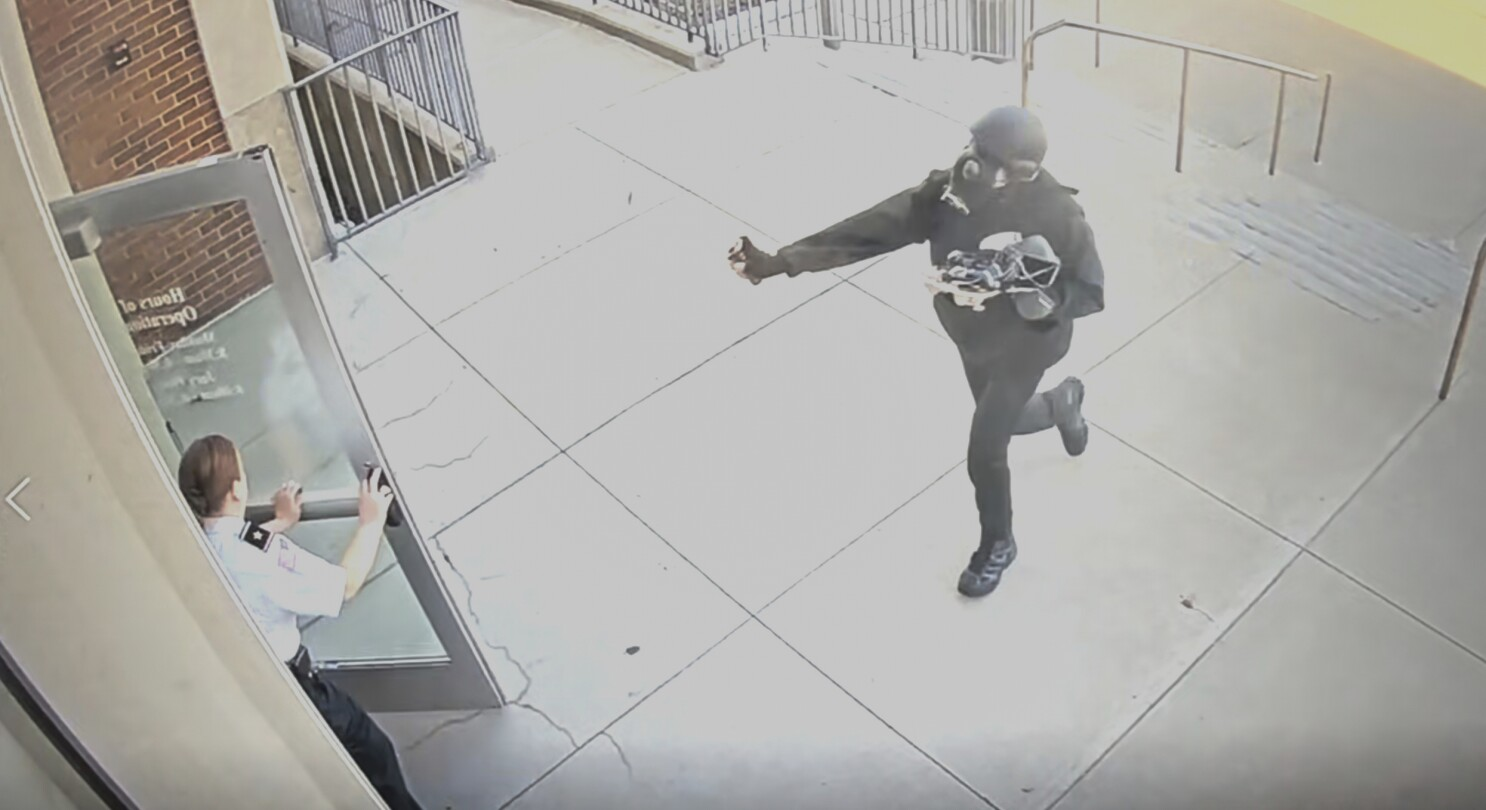
In a chaotic incident at Woburn District Court in Massachusetts, 28-year-old Nicholas Akerberg of Yarmouth Port was arrested after storming the courthouse lobby in a gas mask and tactical gear, deploying pepper spray on court officers, a police officer, and an assistant district attorney.
The attack, which occurred around 10:30 a.m. on April 14, 2025, led to the evacuation of the courthouse and injuries to multiple individuals, though all were later released from hospital care.
Akerberg, who has a history of mental health issues and prior pepper spray-related charges, faces a slew of charges and is undergoing a competency evaluation. This case raises serious concerns about courthouse security and the handling of individuals with mental health challenges within the justice system.
The Courthouse Assault and Immediate Response
Nicholas Akerberg entered Woburn District Court wearing a helmet, gas mask, tactical boots, and sunglasses, an alarming sight captured on security footage. He was scheduled for a hearing related to a prior charge from Stoneham, where he had allegedly pepper-sprayed police during a 2024 arrest.
As he approached the courthouse entrance, a female court officer attempted to block his entry by holding the door shut, but Akerberg forced his way inside, deploying pepper spray.
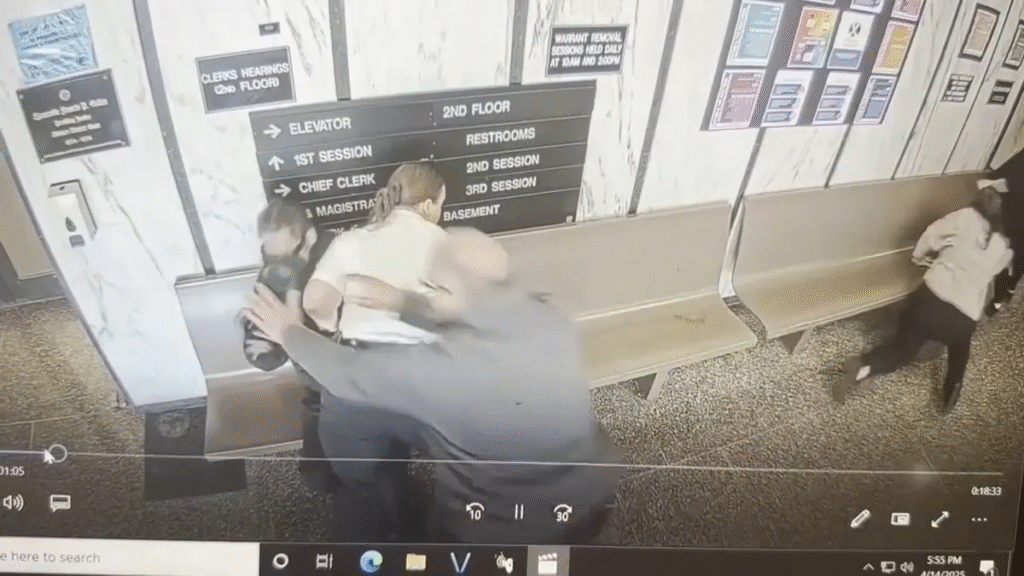
Once in the lobby, he sprayed multiple court officers, a Stoneham police officer, and an assistant district attorney, while also punching, shoving, and assaulting several bystanders, according to the Middlesex District Attorney’s Office.
The scene, described as terrifying by witnesses, saw bystanders scattering as officers struggled to restrain Akerberg. Security footage shows a bystander tackling him near a bench, followed by four court officers pinning him to the ground. A Taser was ultimately used to subdue him, and he was arrested.
Authorities discovered Akerberg was carrying eight canisters of pepper spray and two smoke canisters, raising fears of a potentially more dangerous intent. The courthouse was evacuated, reopening at 2 p.m. after the situation was contained. Akerberg, along with two court officers and the Stoneham police officer, were taken to a local hospital for treatment and later released.
Shocking video shows the moment a masked man entered a Woburn courthouse Monday, blasting pepper spray before finally being tackled to the ground.https://t.co/GnZMdVJGhg pic.twitter.com/Y6dNI4BBZX
— Boston 25 News (@boston25) April 15, 2025
Middlesex District Attorney Marian Ryan condemned the attack, stating, “Courts are sacred, hallowed places… The rule of law is not a fancy academic concept, it is the foundation of our democracy.
Read : Lipstick-Wearing Man Arrested for Arson Incidents in New Mexico
Anyone who desecrates these sacred places will be prosecuted to the fullest extent of the law.” The incident, the third serious courthouse disruption since March 10, 2025, underscored the need for enhanced security measures to protect court staff and visitors.
Legal Charges and Akerberg’s Troubled History
Nicholas Akerberg was arraigned on April 14, 2025, facing a litany of charges: six counts of assault and battery with a dangerous weapon, five counts of assault and battery on a public employee, two counts of assault and battery on a police officer, and single counts of assault, disrupting a court proceeding, disorderly conduct, making a bomb threat, and intimidation.
He pleaded not guilty, but his bail was revoked on several open cases in Woburn District Court, and he was ordered held pending a dangerousness hearing on May 2. The court also mandated a competency evaluation, reflecting concerns about his mental state, with his attorney describing him as “sounding completely deranged.”
Akerberg’s prior run-ins with the law paint a picture of escalating behavior. Court records show he was arrested in 2023 for punching a 67-year-old neighbor in Stoneham and again in 2024 for pepper-spraying police during an arrest attempt on charges of assault and battery with a dangerous weapon and violating a prevention order.

Stoneham police noted Akerberg’s well-documented mental health issues, with five prior commitments recorded. These incidents suggest a pattern of violent outbursts, often involving pepper spray, raising questions about how his mental health needs were addressed before the courthouse attack.
During his arraignment, Akerberg was transferred to Bridgewater State Hospital for a mental health evaluation, a step his attorney supported given his apparent instability.
The judge’s decision to revoke bail and order a competency evaluation reflects the gravity of the incident and Akerberg’s history, ensuring he remains in custody until his mental state and dangerousness can be assessed. The case has drawn attention to the challenges of managing defendants with mental health issues, particularly those with access to weapons like pepper spray.
Broader Implications for Courthouse Safety and Mental Health
The Woburn courthouse incident has sparked urgent discussions about courthouse security and the intersection of mental health and the justice system. The ease with which Nicholas Akerberg entered a secure facility, armed with multiple canisters of pepper spray and smoke devices, exposed vulnerabilities in current protocols.
Woburn Police Chief Robert Rufo Jr. and District Attorney Ryan emphasized the need to foster respect for courts, noting that such attacks undermine the judicial process. The incident prompted immediate reviews of security measures, including entry screening and officer training, to prevent future breaches.
Akerberg’s case also highlights systemic gaps in addressing mental health within the criminal justice system. His documented history of mental illness and prior commitments suggest missed opportunities for intervention.
Advocates for mental health reform argue that individuals like Nicholas Akerberg require comprehensive treatment plans rather than repeated arrests, which may exacerbate their conditions.
The court’s decision to order a competency evaluation is a step toward understanding his mental state, but it raises broader questions about how courts can balance public safety with the needs of mentally ill defendants.
The community response has been one of shock and concern, particularly in Yarmouth Port, where Akerberg resides. Local leaders are calling for increased mental health resources and better coordination between law enforcement and mental health services to prevent similar incidents. The attack’s ripple effects extend beyond Woburn, as courthouses nationwide reassess their preparedness for unpredictable threats, especially in an era of heightened public tensions.
As Nicholas Akerberg awaits his dangerousness hearing, the focus remains on ensuring justice for the victims—court officers, a police officer, and a prosecutor who endured physical and emotional trauma—and addressing the systemic issues his case exposes.
The incident at Woburn District Court serves as a sobering reminder of the fragility of public safety in judicial settings and the urgent need for reforms to protect both the public and those struggling with mental health challenges.