

On a quiet Sunday morning in Kalispell, Montana, a tragedy unfolded that left a community in shock and mourning. Nicholas Olson-Hartley, a 33-year-old father, called 911 just before 6 a.m., making disturbing statements to the operator.
When police arrived at the family’s home in the Silverbrook Estates community, they discovered a horrific scene: Nicholas, his 27-year-old wife Katie Olson-Hartley, their 7-month-old daughter, and their 6-year-old daughter were all dead from gunshot wounds.
Authorities have concluded that Nicholas killed his wife and children before taking his own life, marking the incident as a devastating murder-suicide. This heartbreaking event, occurring in a picturesque town near Glacier National Park, has raised questions about the factors leading to such an unthinkable act and its impact on the close-knit community.
The Tragic Incident in Silverbrook Estates
The sequence of events began in the early hours of Sunday, when Nicholas Olson-Hartley dialed 911 from the family’s home in Silverbrook Estates, a planned community known for its modern homes and proximity to the Stillwater River.
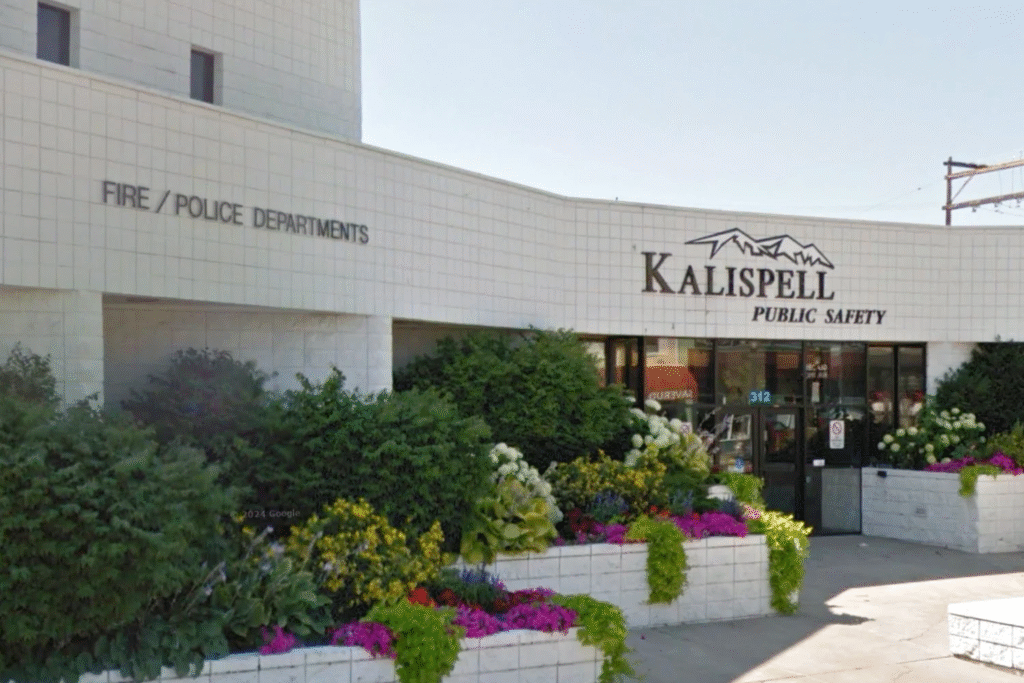
According to Kalispell Police Chief Jordan Venezio, Nicholas made “concerning” statements during the call, though specific details of the conversation have not been disclosed. By the time officers arrived at the residence, it was too late. Inside, they found the bodies of Katie Olson-Hartley, the couple’s two young daughters, and Nicholas himself, all killed by gunshot wounds.
Investigators spent the day collecting evidence and interviewing witnesses to piece together the timeline of the tragedy. Their findings pointed to a clear but harrowing conclusion: Nicholas Olson-Hartley had shot and killed his wife and children before turning the gun on himself.
The police have classified the incident as a murder-suicide, with Nicholas as the sole perpetrator. The precise motive remains under investigation, but the absence of any reported domestic violence history or public disputes has left authorities and neighbors searching for answers.
Read : 4 Men Arrested in Africa in Connection with Suicide of 17-Year-Old California Boy Ryan Last
Silverbrook Estates, where the family lived, is a relatively new development with homes built in the last five years, some valued at over $1 million. The neighborhood’s serene setting, nestled in the shadow of Glacier National Park, contrasts sharply with the violence that occurred.
Read : Shocking Pentagon Study Found That More U.S. Soldiers Died by Suicide Than Combat from 2014 to 2019
Westcraft Homes, the community’s developer, issued a statement expressing deep sorrow for the loss of “one of our Silverbrook families.” The statement called for unity and compassion, urging residents to support one another in the wake of the tragedy. For many in Kalispell, a city of just under 30,000, the incident has shattered the sense of safety typically associated with their small-town lifestyle.
The Olson-Hartley Family: A Portrait of Love and Loss
Katie and Nicholas Olson-Hartley appeared to be a loving couple devoted to their two young daughters. Court records show that Nicholas filed a marriage license application in 2018, formalizing their commitment. Katie’s Facebook page, verified by NBC News, was filled with joyful photos of their children, capturing milestones and everyday moments.
The images painted a picture of a proud mother who cherished her role in raising her 7-month-old and 6-year-old daughters. One particularly poignant post from 2023 featured a photo of Katie and Nicholas surrounded by fall foliage. In a comment, Katie wrote, “This is how people look at each other in movies when they’re in love,” suggesting a deep bond between the couple.
Little is known publicly about Nicholas Olson-Hartley’s background or state of mind leading up to the incident. Authorities have not released information about his occupation, mental health history, or any stressors that may have contributed to his actions. Similarly, details about Katie’s life beyond her role as a mother and wife are scarce.
What is clear, however, is that the family was deeply integrated into their community, living in a neighborhood designed for families seeking a peaceful, upscale lifestyle. The loss of Katie and her daughters has left an indelible mark on those who knew them, with neighbors and friends grappling with grief and disbelief.
The deaths of the Olson-Hartley children—a 7-month-old and a 6-year-old—are particularly heart-wrenching. These young girls, whose names have not been publicly released, were robbed of their futures in an act of incomprehensible violence.
The community’s mourning extends beyond the immediate family, as residents reflect on the innocence lost and the fragility of life. The tragedy serves as a stark reminder that even in seemingly idyllic settings, unseen struggles can lead to catastrophic outcomes.
Mental Health, Warning Signs, and Community Response
The Olson-Hartley murder-suicide underscores the critical need for mental health awareness and intervention, particularly in cases where individuals may be silently battling inner turmoil. While no specific motive has been confirmed, murder-suicides often stem from a combination of psychological distress, unresolved conflict, or untreated mental health conditions.
Nicholas’s decision to call 911 before taking his own life suggests a moment of awareness or remorse, but it was not enough to prevent the tragedy. This raises questions about what warning signs, if any, were missed and how communities can better support individuals in crisis.
Mental health resources in small towns like Kalispell can be limited, with fewer therapists and crisis intervention services compared to urban areas. Montana, in particular, has faced challenges in addressing mental health needs, with high rates of suicide and limited access to care in rural regions.
The state’s rugged individualism, while a point of pride, can sometimes discourage people from seeking help due to stigma or a lack of awareness. For families like the Olson-Hartleys, who appeared to lead a stable and happy life, underlying issues may go unnoticed until it’s too late.

The broader context of this incident is also notable. Just one day earlier, a similar tragedy occurred in Nebraska, where a husband, wife, and their two teenage children were found dead in a suspected murder-suicide. These back-to-back events highlight the alarming frequency of such incidents and the need for proactive measures to prevent them.
Experts suggest that warning signs of murder-suicide can include social withdrawal, expressions of hopelessness, or sudden changes in behavior. However, these signs are not always obvious, especially if the individual is adept at masking their struggles.
In response to the Kalispell tragedy, community leaders and organizations have called for unity and compassion. Westcraft Homes’ statement emphasized the importance of fostering kindness and supporting neighbors, a sentiment echoed by local residents.
Vigils and memorials are likely to emerge as the community processes its grief, offering a space for collective healing. Schools, churches, and local nonprofits may also play a role in providing counseling and support to those affected, particularly children who may struggle to understand the loss of their peers.
Moving forward, the Kalispell community has an opportunity to advocate for stronger mental health resources and education. Initiatives such as crisis hotlines, community wellness programs, and training for first responders can help identify and address potential risks before they escalate.
Additionally, open conversations about mental health can reduce stigma, encouraging individuals to seek help without fear of judgment. The tragedy of the Olson-Hartley family serves as a painful catalyst for these efforts, reminding us that compassion and vigilance are essential in preventing future losses.
In conclusion, the murder-suicide involving Nicholas Olson-Hartley and his family is a profound tragedy that has left Kalispell, Montana, reeling. The loss of Katie Olson-Hartley and her two young daughters, coupled with Nicholas’s own death, has shattered the community’s sense of security and prompted soul-searching about how such events can be prevented. As investigators continue to uncover details, the focus must shift to healing and prevention.
By honoring the memory of the Olson-Hartley family through acts of kindness, advocacy, and support, Kalispell can emerge stronger, united in its commitment to protecting its residents and fostering a culture of care. The road to recovery will be long, but with collective effort, the community can find hope amid the sorrow.