
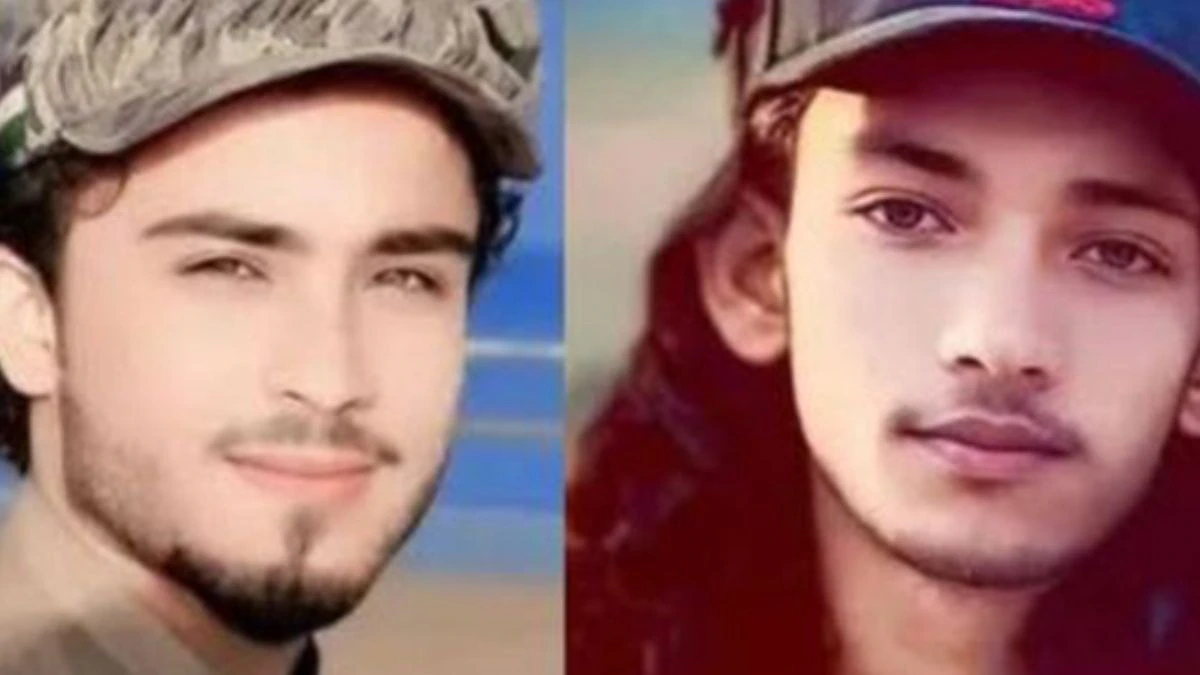
The troubled province of Balochistan in Pakistan has long been a hotspot for violence, unrest, and allegations of human rights abuses. Over the years, the region has witnessed an alarming number of enforced disappearances, most often blamed on the Pakistani military and intelligence agencies.
The recent case of nine Baloch men being forcibly disappeared has once again brought the grim reality of state-led oppression into the spotlight. These incidents, reported by The Balochistan Post (TBP), have triggered widespread outrage and renewed international calls for justice.
According to TBP, the disappearances occurred in two separate incidents in Pasni and Dasht Balnigor district of Kech. The victims, all young Baloch men, were reportedly taken away by Pakistani security forces in raids that have become increasingly common in the region.
No formal charges were filed, no arrest warrants were presented, and no information has been provided to the families, who remain in a state of anguish and uncertainty. These disappearances are not isolated events but are symptomatic of a wider policy of repression, surveillance, and control aimed at the Baloch people.
As the voices of affected families echo through the empty streets of Baloch villages, the question that remains is not just “where are they?” but also “who were they?” Who are the individuals behind these names, and why were they targeted? Understanding this is essential not only for justice but also for exposing the patterns of systematic abuse that have haunted Balochistan for decades.
The Victims from Pasni: Yar Jan and Sher Jan
In the coastal town of Pasni, located in Gwadar District of Balochistan, the first incident involved the abduction of two men identified as Yar Jan and Sher Jan. Both were residents of Babbar Shor Ward No. 1 and were reportedly detained without any legal process. Family members have expressed deep concern over their sudden disappearance, stating that both men were non-political and had no known affiliations with any banned organizations.
Pasni has seen increasing military surveillance due to its strategic location near the Gwadar port, a key component of the China-Pakistan Economic Corridor (CPEC). Local sources suggest that the increased militarization of the area has led to a sharp rise in arbitrary detentions, particularly targeting young men suspected of dissent or opposition to state-backed development projects. The detainment of Yar Jan and Sher Jan appears to be another such case where suspicion alone, without evidence or trial, was enough to warrant disappearance.
Read : Why is Pakistan Considered One of the Most Beautiful Countries?
Community elders from the area have called for their immediate release, demanding transparency and legal recourse. Their families have not received any information from authorities and fear for their safety, especially considering past incidents where missing persons were found dead or never returned. The sense of helplessness and injustice is widespread, with no avenue for appeal or accountability.
The Kech Incident: Seven Young Men Disappeared
The second and more significant raid occurred in Dasht Balnigor, a district in the Kech region of Balochistan. In the early hours of Monday morning, Pakistani security forces reportedly conducted aggressive raids, harassing women and children while ransacking homes. During this operation, seven young men were detained and disappeared. They were later identified as Naveed, Salman, Haneef, Naseer, Afraz, Kamal, and Phullain.
Read : 25-Year-Old Kashish Chaudhary Becomes First Hindu Woman Assistant Commissioner in Balochistan
These young men were reportedly community members known for their peaceful conduct and regular involvement in local affairs. None had any formal criminal charges against them. According to eyewitnesses, the security forces arrived with armored vehicles, surrounded the village, and began house-to-house searches. Those taken were dragged from their homes, some still in their sleepwear, and thrown into waiting vehicles.

The use of such heavy-handed tactics has become a routine in Kech, a district frequently accused by the state of harboring militants. But human rights observers argue that these accusations are often exaggerated or unsubstantiated and are used to justify the detention of civilians, especially students and activists who challenge the state narrative. The forced disappearance of these seven men follows a familiar pattern where young Baloch are silenced and removed from their communities under the guise of national security.
Enforced Disappearances: A Persistent Human Rights Crisis
The disappearance of these nine men is only the latest in a long line of similar cases. According to human rights groups and local media, enforced disappearances in Balochistan have become a systematic strategy of control and suppression. Amnesty International has condemned Pakistan’s ongoing failure to address these disappearances, calling them a violation of international human rights obligations. Yet, successive governments have done little to stem the tide.
Laws like the Anti-Terrorism Act and special security ordinances are often misused to justify these operations. Many victims are never officially registered as detainees, and their families are left without any legal avenues for redress. In some cases, the bodies of missing persons are discovered in mass graves or remote regions, bearing signs of torture.

The problem is compounded by the role of military courts and special tribunals, which operate outside the regular judicial system. These courts often try Baloch activists in secret and without proper legal defense. Human rights lawyers argue that such practices are incompatible with the principles of fair trial and due process, further deepening the culture of impunity.
International organizations have frequently raised the issue at forums like the United Nations Human Rights Council, but geopolitical interests and internal politics have often silenced these concerns. For the Baloch people, the message is clear: dissent is dangerous, and even peaceful activism can lead to disappearance or death.
Meanwhile, grassroots organizations and civil society groups in Balochistan continue to document cases and advocate for justice. They hold public rallies, file missing person reports, and engage with international human rights bodies. Yet, their efforts are often met with surveillance, arrests, and threats.
In recent years, the families of missing persons have taken to holding protest camps in front of press clubs and government buildings, sometimes for weeks or even months. They hold up photographs of their disappeared loved ones, demanding answers that rarely come. These haunting images have become symbolic of the Baloch struggle for dignity, identity, and basic human rights.
The disappearances of Yar Jan, Sher Jan, Naveed, Salman, Haneef, Naseer, Afraz, Kamal, and Phullain are not just names on a list — they are lives interrupted, families devastated, and communities torn apart. They represent a larger narrative of state violence and systemic oppression in Balochistan. As the world watches silently, the question remains: How many more must vanish before justice is served?