
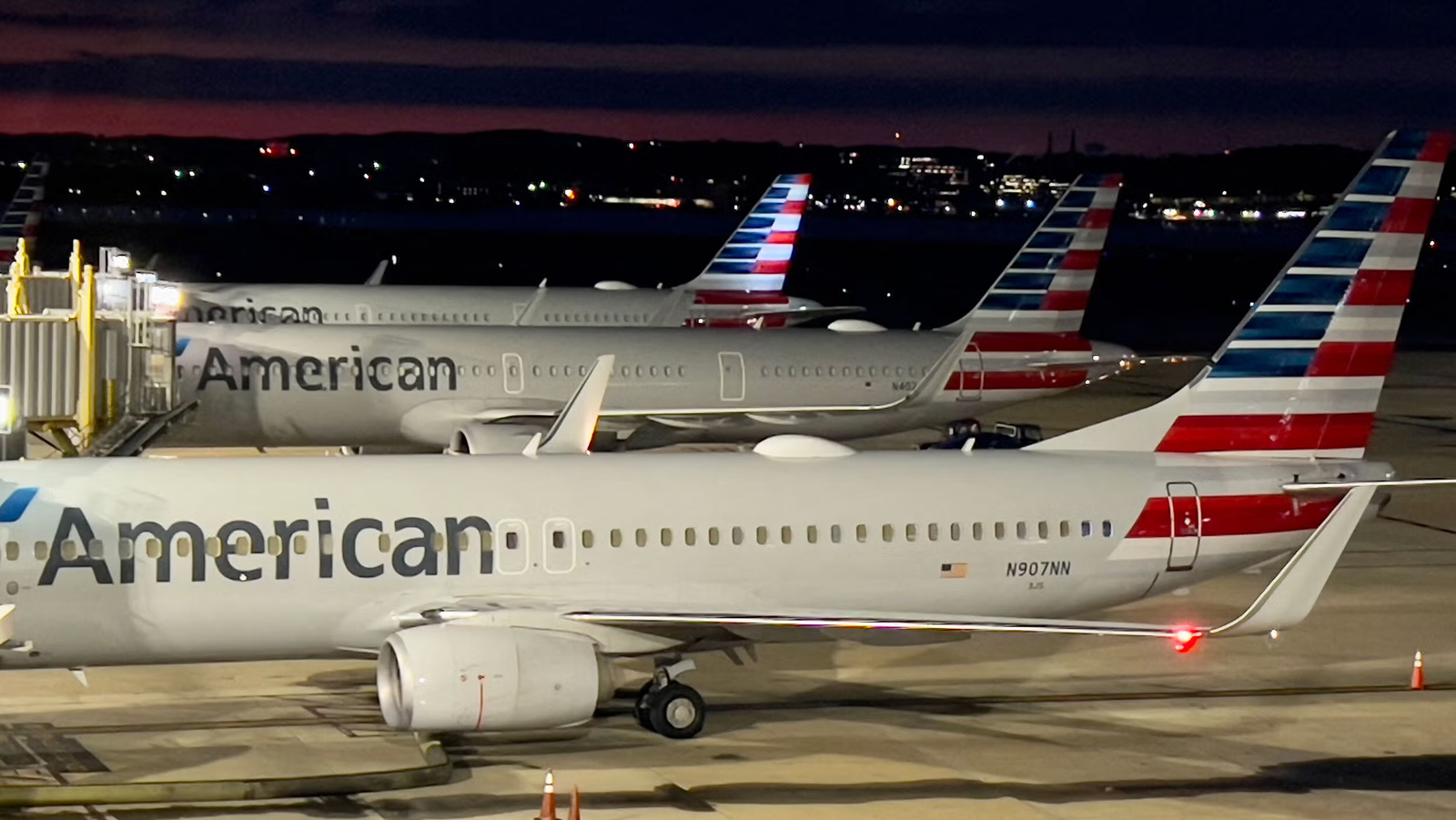
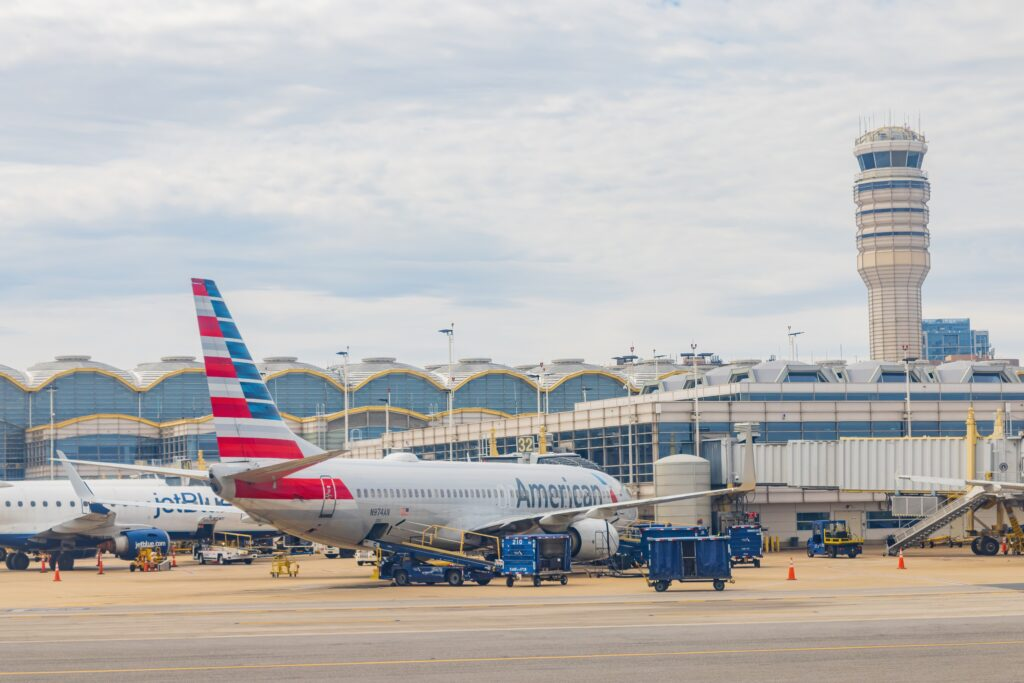
In an incident that raised serious questions about in-flight safety protocols and airline accountability, Njeri Williams, a passenger aboard American Airlines Flight 2123, has filed a $500,000 lawsuit after a flight attendant fell on her while she was sleeping.
The incident, which occurred in 2021, resulted in multiple injuries that required hospitalization and physical therapy. What began as a routine flight from Washington National Airport to New York’s JFK quickly spiraled into chaos due to the disruptive behavior of another passenger—an event that would leave Williams in pain and eventually in court.
According to the lawsuit filed by Williams, she had boarded the flight and fallen asleep in her seat before the plane had even taken off. As the aircraft began taxiing toward the runway, a female passenger seated toward the back of the plane began speaking loudly on a FaceTime call, disregarding instructions from the crew to put her phone on airplane mode.
The confrontation that followed not only delayed the flight but also set off a chain of events that led to the unfortunate incident where the flight attendant fell on Williams.
American Airlines has argued that the fall was the result of the unruly passenger’s behavior and not due to any negligence on their part. However, the court has found enough evidence to suggest that the airline’s handling of the situation may have contributed to the outcome.
The Incident on Flight 2123
The events on Flight 2123 were anything but ordinary. What started as a seemingly routine trip between two major East Coast cities turned into a stressful and painful ordeal for Njeri Williams. As the plane was preparing for takeoff, Williams was already asleep in her seat.
Toward the back of the plane, however, another passenger created a disturbance by engaging in a loud FaceTime call, ignoring repeated instructions from the flight crew to disconnect and comply with safety regulations.
After repeated warnings, the decision was made to return the aircraft to the gate to have the disruptive passenger removed. But things didn’t end there. Instead of de-escalating quickly, the situation dragged on as the crew continued to speak with the passenger near the front of the aircraft.
During this back-and-forth, the irate passenger physically shoved one of the flight attendants who was walking down the aisle. As a result of the push, the flight attendant lost balance and fell on Williams, who was completely unaware and unprepared for such an event in her sleep.
The fall caused serious injuries to Williams, leading her to seek medical attention and undergo subsequent physical therapy. She claims that the trauma and recovery process not only affected her physical health but also caused emotional distress.
Read : American Airlines Passenger Duct-Taped and Sued in 2024 for Violent Behavior Onboard in 2021 Flight
In her lawsuit, she alleges that American Airlines failed to maintain a safe environment and did not act swiftly or appropriately to mitigate a growing security concern.
American Airlines’ Defense and Legal Grounds
American Airlines has argued in its defense that it was not directly responsible for the injuries sustained by Williams. The airline placed the blame squarely on the unruly passenger whose actions led to the flight attendant being pushed.
Moreover, the airline cited the Montreal Convention—a treaty that governs liability for international flights—as part of its legal strategy, arguing that the circumstances surrounding the incident fell outside of its direct control.
However, the U.S. District Court for the District of Columbia saw things differently. The judge presiding over the case stated that there was sufficient evidence for a jury to determine whether American Airlines had failed to follow its internal protocols and whether that failure played a role in what happened to Williams.
Particularly troubling for the court was the fact that the airline allowed the passenger to continue interacting with the crew near the front of the plane even after deciding she would be removed. The judge raised the question: if a security threat had been identified, why was movement within the cabin permitted, especially when it put other passengers at risk?
Another key point raised by the court was that American Airlines had not sufficiently proven that Williams’ injuries were caused solely by the unruly passenger’s actions.
This undermined the airline’s reliance on the Montreal Convention’s liability cap, which generally limits compensation for injuries unless the airline is shown to be at fault. In this case, the judge ruled that those protections did not apply, clearing the way for Williams to pursue her claim without the convention’s limitations.
Broader Implications for Airline Safety and Passenger Rights
This case opens up a broader conversation about the responsibilities of airlines when it comes to passenger safety—especially in situations involving disruptive behavior onboard.
The FAA and other regulatory bodies have placed increased emphasis on addressing in-flight disturbances in recent years, particularly since the onset of the pandemic saw a rise in such incidents. Airlines are under greater pressure to ensure that protocols are not only well-documented but effectively implemented.
In the case of American Airlines Flight 2123, Williams’ lawsuit highlights what she believes was a failure in executing those protocols. From the failure to immediately remove the disruptive passenger, to allowing her to move closer to the front of the plane and interact with crew members, each decision made during the episode is now under legal scrutiny.
The fact that a flight attendant ended up being pushed and fell on a sleeping passenger, resulting in serious injuries, raises important questions about how airlines manage high-tension scenarios in a confined space.
Moreover, the public perception of airline accountability could be impacted by the outcome of this case. If a jury finds American Airlines liable, it may lead other airlines to reevaluate how they handle similar situations.
Training procedures, communication chains, and rapid decision-making protocols may all come under the microscope as carriers try to minimize legal exposure and enhance safety.
This case also serves as a reminder to passengers about their rights and what they can reasonably expect in terms of safety and security while traveling. Williams’ lawsuit is not only about compensation; it’s a statement that passengers have a right to feel protected from harm—especially when they’re not involved in any conflict and are simply trying to reach their destination.
The idea that someone can suffer physical injuries through no fault of their own and be left without recourse is one that the courts will ultimately decide.
In the meantime, American Airlines faces a challenging legal road ahead. Despite its efforts to deflect blame, the court’s decision to move the case forward signals that the airline may need to answer difficult questions in front of a jury.
The outcome could potentially reshape how future incidents are handled, and how responsibility is allocated when unforeseen events unfold mid-air.
If nothing else, the story of Njeri Williams and the flight attendant who fell on her underscores a simple but critical truth: even one person’s disregard for rules can ripple outward, affecting the lives of others in ways that are painful, lasting, and legally significant.
Whether Williams receives the damages she is seeking remains to be seen—but her case has already made its mark as a cautionary tale for the airline industry.