

The quiet town of Frosta, nestled near Trondheim on Norway’s west coast, has been rocked by a scandal of unimaginable proportions. Arne Bye, a former general practitioner trusted by many in this small community of fewer than 3,000 people, was sentenced to 21 years in prison for the rape and sexual abuse of dozens of women.
The verdict has not only shaken the residents of Frosta but has also reverberated across Norway, leaving many grappling with the betrayal of trust and the systemic failures that allowed such abuse to continue for nearly two decades.
Over a span of several years, Arne Bye abused his position as a doctor, taking advantage of patients who came to him for care and medical support. His crimes involved 94 women, ranging in age from 14 to 67, with allegations stretching back to 2004 and as recently as 2022.
The full extent of his actions was only brought to light following a police investigation that uncovered a cache of secretly recorded footage, revealing the horrific reality of what occurred behind the closed doors of his clinic.
A Breach of Trust in the Safest Place
A physician’s office is supposed to be a place of safety, where individuals seek help, healing, and reassurance. However, for dozens of women in Frosta, it became a place of trauma and violation. Judge Espen Haug, while reading out the verdict in a courtroom in Trondheim, underscored this sentiment, stating that “the defendant’s actions happened in a place and setting where people are supposed to feel safe.”
The betrayal of such a deeply personal trust was central to the gravity of the case, making it one of the most serious criminal trials in recent Norwegian memory. Arne Bye was convicted of 70 counts of rape and sexual assault and 82 counts of abuse of power. Many of these incidents occurred during what should have been routine medical examinations.
Women and girls, some minors at the time, went to Bye for check-ups and treatment, never suspecting that their doctor would turn predator. Instead of professional care, they were subjected to unauthorized and invasive procedures. In some cases, the court heard that Arne Bye used non-medical items such as deodorants in pelvic examinations—an act for which there was no medical justification.
Read : Chinese Man in ICU After Unqualified Doctor Performs Acupuncture on Him to Treat Benign Tumor
Perhaps most disturbing was the systematic nature of his crimes. Arne Bye meticulously planned and recorded his assaults. Hidden cameras were found in his office, and investigators reviewed hundreds of hours of footage documenting the abuse. This digital evidence became a cornerstone of the prosecution’s case, revealing the sheer scale and duration of his crimes.
The Judicial Reckoning and Public Response
As the verdict was handed down, Arne Bye stood impassively, showing no visible reaction to the maximum sentence imposed on him. The courtroom remained still, the gravity of the moment reflected in the hushed demeanor of those present. Judge Haug took over an hour to read the full judgement, a testament to the scope and complexity of the case.
Prosecutors had asked for the harshest sentence available under Norwegian law and were ultimately satisfied with the court’s decision. Although Arne Bye had admitted guilt in relation to 21 victims, the court concluded that the severity and number of his actions warranted the maximum penalty—21 years of incarceration. Prosecutors told Norwegian broadcaster NRK they would take time to consider whether to appeal specific parts of the ruling, but they believed justice had largely been served.
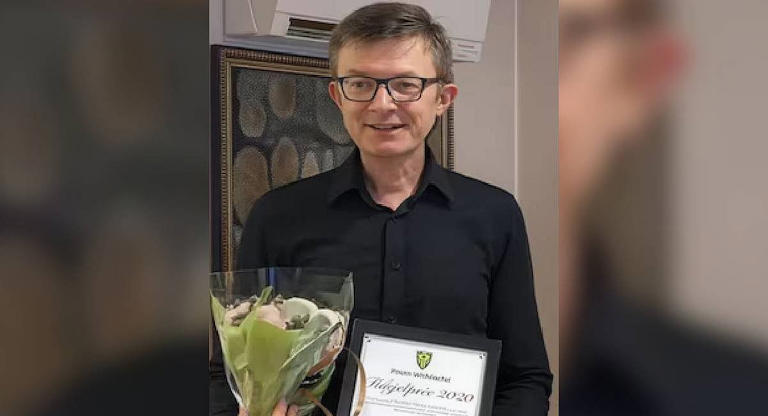
Arne Bye’s defense lawyers had argued for a lesser sentence of 17 to 18 years, citing his partial admission of guilt. His legal team now faces a decision about whether to appeal the sentence. But for the women who came forward, and for a community left reeling from the betrayal, the sentence represents a critical acknowledgement of their suffering and a pivotal moment of accountability.
Read : “It’s My Hospital, I’m a Doctor,” Cries Injured Dr. of Kyiv Hospital After Russian Missile Strikes
Norwegian media has provided continuous coverage of the case, with reactions pouring in from across the country. Many have expressed horror and outrage—not just at the crimes themselves, but at the systemic shortcomings that allowed them to persist. Although health authorities first raised concerns about Arne Bye in August 2022, his abuses had already spanned 18 years. The question now confronting Norwegian society is: how could such egregious abuse go undetected for so long?
The Lingering Impact and Call for Reform
The case of Arne Bye is not just a story of individual criminality, but a stark reminder of how positions of power, particularly in professions grounded in trust, can be dangerously exploited. Women who spoke out described feeling ashamed, confused, and fearful, uncertain whether their experiences were real or whether they would be believed.
It took extraordinary courage for victims—ranging from teenagers to elderly women—to come forward. Their testimonies were harrowing, recounting years of silence and internalized trauma, and their voices formed the backbone of the prosecution’s case.
The psychological toll on the victims has been severe. Several women have spoken publicly, describing ongoing anxiety, depression, and trust issues. Some have even said they avoided seeking medical help afterward, terrified of repeating their traumatic experiences. Others have reported guilt or confusion about what happened, particularly those who were young when the abuse occurred.

The Norwegian health system is now facing urgent questions about oversight, reporting mechanisms, and safeguarding patients. How could one doctor victimize nearly 100 women over almost 20 years without detection? What checks were missing? Were there ignored complaints or warning signs?
The public is demanding answers, and rightly so. In the wake of the conviction, there are renewed calls for tighter regulations, improved patient feedback systems, and independent reviews of doctor-patient interactions.
Medical institutions are under pressure to implement more transparent safeguards. Proposals include mandatory presence of a nurse or chaperone during intimate examinations, routine audits of practitioners’ conduct, and stronger whistleblower protections. Trust in the medical profession, particularly in small rural communities, is fragile and must be actively restored.
Meanwhile, Arne Bye has been permanently banned from practicing medicine. He was also ordered to pay compensation to his victims, although no amount of money can truly make amends for the pain inflicted. The case underscores the necessity of victim-centered justice, where survivors are not only heard but also supported in the long journey of healing.
The trauma of this case will not disappear with the sentencing. It will leave a long shadow, both over the community of Frosta and across Norway. But it also offers an opportunity for systemic reflection and change. The bravery of the victims who stepped forward has already made a difference, prompting a national reckoning and compelling reforms that could prevent future tragedies.
Arne Bye’s crimes remind us of the dual responsibility in any system—of individuals to act ethically, and of institutions to vigilantly guard against abuses of power. Justice may have been served in the courtroom, but the work of rebuilding trust and safeguarding the vulnerable continues.