

In the heart of Paris, where the Seine whispers tales of the city’s ancient soul, stands a monument of unparalleled grandeur—the Notre Dame Cathedral. Its towering spires, intricate sculptures, and the soft hum of history embedded in its stones make it not just a place of worship but a testament to human ambition, artistic mastery, and a world that seems both distant and familiar.
To gaze upon the cathedral is to be transported through centuries, where every crack in its stone and every stain on its stained glass holds a story, a moment in time that continues to reverberate through the corridors of history.
In this city where romance meets revolution, Notre Dame stands as an unshakable pillar—a symbol of Paris itself. Yet, behind its formidable presence lies a tale of creation, destruction, and rebirth. Join me as we explore the history, architecture, legends, and cultural significance of Notre Dame Cathedral, where every corner invites discovery and every stone whispers a story.
The Birth of a Masterpiece
In the year 1163, a vision was born in the heart of the French king, Louis VII. He sought to create a church that would not only be a place of worship but a symbol of France’s rising power and faith. The land he chose was the Île de la Cité, an island at the very center of the Seine, the lifeblood of Paris.
Here, on the banks of the river that carved the soul of the city, a cathedral would rise to the heavens. The journey to complete this monumental structure would span over two centuries, an effort that involved not only master builders and artisans but also the dedication of generations of Parisians who shaped it with their hands and hearts.
Read : Notre Dame Cathedral: A Timeless Symbol of Beauty, History, and Resilience
As the cathedral slowly rose, so too did the city around it. Paris was no longer just a medieval town; it was becoming a capital of culture, power, and faith. The Gothic style of architecture, with its pointed arches, ribbed vaults, and flying buttresses, transformed not only the skyline but the very experience of entering a cathedral.
Read : Notre Dame Cathedral Unveils Its New Interior 5 Years After Devastating Fire: Watch
The towering structure allowed light to pour in through stained glass windows, creating a divine atmosphere that inspired awe in the hearts of those who walked beneath its vaulted ceilings.
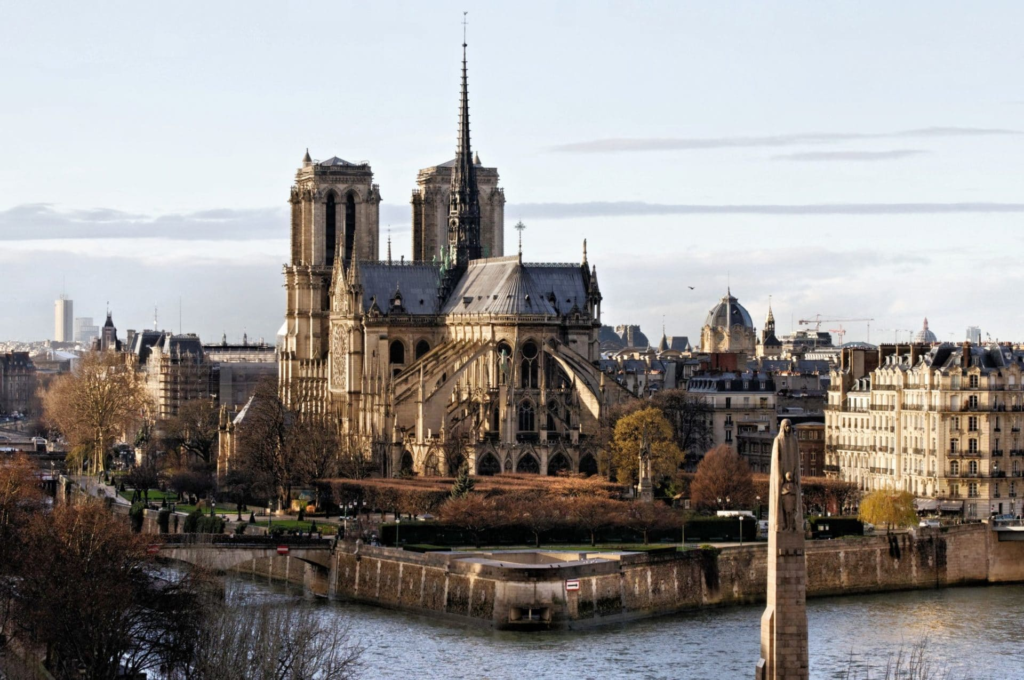
By the time it was completed in 1345, the cathedral stood as one of the largest and most advanced buildings of its time. Yet, the true heart of Notre Dame lay not in its architectural innovations but in the centuries of worship, celebration, and sorrow that it would come to house.
Architecture and Design: A Dance Between Earth and Sky
What strikes most visitors to Notre Dame is its sheer scale. Rising 35 meters at the nave and stretching 130 meters in length, the cathedral is a testament to human ingenuity and ambition.
Yet, it is not just its size that commands attention; it is the delicate balance of its design—a perfect harmony between strength and lightness. The towering walls are held aloft by intricate flying buttresses, allowing the cathedral to reach new heights while the walls remain thin and adorned with magnificent stained glass.
The central feature of Notre Dame’s design is its magnificent facade, a work of art that tells the story of biblical creation, from the Last Judgment to scenes of the life of Christ.
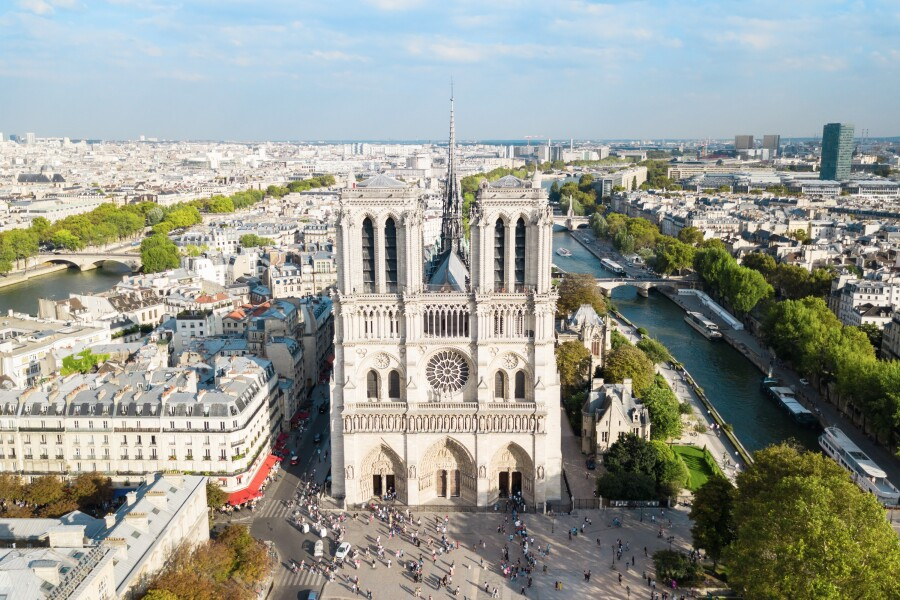
Each stone, each carving, holds its own meaning. The rose windows, which have stood for centuries, are perhaps the most iconic of these features. Their intricate patterns—constructed from thousands of tiny glass pieces—depict biblical stories in vivid colors, catching the light in a manner that breathes life into the stone.
Inside, the soaring columns and ribbed vaults create a sense of weightlessness, as if the cathedral itself is reaching for the heavens. The echoes of footsteps and whispered prayers resonate against these stone walls, carrying with them centuries of devotion and reverence.
The air is thick with history, yet also filled with the quiet hum of the present, where the cathedral continues to serve as a place of solace and reflection for Parisians and visitors alike.
Perhaps most striking of all is the cathedral’s facade, with its three grand portals that seem to tell an endless story of life, death, and rebirth.
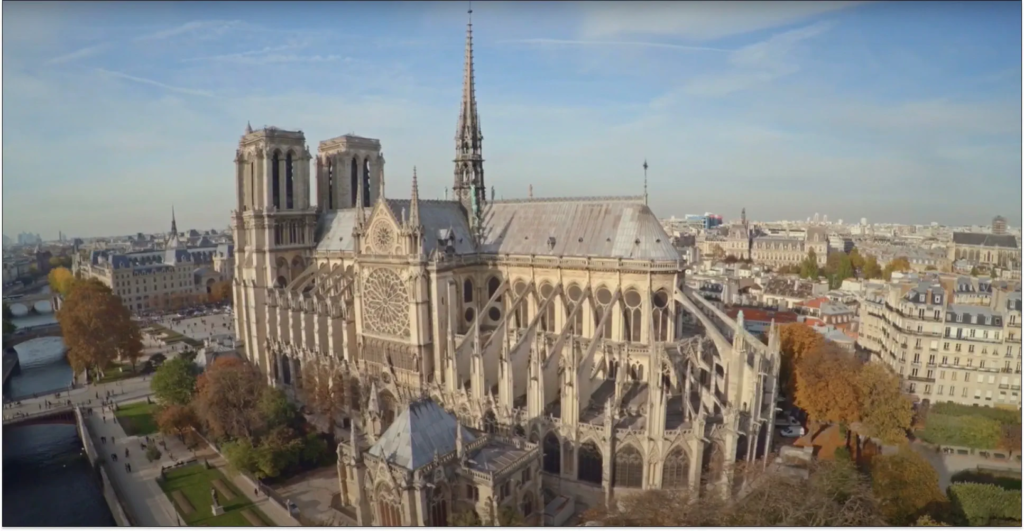
Above them, the Gallery of Kings stands, a row of statues of French kings that stretches across the length of the building. Yet, in 1795, during the tumultuous days of the French Revolution, these statues would be decapitated, a symbol of the monarchy’s fall from grace.
Legends and Lore: The Heartbeat of Paris
Notre Dame is more than just a cathedral; it is a living legend, woven into the fabric of Parisian folklore and culture. For centuries, the cathedral has been the backdrop for countless stories—some tragic, some mystical, but all undeniably captivating.
The most famous of these is, of course, Victor Hugo’s The Hunchback of Notre-Dame. Published in 1831, the novel brought the cathedral to the forefront of French consciousness and cemented its place in the hearts of Parisians.
Through Hugo’s characters, most notably Quasimodo, the bell-ringer with the soul of a poet and the body of a beast, Notre Dame became more than just a building; it became a symbol of love, longing, and the tragedy of unrequited affection.
The cathedral also houses numerous relics and sacred treasures, from the Crown of Thorns, believed to have been worn by Jesus Christ during his crucifixion, to the Holy Tunic, said to be the tunic worn by Christ on the cross. These relics, housed within the cathedral’s treasury, are a constant reminder of the sacred connection between the cathedral and the divine.
But beyond the stories, beyond the novels and relics, Notre Dame is a place of real-life mystery. Its bells, which once rang to announce the hour of prayer or the arrival of a new king, are now silent, their echoes a memory of a bygone era.
Yet, there are whispers that the bells still sing to those who listen closely, their song carrying the history of Paris through the wind and across the Seine. For centuries, the cathedral has been the keeper of secrets—of love and loss, of revolution and renewal.
The Tragedy and the Rebirth: Notre Dame Cathedral’s Resilience
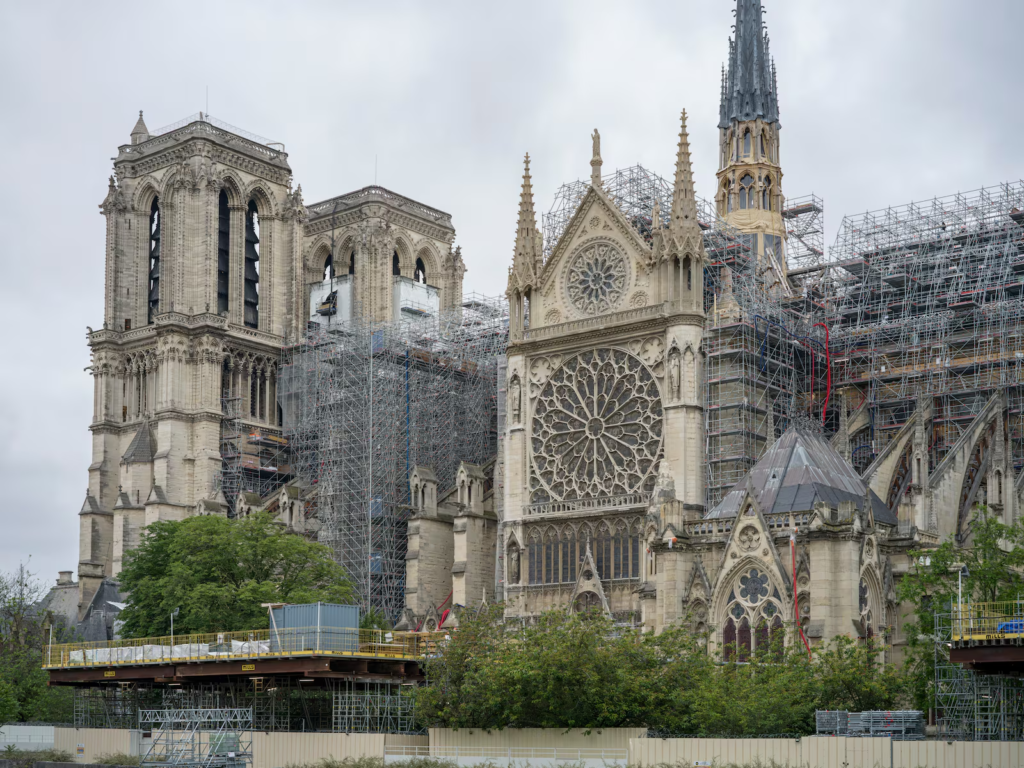
In 2019, the unthinkable happened: a devastating fire ravaged Notre Dame Cathedral, causing widespread destruction to its roof and spire. The world watched in horror as the flames consumed the wooden framework, threatening to bring down centuries of history in a matter of hours.
Yet, despite the smoke and flames, the stone structure of Notre Dame stood resilient, a testament to the enduring strength of its design and the spirit of the people who had built it.

In the aftermath of the fire, the world rallied to support the restoration of Notre Dame. Donations poured in from all corners of the globe, and experts in art restoration and architecture began the painstaking work of returning the cathedral to its former glory. It is a slow and careful process, but Notre Dame will rise again, stronger and more beautiful than ever.
In many ways, the fire was a stark reminder of the fragility of human creations, yet it also demonstrated the unbreakable spirit of Notre Dame. Like the city of Paris itself, the cathedral has endured countless trials—wars, revolutions, fires—but through it all, it has remained a symbol of resilience, faith, and the undying beauty of the human spirit.
As the restoration continues, the cathedral will once again become a beacon to those who seek solace, inspiration, and connection. For as long as it stands, Notre Dame will remain not just a building but a living testament to the heart of Paris and the soul of France.