

The majestic Notre Dame Cathedral, a symbol of French heritage and architectural brilliance, has once again opened its doors to the world, unveiling a meticulously restored interior after the catastrophic fire of April 2019.
More than five years of dedicated reconstruction efforts have brought back the splendor of this 12th-century Gothic masterpiece, with every stone and stained-glass window bearing witness to the resilience of human spirit and craftsmanship.
As French President Emmanuel Macron toured the Notre Dame Cathedral, the world watched in awe, celebrating a remarkable achievement that transformed a national tragedy into a testament of collective will and restoration expertise.
A Tragic Past: The 2019 Fire and Its Impact
On April 15, 2019, the world watched in shock and horror as flames engulfed Notre Dame Cathedral, a cherished icon of Paris and one of the most significant landmarks in Western architecture.
The fire started in the evening, quickly spreading through the wooden framework of the roof, famously known as “the forest” due to its intricate network of centuries-old beams. The blaze caused the spire to collapse and gutted large sections of the structure, leaving gaping holes in the vaulted ceilings and a charred skeleton where the magnificent roof once stood.
The fire was a devastating blow not only to France but to the global community. Notre Dame was more than a cathedral; it was a repository of history, art, and culture, attracting over 12 million visitors annually.
The destruction of its roof, spire, and interiors struck at the heart of French identity and raised urgent questions about the future of the structure.
Notre Dame Cathedral showed its new self to the world on Friday after more than five years of frenetic reconstruction work, with rebuilt soaring ceilings and creamy good-as-new stonework erasing somber memories of its devastating fire in 2019.
— ABC News (@ABC) November 29, 2024
Read more: https://t.co/4C6r7DWf1x pic.twitter.com/awNW2jDVCi
For many, the Notre Dame Cathedral symbolized continuity through the centuries—a place where generations had gathered for worship, reflection, and celebration. The fire was a national wound, as President Macron described it, but it also ignited a global call for solidarity and preservation.
In the immediate aftermath, an unprecedented $700 million was pledged by donors worldwide, with the French government committing to a rigorous five-year restoration plan.
Read : Notre-Dame de Paris Restoration is Complete After a Devastating Fire in April 2019: Watch
The goal was not only to repair the physical damage but to honor theNotre Dame Cathedral’s historical and spiritual essence. The challenge was monumental: ensuring structural integrity while preserving authenticity, all under the watchful eyes of historians, architects, and the public.
The Restoration: A Triumph of Craftsmanship and Dedication
Rebuilding Notre Dame was no ordinary task. It required a blend of traditional craftsmanship and cutting-edge technology, along with an unwavering commitment to historical accuracy. The first phase involved stabilizing the structure and removing toxic lead dust released during the fire.
Powerful vacuum cleaners and specialized techniques, such as applying fine layers of latex to remove grime, were employed to clean the limestone walls. This painstaking process restored the cathedral’s creamy stonework, erasing centuries of accumulated dirt and the scars of the fire.
One of the most remarkable aspects of the restoration was the recreation of the intricate vaulted ceilings. Craftsmen used traditional methods, carefully selecting stones that matched the original structure. Delicate golden angels now adorn the ceilings, symbolizing hope and renewal.
Philippe Jost, the man leading the restoration, spoke of the immense pride and responsibility that came with the project. “We are all very proud of what we have done together,” Jost told CBS’s 60 Minutes. “In this monument, there is a soul… When we enter now, we feel it.”
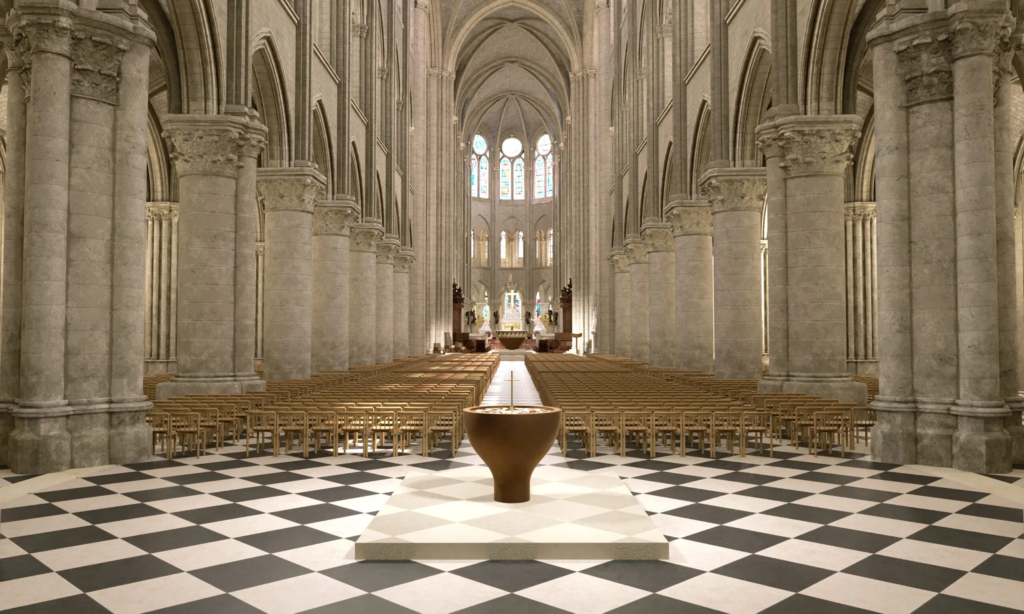
The stained-glass windows, which had miraculously survived the fire, were meticulously cleaned and restored. Their vibrant colors now shine more brilliantly than ever, casting a kaleidoscope of light across the cathedral’s wide, open spaces.
This breathtaking sense of light and space, as Jost described, is a testament to the cathedral’s enduring beauty and the skill of those who brought it back to life.
President Macron’s visit to the restored Notre Dame Cathedral was a poignant moment. Entering through the intricately carved front doors, he gazed up at the rebuilt ceilings in wonder.
“You have achieved what was thought impossible,” he told the workers, acknowledging their dedication and craftsmanship. For Macron and the French people, the restoration of Notre Dame is more than a construction project; it is a symbol of resilience, unity, and the enduring power of heritage.
A New Chapter: The Reopening and Future of Notre Dame
The unveiling of Notre Dame’s restored interior marks the beginning of a new chapter for this iconic structure. While the reconstruction is largely complete, the Notre Dame Cathedral will officially reopen to the public on December 8, 2024, with a series of events planned to celebrate its rebirth.
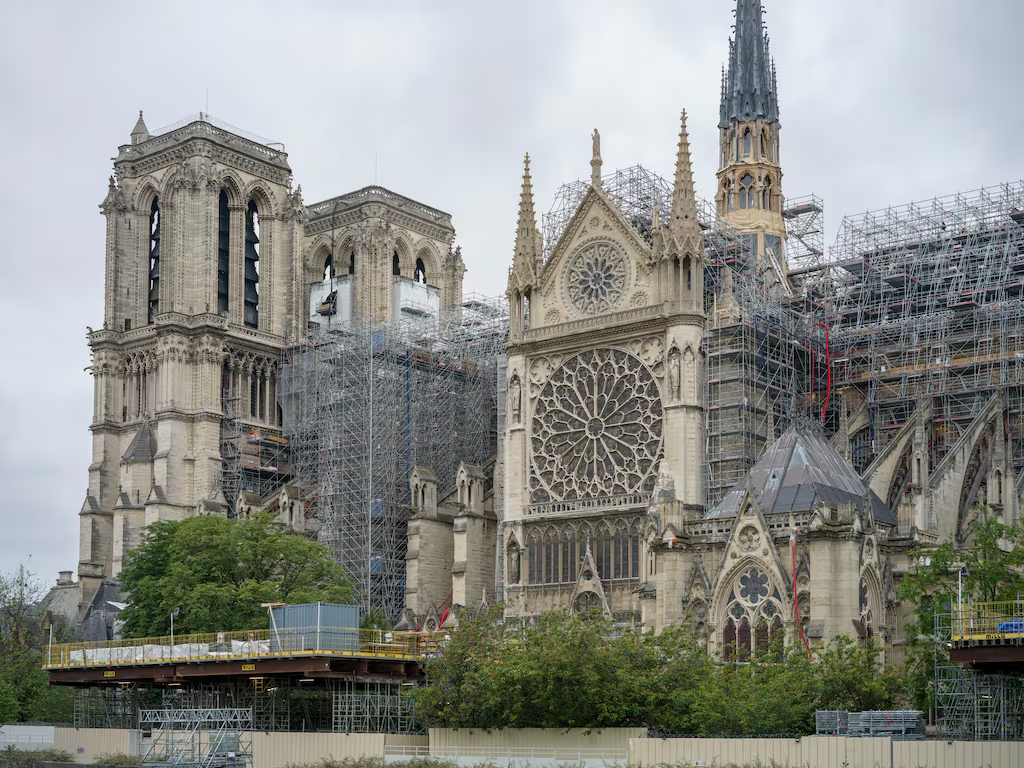
President Macron will return on December 7 to deliver an address, and the following day, a solemn Mass will be held to consecrate the new altar. These events will not only mark the physical restoration of the cathedral but also reaffirm its spiritual significance and place in the hearts of millions.
The reopening of Notre Dame is a moment of triumph, but it also serves as a reminder of the ongoing challenges faced by cultural heritage sites around the world.
The fire at Notre Dame was a wake-up call, highlighting the vulnerability of even the most cherished landmarks. It underscored the importance of preservation, vigilance, and investment in the protection of cultural heritage.
For those involved in the restoration, the journey has been both challenging and deeply rewarding. Philippe Jost described the experience as transformative, not just for the cathedral but for everyone who worked on it. “We feel it… There is a soul,” he said, reflecting on the profound sense of connection and purpose that permeated the project.
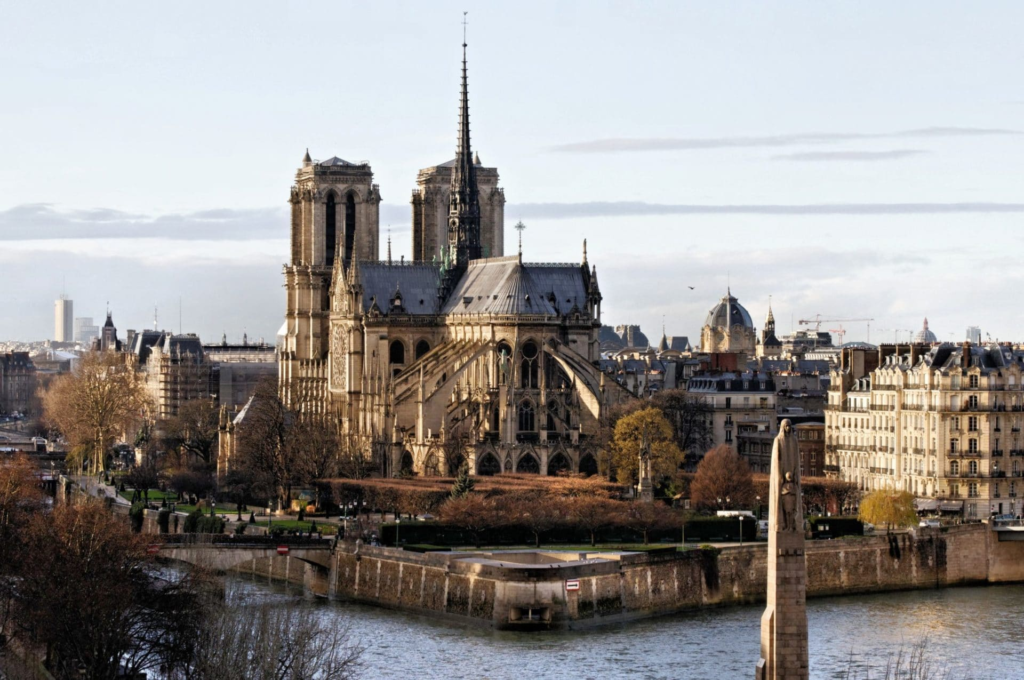
As Notre Dame prepares to welcome visitors once again, it stands as a symbol of hope and resilience. The fire may have devastated its structure, but it also ignited a renewed commitment to preserving history and honoring the craftsmanship of the past.
For the millions who will walk through its doors in the years to come, Notre Dame will continue to inspire awe and reverence, just as it has for centuries.
The restoration of Notre Dame Cathedral is more than a story of rebuilding a structure; it is a testament to the resilience of the human spirit and the enduring power of cultural heritage.
In the face of unimaginable loss, the people of France—and the world—came together to restore a symbol of history, faith, and beauty. The unveiling of its new interior is a moment of triumph, marking the beginning of a new chapter for this iconic landmark.
As President Macron aptly said, the blaze at Notre Dame was a national wound, but the restoration has been a remedy. It is a reminder that even in the face of tragedy, there is hope. Through will, work, and commitment, the impossible can be achieved, and history can be preserved for future generations.