
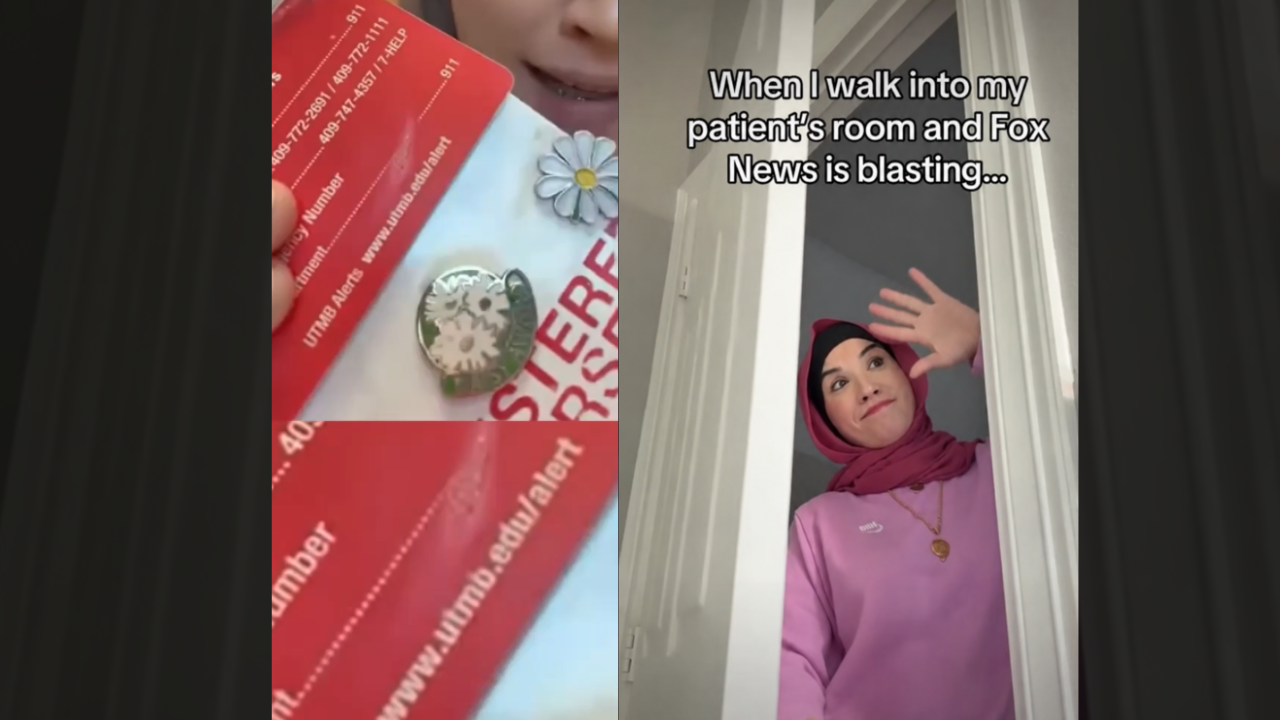
A contract nurse known online as “Nurse Ahlam” has become the center of a nationwide controversy after a short social media video led to her dismissal from the University of Texas Medical Branch (UTMB). The incident quickly drew widespread attention because it involved questions about medical ethics, professional conduct, and the expectation that healthcare workers provide equal treatment to every patient regardless of their personal or political beliefs.
Although the video appeared to be presented as political humor, many viewers interpreted it as suggesting that the nurse would avoid caring for patients who were watching Fox News. The reaction was swift, with social media users debating whether the post reflected a genuine attitude toward patient care or was simply an ill-considered joke. Within hours of the video gaining widespread attention, UTMB launched an investigation and announced that the nurse’s contract had been terminated.
The controversy has since expanded beyond a single viral clip, prompting broader discussions about professionalism on social media, the responsibilities of healthcare workers, and the impact that online content can have on public trust in medical institutions. While relatively little is publicly known about Nurse Ahlam herself, the incident has made her name widely recognized and sparked conversations across political and healthcare communities.
The Viral Video That Sparked the Controversy
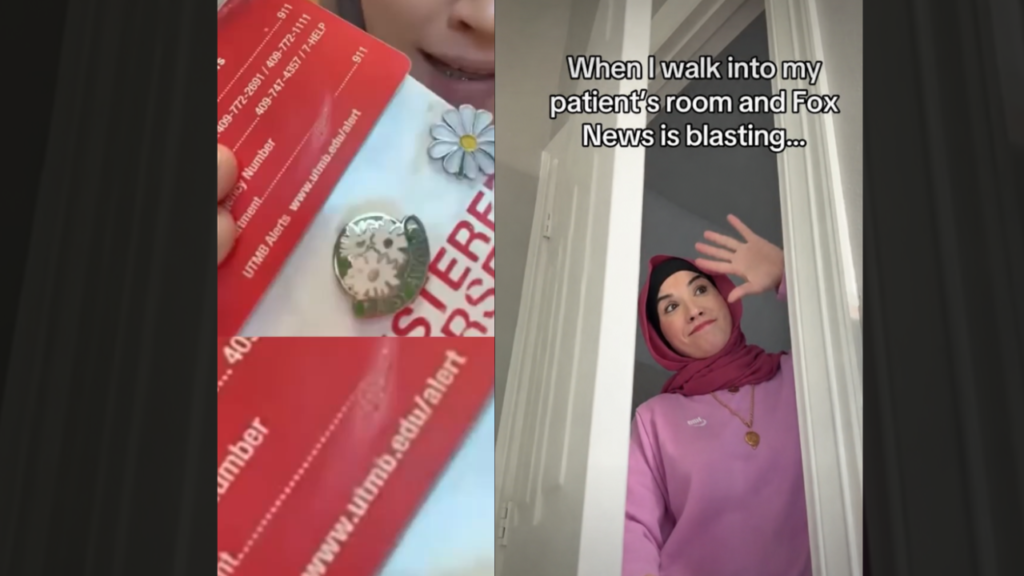
The controversy began when Nurse Ahlam posted a short video on social media showing herself appearing to back out of what looked like a patient’s hospital room. The video featured Whitney Houston’s song I Will Always Love You, specifically the lyric, “We both know I’m not what you need,” while a caption over the footage read, “When I walk into my patient’s room and Fox News is blasting.” The combination of the caption, music, and visual presentation was widely interpreted as implying that she would avoid treating patients who were watching the conservative news network.
Although the clip was brief and may have been intended as satire or political humor, many viewers believed it crossed a professional boundary because it appeared to reference patient care in a healthcare setting. The situation escalated significantly after an eight-second version of the video was reposted on X by the account Libs of TikTok. The repost rapidly attracted hundreds of thousands of views, exposing the clip to a much larger audience beyond the nurse’s original followers.
Screenshots and recordings of the post spread across multiple social media platforms, generating intense criticism from users across the political spectrum. Many commentators argued that healthcare professionals hold positions of trust and should never create content that could be interpreted as refusing or avoiding care based on a patient’s political preferences or media consumption. As the video continued circulating online, many individuals expressed concern that even if the clip was intended as a joke, it had the potential to undermine public confidence in healthcare providers.
Hospitals and medical professionals rely heavily on patient trust, and critics argued that social media content suggesting bias against certain groups could make patients question whether they would receive fair and impartial treatment. Others defended the nurse by suggesting the video was meant as political satire rather than a literal statement about patient care. Nevertheless, the public reaction had already intensified, turning what may have begun as a personal social media post into a national discussion about ethics, professionalism, and the responsibilities associated with working in healthcare.
🚨 YOUR LIFE MIGHT DEPEND ON ISLAMIST OPINIONS.
— Michael C (@Michaeach3) July 3, 2026
A Muslim nurse who appears to work at @utmbhealth in Houston just posted a completely chilling video.
Islamist opinions are now secretly dictating who gets medical care in Texas.
🔴 She posted a video suggesting she will refuse… pic.twitter.com/BBNPjviynm
The debate also highlighted how quickly online content can spread and take on new meanings once it reaches a wider audience. In today’s digital environment, short videos often circulate without additional context, leaving viewers to interpret them based solely on what they see. That dynamic played a significant role in this controversy, as the video’s wording and presentation led many people to conclude that the nurse was expressing an unwillingness to care for certain patients. Whether intended humorously or not, the post demonstrated how social media activity by healthcare workers can have consequences far beyond their personal accounts.
UTMB’s Investigation and Decision to Terminate the Contract
Following the widespread backlash, the University of Texas Medical Branch moved quickly to address the situation. According to the institution, it became aware of the social media posts on Thursday afternoon and immediately initiated an internal investigation into the matter. After reviewing the circumstances, the university announced later that same evening that the contract employee was no longer employed. The speed of the response reflected the seriousness with which UTMB viewed allegations involving potential bias in patient care and its commitment to maintaining confidence in its healthcare services.
In a public statement shared on X, UTMB explained that it had learned of the social media posts involving the contract employee, conducted an investigation, and terminated the individual’s contract after determining that the behavior was inconsistent with the institution’s standards. The university emphasized that it is committed to providing compassionate, respectful, and unbiased care to every patient regardless of personal characteristics, beliefs, or political affiliations. By publicly addressing the issue, UTMB sought to reassure patients and the broader community that equal treatment remains a core principle of its healthcare mission.
Read : BabyBoom! 17 Nurses Pregnant at Same Time in Labor & Delivery Unit at Miami Valley Hospital
One important aspect of the incident is that Nurse Ahlam was identified as a contract employee rather than a permanent staff member. Although contract workers may not have the same employment arrangements as full-time employees, they are generally expected to follow the same professional standards and institutional policies while working within healthcare facilities. Hospitals and medical organizations routinely require all staff members, regardless of employment status, to uphold ethical obligations related to patient care, confidentiality, professionalism, and nondiscrimination.
Following the announcement of her dismissal, Nurse Ahlam’s social media account was reportedly made private, limiting public access to her previous posts. Despite that, copies of the video continued circulating across various online platforms, ensuring that the controversy remained in public discussion even after the original content became less accessible. The continued sharing of the clip further demonstrated how difficult it can be to contain viral content once it has spread widely on social media.
The incident also illustrates the increasing role employers play in monitoring conduct that occurs outside traditional workplace settings when that conduct has the potential to affect public confidence in the organization. Healthcare institutions, in particular, often face heightened expectations because patients place significant trust in medical professionals. As a result, organizations may determine that online behavior reflecting poorly on patient care or professional standards warrants disciplinary action, even when the content is created on personal social media accounts.
Medical Ethics, Public Trust, and the Broader Debate
Beyond the individual circumstances involving Nurse Ahlam, the controversy has generated broader discussions about the ethical responsibilities of healthcare professionals and the challenges posed by social media. Medical ethics are built upon principles that require doctors, nurses, and other healthcare workers to provide appropriate treatment without discrimination. Professional standards generally emphasize that medical decisions should be based entirely on a patient’s health needs rather than personal opinions, political beliefs, religion, race, gender, or other unrelated characteristics. These expectations exist to ensure that every individual feels confident seeking medical care regardless of their background or viewpoints.
Public trust forms one of the foundations of effective healthcare. Patients often find themselves in vulnerable situations where they must rely on medical professionals to act solely in their best interests. Any suggestion that treatment could be influenced by political preferences or personal biases can raise concerns among patients who expect impartial and compassionate care. Even when comments are intended as jokes or satire, healthcare professionals may face greater scrutiny because their words carry additional weight due to the nature of their profession.
The incident has also renewed discussion about the relationship between personal expression and professional responsibility. Social media platforms encourage users to share opinions, humor, and commentary with wide audiences, but professionals working in sensitive fields frequently encounter higher expectations regarding what they post publicly. Employers increasingly recognize that online activity can affect institutional reputation, patient confidence, and workplace culture. As a result, many healthcare organizations maintain policies reminding employees that public posts may reflect on both the individual and the institution they represent.
Supporters of stronger professional standards argue that even the appearance of bias can be damaging because patients may hesitate to seek care if they fear unequal treatment. Critics of the dismissal, however, contend that personal social media posts, especially those intended as humor, should not always be interpreted literally or viewed as evidence of actual workplace behavior. This difference in interpretation has fueled ongoing debate about where institutions should draw the line between protecting professional integrity and respecting personal freedom of expression.
Regardless of differing opinions, the controversy involving Nurse Ahlam demonstrates the powerful influence of social media in shaping public perception. A video lasting only a few seconds resulted in national attention, an internal investigation, and the loss of employment, while also prompting extensive discussion about ethics within the medical profession. It serves as a reminder that healthcare workers are often held to exceptionally high standards because of the trust society places in them and the critical role they play in caring for people from every background.
Although little verified information has been publicly released about Nurse Ahlam beyond her identification as a UTMB contract nurse and the circumstances surrounding her dismissal, the incident has become a widely discussed example of how digital content can intersect with professional responsibilities. The case underscores the importance that healthcare institutions place on impartial patient care and reinforces longstanding ethical principles requiring medical professionals to treat every patient fairly, compassionately, and without discrimination, regardless of political beliefs or personal preferences.
Great wordpress blog here.. It’s hard to find quality writing like yours these days. I really appreciate people like you! take care
Index mpg stripBlack dicks in whiteBlog hetero sexForced milf vidTamil boob exposure picsGirl fucking teddy bearLesbians
anal in bedFucking machine woman womanFree animated unrated porn videoBreast
massage products xnxx Big natural tits free daity videoSperm test centerBlack dick and white
womenPorn star catalina max hardcore todayPlaces to have sex in tampaThree somes milfsTeen prize ideasPhotos of zeka pornstarBlonde throat fuckNiagara county sex offenders https://xnxx4.cc/ Cheating milf freePorn dare sex gamesMy friend naked display
pictureFuck and suck sex stories freeAsian baby wrapHot sexy stripers and car clubsPhotographing nude
girls lawPorn mpeg mpg longHayden p nakedTeen wolf urban legend xnxx
Divini rea lingerie picsStand up sexual positions wifeRoyal sex filmBusty
tight clothed babesSarah hyland sexyDoes everyone have a hairy anusNude femaleamateursLatina porn vidsBenefits of an uncircumcised penisFree sexy freaky xxx movies
Your place is valueble for me. Thanks!…