
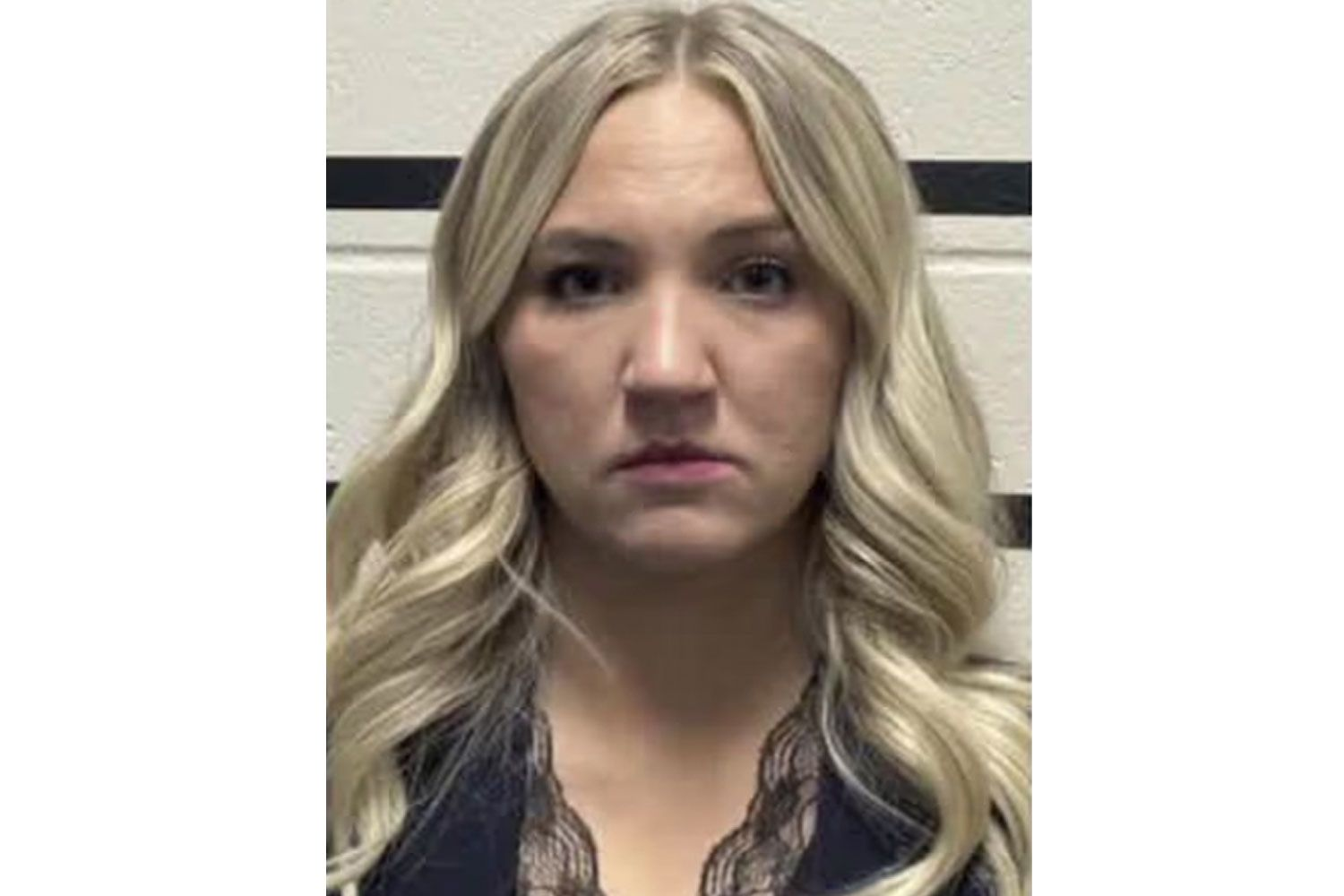
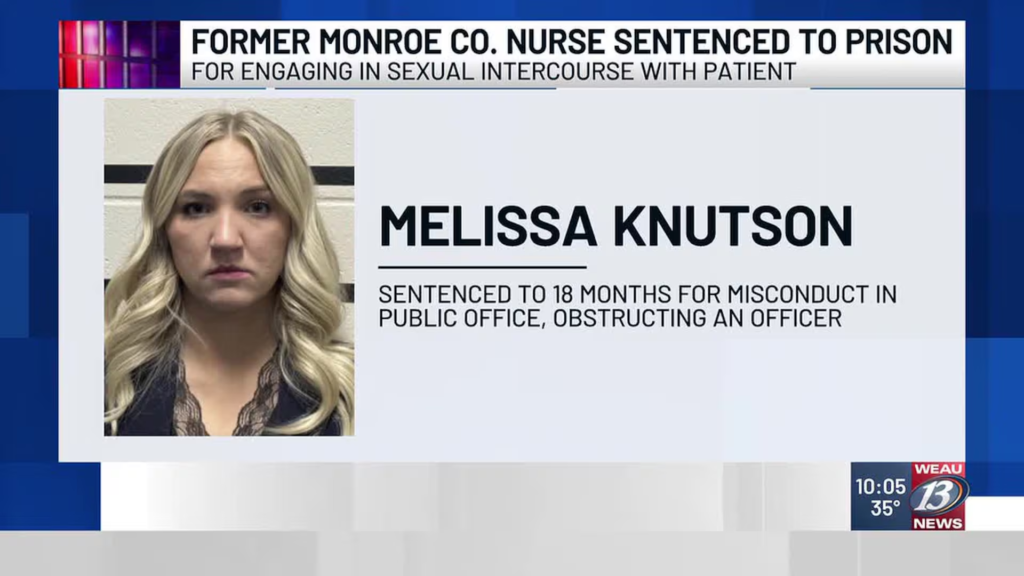
A Wisconsin nurse has been sentenced to 18 months in prison after admitting she engaged in sexual intercourse with a patient assigned to her through a drug court program and later falsely accused him of sexual assault. The case has drawn attention not only because of the serious breach of professional ethics involved, but also because of the compounded harm caused by the fabricated allegation. Melissa Knutson pleaded guilty to misconduct in public office and obstructing an officer, bringing the legal proceedings to a close while raising broader questions about accountability, professional boundaries, and the responsibilities of healthcare providers working with vulnerable populations.
Abuse of Trust Within a Drug Court Setting
According to the Monroe County District Attorney’s Office, Melissa Knutson was working as a nurse assigned to a participant in a drug court program when the misconduct occurred. Drug court programs are designed to provide structured supervision and treatment alternatives for individuals dealing with substance use disorders, often as part of a diversion effort within the criminal justice system. Participants in such programs are typically under court oversight and may be in particularly vulnerable circumstances, relying heavily on professionals for medical support, guidance, and rehabilitation services.
Prosecutors stated that Knutson “repeatedly” engaged in sexual intercourse with the patient while she was responsible for his care. In professional healthcare settings, any sexual relationship between a provider and a patient is strictly prohibited due to the inherent imbalance of power and the duty of care owed by the provider. Even if consent is claimed, ethical and legal standards recognize that patients in dependent relationships with healthcare professionals cannot freely consent in the same way as individuals in equal positions.
The encounters eventually came to the attention of the Wisconsin Department of Safety and Professional Services, which oversees professional licensing and investigates complaints involving healthcare workers. The reporting of the conduct initiated further scrutiny and legal action. The circumstances of the case highlight how oversight mechanisms function when allegations of professional misconduct arise and underscore the seriousness with which regulatory authorities treat violations of patient boundaries.
Read : Safari Park Visitor Throws Plastic Bag in Hippo’s Mouth in Indonesia: Video Sparks Outrage
The patient’s status as a drug court participant added an additional layer of concern for prosecutors. Individuals enrolled in drug court programs are often navigating complex legal and personal challenges, including recovery from substance use disorders and compliance with court-mandated requirements. Healthcare professionals assigned to them are expected to maintain strict boundaries and act in their best interests. The breach of this trust was cited as a particularly troubling element of the case, as it undermined the rehabilitative intent of the drug court framework.
False Sexual Assault Allegation and Admission of Fabrication
After the sexual encounters were reported, prosecutors said Knutson responded by accusing the patient of sexual assault. Such an accusation carries severe legal and personal consequences, potentially exposing the accused individual to criminal investigation, prosecution, and lasting reputational harm. In this instance, the allegation prompted law enforcement involvement and added complexity to the unfolding case.
Read : Recovery Room Nurse Joel Vega Charged with Sexual Battery of Patients After Surgeries
However, Knutson eventually admitted that she had fabricated the sexual assault claim. According to prosecutors, she acknowledged that she made the false accusation to avoid facing consequences for engaging in sexual acts with a patient under her care. Her admission led to charges of obstructing an officer in addition to misconduct in public office.
False allegations of sexual assault can have far-reaching impacts. They can cause significant distress to the accused, divert investigative resources, and potentially erode public trust in genuine claims brought by victims of sexual violence. In this case, the fabricated report compounded the original ethical violation, deepening the legal and moral ramifications of the conduct.
By pleading guilty on Feb. 27 to misconduct in public office and obstructing an officer, Knutson avoided a trial. A guilty plea in such cases typically indicates acknowledgment of wrongdoing and acceptance of responsibility for the criminal charges. However, the court’s remarks during sentencing suggested that the presiding judge questioned the depth of her remorse.
The admission of fabrication was a critical turning point in the case. It clarified the sequence of events and allowed authorities to address not only the initial misconduct but also the additional harm caused by the false accusation. The combined actions formed the basis for the prison sentence ultimately imposed.
Court’s Response and Sentencing Outcome
Judge Paul Curran, who presided over the case, sentenced Melissa Knutson to 18 months in prison. Following her release, she will be subject to two years of public supervision. In delivering the sentence, the judge issued strong criticism of her conduct, describing it as “despicable” and calling her “an embarrassment to nurses everywhere.” He further remarked that he believed her expressed remorse was “a mile wide and an inch deep,” signaling skepticism about the sincerity or depth of her contrition.
Read : 22-Year-Old Sikh Nurse Left with Broken Nose After Brutal Assault Outside Corio Gym
The court’s comments reflected the seriousness with which the judiciary viewed both aspects of the case: the sexual relationship with a patient and the subsequent false accusation. The sentencing outcome underscores the legal consequences that can arise when public officials misuse their positions of authority. Misconduct in public office charges are typically reserved for individuals who abuse the powers or responsibilities entrusted to them in an official capacity. In this instance, Knutson’s role as a nurse assigned to a drug court participant placed her in a position of significant trust and responsibility.

District Attorney Kevin Croninger emphasized the harm caused by the actions in a public statement following the sentencing. He stated that Knutson violated the “sacred trust” between a patient and a nurse and compounded that harm by falsely accusing the patient of sexual assault. He described the situation as particularly egregious given the patient’s participation in drug court, reinforcing the view that the case involved both ethical misconduct and exploitation of a vulnerable individual.
The 18-month prison sentence, followed by two years of supervision, represents a substantial penalty for professional misconduct of this nature. In addition to criminal penalties, cases involving healthcare professionals often lead to professional licensing consequences, including suspension or revocation. Although the court proceedings addressed the criminal charges, regulatory authorities may separately determine whether Knutson can continue practicing nursing in the future.
The broader implications of the case extend beyond the individuals directly involved. Healthcare professionals operate within systems built on trust, confidentiality, and ethical standards designed to protect patients. Violations of these standards can erode confidence in institutions and place additional strain on regulatory and judicial systems. At the same time, the case illustrates how oversight, investigation, and legal accountability function when serious breaches occur.
For drug court programs, which aim to rehabilitate participants and reduce recidivism through structured support, the case underscores the importance of maintaining professional integrity among those tasked with assisting participants. Such programs depend on collaboration among courts, healthcare providers, and community services. Misconduct by any participant in that system can undermine its effectiveness and credibility.
As the legal chapter concludes with the prison sentence, the case stands as a cautionary example of the consequences of crossing professional boundaries and attempting to evade accountability through false allegations. The sentencing reflects judicial condemnation of both the abuse of professional authority and the decision to fabricate a serious criminal claim.