
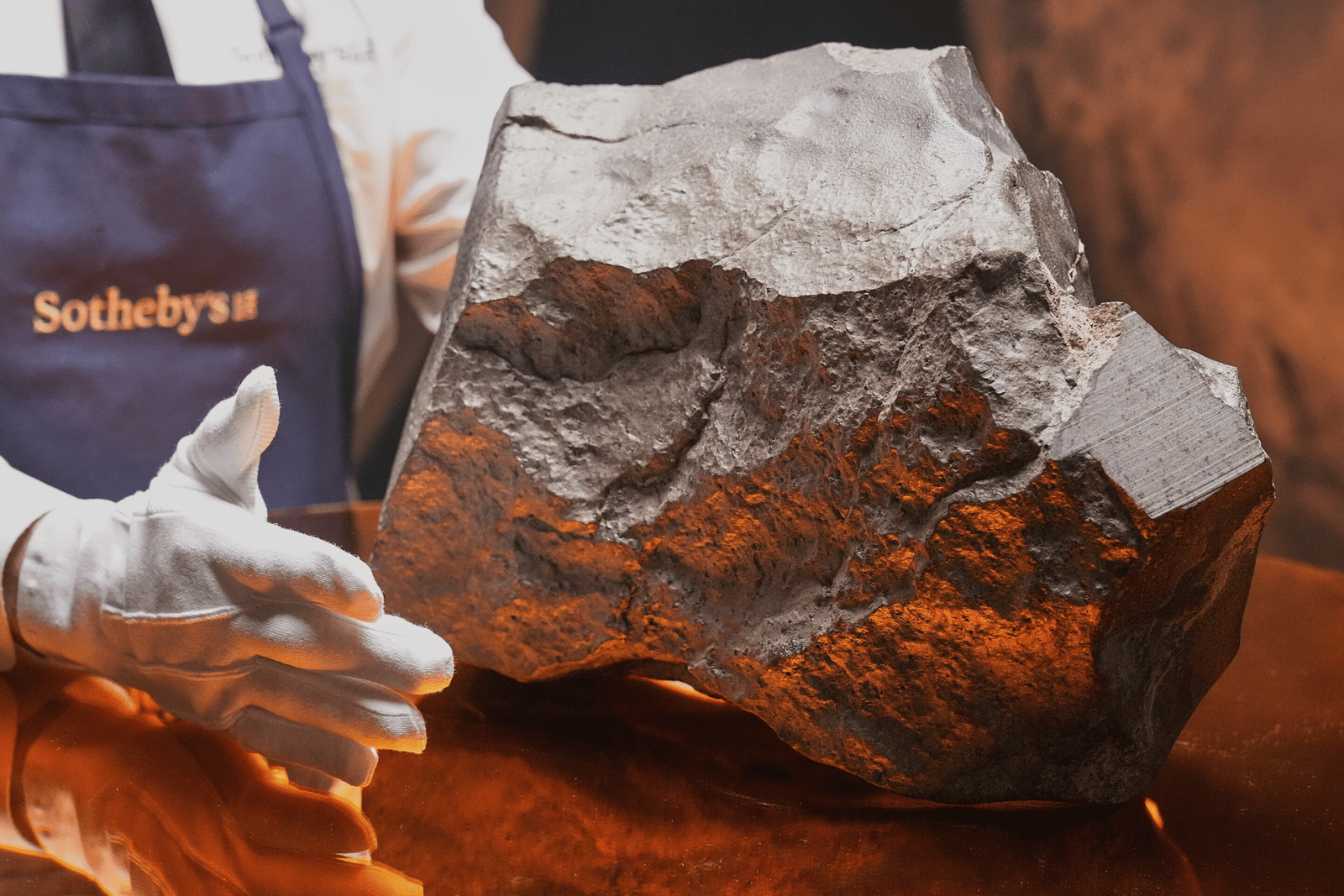
A cosmic relic from the red planet is making headlines as it prepares to change hands in one of the most anticipated auctions of the year. The NWA 16788 meteorite, a Martian rock that has travelled nearly 225 million miles through the solar system, is poised to command a record price at Sotheby’s Natural History auction in New York on July 16.
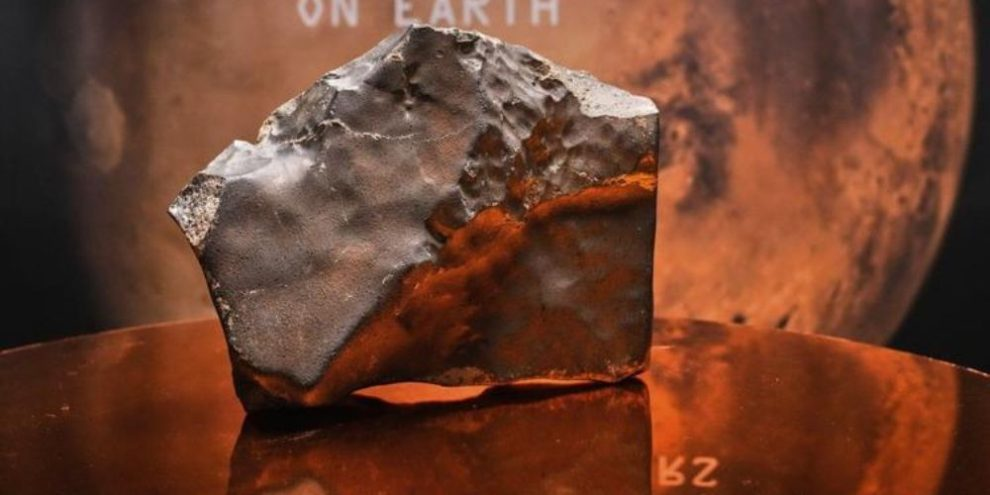
Weighing more than 25 kilograms and measuring 15 inches wide, NWA 16788 is not just the largest Martian meteorite ever discovered on Earth, but also a scientific wonder with a near-pristine state that has astonished researchers and collectors alike.
As the hammer prepares to fall, interest in the meteorite has already reached astronomical heights, with bidding having touched $1.6 million nearly a week before the auction, and estimates predicting a final sale price exceeding $4 million. For space enthusiasts, scientists, and collectors, this meteorite represents not just a chunk of rock, but a rare opportunity to own a piece of another world — a tangible fragment of Mars with profound implications for science and history.
A Rarity Among Rarities: What Makes NWA 16788 Unique
Martian meteorites are already among the most exclusive categories of space rocks, accounting for just 0.6 per cent of all officially recognized meteorites on Earth. Out of the 77,000 meteorites identified globally, only about 400 are confirmed to be of Martian origin. That makes NWA 16788, which constitutes approximately 6.5 per cent of all Martian meteorite material ever recovered, a rarity among rarities.
Discovered in 2023 in the remote Agadez region of Niger, NWA 16788 stands out not just for its size, but for its exceptional preservation. According to Sotheby’s, the meteorite shows minimal signs of terrestrial weathering, suggesting that it has spent relatively little time on Earth and has retained much of its original chemical and physical integrity.
This makes it a valuable scientific asset, one that could offer vital clues about Mars’s geological history, surface composition, and past volcanic activity. The meteorite’s journey to Earth is nothing short of extraordinary.
A 54-pound Martian meteorite — the largest known piece of Mars ever found on Earth — has landed at #SothebysNewYork.
— Sotheby's (@Sothebys) July 11, 2025
How did it get here? Find out from @the_lynx_eyed.
The Natural History Live Auction takes place 16 July at 10:00 AM ET. https://t.co/7rZVChTFmY pic.twitter.com/W3zqEbAG1H
It likely began with a massive asteroid impact on Mars, which ejected debris into space with enough velocity to escape the planet’s gravity. One of those fragments—NWA 16788—traveled across space for millions of years before surviving entry through Earth’s atmosphere and ultimately landing in the Sahara Desert. The sheer improbability of this sequence of events underscores just how exceptional this meteorite truly is.
Science vs. Commerce: A Battle Over the Meteorite’s Fate
While NWA 16788 has sparked awe and excitement among collectors, its impending sale has also raised serious concerns within the scientific community. For many researchers, the idea that such a significant specimen could vanish into a private collection is deeply troubling.
Steve Brusatte, a professor of paleontology and evolution at the University of Edinburgh, voiced this concern in an interview with CNN, saying, “It would be a shame if it disappeared into the vault of an oligarch. It belongs in a museum, where it can be studied, and where it can be enjoyed by children and families and the public at large.”
Read : Human Blood Could Build Future Mars Homes Similar to Ancient Roman Techniques
This concern is not unfounded. While private ownership of meteorites is legal and often encouraged in the world of high-end auctions, it can limit access to specimens that could otherwise contribute to public knowledge. Scientists emphasize that meteorites like NWA 16788 are not merely collectible items, but critical datasets that offer unique insights into the composition and evolution of other planets.
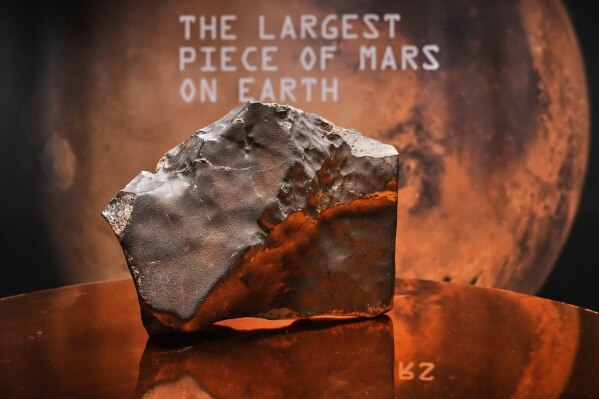
In the case of Martian meteorites, they serve as proxies for samples from Mars, a planet that, despite ongoing exploration efforts, remains physically out of reach for direct sample return — at least for now. The debate highlights a long-standing tension between the commercial market and the scientific community.
While auction houses like Sotheby’s play a key role in bringing rare geological specimens to public attention, they also facilitate the movement of these artifacts into private hands, sometimes at the expense of research and public access. In the case of NWA 16788, many hope that a museum or research institution might step forward with a winning bid, ensuring the meteorite remains accessible to scientists and the public alike.
A Meteorite with Stories to Tell and Secrets to Unlock
What makes NWA 16788 especially compelling is not just its Martian origin or impressive size, but the vast array of scientific mysteries it may help unravel. Cassandra Hatton, Sotheby’s vice chairman of science and natural history, emphasized this point in a promotional video released by the auction house. “This isn’t just a miraculous find, but a massive dataset that can help us unlock the secrets of our neighbour, the red planet,” she said. “The odds of this getting from there to here are astronomically small.”
Meteorites like NWA 16788 are essential tools in planetary science. By analyzing their mineral composition, isotopic ratios, and trapped gas bubbles, scientists can gain insight into the Martian crust, the history of volcanic activity on the red planet, and the environmental conditions that may have existed there in the past. Some Martian meteorites have even shown signs of ancient water activity, lending further weight to theories about Mars once being a habitable world.
Moreover, Martian meteorites are crucial for preparing future missions to Mars. As space agencies like NASA and ESA work toward Mars Sample Return missions, understanding the baseline characteristics of Martian rocks through meteorites can help refine scientific instruments and protocols. They also offer valuable training opportunities for scientists and technicians who will eventually work with returned Martian samples.
In this context, NWA 16788 is more than just a meteorite — it’s a scientific time capsule, containing information about a world billions of years old. Its sale at auction, while exciting for collectors, raises important questions about how humanity values and protects such rare pieces of our cosmic heritage.
As the auction date approaches, anticipation continues to build. The meteorite is currently on public display at Sotheby’s New York galleries until July 15, giving visitors a final chance to see it up close before it potentially disappears into a private collection. Whether it ends up in a museum or a billionaire’s showcase, NWA 16788 has already made its mark — not only as the largest Martian meteorite ever found on Earth but as a symbol of our deepening curiosity about the universe and our place within it.
Its story is a reminder of how small events — like an asteroid strike on a distant planet — can echo across space and time, eventually intersecting with human lives in the most unexpected ways. And whether viewed through a lens of science or spectacle, the NWA 16788 meteorite is, without question, a treasure from beyond our world.