
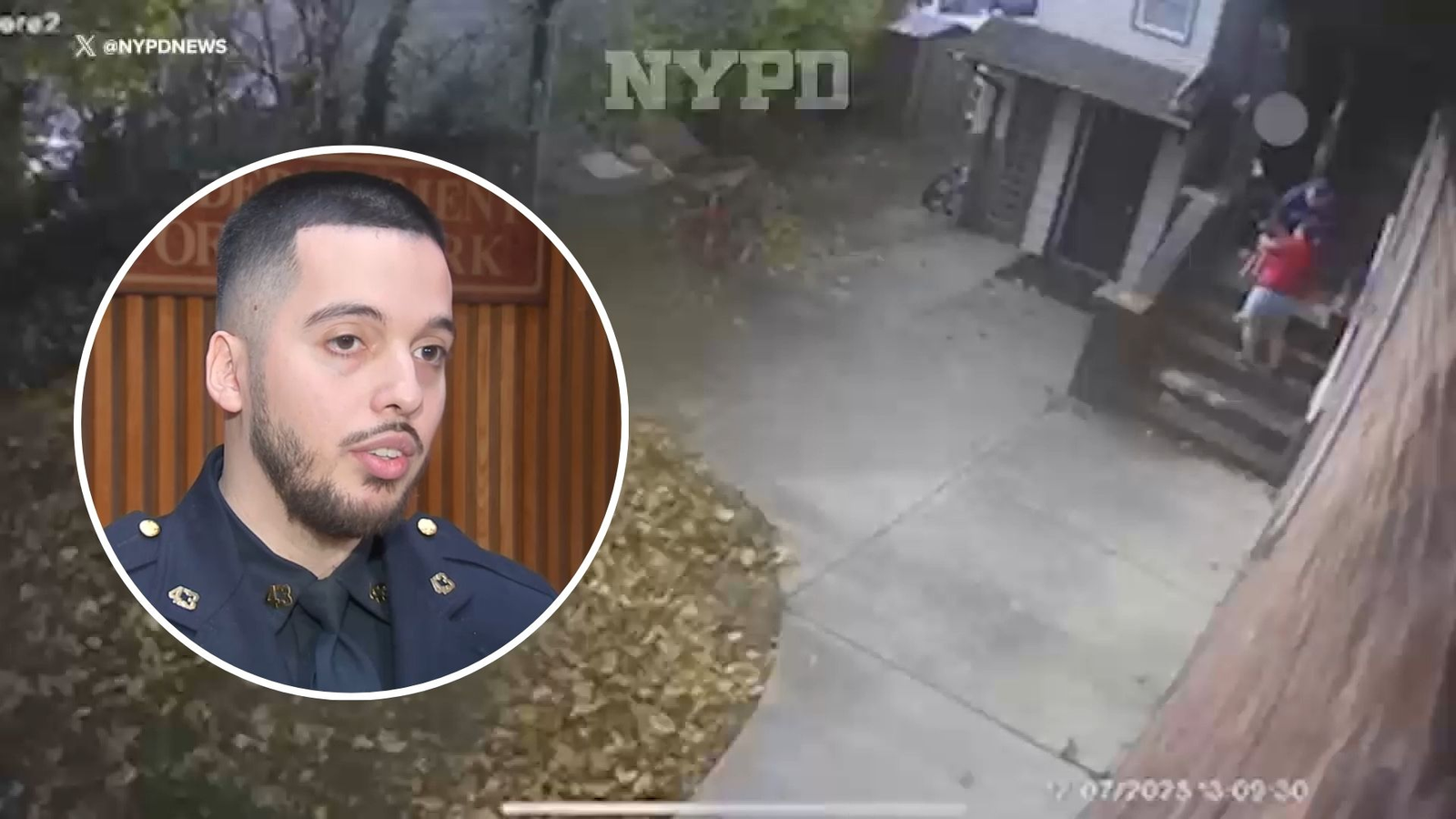
On a quiet December afternoon on Long Island, a medical emergency unfolded that could easily have ended in tragedy. A 1-year-old girl, weakened by a cold and suddenly unable to breathe, became unresponsive in her mother’s arms. Panic set in as precious seconds passed. Instead of waiting helplessly, her parents ran to the person they believed could make the difference between life and death: their neighbor, an off-duty New York City police officer.
What followed was a rapid, instinctive response shaped by recent training, calm decision-making, and an understanding that immediate action was critical. Surveillance video later captured the moment when Officer Freddy Cerpa intervened, demonstrating how preparedness and proximity can intersect at decisive moments. The incident, which occurred on Dec. 7, highlights both the unpredictability of medical emergencies involving infants and the value of emergency response training beyond professional settings.
Although Freddy Cerpa had been on the job for only about seven months after graduating from the police academy, the skills he had learned were applied not in a patrol situation, but in the front yard of his own neighborhood. The child survived, breathing was restored before paramedics arrived, and she was later taken to the hospital for further evaluation. The event serves as a real-world example of how training, awareness, and quick thinking can play a decisive role in emergencies involving young children.
A Life-Threatening Emergency Unfolds in Seconds
The emergency began when the baby, who had been suffering from a cold, started choking on mucus and could no longer breathe properly. According to Freddy Cerpa, when the parents reached him, the child appeared lifeless. The mother was holding her, frantic and desperate for help. Although the parents had attempted to call 911, they recognized that Cerpa was nearby, trained, and able to respond immediately. In choking emergencies, particularly with infants, the difference between survival and severe injury can be measured in seconds.
Freddy Cerpa responded without hesitation. Drawing on his academy training, he took the baby from her mother and began performing back slaps, a recommended technique for infants experiencing airway obstruction. He explained that after administering the initial back blows, he checked the child’s mouth and throat for visible obstructions. Finding none, he continued with additional back slaps. The obstruction, caused by mucus rather than a solid object, made the situation more complicated, as there was nothing visible to remove manually.
As he continued the procedure, Freddy Cerpa felt a crucial change. The child’s chest began to rise and fall, indicating that she had started breathing again. For Cerpa and the parents, that moment marked an immediate shift from fear to relief. Paramedics arrived shortly afterward and transported the child to a hospital, where she received further medical care. The rapid response ensured that oxygen deprivation was minimized, reducing the risk of long-term complications.
Read : Discovering Algeria’s Beauty: Top Ten Selfie Spots Across the Country
Surveillance footage of the rescue later circulated, underscoring how quickly the situation escalated and how decisive the intervention was. The video showed the urgency of the parents’ approach and Freddy Cerpa’s immediate reaction. While such footage can be difficult to watch, it also provides a clear reminder of how sudden and severe infant choking incidents can be, even in familiar and seemingly safe environments like one’s own home or neighborhood.
Training Put to the Test Beyond the Line of Duty
Officer Freddy Cerpa’s actions were rooted in training he had completed only months earlier. As part of his preparation at the police academy, he learned first aid skills, including the use of automated external defibrillators, back slaps for infants, and the Heimlich maneuver for older children and adults. Like many trainees, he did not expect to use these skills so soon, nor in such a personal context involving neighbors rather than strangers.
Freddy Cerpa later stated that while the techniques are taught routinely, the opportunity to apply them in a real-life situation can be rare. Training scenarios are often controlled and predictable, while real emergencies involve heightened emotion, uncertainty, and pressure. In this case, his ability to remain focused and follow protocol played a central role in the successful outcome.
Read : 40-Year-Old NYPD Detective Alicia Stone Dies in Colombia a Week After Butt Lift Surgery
The incident also reflects a broader reality of modern policing and emergency services: officers are frequently trained not only for law enforcement tasks, but also for medical and humanitarian interventions. In many communities, police officers are among the first to arrive at medical emergencies, particularly when they are nearby or already present. Off-duty officers, like Freddy Cerpa , may still find themselves in positions where their training becomes relevant outside of official working hours.
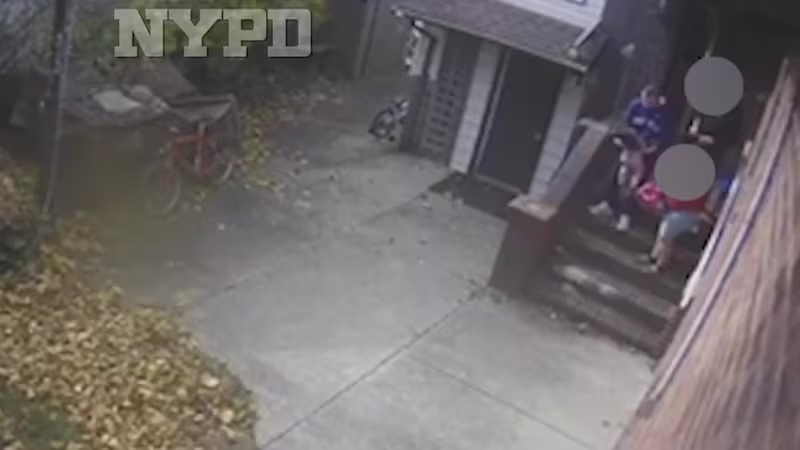
Freddy Cerpa emphasized that despite his successful intervention, calling 911 remains the most important step in any emergency. Professional medical responders are equipped to provide advanced care and transport patients to hospitals. However, he also acknowledged that there can be critical moments before paramedics arrive when immediate action is necessary. In those moments, basic life-saving skills can sustain a victim until further help becomes available.
The fact that Freddy Cerpa had graduated from the academy only seven months earlier underscores how foundational training can have immediate real-world impact. It also illustrates how emergency response education is not abstract or theoretical, but designed for unpredictable situations that can arise at any time, including during off-duty hours and in personal spaces.
Public Health Guidance and the Importance of Infant Choking Awareness
The rescue also drew attention to the broader issue of choking hazards among infants and young children. According to the American Red Cross, choking is one of the leading causes of injury and death in infants and children. Factors such as small airways, underdeveloped swallowing coordination, and vulnerability during respiratory illnesses like colds can significantly increase risk.
Sean McNerney of the American Red Cross explained that response techniques differ depending on the age of the child. For infants under one year old, the recommended approach includes a combination of back blows and chest compressions. Abdominal thrusts, commonly known as the Heimlich maneuver, are not used on infants due to the risk of internal injury. Instead, responders support the infant carefully while delivering firm back blows designed to dislodge the obstruction.

For older children, the guidance changes slightly. Abdominal thrusts can be used, similar to the technique applied to adults, but adjusted for the child’s size and with the responder positioned at the child’s level. McNerney emphasized that proper training is essential to ensure these techniques are performed safely and effectively.
The American Red Cross and other organizations offer courses designed to teach parents, caregivers, and community members how to respond to choking, cardiac arrest, and other emergencies. These programs aim to empower individuals with the knowledge needed to act confidently during critical moments. While not everyone will encounter an emergency, those who do may find that even basic training can make a meaningful difference.
Freddy Cerpa’s experience aligns with this message. He noted that while his training came through law enforcement, the same principles apply to civilians who take first aid and CPR courses. He encouraged parents to consider learning these skills, not as a replacement for emergency services, but as a supplement during the crucial minutes before professional help arrives.
The incident occurred just weeks before Christmas, a time often associated with family gatherings and increased activity involving children. While Freddy Cerpa described the rescue as an amazing feeling, he consistently redirected attention toward preparedness rather than heroism. He framed his actions as part of his responsibility to preserve life, a mission he considers central to his role as a police officer.
In the aftermath, the child’s recovery and the family’s relief stood as tangible outcomes of timely intervention. The event serves as a case study in how community proximity, training, and awareness can converge during emergencies. It also reinforces the importance of accessible emergency education and the role individuals can play in supporting one another during unforeseen crises.
Yo, 33win44 on the scene! I’ve been playing here for a bit. Payouts are pretty quick, which is always a good sign. Game selection is solid – got my favorites covered. Give it a go, might be your new lucky spot: 33win44
It?¦s in point of fact a great and helpful piece of information. I?¦m happy that you just shared this helpful information with us. Please keep us up to date like this. Thanks for sharing.
Hi are using WordPress for your blog platform? I’m new to the blog world but I’m trying to get started and set up my own. Do you require any html coding expertise to make your own blog? Any help would be greatly appreciated!
Very interesting topic, thanks for putting up. “I am not an Athenian or a Greek, but a citizen of the world.” by Socrates.