
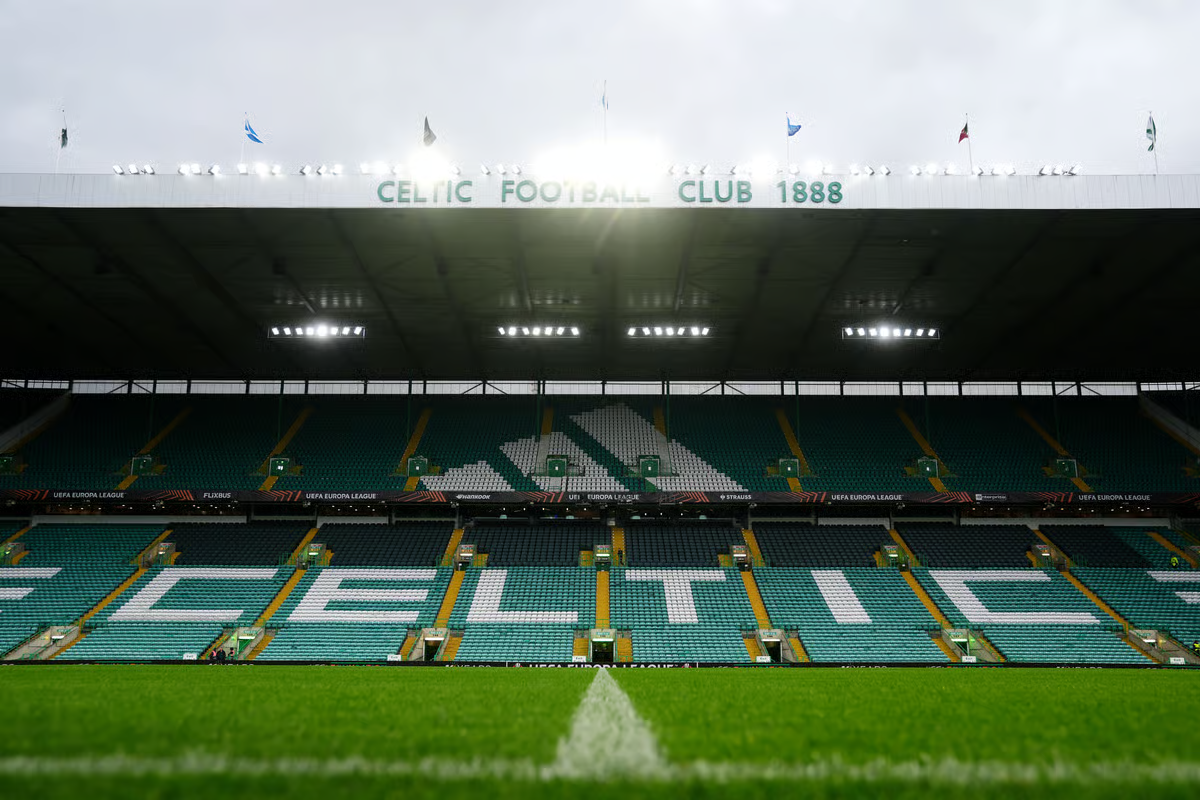
The atmosphere at Celtic Park during the Scottish champions’ 4-0 victory over Falkirk on October 29 initially reflected what many would expect from one of the most passionate football venues in Europe. The match itself brought comfortable success on the pitch. However, events unfolding off the field overshadowed the result and have since become the focal point of club policy discussions, supporter criticism, and law enforcement involvement.
The incident involving the Green Brigade—a prominent Celtic fan group known for orchestrating choreographed displays and vocal support—has led to serious consequences including stadium bans, police investigations, and renewed examination of supporter conduct. According to police and club statements, a steward and two police officers were assaulted when attempts were made to detain an individual during the second half.
The situation escalated rapidly and involved around 100 individuals, prompting significant concern over safety, crowd management, and the responsibilities of organized supporter groups. The club has since enforced a previously suspended sanction, resulting in multiple-match bans and heightened scrutiny over away match attendance.
Escalation of the Incident at Celtic Park
As Celtic maintained control of the match on the field, an issue emerged within the standing section associated with the Green Brigade. A routine ticket check was being carried out by club staff, which is standard procedure intended to prevent seat misallocation and ensure compliance with stadium policy. During this process, according to the club’s statement, a staff member was assaulted by one individual. Police officers, one male and one female, then attempted to arrest the supporter involved. It was at this point that the situation escalated beyond the scope of ordinary matchday security challenges.
Video footage released by Celtic shows groups of fans rapidly converging in the tunnel area adjacent to the standing section. The club stated that approximately 100 individuals coordinated to interfere with the arrest, positioning themselves physically and verbally against staff and officers.
Attempts by officers to restrain the initial suspect were directly impeded, and club officials highlighted the risk of officers being overpowered or injured due to the narrow corridor and the pressure of the crowd. At one moment, there was concern that one of the officers could be knocked to the ground, creating the potential for trampling as momentum from the group surged forward. The confined physical environment was a critical factor in the severity of the confrontation, as it limited the ability of security and police to control movement or create safe separation.
Read : Hurling Star DJ Carey Jailed for Fake Cancer Scam Exploiting Friends, Family and Fans
Club officials also noted that several individuals involved concealed their identities with face coverings, hoods, and scarves. While coverings are common in supporter culture, their use during confrontational actions has been emphasized as a barrier to identifying those who directly engaged in assault or obstruction. Police have since appealed for information and have indicated that ongoing efforts are underway to identify and hold specific participants accountable.
Green Brigade kettled yet again at George Square while the Union bears are allowed to run riot and attack McChuills bar in the high street. @PoliceScotland being selective with their targets yet again? pic.twitter.com/Ym8xsm0b6U
— Michael Celtic (@MichaelCeltic18) September 8, 2024
Assistant Chief Constable Mark Sutherland described the incident as “unacceptable disorder,” underscoring that neither police personnel nor stewards should be subjected to threats or violence while carrying out their duties. The officers and steward involved were left “shaken and traumatised,” and support resources have been offered. The language used by both law enforcement and the club reflects the seriousness with which the event is being treated and the level of disruption observed during what should have been routine operations.
Club Response and Enforcement of Suspended Sanctions
The consequences for the Green Brigade were immediate. Celtic confirmed that the supporter group was already under a suspended stadium sanction issued in July due to what the club described as repeated breaches of safety and security regulations. The previous incidents had involved matters such as unauthorized banners, pyrotechnics, and areas of organized movement within restricted stadium areas. The club highlighted that the suspended sanction existed as a deterrent and as a clear expectation that compliance was necessary to maintain privileges and continued group presence within designated standing sections.
Following the events against Falkirk, Celtic stated that this suspended sanction would now be activated. The penalty spans three home fixtures, specifically matches against Kilmarnock, Dundee, and league leaders Hearts. In addition to home restrictions, group members will face limits on attending away fixtures during the period, including trips to St Mirren, Hibernian, and a European away fixture at Feyenoord.
The club emphasized that such measures were not taken lightly but were required to reiterate standards of conduct and to ensure that matchday environments remain safe for all involved—players, staff, supporters, officials, and law enforcement personnel. Celtic’s statement framed the decision as necessary, stating that the actions taken by individuals associated with the group prevented the lawful arrest of a supporter and directly resulted in physical harm. The club further expressed strong disapproval of both the violence and the collective effort to obstruct police activity. In their view, the incident represented a coordinated response that undermined stadium order and escalated risk.
Club management also stressed the importance of preserving a safe and welcoming environment at Celtic Park. Public safety considerations play a significant role in operational oversight of major sporting events, and organized supporter groups are generally expected to cooperate with, rather than challenge, guidelines designed to prevent dangerous situations. The use of matchday standing sections, particularly, relies on supporters adhering to rules on crowd behavior, positioning, and movement. Any action that threatens control within these areas raises broader security concerns.
Supporter Group Dynamics and Ongoing Implications
The Green Brigade has long been a visible and influential supporter faction, known for generating visual and vocal energy inside the stadium. The group’s displays, chants, and coordinated sections have been recognized for contributing to the matchday identity of Celtic Park. However, the same intensity that defines supporter culture can become problematic when collective organization shifts towards confrontational behavior, especially when such behavior challenges event security protocols.
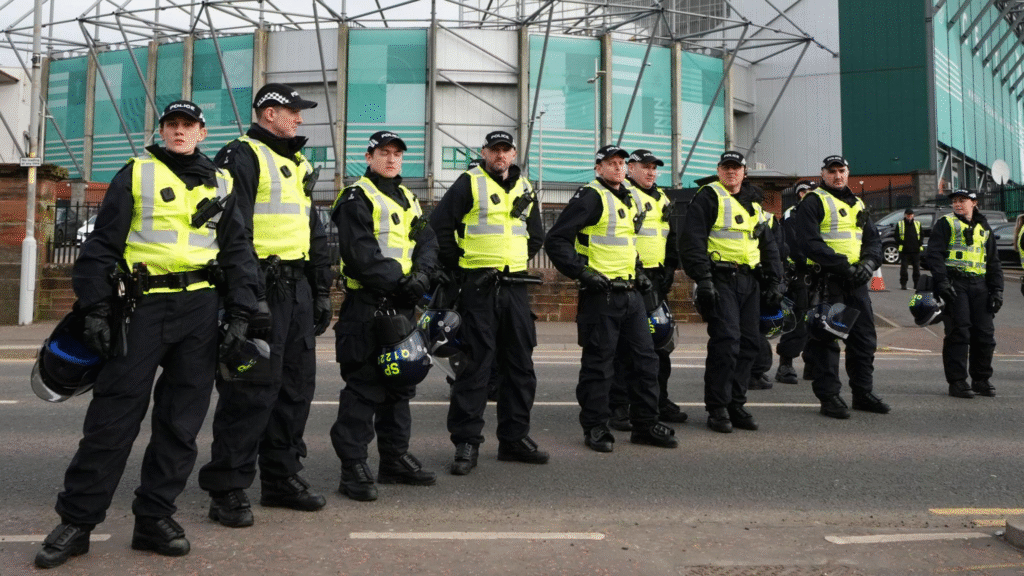
This confrontation is likely to continue shaping dialogue between the club’s leadership and segments of its supporter base. The ban will also affect matchday atmosphere, particularly in fixtures where vocal support plays a significant role in energizing the stadium environment. How the Green Brigade responds to the sanctions, and whether dialogue may lead to reestablishment of terms for attendance, will be pivotal in determining longer-term outcomes. The club has indicated willingness to maintain structured communication with supporter groups, but only within the boundaries of compliance with legal and safety standards.
Law enforcement, for its part, continues to gather evidence and seek identification of individuals involved. The emphasis from police on accountability suggests that legal processes may follow for those determined to have participated in assault or obstruction. Stadium bans issued by clubs can be supplemented by legal penalties when violent conduct is confirmed. Additionally, broader discussions across the Scottish football landscape may arise regarding security planning, standing section management, and engagement strategies with highly organized supporter collectives.
Stadium environments rely on a balance between passionate support and regulated order. When that balance is disrupted, the effects can be wide-ranging. Staff safety, fan safety, visitor confidence, and club reputation are all interlinked. In this case, the incident has prompted both immediate consequences and continuing investigation, and it serves as a notable moment in recent discussions about supporter behavior in Scottish football.
Không phải ngẫu nhiên mà xn88 – Tổng quan sàn cược trực tuyến an toàn có hàng triệu thành viên. Uy tín được xây dựng từ năm 2019 giúp thương hiệu này đứng vững trước mọi đối thủ cạnh tranh. TONY03-09
Thực tế cho thấy, các vấn đề về giao dịch tại 188v – Link Vào Trang Chủ 188Bet Chính Thức Không Bị Chặn 2024 rất hiếm khi xảy ra. Theo thống kê, tỷ lệ giao dịch có vấn đề chỉ chiếm chưa đầy 0.5%, thấp hơn đáng kể so với mức trung bình ngành là 2-3%. TONY03-09